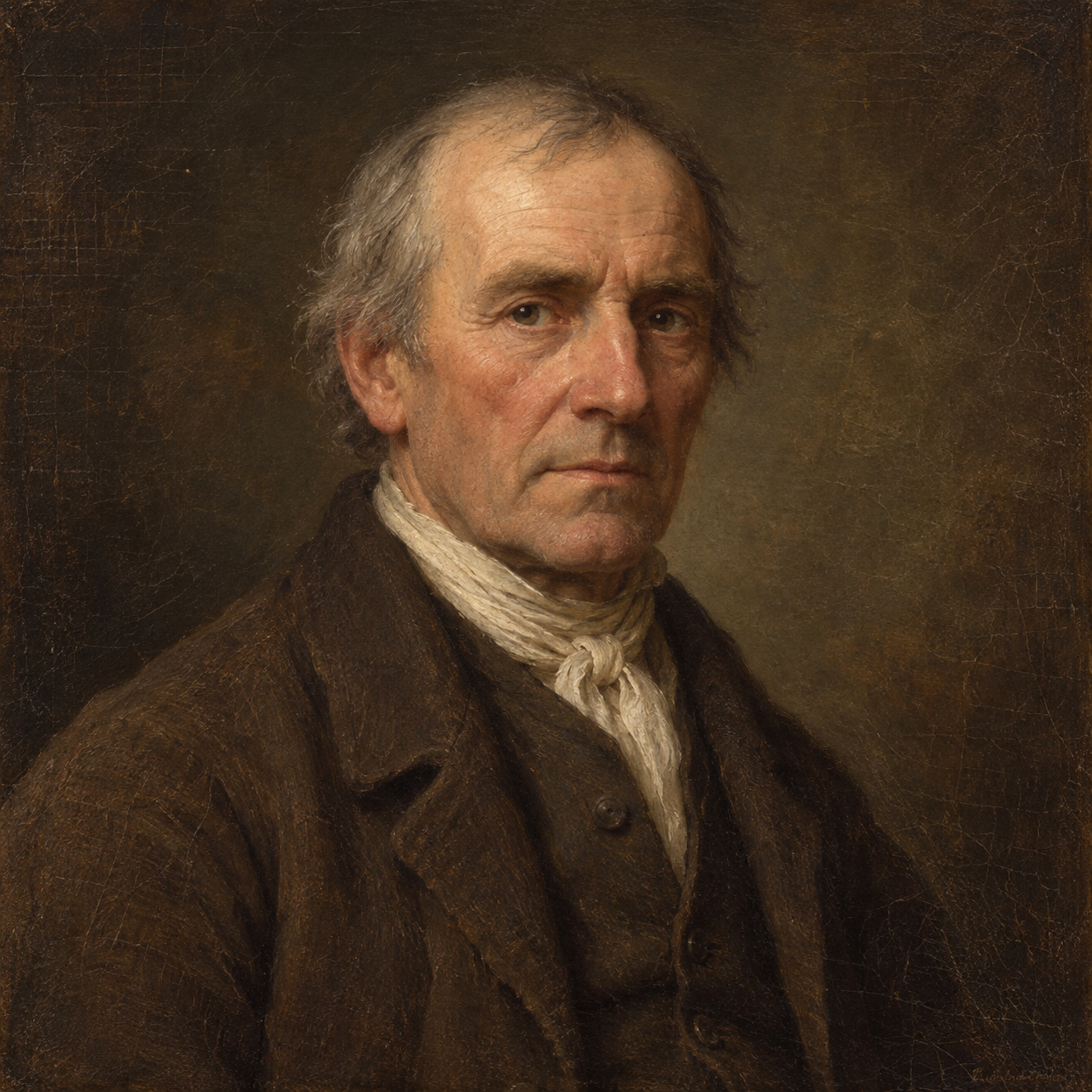
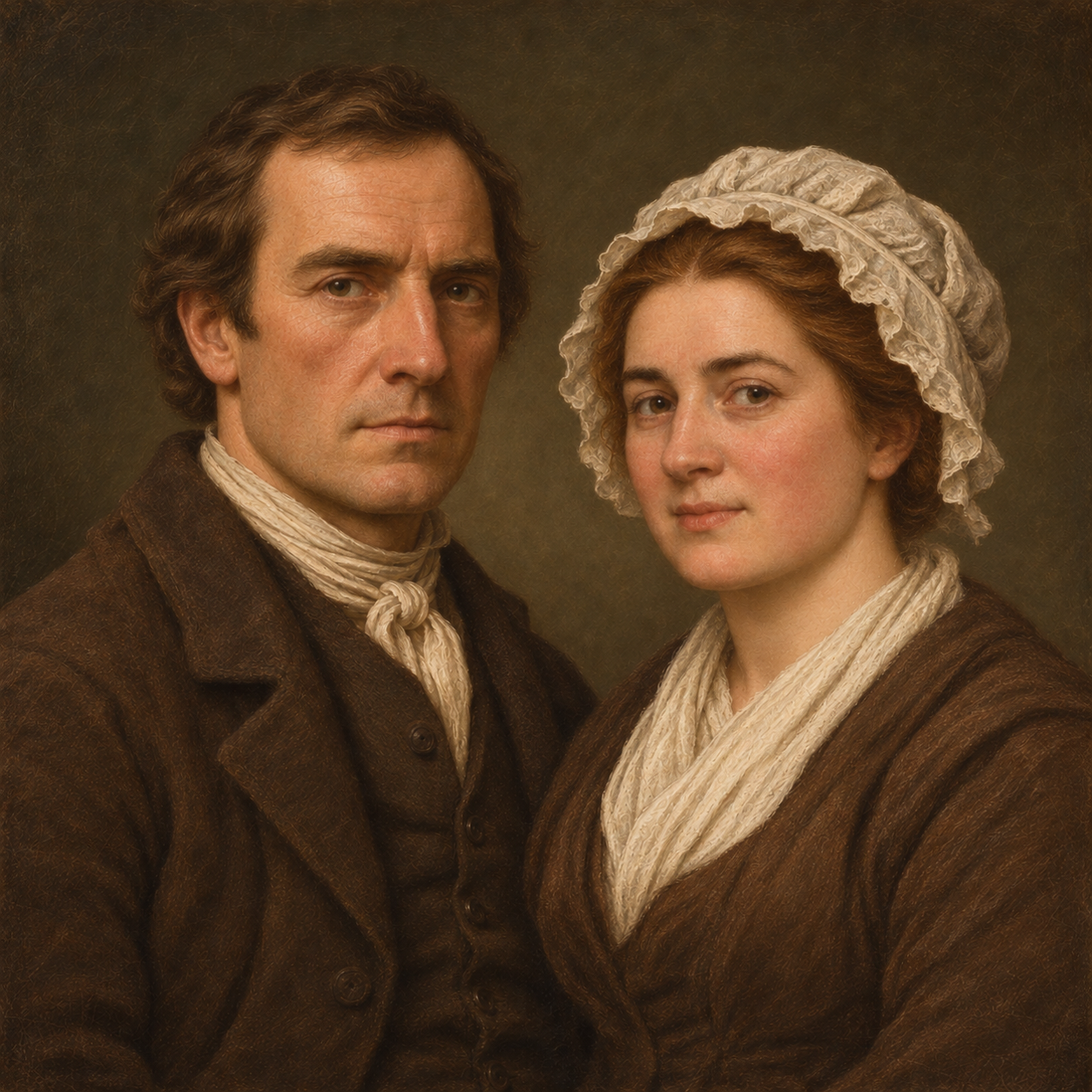
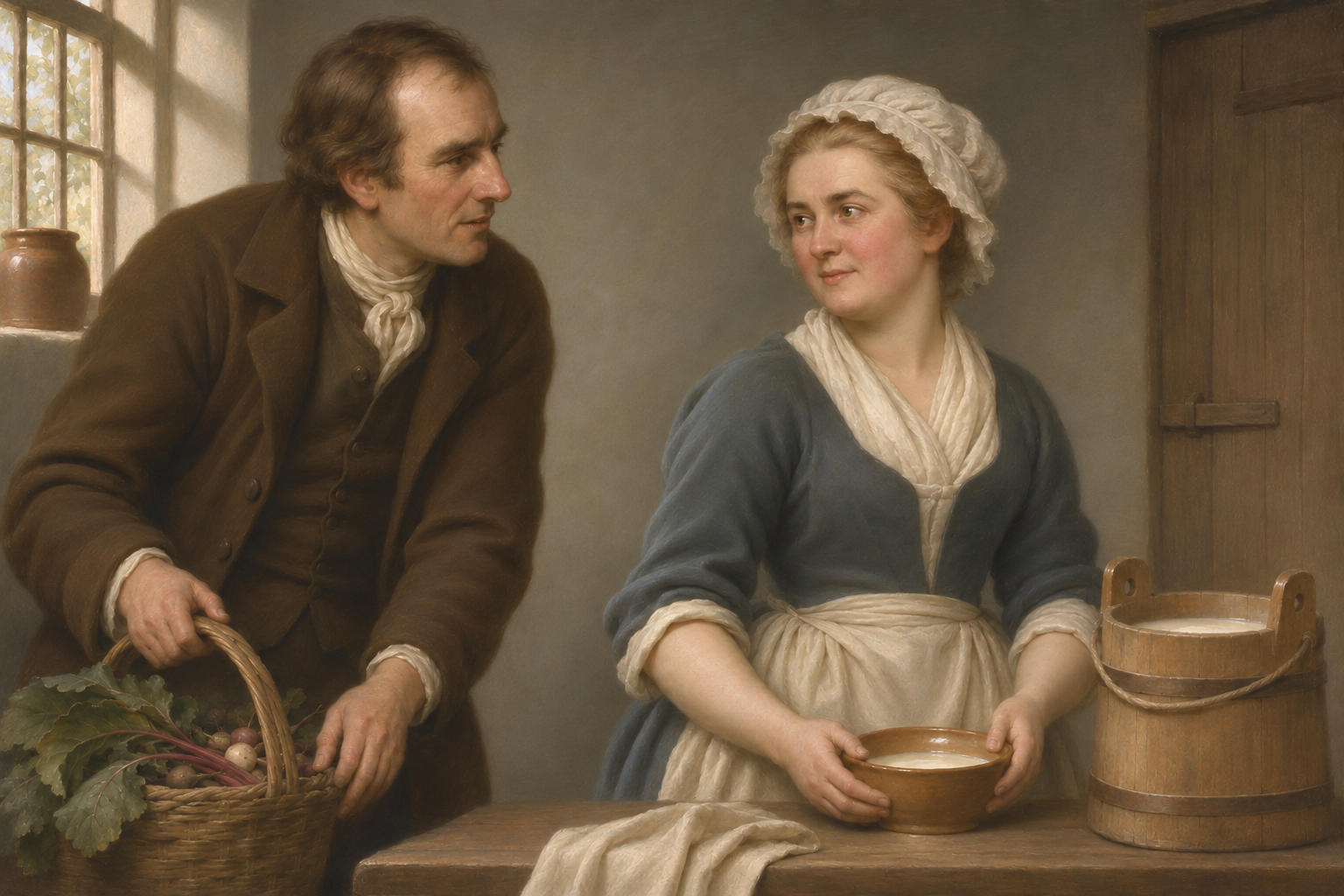
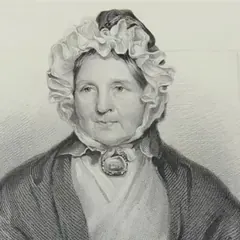
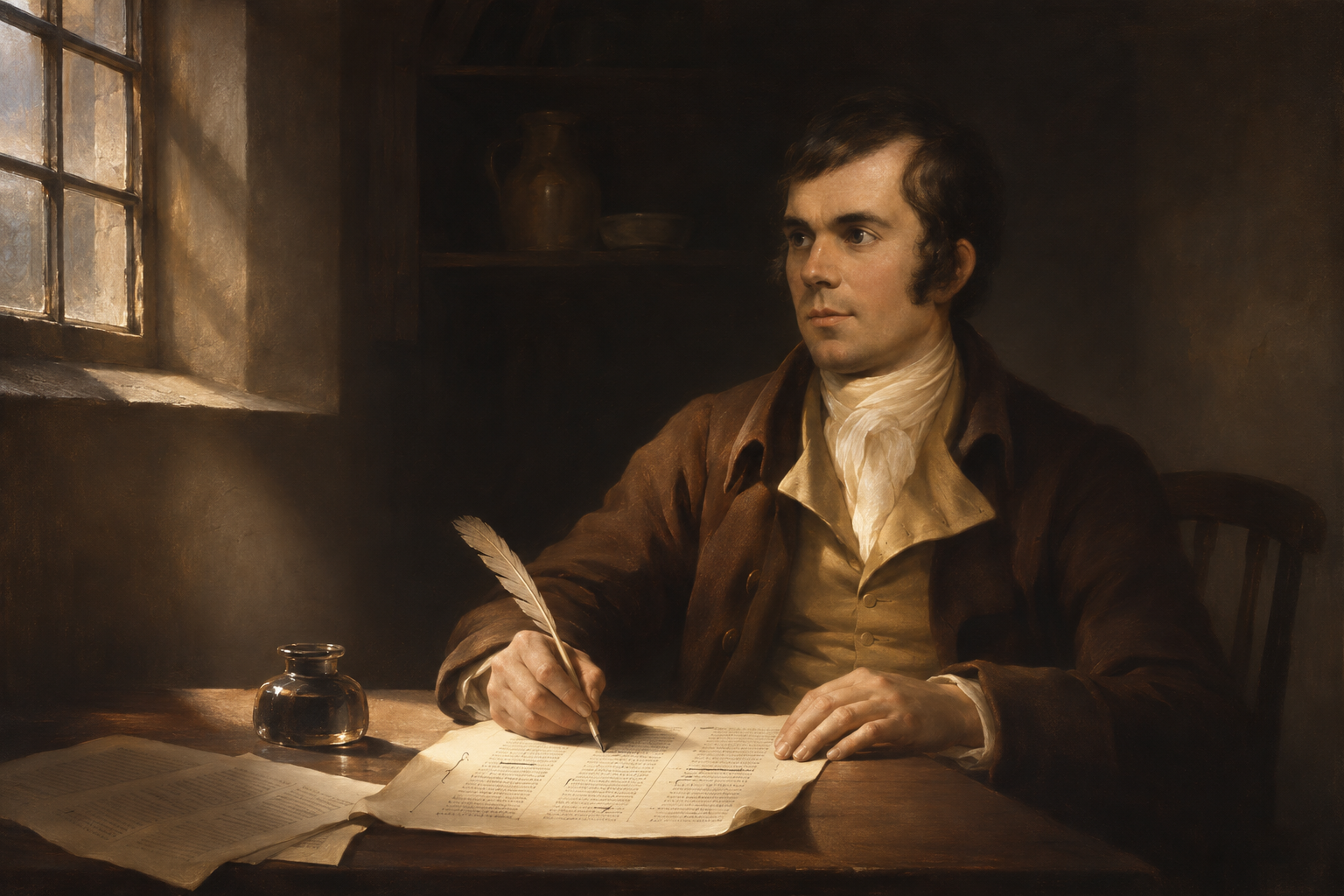
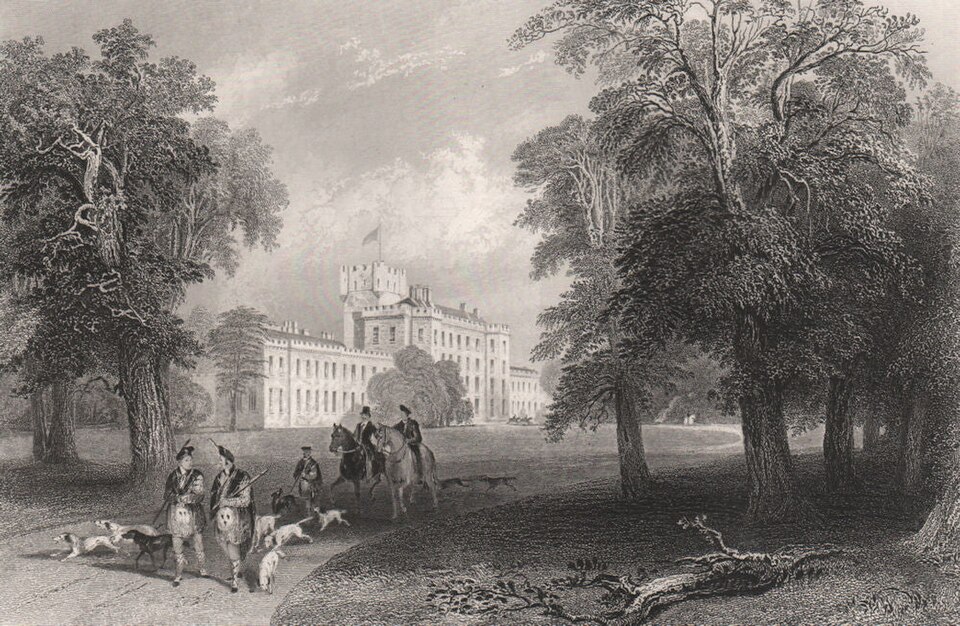
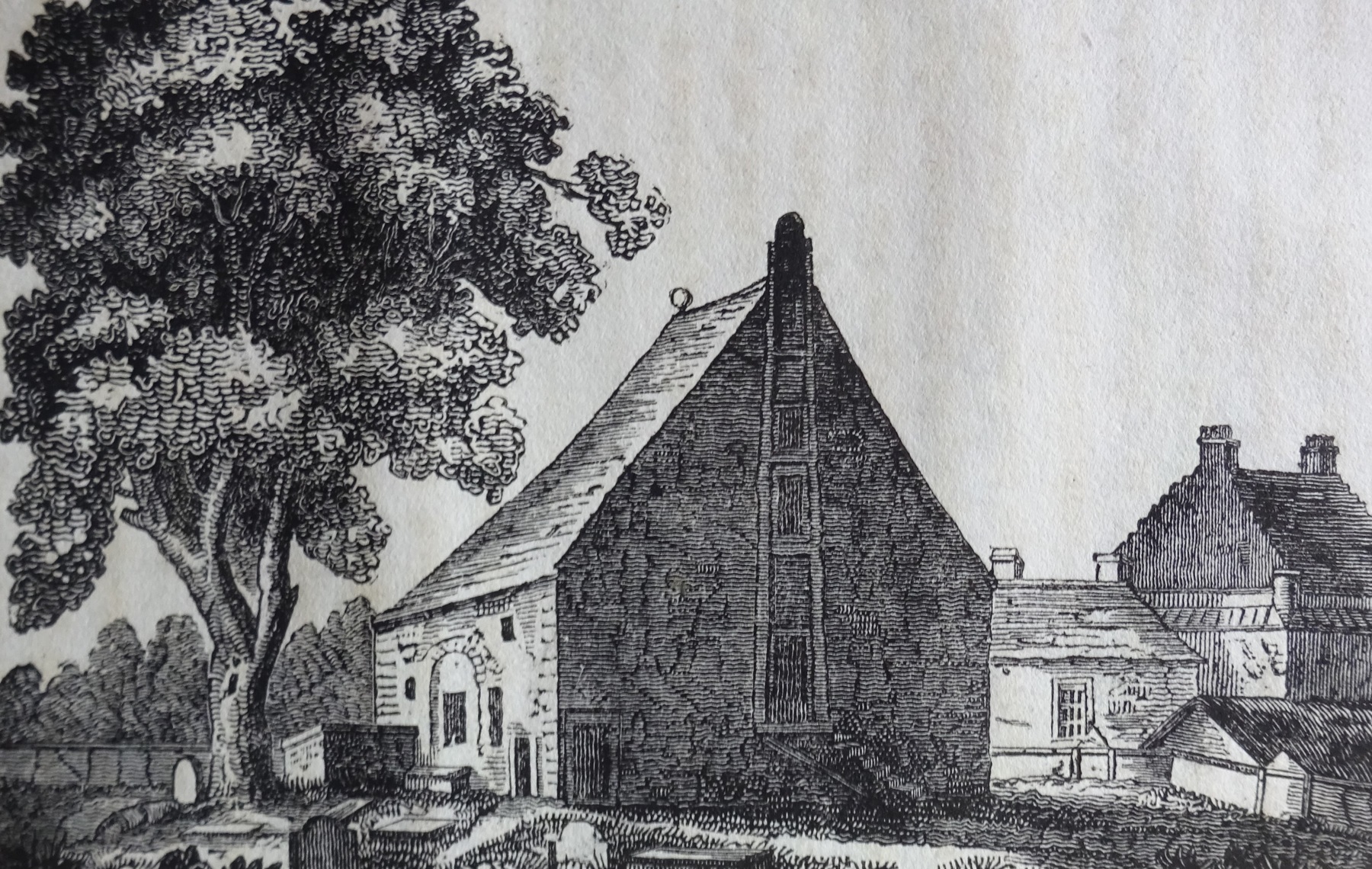
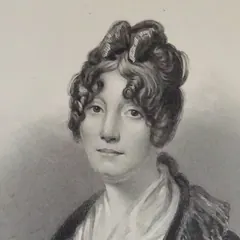
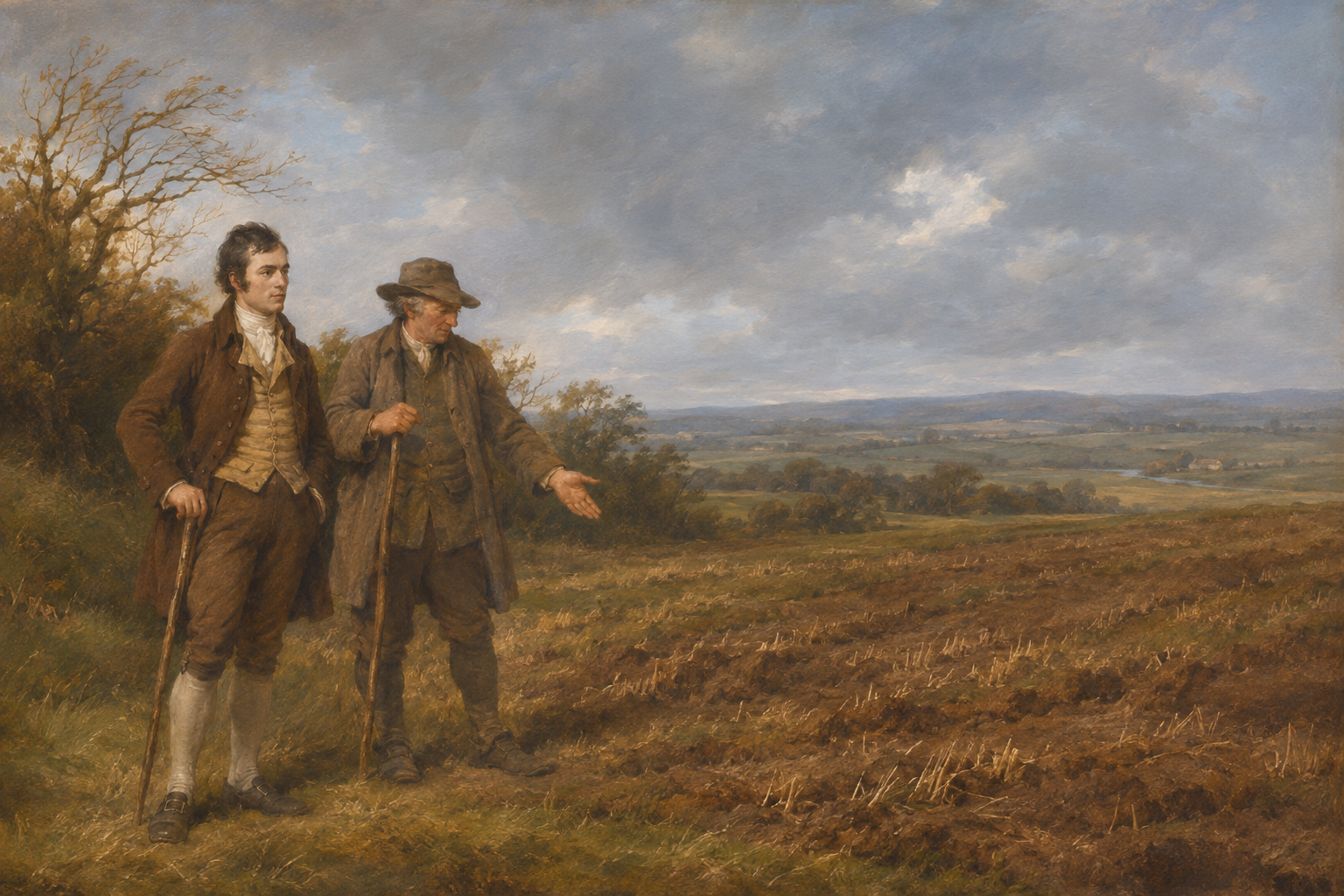
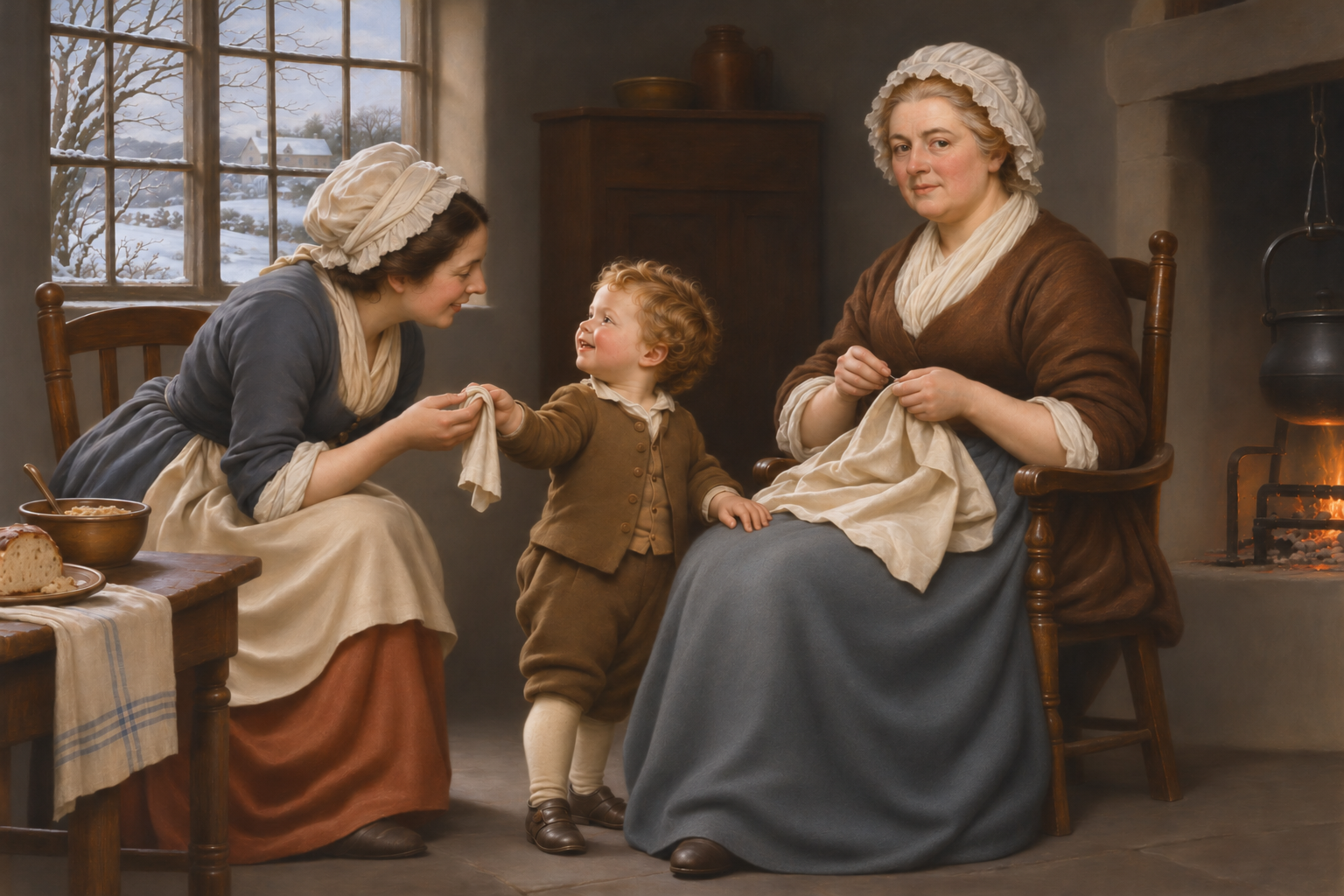
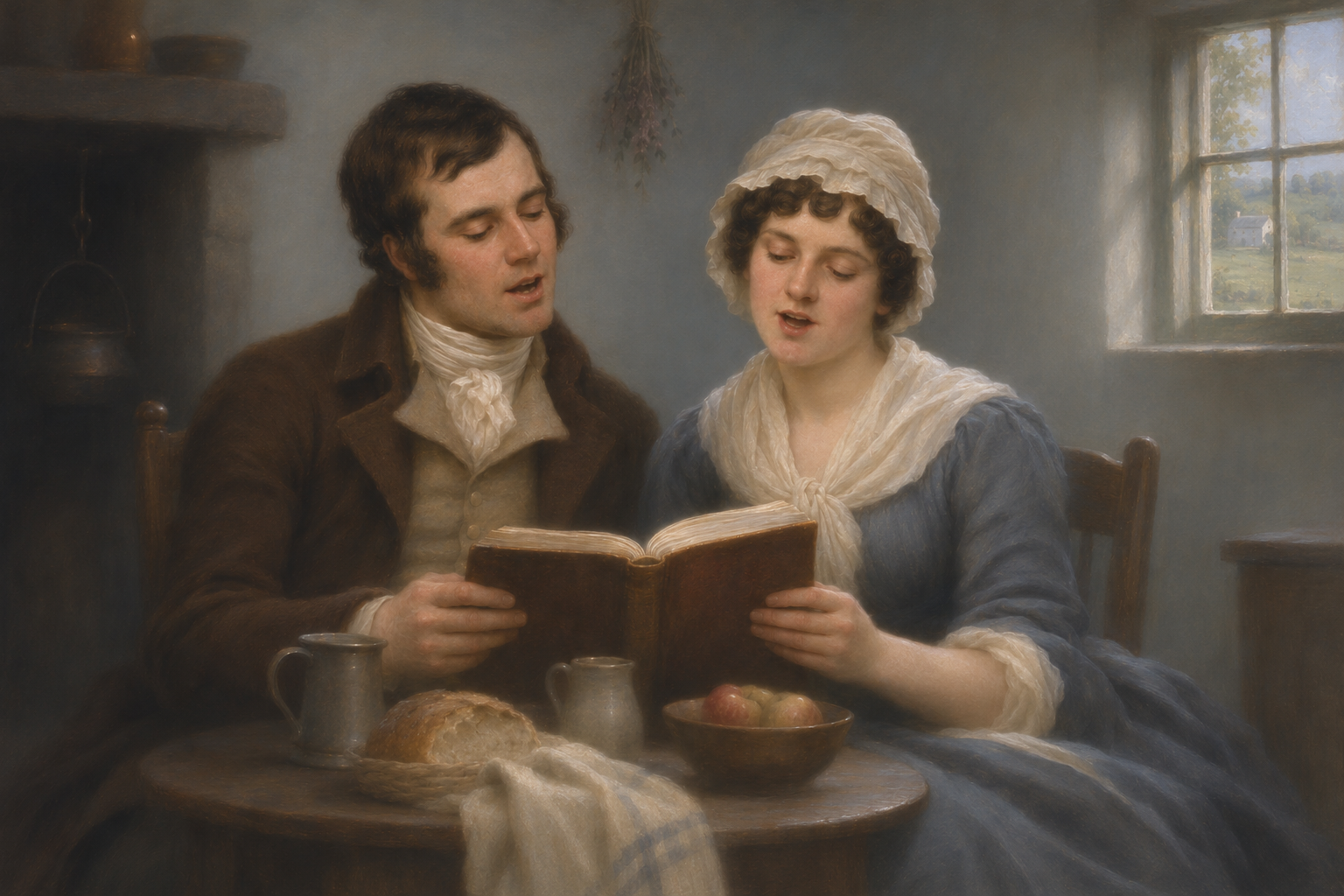
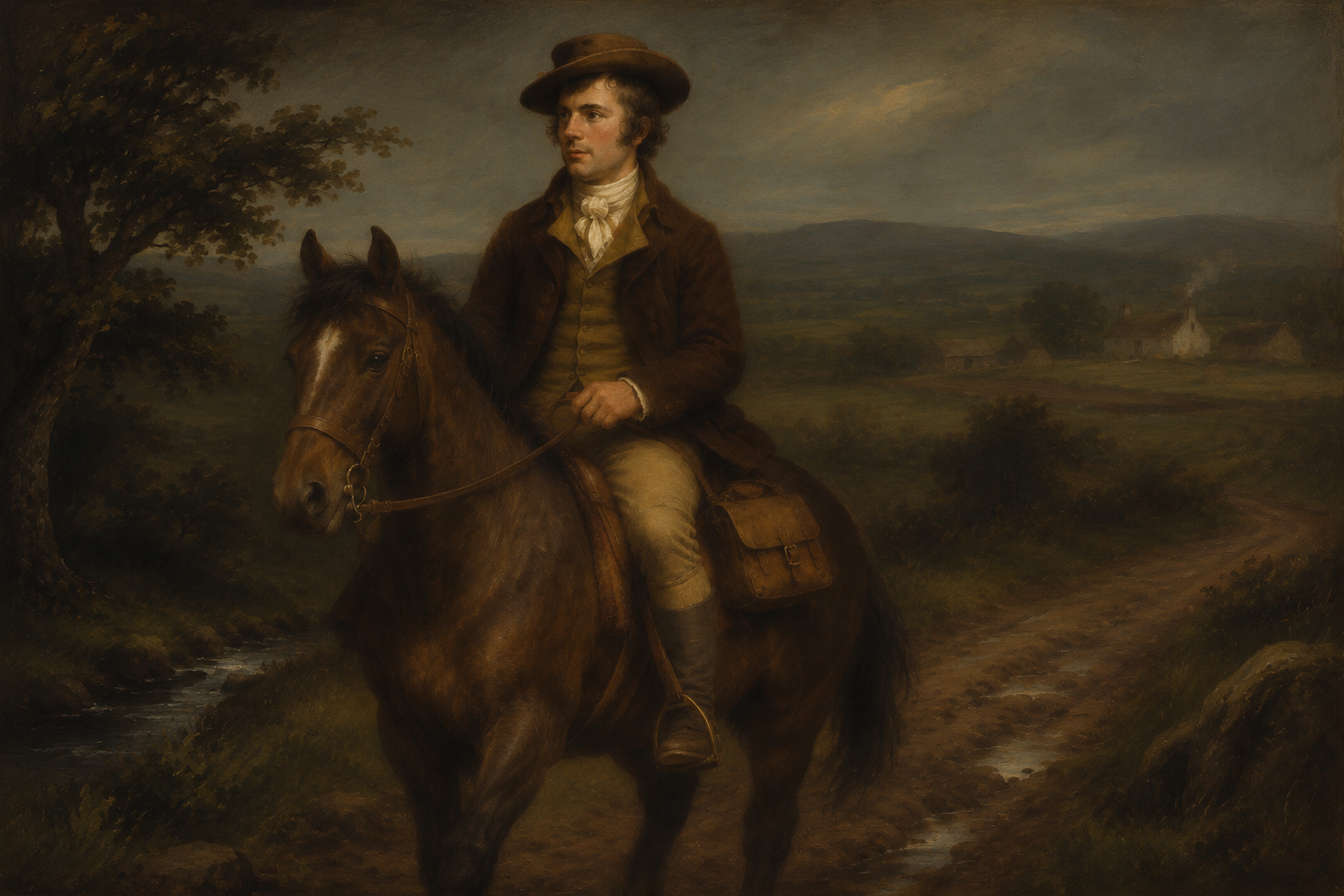
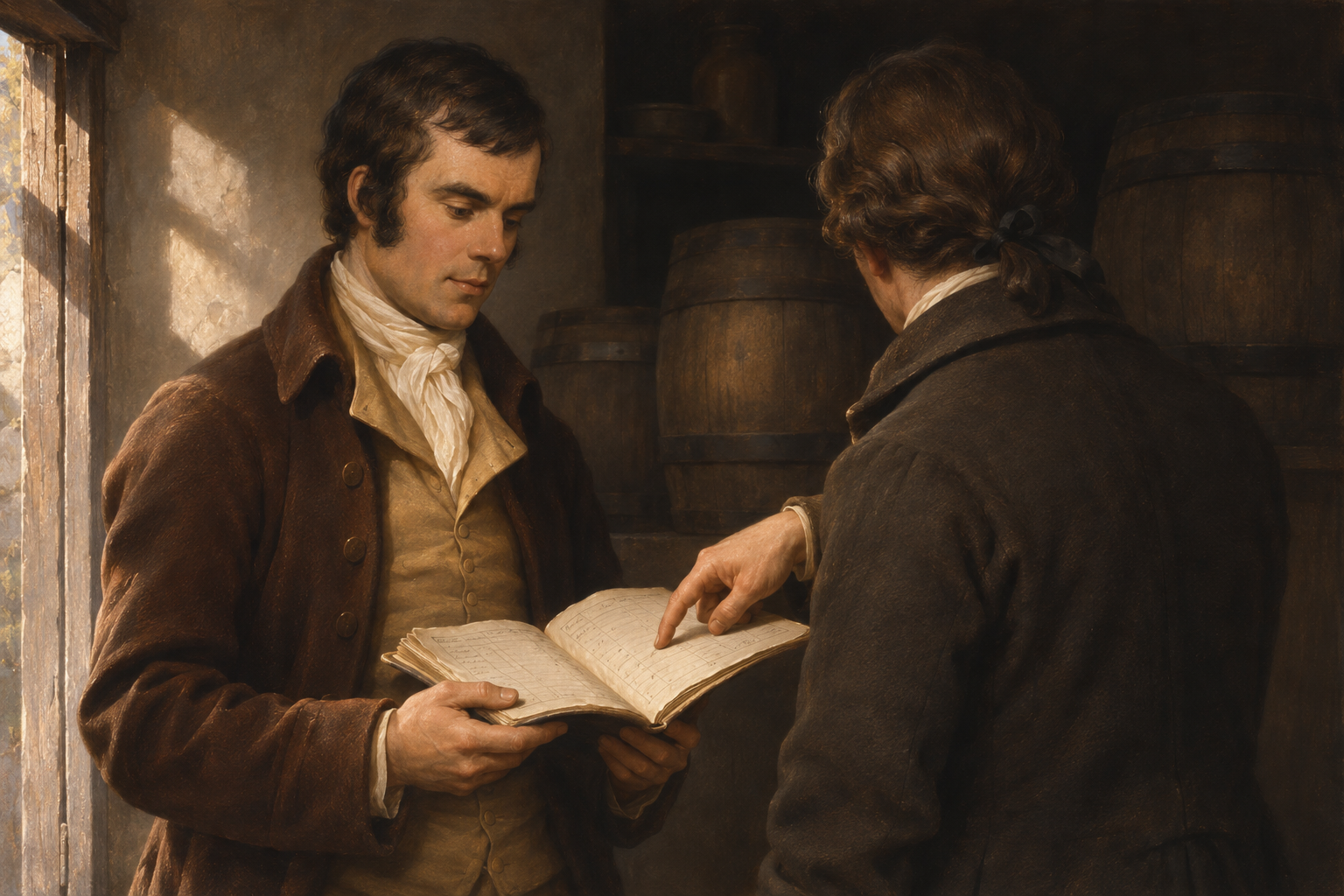
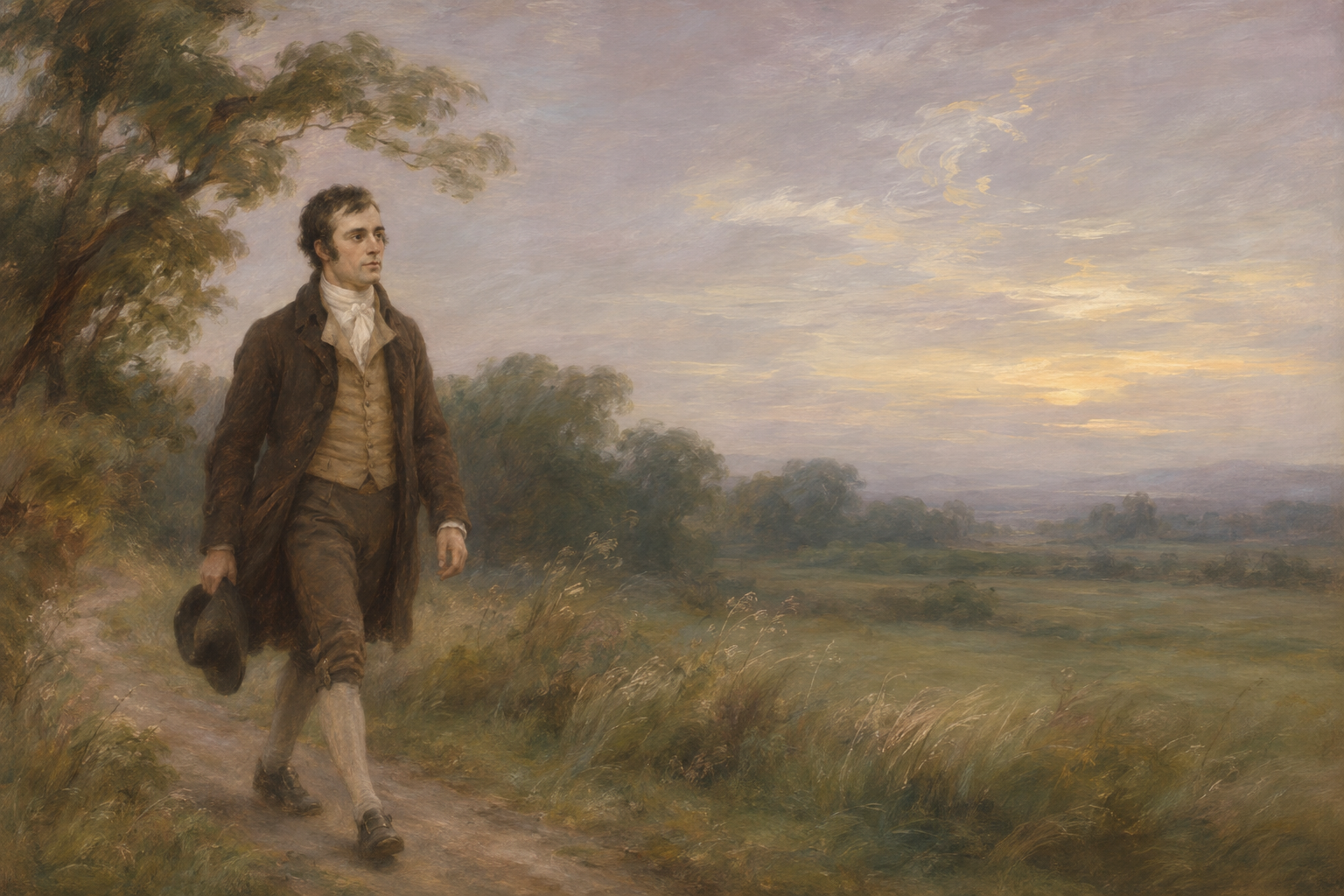
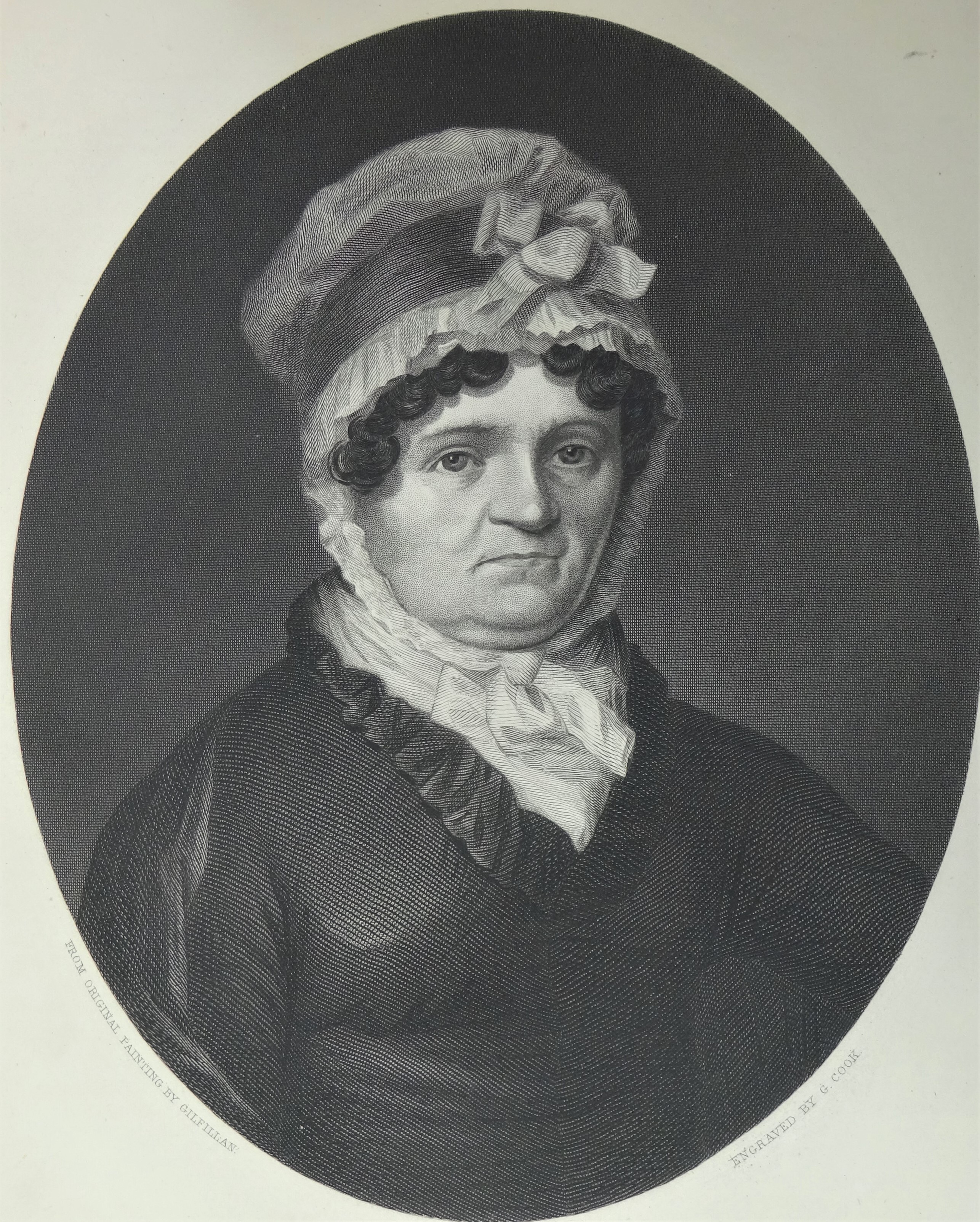
An imagined portrait of William Burnes in later life. AI-assisted illustration · AIRT
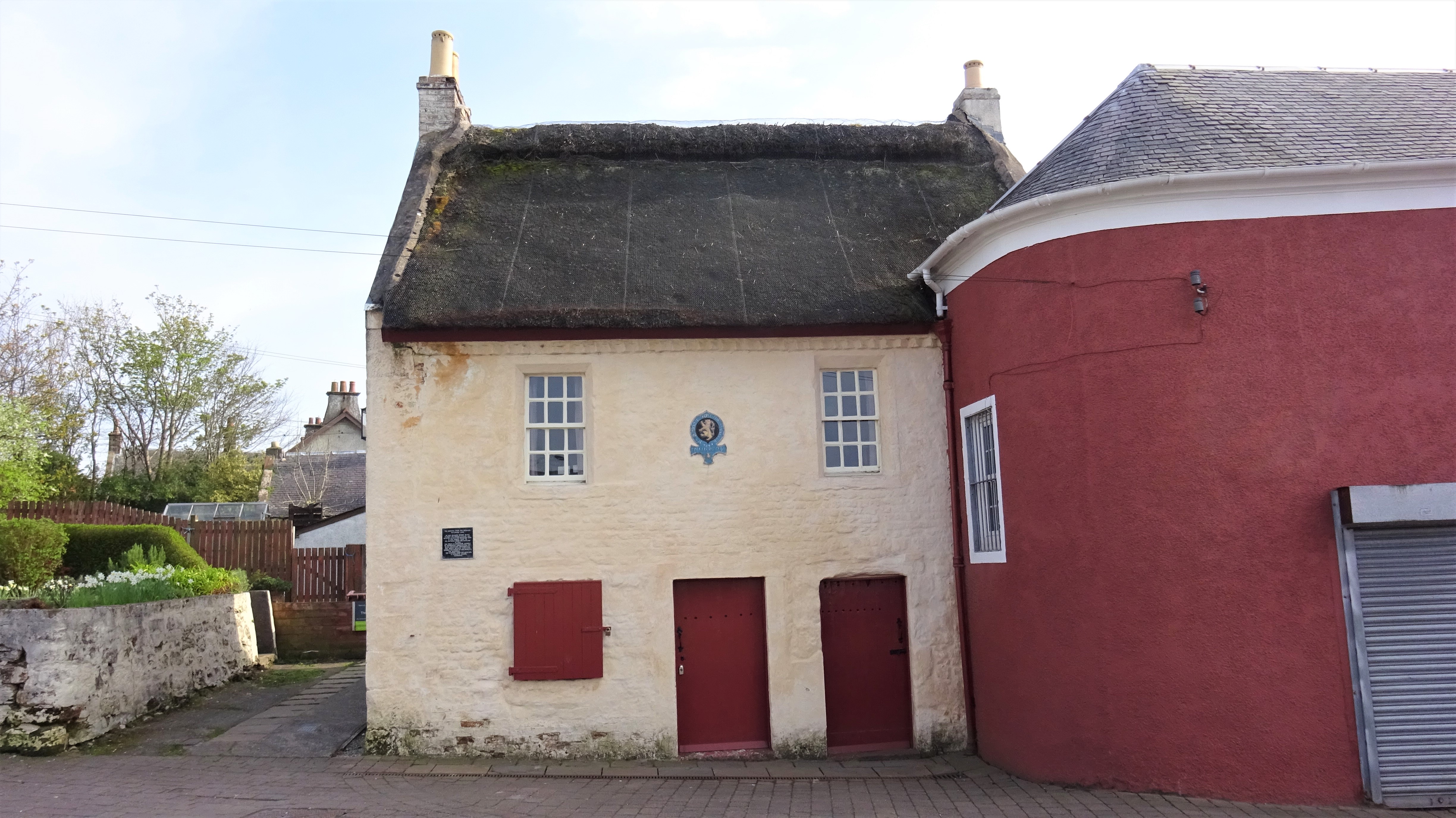
William Burnes, the father of Robert Burns, came from Kincardineshire in north-east Scotland. The National Trust for Scotland gives his birth date as 11 November 1721. On his way south he worked as a gardener in Edinburgh before settling in Ayrshire.
William's son Gilbert remembered hearing about the difficulties of those early working years. Even when employment was uncertain, William tried to send money to support his own father. He eventually made a living as a gardener near Ayr and was able to set up a household of his own.
He took land at Alloway, built a house and married Agnes Broun in December 1757. Their first child, Robert, was born in 1759. As the family grew, William taught his children. They remembered his lessons, the borrowed books and their conversations as they worked on the farm. Robert learnt from his father and had to work hard on the farm.
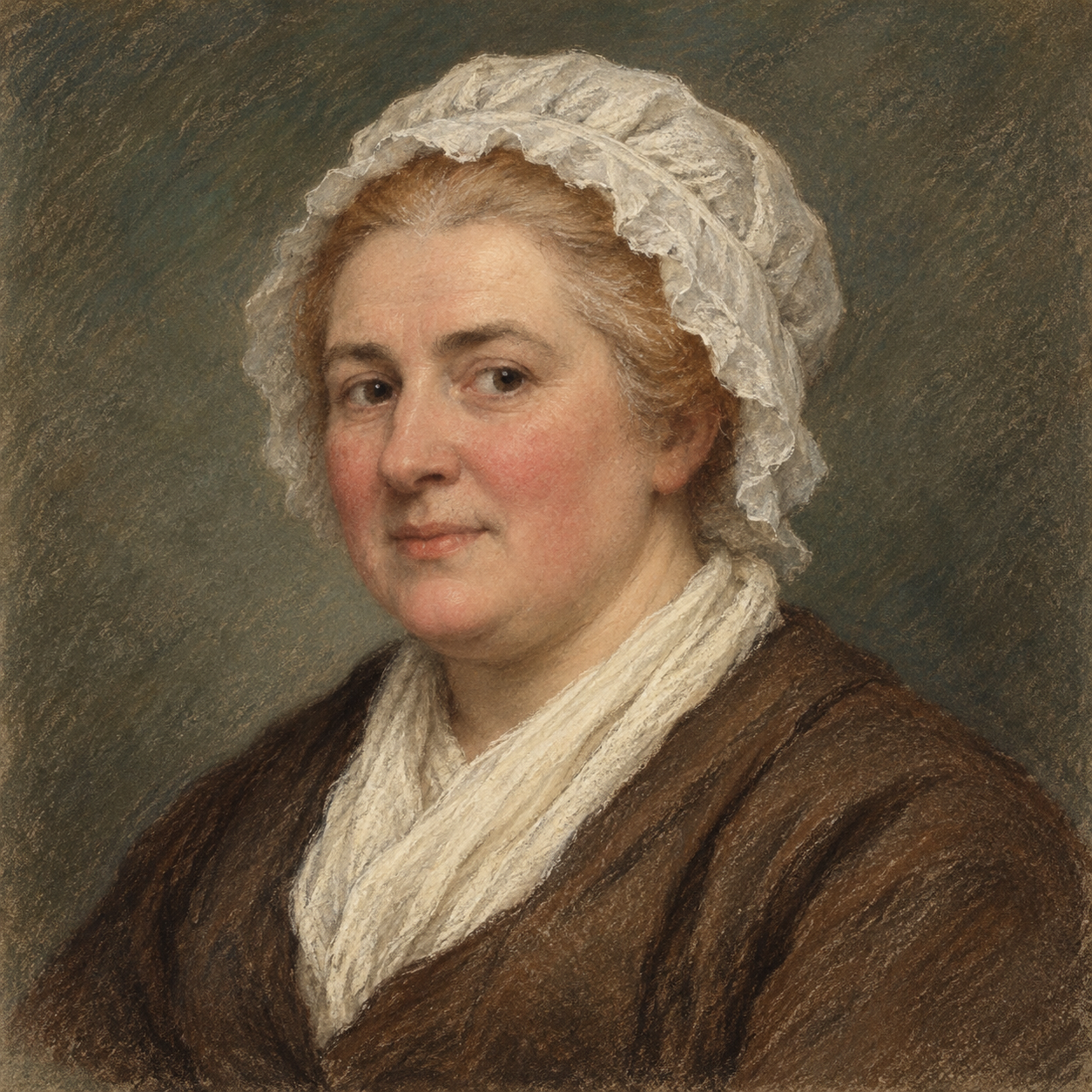
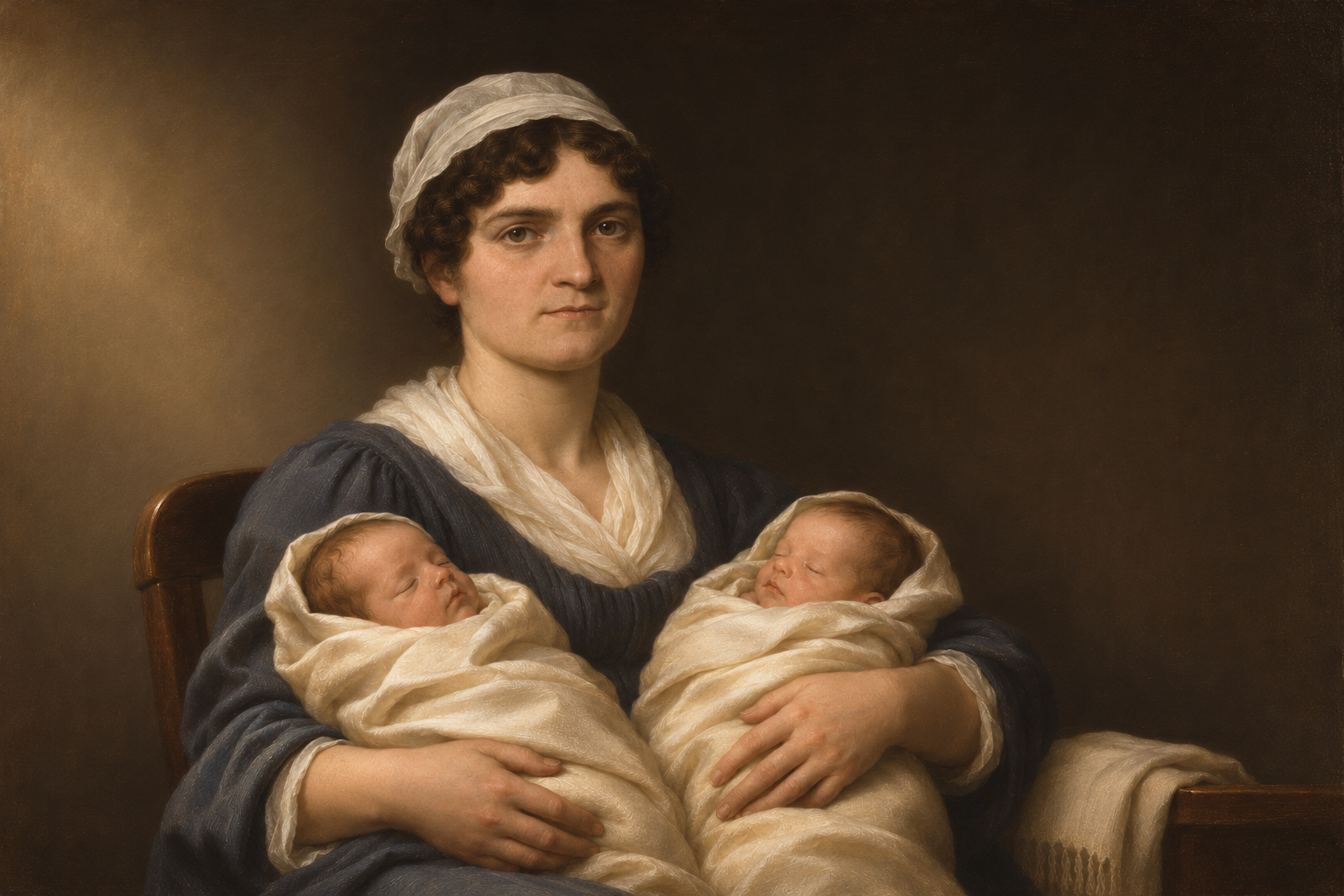
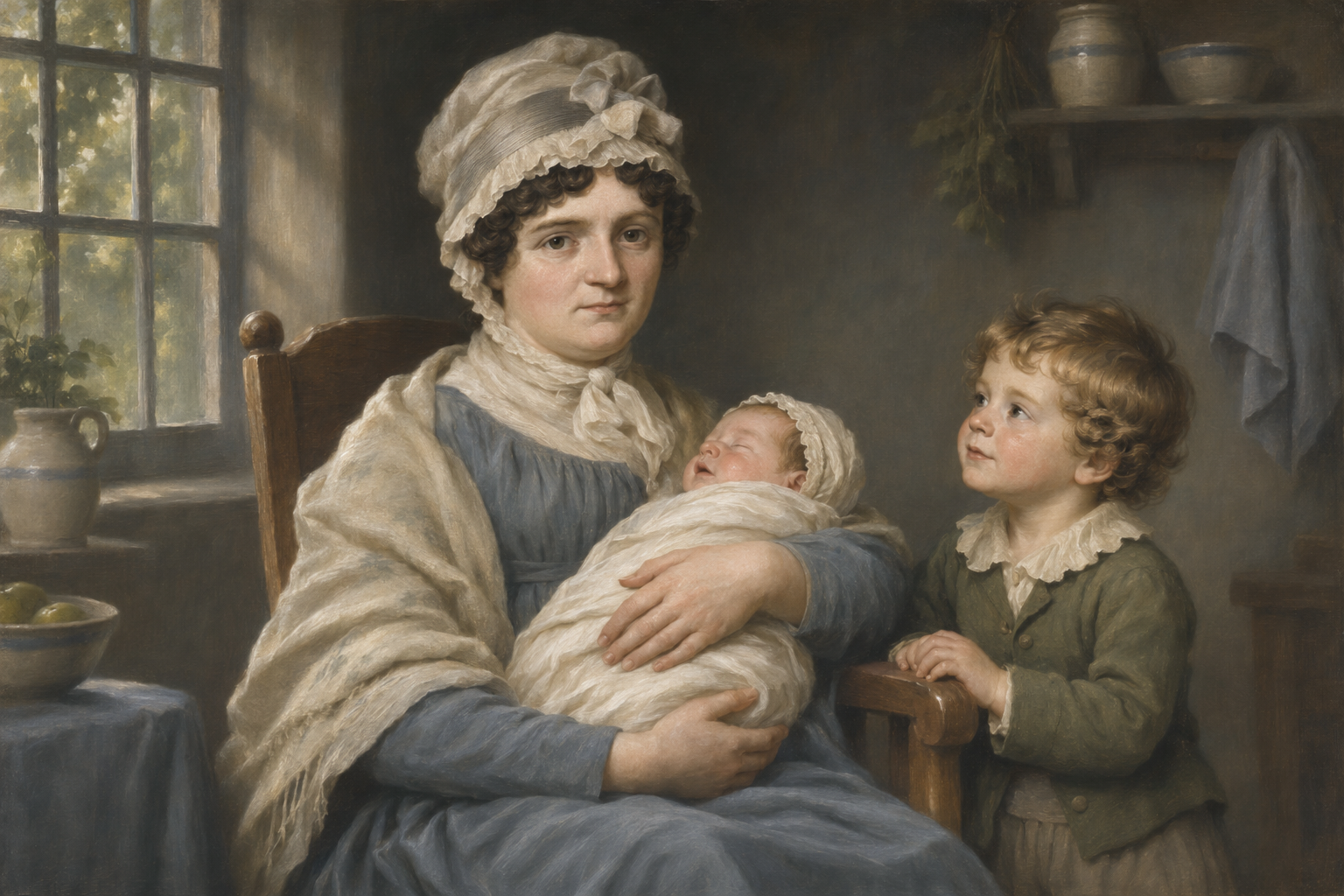
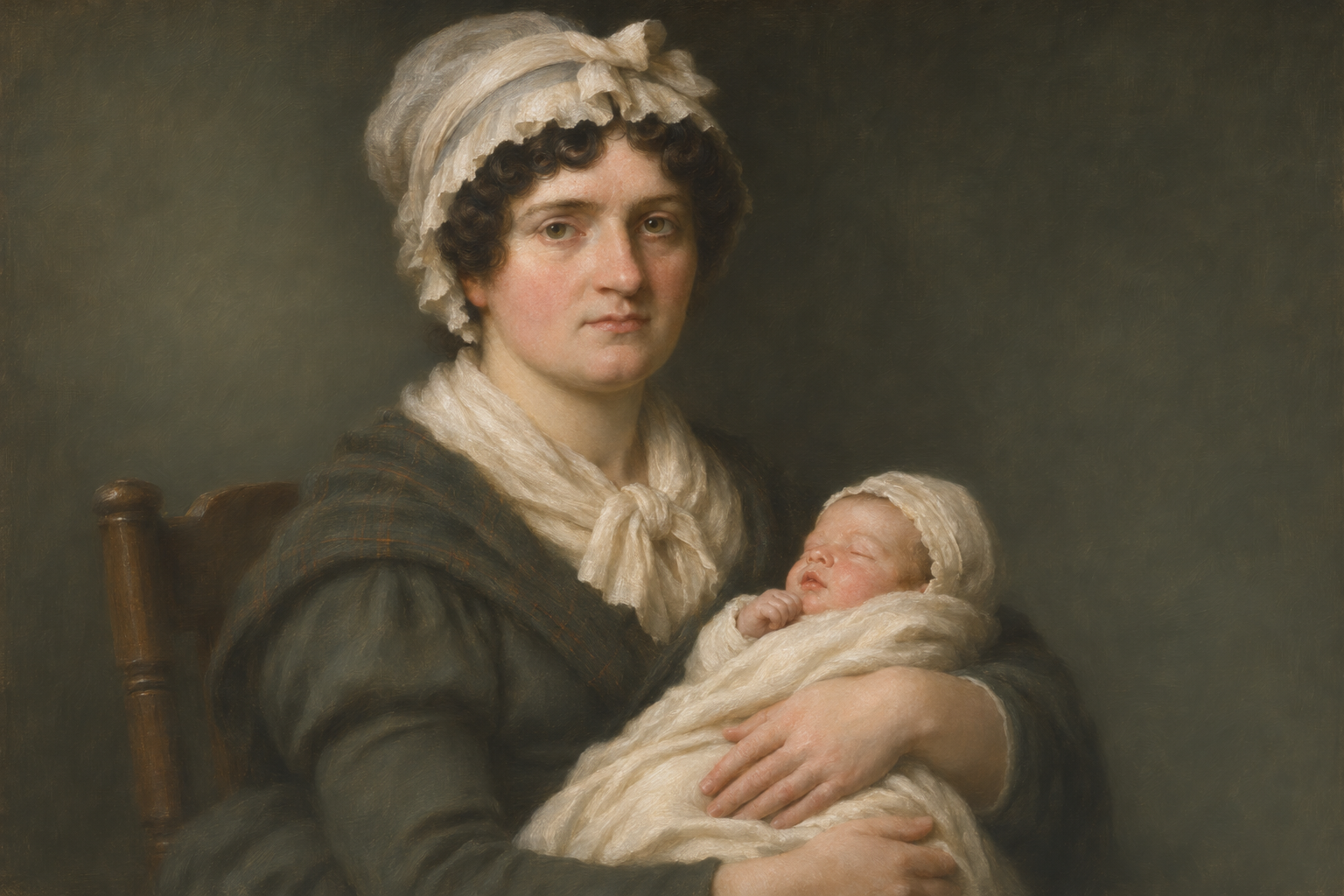
An imagined portrait of Agnes Broun in later life. AI-assisted illustration · AIRT
Agnes Broun, Robert Burns’s mother, came from a farming family in Carrick, south Ayrshire. Charles Rogers’s later family history gives her birth as 17 March 1732 and names her father as Gilbert Broun of Craigenton. Her future husband, William Burnes, was a gardener who had come south from Kincardineshire.
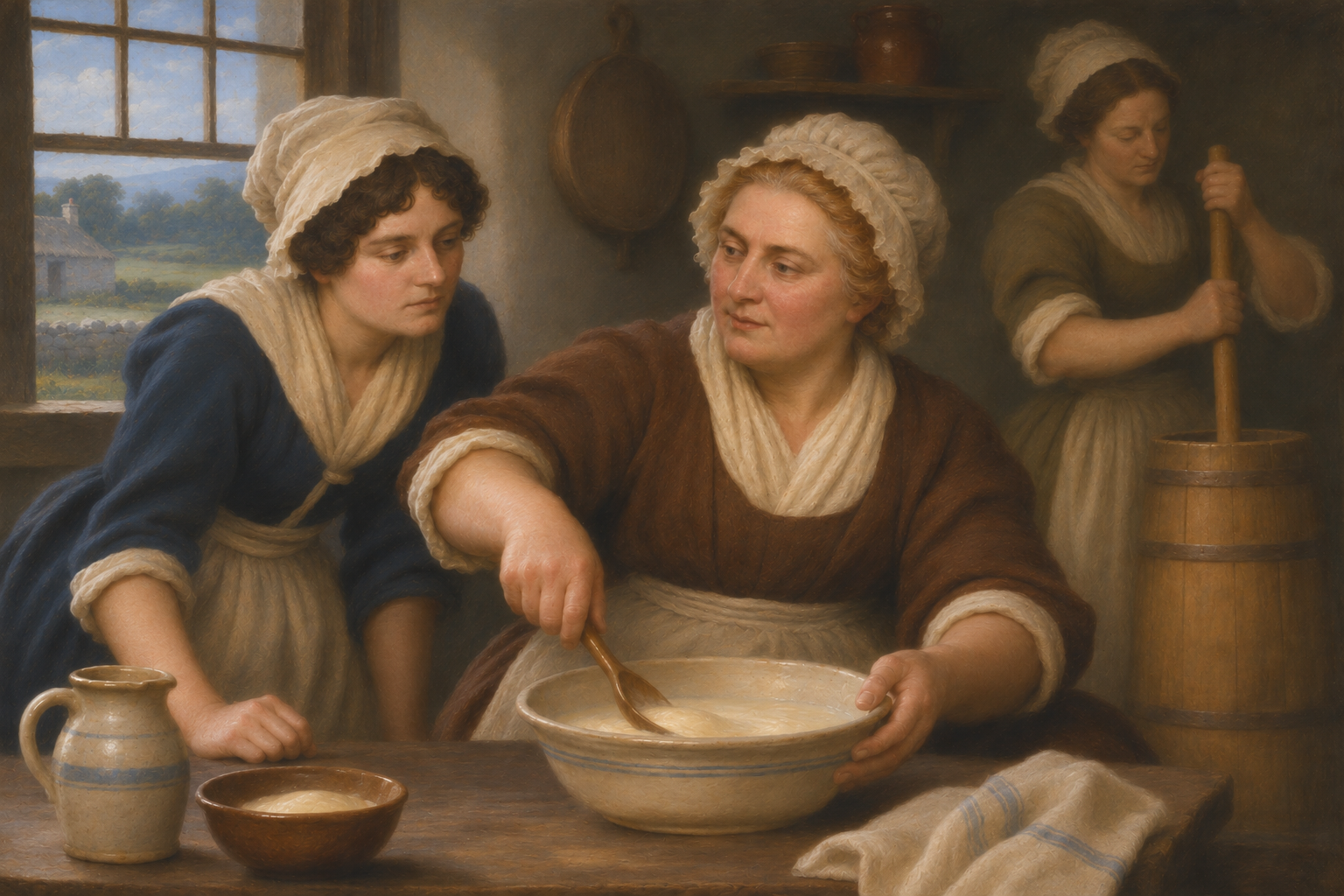
When Agnes married William in December 1757, she moved into the home he had built at Alloway. Robert, their first child, was born there in January 1759. William worked at nearby Doonholm while Agnes managed the household and a small dairy of two or three cows.
The family later moved to larger farms. When Robert was preparing to set up his own household at Ellisland, his wife Jean learnt dairy work from Agnes and Robert’s sisters.
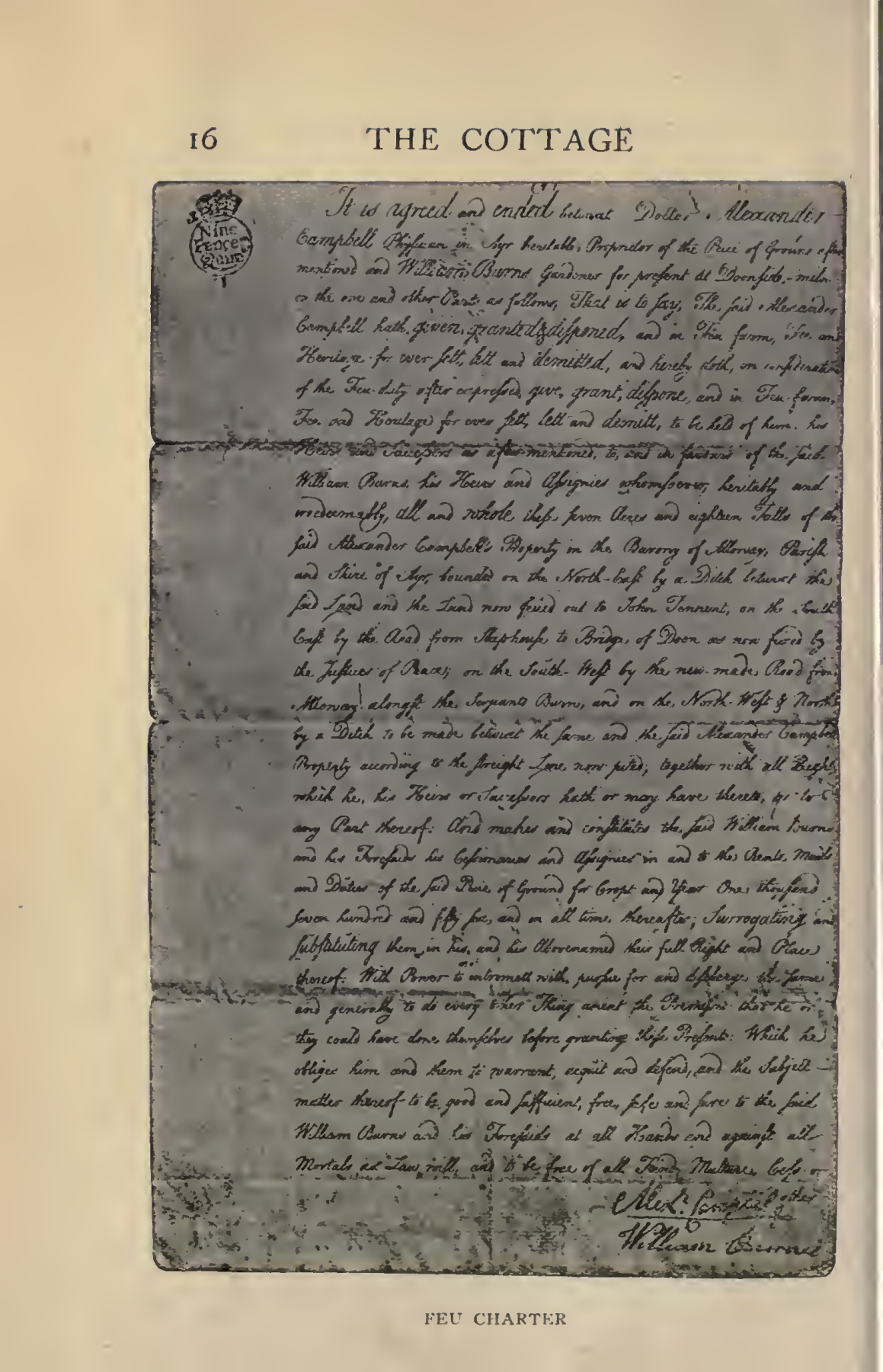
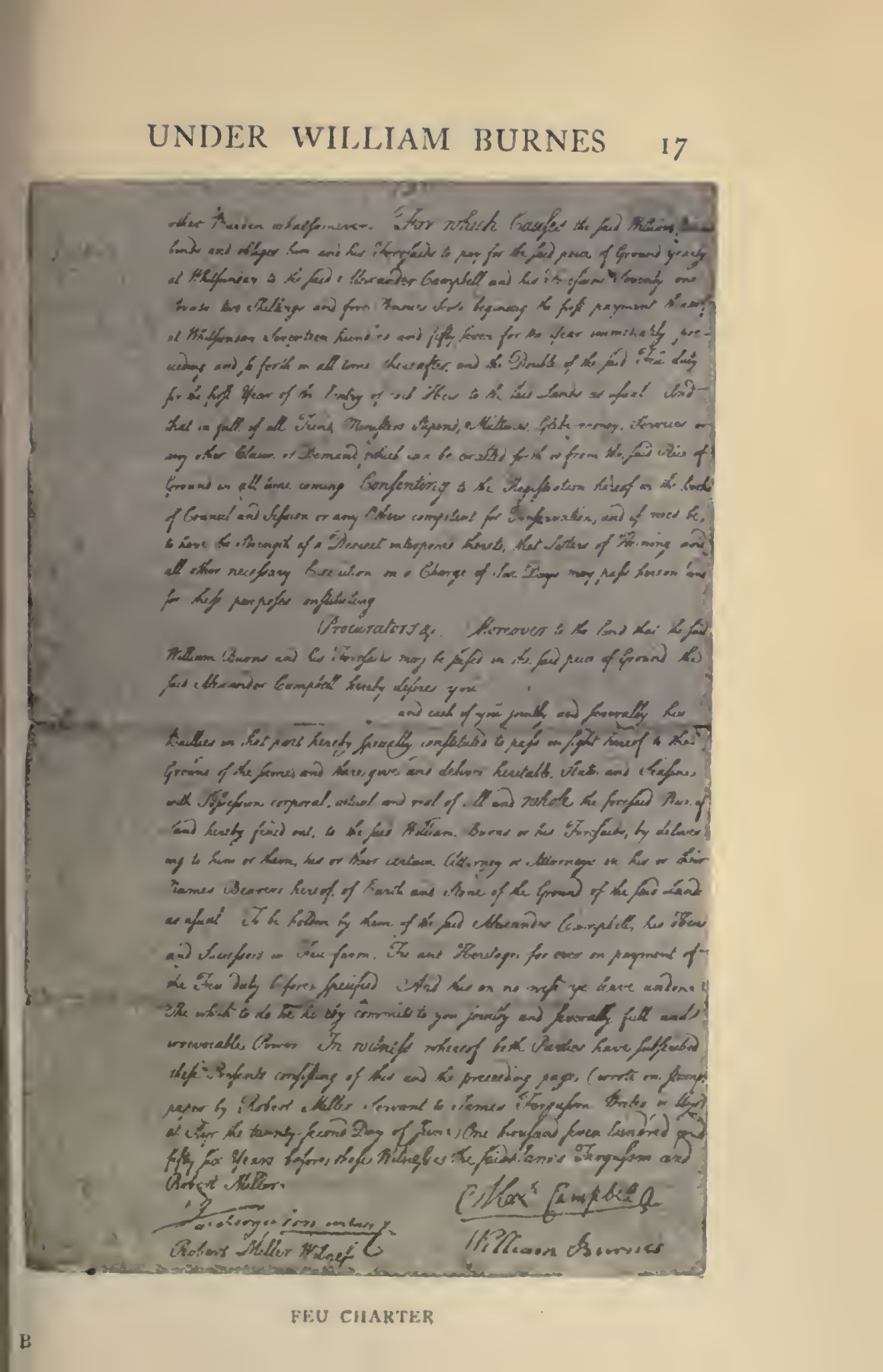
Open full imageWilliam Burnes’s 1756 feu contract for the cottage ground, reproduced in James M’Bain’s Burns’ Cottage. Feu contract, 1756 · reproduced in M’Bain, Burns’ Cottage · SourceView related pagesOpen full imageThe second page of the feu contract, reproduced in M’Bain’s Burns’ Cottage. Feu contract, 1756 · reproduced in M’Bain, Burns’ Cottage · Source
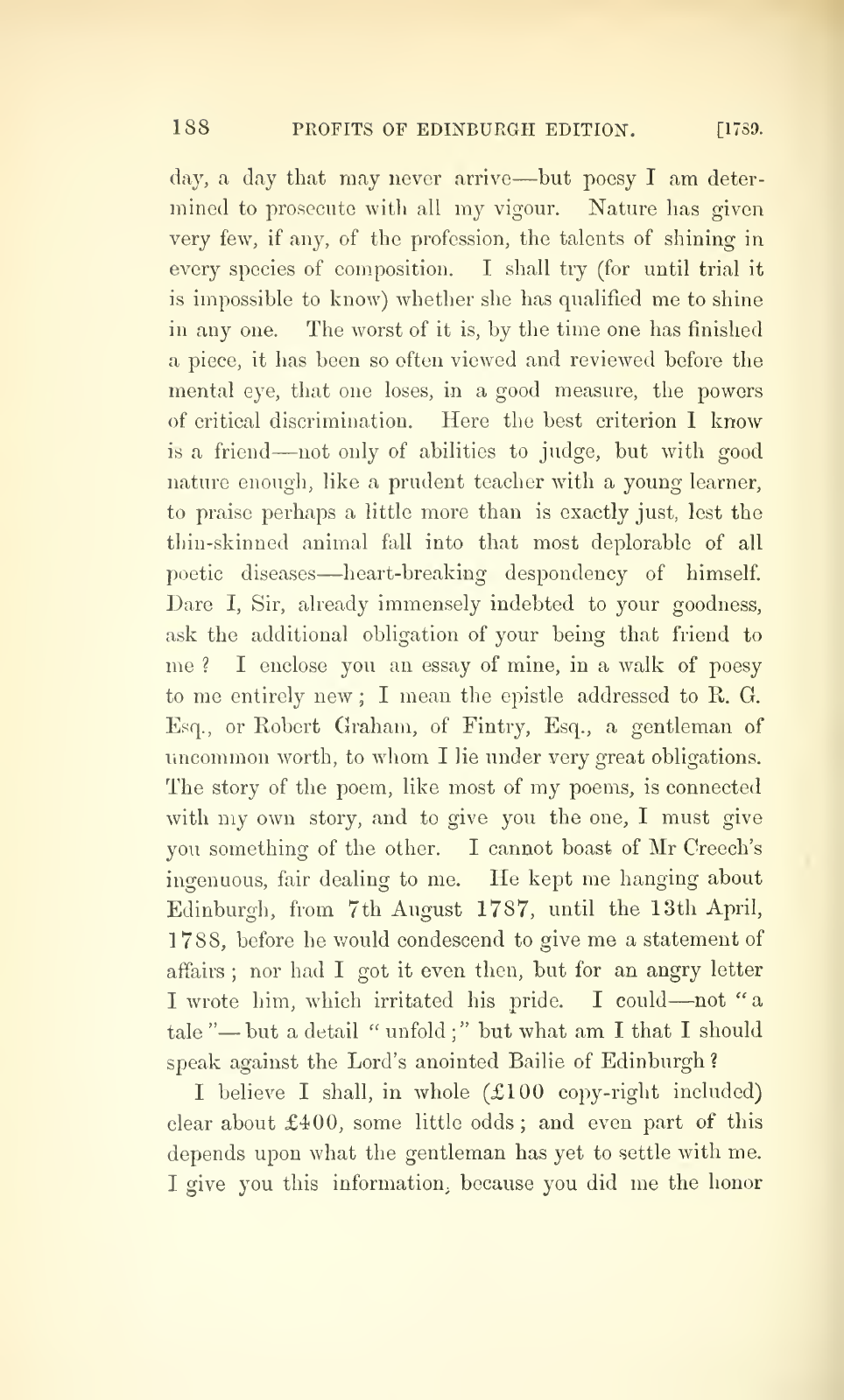
William Burnes acquired land at Alloway before marrying Agnes Broun and starting the family into which Robert Burns was born. A historical account of the cottage dates the grant to 22 June 1756. It describes Dr Alexander Campbell, a physician in Ayr, granting William a little over seven Scots acres while he was working as a gardener at Doonside Miln.
William called the holding New Gardens. He built his cottage on its eastern boundary, facing the road. He could set up a home there while continuing to earn his living as a gardener.
He married Agnes in December 1757, and Robert was born at the cottage in January 1759. James Currie's account describes the family working a small holding and keeping a few cows. By the time Robert was born, his parents had a house of their own, land to cultivate and animals to look after.
Open full imageAn imagined portrait of William Burnes and Agnes Broun around the time of their marriage. AI-assisted illustration · AIRT
In December 1757 William Burnes and Agnes Broun were preparing to marry. The Ayr parish transcript records the proclamation of their banns on 3 December, naming William as a gardener living in Ayr and Agnes as a resident of Maybole. Banns publicly announced that a couple intended to marry. William and Agnes were still living apart as they prepared to set up home together.
William had already secured a small holding near Alloway. In the family account published by James Currie, he built the house himself and planned to use the land as a nursery. He later took work as gardener and overseer at Doonholm while continuing to live in his own house.
Agnes managed the growing household and a dairy of two or three cows. Their eldest child, Robert, was born in January 1759. The cottage beside the Ayr–Maybole road was Robert’s first home.
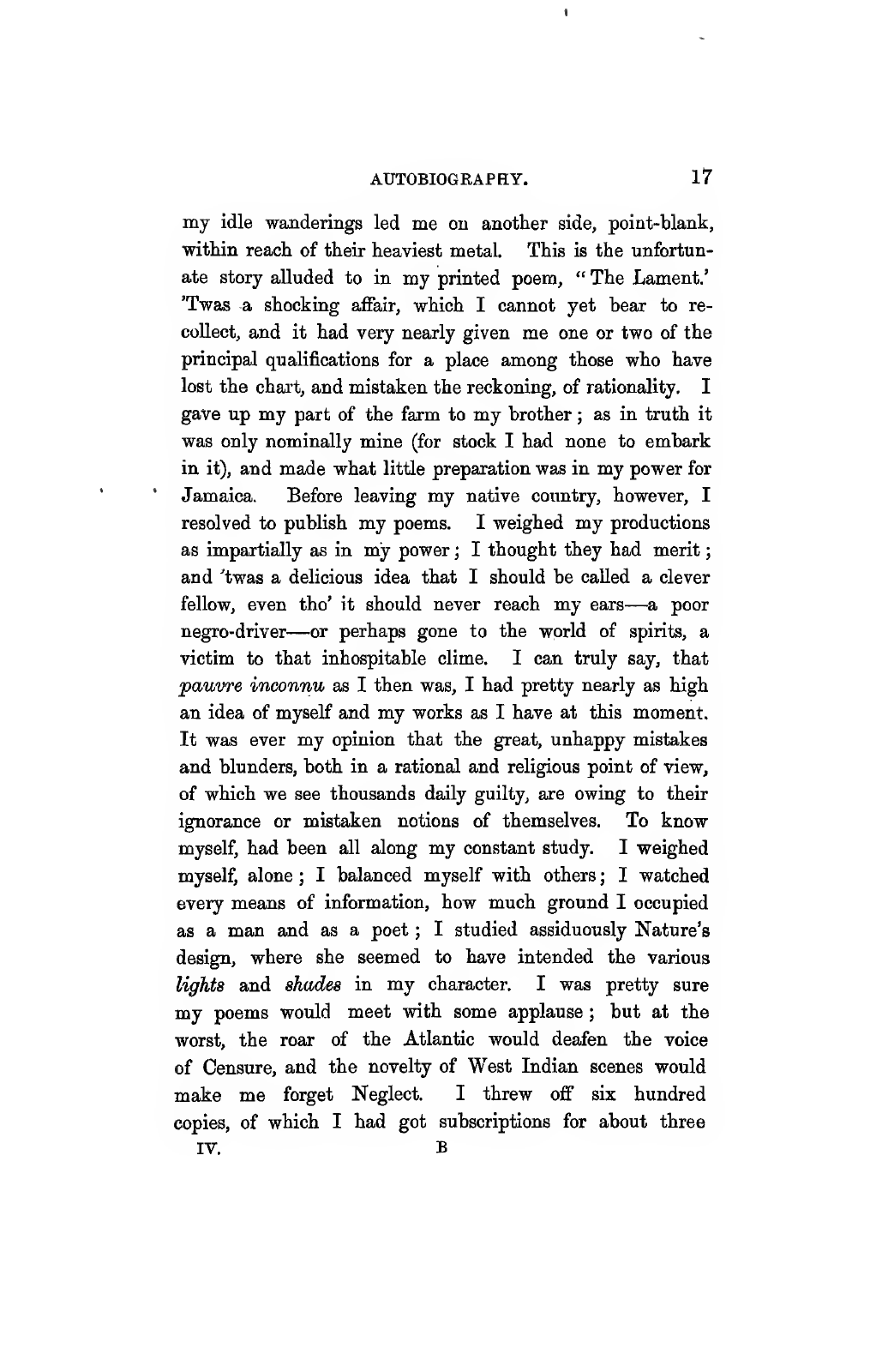
Open full imageWilliam and Agnes at their Alloway home, in an imagined scene of their early married life. AI-assisted illustration · AIRT
William Burnes and Agnes Broun married in December 1757 and made their home at Alloway, near Ayr. William had taken seven acres from Dr Campbell, an Ayr physician, intending to become a nurseryman and gardener. James Currie's family account describes him building the house with his own hands.
Mr Ferguson, who had bought the nearby estate of Doonholm, soon employed William as gardener and overseer. William continued to live in his own house, while Agnes managed the household and a dairy of two or three milking cows. They made their living from William’s wages, Agnes’s work at home and the produce of their small holding.
Robert, born in 1759, was their first child. As the family grew, William helped arrange schooling for the children and took part in teaching them himself. The Alloway household was their home until the move to Mount Oliphant in 1766, when farming placed greater demands on the children's labour.
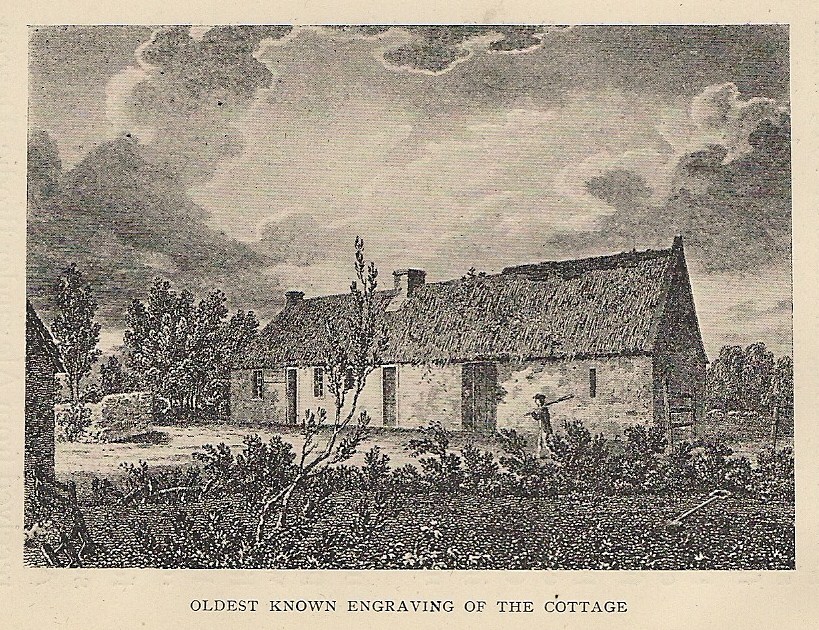
An engraving of Burns Cottage dated 1805 in M’Bain’s illustration list, from the period when the cottage served as an inn. Engraving, 1805 · M’Bain, Burns’ Cottage · Wikimedia Commons · Source · Licence
Robert Burns was born at Alloway, near Ayr, on 25 January 1759. He was the first child of William Burnes and Agnes Broun, who had married in December 1757. Their home stood beside the road from Ayr to Maybole, on land William had taken for a small holding and a proposed plant nursery.
William worked as a gardener and overseer at nearby Doonholm. Agnes managed the family and a dairy of two or three milking cows. When Robert’s younger brother Gilbert was born, gardening, tending the cows and looking after the children were part of the daily work at Alloway.
Robert attended school at Alloway Mill, and William later joined neighbouring families in employing John Murdoch as their teacher. The brothers learnt reading, writing and grammar before the family moved to Mount Oliphant in 1766. There the boys had more work to do on the farm.
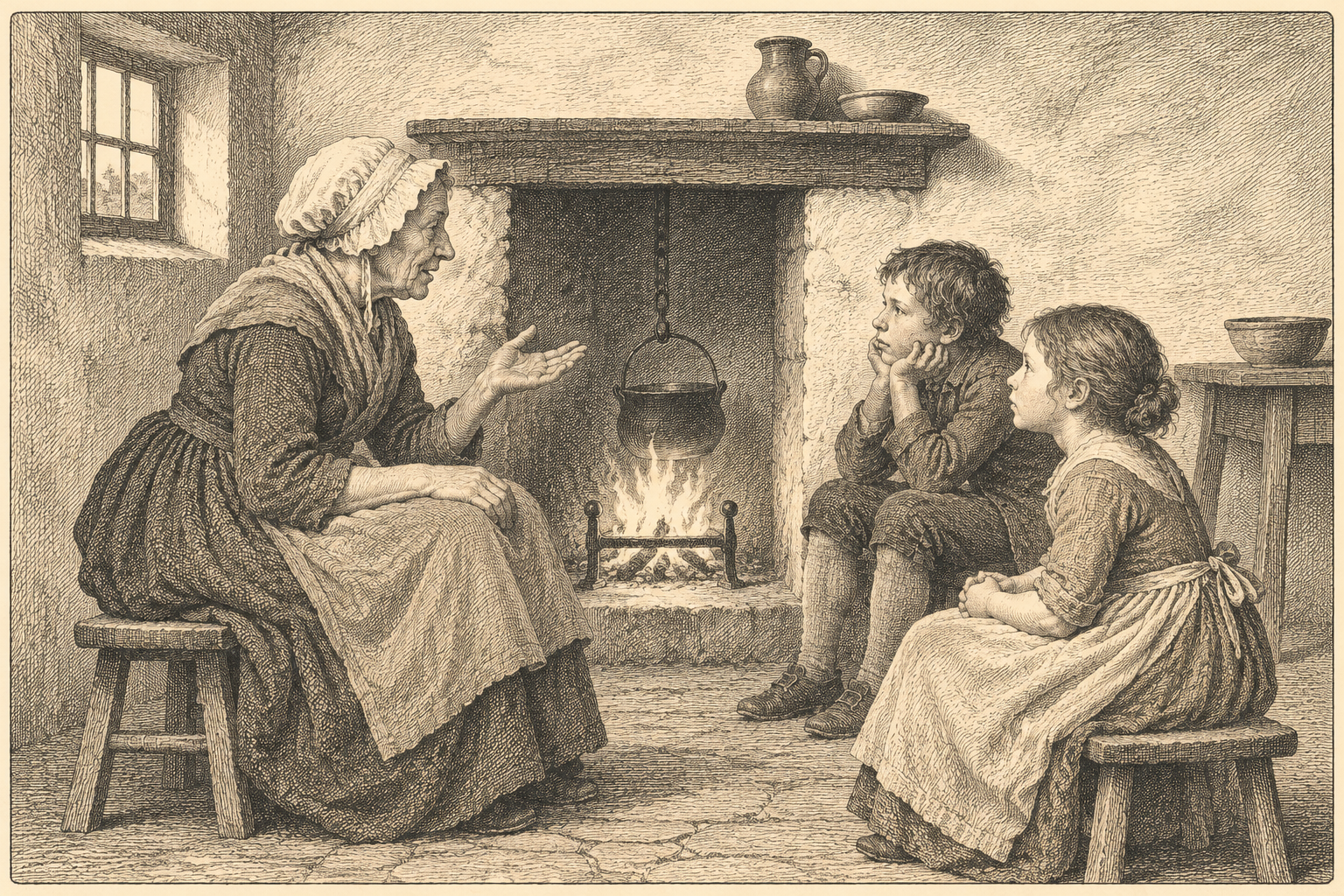
Open full imageAn imagined scene of storytelling in an eighteenth-century Scottish household. AI-assisted illustration · AIRT
An older woman living with the Burns family supplied Robert with a store of tales and songs about ghosts, witches, fairies and other supernatural beings. He remembered her contribution when he wrote an account of his life to the physician and novelist John Moore on 2 August 1787. Her storytelling, he said, had helped awaken his poetry.
Burns placed that memory alongside his school lessons and early reading. He recalled the pleasure of an Addison hymn and a passage from The Vision of Mirza, both encountered in a school anthology. Spoken stories and printed literature were already giving him different kinds of enjoyment in language.
The woman's tales also left fears that lasted into adulthood. Burns told Moore that he sometimes watched suspicious places closely during night walks, although he regarded himself as sceptical about supernatural matters. He could reason against the fears and still feel their force. When Burns wrote about his early education, he gave the unnamed woman a place alongside his teachers.
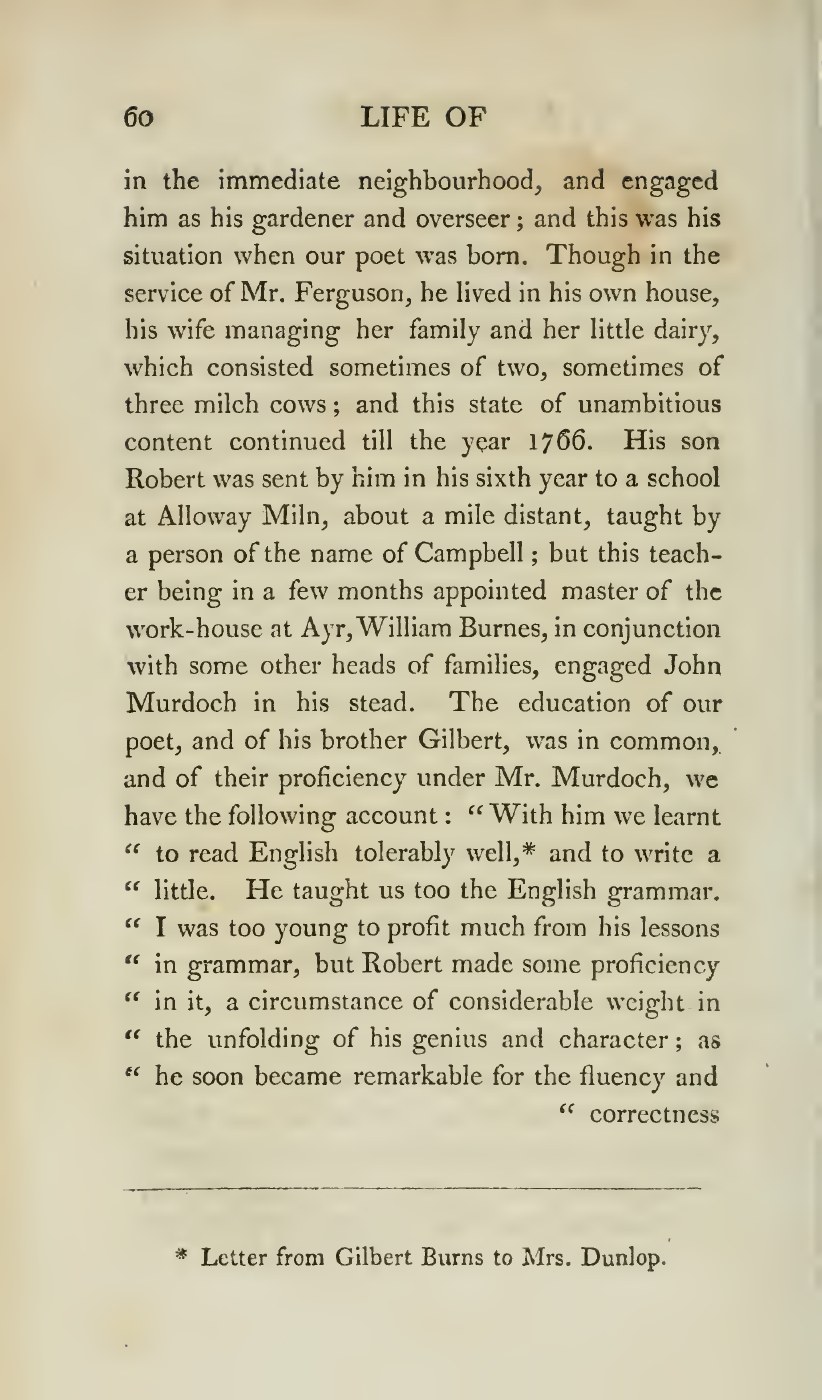
Open full imageThe family dairy and John Murdoch’s teaching, described in Currie’s 1800 Life, page 60. Currie · 1800 · Source
Robert Burns’s first schooling took place near his family’s home at Alloway. He attended a school at Alloway Mill; after its teacher left for a post in Ayr, his father William Burnes and four neighbours engaged John Murdoch to teach their children. The employers took turns boarding the young teacher and promised to make up his salary if the pupils’ payments fell short.
Robert and his younger brother Gilbert learned to read and write and studied English grammar. Murdoch later described exercises that required them to understand language closely: arranging verse in ordinary prose order, finding alternative expressions and supplying words left understood.
William shared that insistence on understanding. When the family moved to Mount Oliphant and farm work limited attendance, teaching continued at home. Gilbert remembered arithmetic lessons by candlelight and conversations with their father during working hours. Schooling and family labour repeatedly had to share the children’s time.
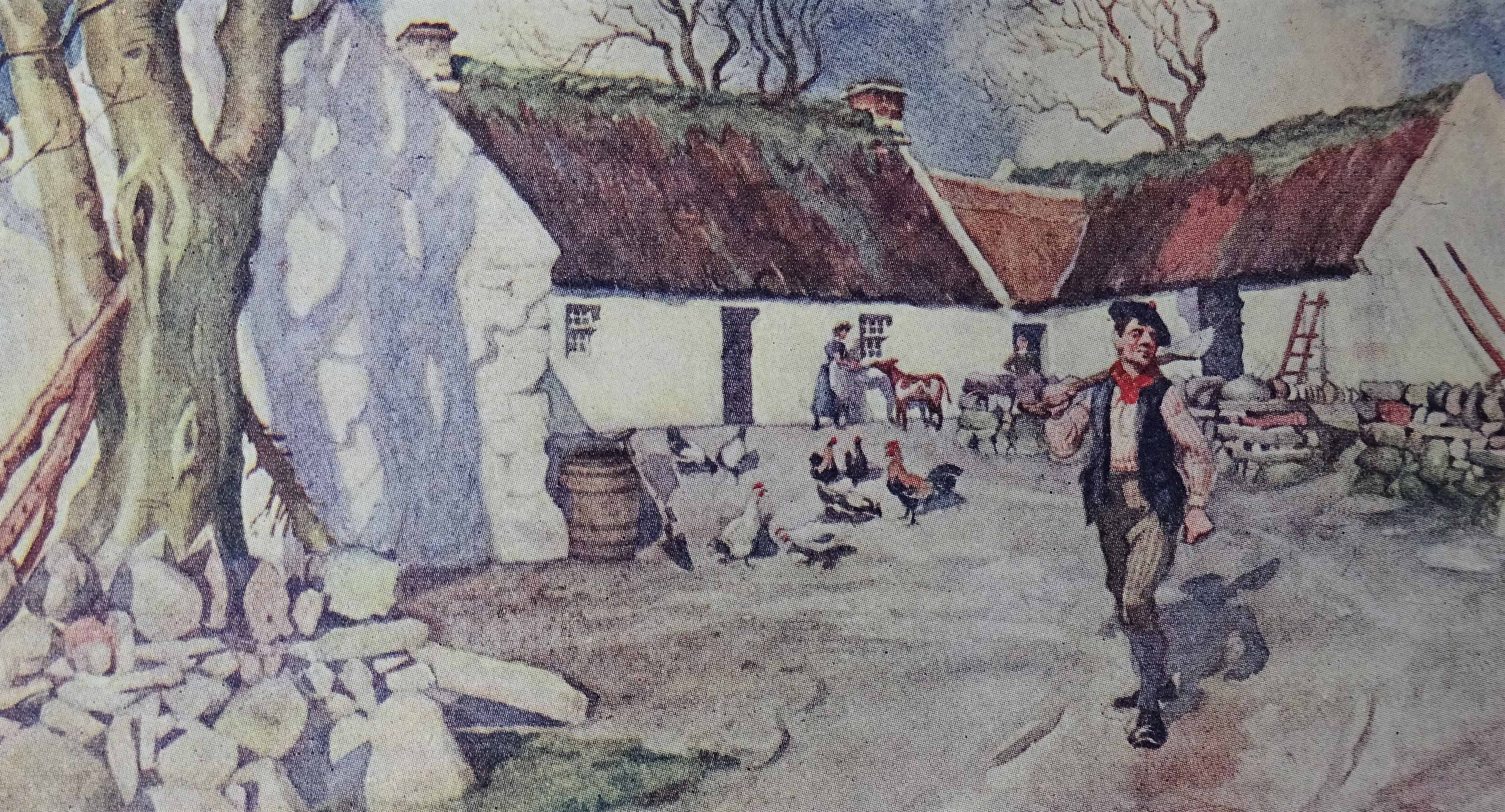
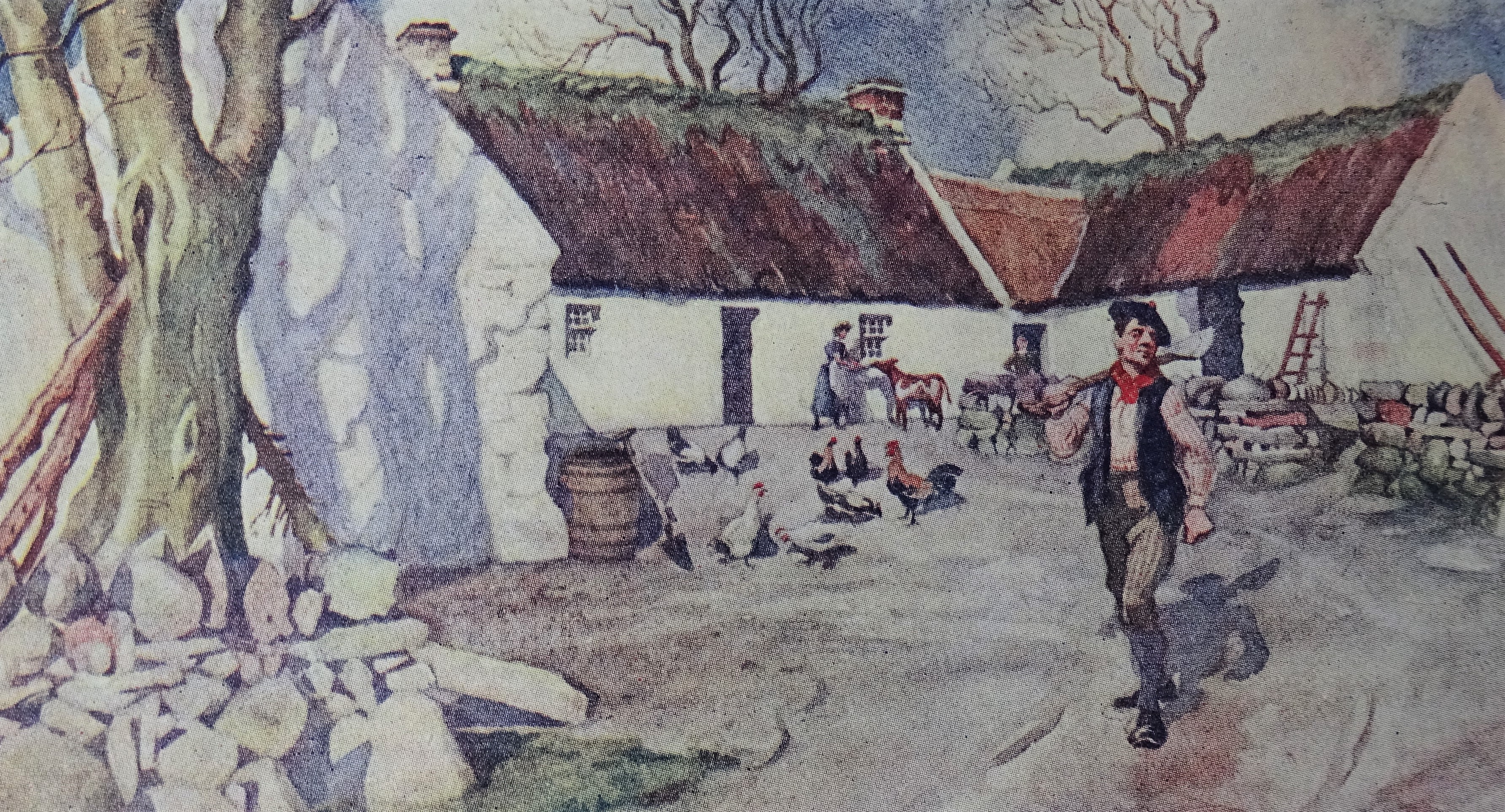
Open full imageMount Oliphant imagined in Burns’s time, by Monro S. Orr, published in Auld Ayrshire of Burns, 1906. Monro S. Orr · 1906 · Licence · Source
William Burnes moved his family to Mount Oliphant in 1766. His sons Robert and Gilbert were still children, and the farm increasingly needed their help. Gilbert later recalled that the rent was £40 a year for the first six years, rising to £45 afterwards. William borrowed £100 from his employer, Mr Ferguson, to stock it.
The move altered the children's education. After their teacher John Murdoch left the district, William taught arithmetic on winter evenings. He borrowed books and talked with his sons as they worked beside him. Schooling had to fit around the farm: later, Robert and Gilbert attended Dalrymple school in alternate weeks.
Robert remembered ploughing while Gilbert drove the team, and the brothers threshing corn together. His account of the family's later difficulties describes reduced spending and threatening letters from the estate factor. The work at Mount Oliphant also limited the time Robert could give to reading.
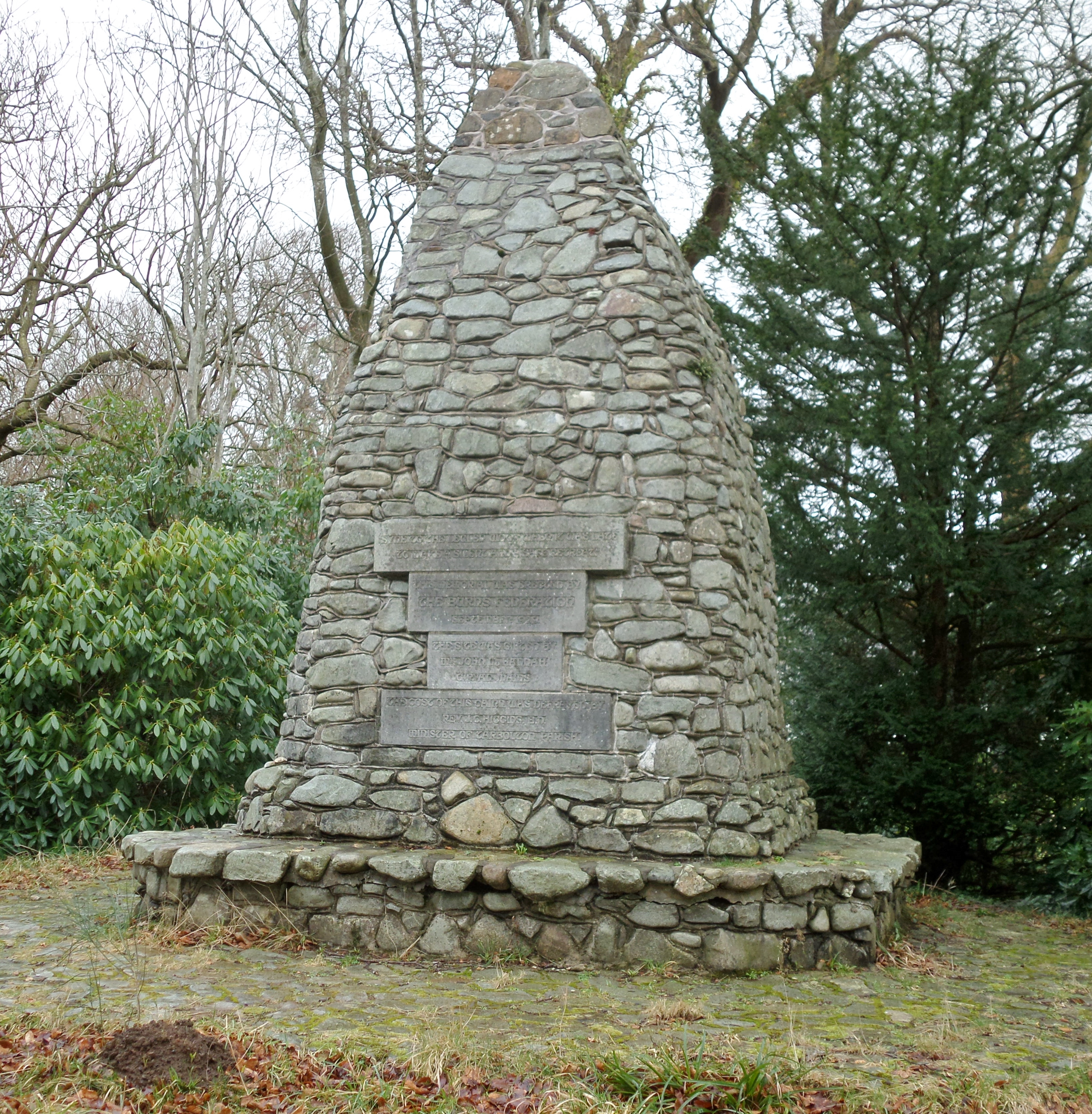
Open full imageMemorial to William Wallace and Robert Burns at Leglen Wood, photographed in 2017. Roger Griffith (Rosser1954), CC BY-SA 4.0. · Licence · Source
A book about William Wallace, the Scottish leader who fought against Edward I, sent the young Robert Burns walking to Leglen Wood. In a letter to Frances Dunlop in November 1786, he remembered travelling about six miles on a summer Sunday, the one day he could spare. Lines in the story named the wood as a refuge, and he explored its hollows imagining where Wallace might have sheltered.
Books reached him through people nearby. His brother Gilbert recalled that their teacher John Murdoch lent Robert a life of Hannibal; the Wallace book came from the blacksmith who shod the family’s horses. Robert remembered both as powerful early reading experiences.
At Leglen he was already trying to write verse and wished he could make a song worthy of his hero. Years later he told Dunlop the story while thanking her for ordering his poems. The date of the boyhood walk is uncertain. As Burns recalled it, reading about Wallace had led him to explore a place he knew of from the book and to think of writing a song himself.
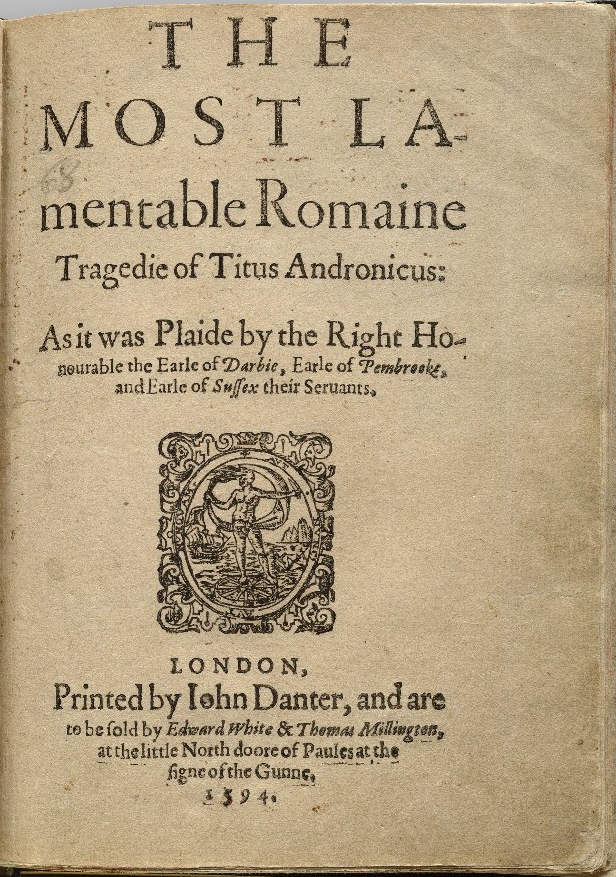
Open full imageThe title page of Titus Andronicus, printed in London in 1594. Folger Shakespeare Library · CC BY-SA 4.0 · Licence · Source
John Murdoch brought Shakespeare's Titus Andronicus to the Burns family as a farewell gift. He had taught Robert and Gilbert to read and write, and was preparing to leave for Carrick. During his visit he began reading the play aloud.
Gilbert later remembered the whole family becoming distressed at the account of a woman whose hands and tongue had been cut off. They asked Murdoch to stop. William Burnes observed that there was little point in keeping a play they could not bear to hear through. Robert said he would burn it if it were left behind.
William was about to rebuke his son for responding so ungratefully to a teacher's gift. Murdoch intervened: he welcomed their sensitivity and left a comedy, The School for Love, instead. Gilbert preserved the episode as a memory of his brother's childhood character. Murdoch also left the family an English grammar.
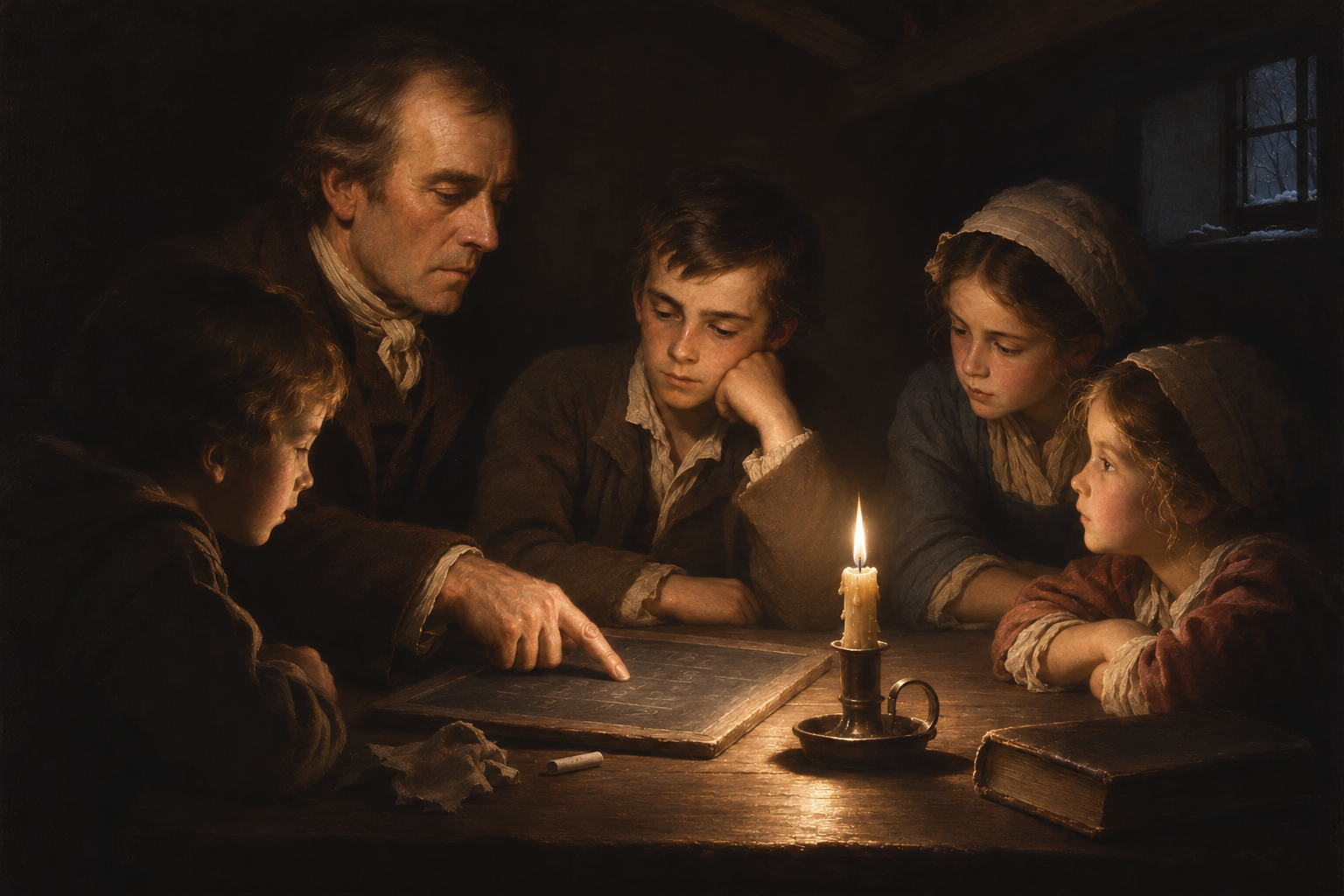
Open full imageAn imagined candlelit lesson with William Burnes and his children. AI-assisted illustration · AIRT
At Mount Oliphant, Robert Burns and his brother Gilbert helped with the farm while their father, William Burnes, found time to teach them. Gilbert later remembered arithmetic lessons on winter evenings by candlelight. The two eldest girls in the family learned at home too, and an uncle who lived with the family acquired some arithmetic beside the same winter candle.
William also taught through conversation. Gilbert remembered him speaking to the boys as though they were grown men, explaining things while they worked together. He borrowed a geographical grammar and obtained works on astronomy and natural history through an Ayr book society.
Robert read eagerly. An uncle’s mistaken purchase of a collection of accomplished writers’ letters gave him examples of prose that encouraged his own letter-writing. When William could arrange further schooling, the brothers attended Dalrymple in alternate weeks, so that one could be at home to work while the other was at school.
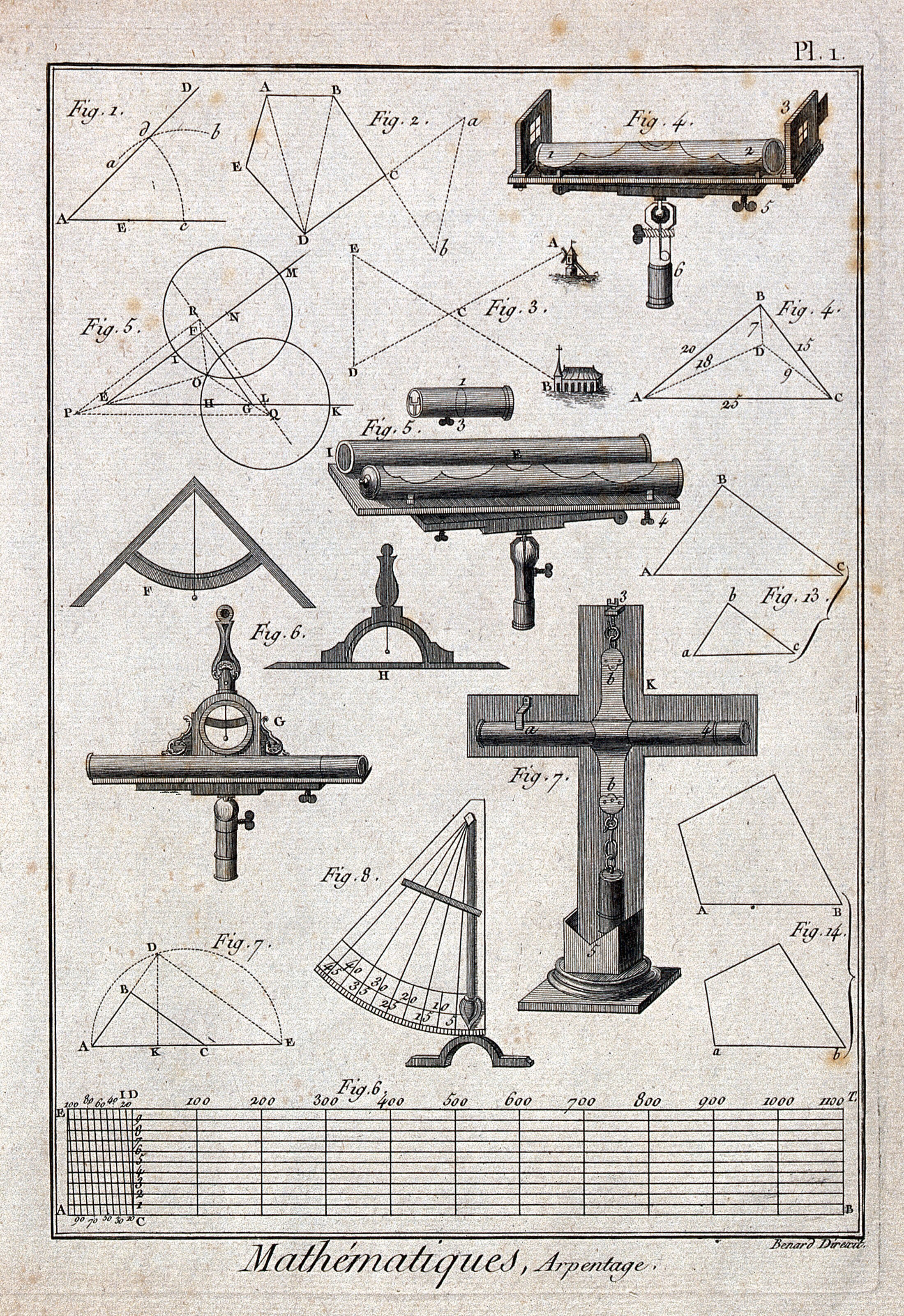
Open full imageSurveying instruments and geometrical diagrams, engraved by Benard. Benard / Wellcome Collection - Public domain · Licence · Source
Robert Burns spent a summer studying practical mathematics at Kirkoswald. His brother Gilbert remembered him lodging with one of their mother's brothers while attending the parish school. Surveying gave geometry a use in measuring land; Burns also recalled learning to calculate areas and volumes and to construct sundials.
Writing to John Moore in 1787, Burns described the district as a smuggling coast. He sometimes met people engaged in the contraband trade and encountered drinking and noisy quarrels unfamiliar to him. His account moves between mathematical progress and a wider acquaintance with people.
Towards the end of the stay, he recalled becoming preoccupied with a girl who lived beside the school. The friendships Burns made that summer gave him a chance to carry on writing after school. He persuaded several schoolfellows to continue a literary correspondence after he went home. Reading their letters, keeping copies of his own and studying published examples helped him practise composition. Those exchanges extended the school friendships into a sustained exercise in writing.
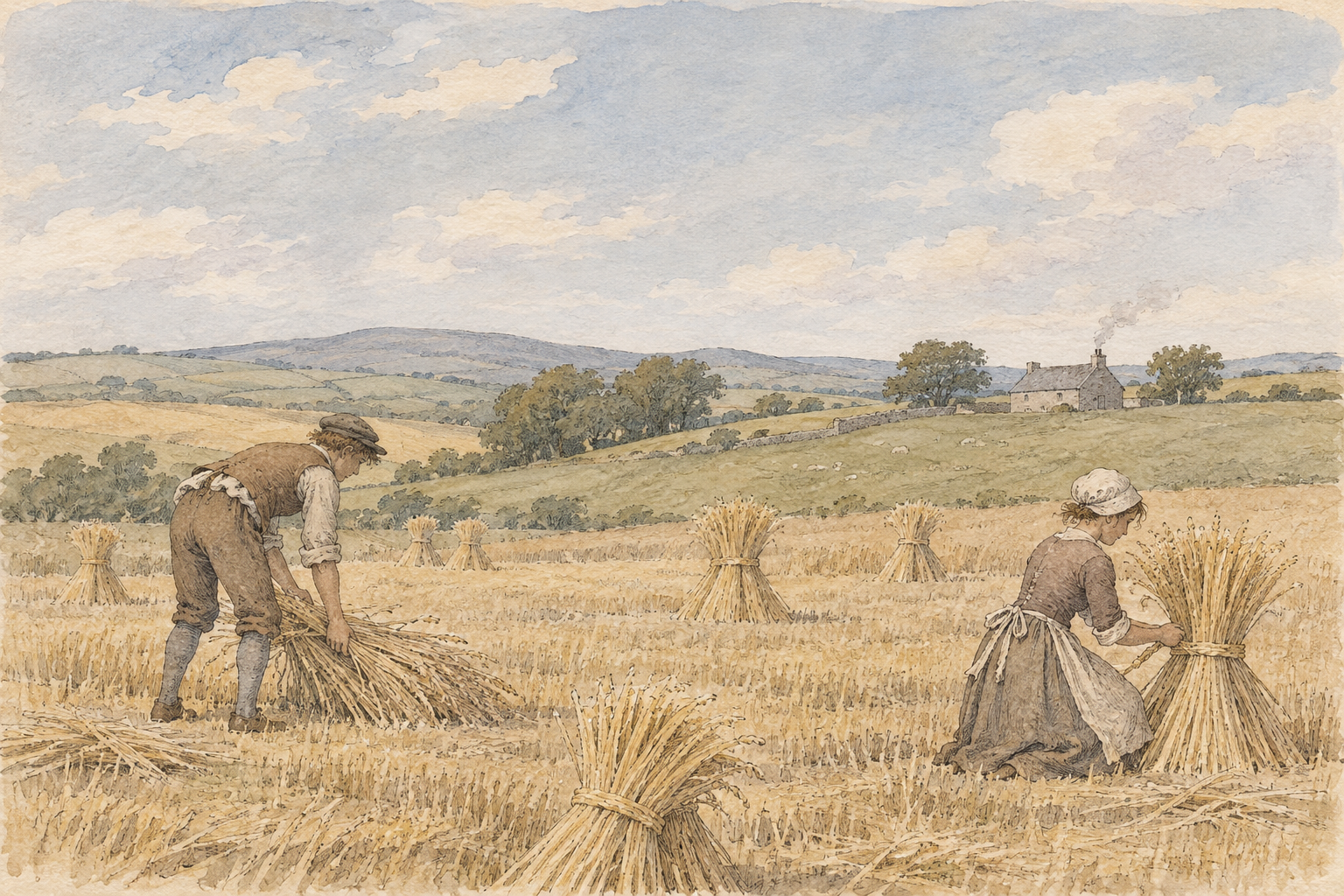
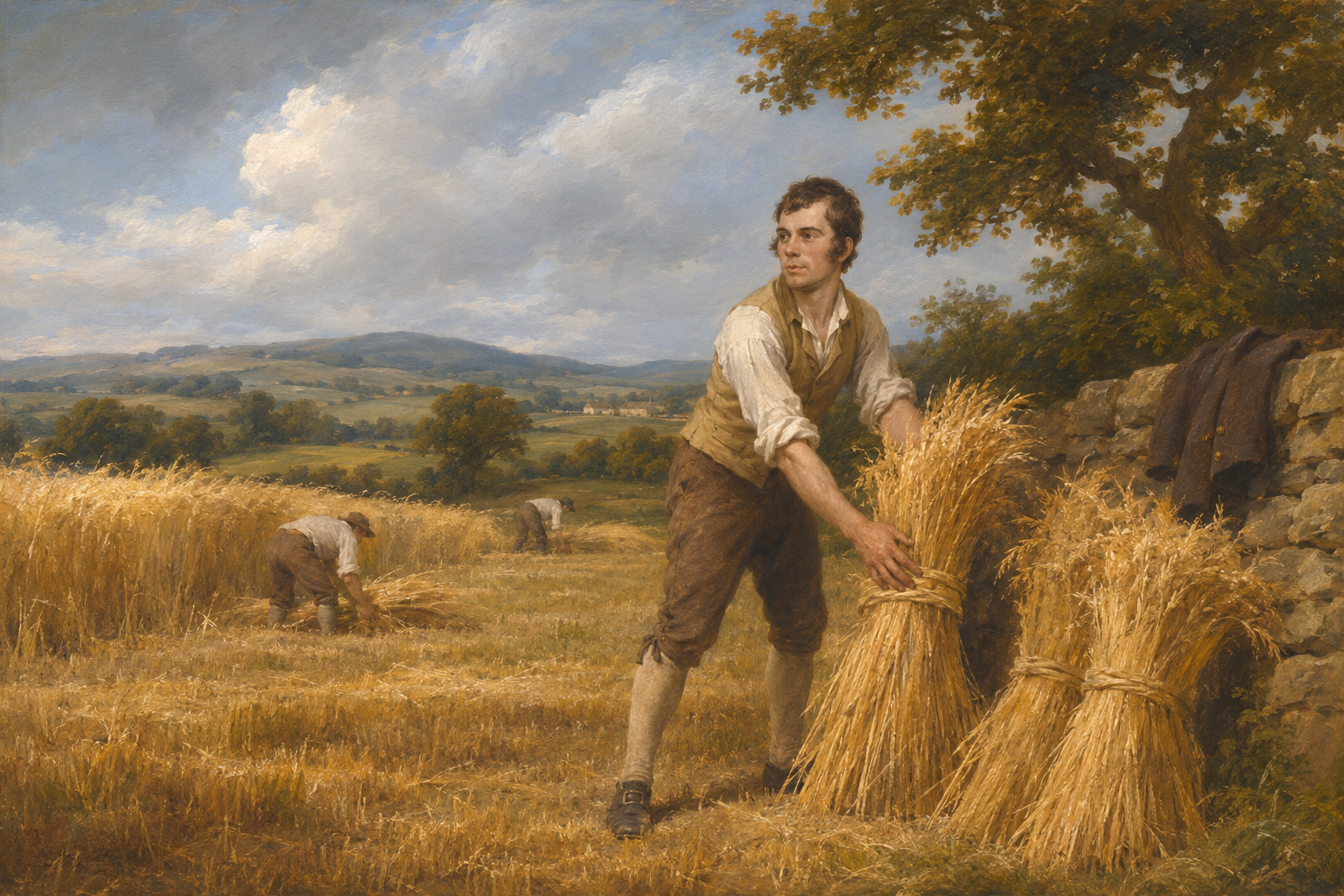
Open full imageAn imagined harvest scene in eighteenth-century Ayrshire. AI-assisted illustration · AIRT
Robert Burns remembered beginning to write verse while working beside a young woman in the harvest field. In his autobiographical letter to John Moore, written in 1787, he placed the episode in his fifteenth autumn. His partner, a year younger, sang a favourite reel, and he tried to make words for its tune.
Another song she knew helped him imagine himself as a writer. It was said to have been composed by a local laird’s son about a servant. Burns had associated printed poetry with men educated in Greek and Latin, but he thought this young writer had no greater learning than himself. Verse suddenly seemed something he could attempt.
Burns does not name his harvest partner in the letter. James Currie later linked the account with the song beginning O once I lov’d a bonnie lass, whose speaker praises his handsome Nell.
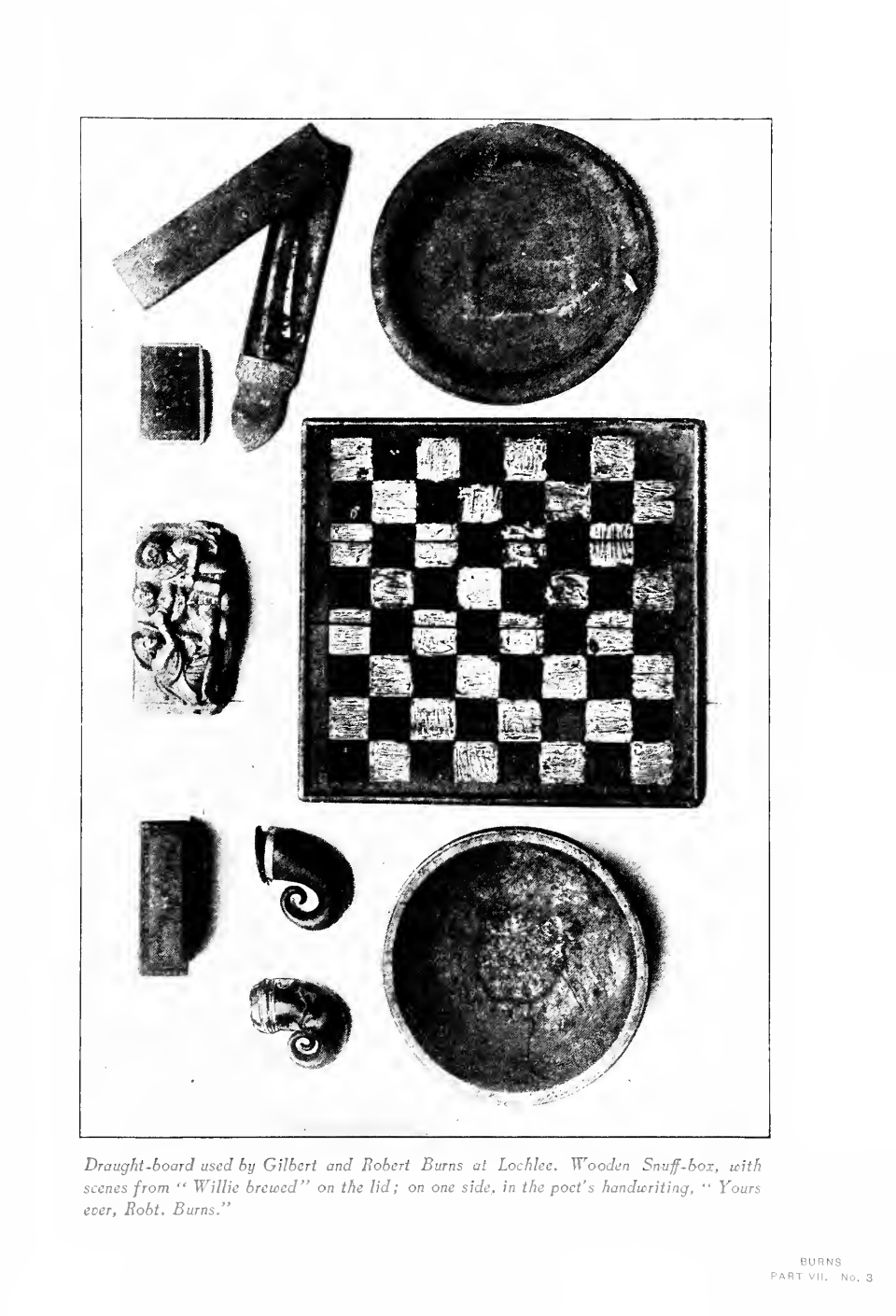
Open full imageA draughtboard attributed to Robert and Gilbert Burns at Lochlea, with other objects, in the Rare Print Collection of 1900. Rare Print Collection · 1900 · Cornell/IA · Licence · Source
The Burns family moved from Mount Oliphant to Lochlea in the later 1770s. The University of Glasgow chronology dates the move to 1777, although an older cottage history gives 1776. For William Burnes, his wife Agnes and their children, the larger farm initially brought relief after the financial pressure of Mount Oliphant.
Robert later recalled four comfortable years before a disagreement between his father and the landlord over the terms of the tenancy. The dispute developed into prolonged litigation. William's failing health added to the household's difficulties, and he died in 1784.
During the Lochlea period Robert continued to read alongside his agricultural work. In his account to John Moore he named books on farming, poetry, history and religion. He studied songs while driving a cart or walking to work, comparing verses and trying to distinguish genuine feeling from affected language. Even as the family struggled to keep the farm, Burns read and practised writing in the time he could spare.
Open full imageThe Bachelors’ Club building in Tarbolton, in a modern photograph by Roger Griffith. Roger Griffith · CC BY-SA 4.0 · Licence · Source
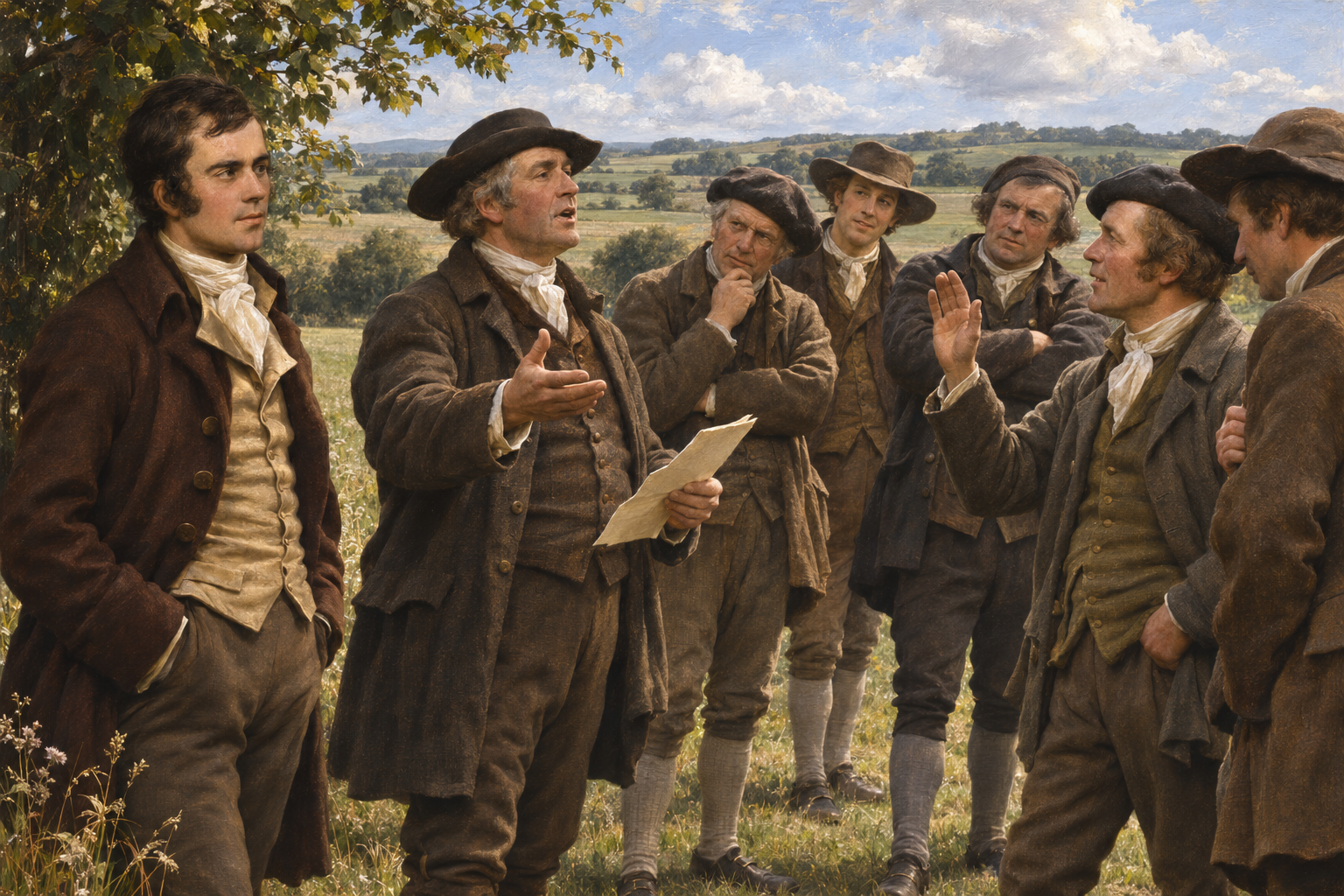
The young men who founded Tarbolton’s Bachelors’ Club began with a question about marriage and money. Should a farmer without a fortune choose a wealthy woman capable of running a farmhouse, or an agreeable woman who had no fortune? The club’s history dates this first meeting to 11 November 1780 and names Robert Burns as its president that evening.
Robert and his brother Gilbert were among seven founders. Their debates offered companionship and intellectual exercise alongside working lives. Members took opposing sides of the room, spoke in turn and heard the president’s opinion after both sides had made their case.
The rules protected discussion from interruption and ridicule. Private conversations brought penalties, while revealing another member’s speech to make him a laughing-stock could lead to expulsion. Questions later addressed friendship, education and happiness. At these meetings Burns and his neighbours could work out an argument, hear the other side and test their opinions.
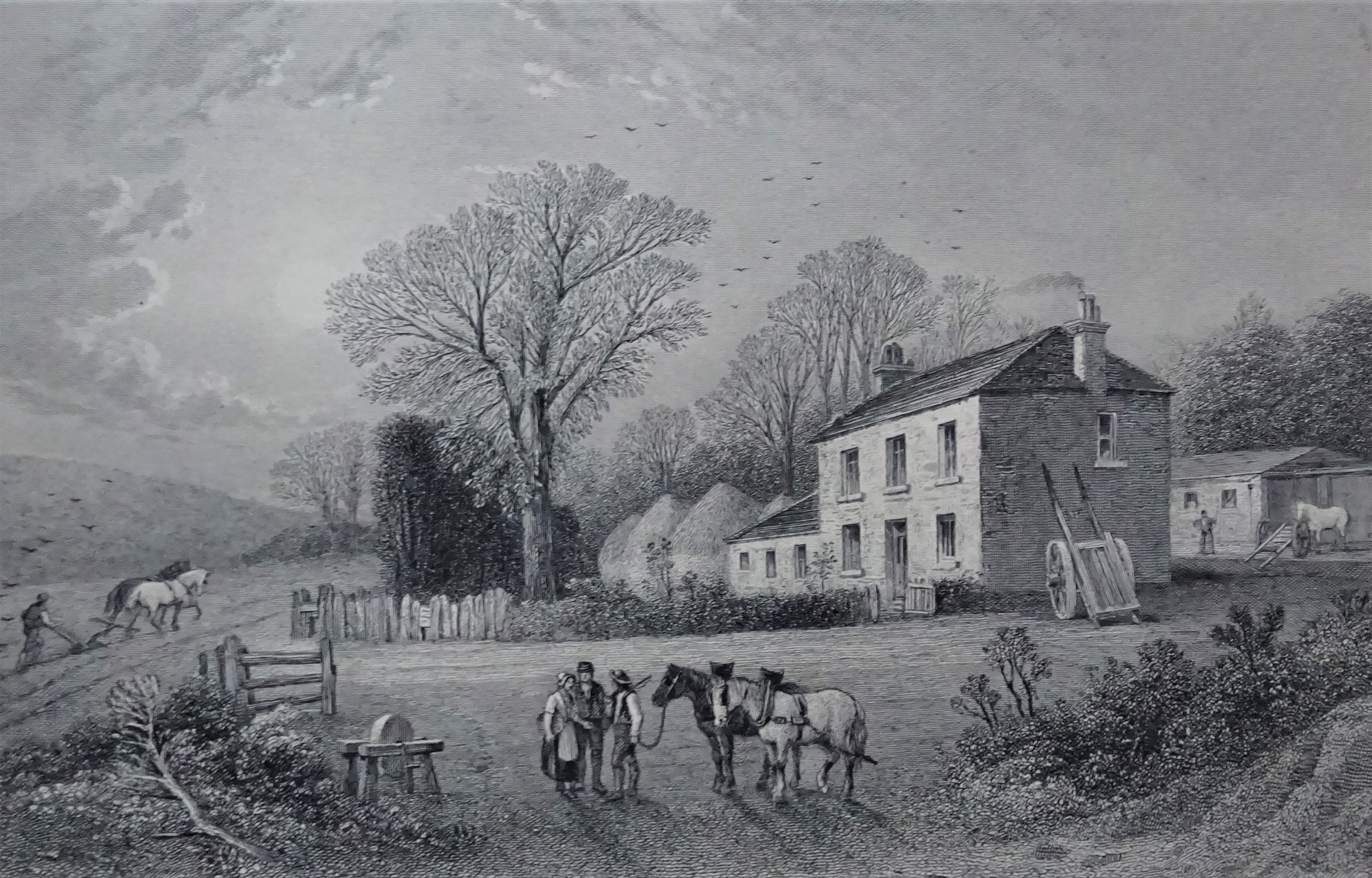
Open full imageAn engraving of Burns Cottage dated 1805 in M’Bain’s illustration list, from the period when the cottage served as an inn. Engraving, 1805 · M’Bain, Burns’ Cottage · Wikimedia Commons · Licence · Source
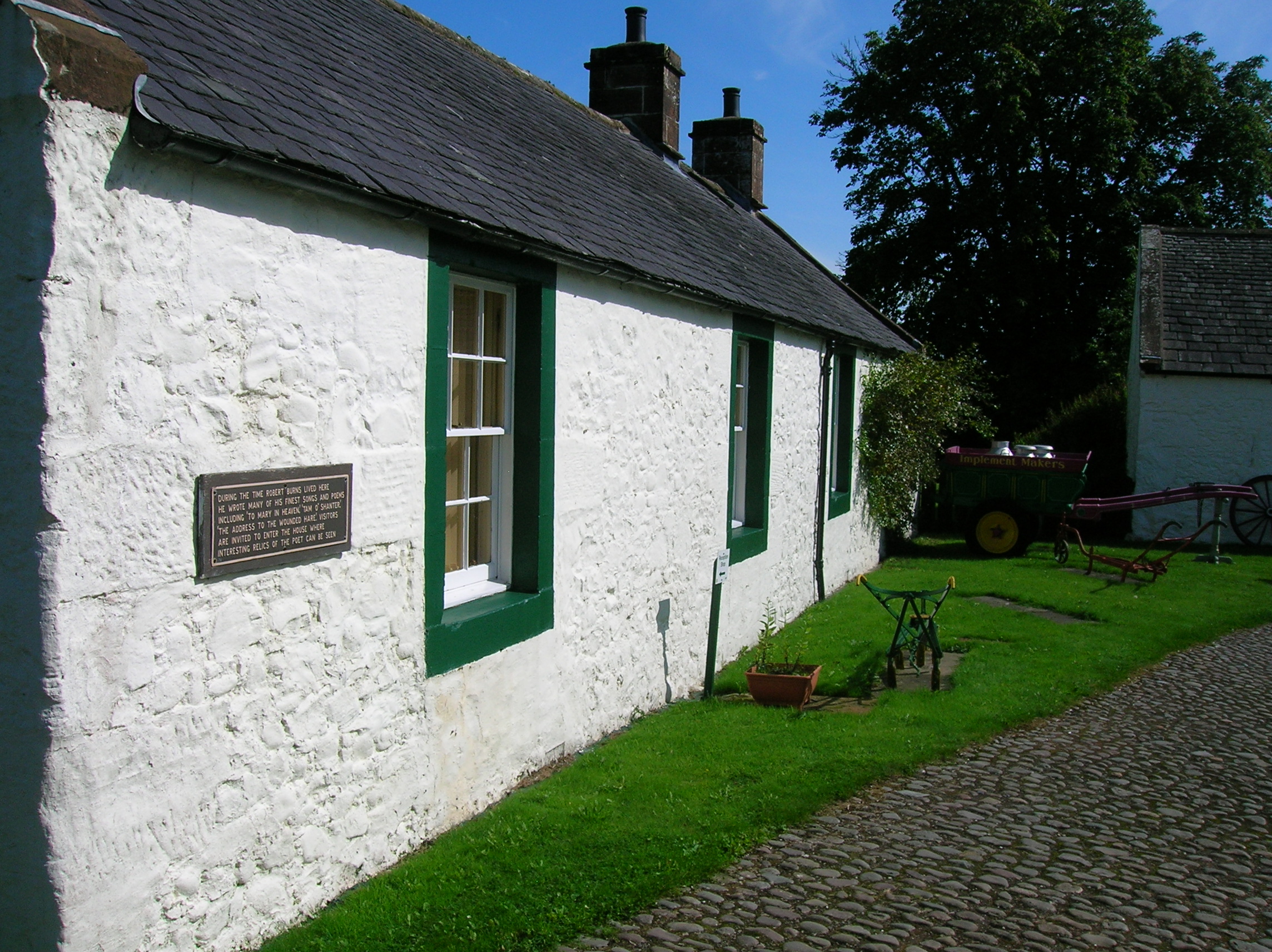
William Burnes retained ownership of the Alloway cottage after moving his family to Mount Oliphant in 1766. Charles Dougall's history of the Burns country dates its sale to the Incorporation of Shoemakers in Ayr to 1781.
The cottage became a public house, and visitors came to see the poet's birthplace. Dougall describes its long life as an inn and recalls John Keats's visit in 1818, when the English poet wrote a sonnet there. Visitors now came to an inn that had once been the home of a gardener and his family.
Later owners altered and extended it. The Burns Monument trustees acquired the property in 1881 and removed additions as part of restoring its earlier appearance. Dougall's account links the sale with a century of changing ownership and use, before the cottage became a place for preserving objects and welcoming readers of Burns.
Open full imageBurns and Richard Brown walking in Eglinton woods, in an imagined scene. AI-assisted illustration · AIRT
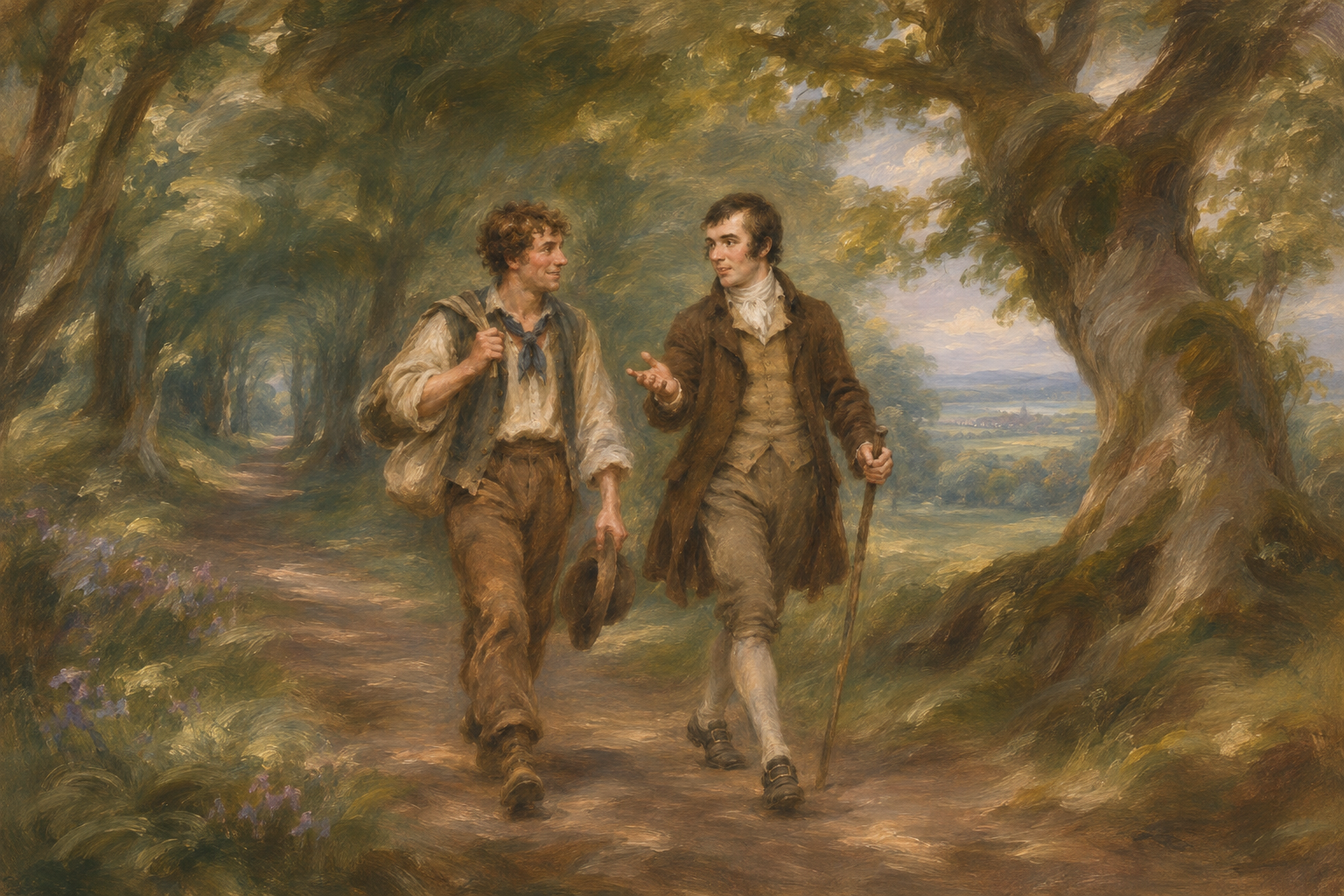
Richard Brown heard Robert Burns recite verses during a Sunday walk in Eglinton woods and asked why he did not send work of that quality to a magazine. Burns remembered the remark years later. Writing to Brown from Edinburgh on 30 December 1787, he credited it with changing his opinion of his own writing and encouraging his ambition to become known as a poet.
The friendship developed during Burns’s time at Irvine, where he had tried to learn flax-dressing, preparing flax fibres for spinning. Brown was a sailor whose experience and independence impressed him. A magazine would give Burns a chance to reach readers beyond his own friends.
The conversation survives through Burns’s recollection. By the time he wrote about it, his poems had appeared in Kilmarnock and Edinburgh editions. He was still keen to see Brown, sending greetings to his wife and hoping to renew their companionship when an injured leg allowed him to travel.
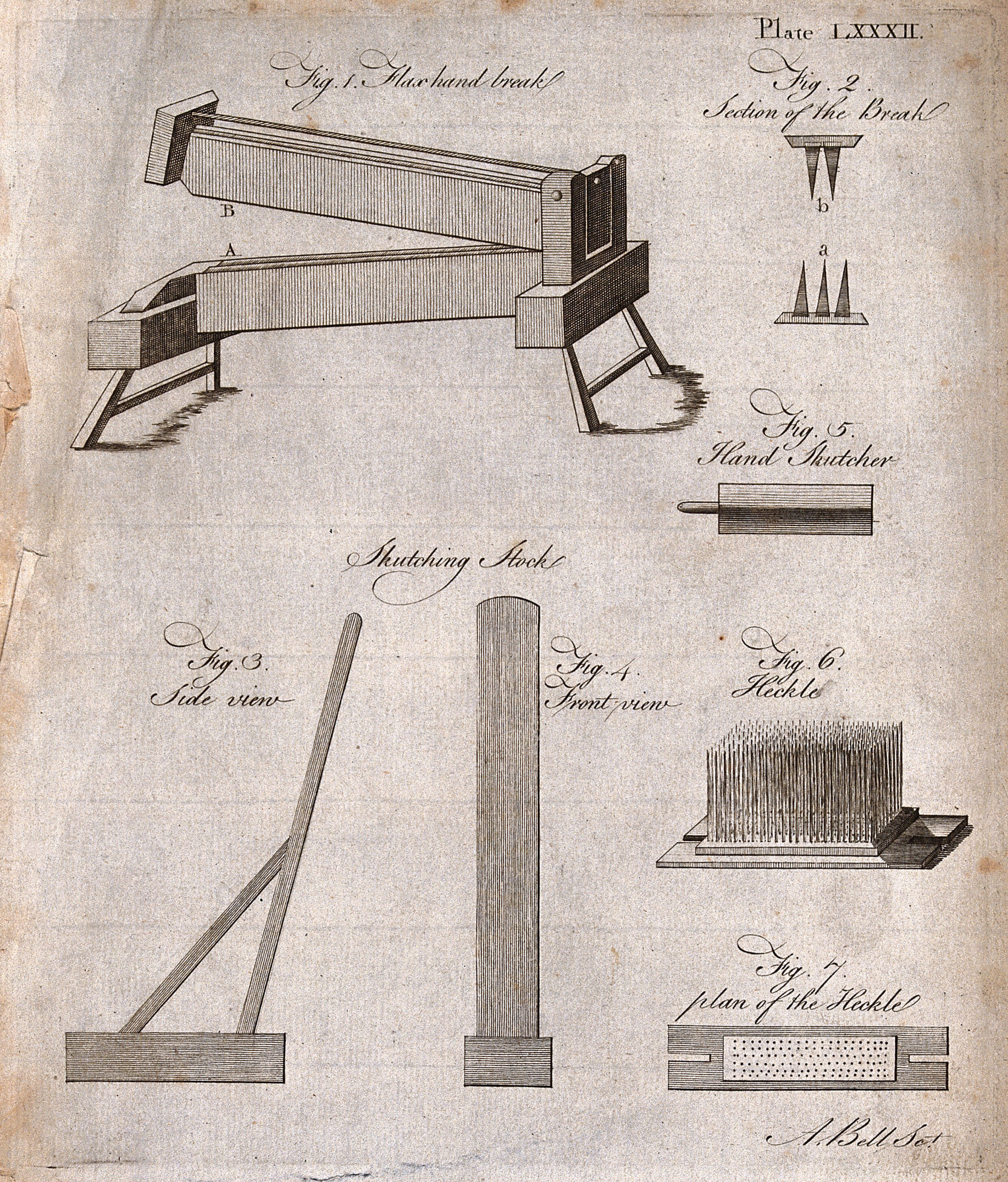
Open full imageTools for preparing flax fibres, engraved by Andrew Bell: a hand brake, scutching equipment and heckles. A. Bell / Wellcome · Public domain · Licence · Source
Robert Burns went to Irvine to learn flax-dressing: preparing the plant fibres for making linen. This offered a trade outside the farming work he had grown up with. In his account to John Moore in 1787, he placed the venture in his twenty-third year and described joining a flax-dresser to learn the business. The attempt ended when the shop burned during a New Year gathering.
Burns remembered the loss as leaving him without money. At home, his father William was seriously ill and the family's farming difficulties were increasing. Robert abandoned the trade and returned to agricultural work.
Irvine also widened his reading and acquaintance. He recalled finding volumes of novels there and forming a friendship with a sailor whose knowledge of the world impressed him. When he encountered Robert Fergusson's Scots poems, the poems encouraged him to write more of his own. He returned to farming with new acquaintances and reading that would continue to matter to his writing.
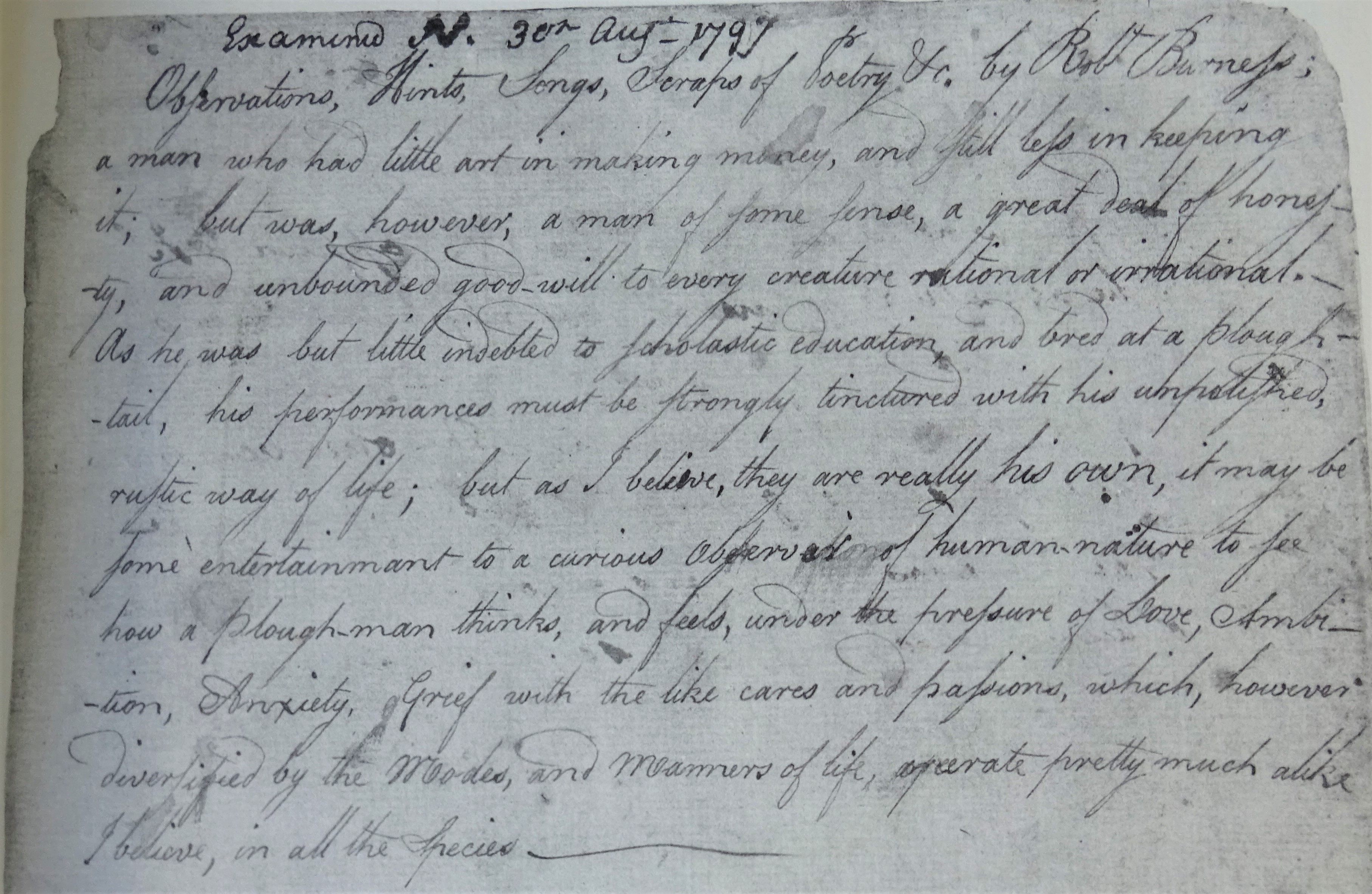
Open full imageBurns’s introduction to his first commonplace book, reproduced from his handwriting. Robert Burns; reproduction via Wikimedia Commons, public domain. · Licence · Source
Between 1783 and 1785 Robert Burns gathered writing in his first commonplace book. A commonplace book was a place to keep material for thought and later use: his contained verse alongside quotations, observations and reflections about people and ideas. Those notes and poems survive together in the notebook, from before the success of Burns’s first printed collection.
These were also years of change in his working life. His father William died in 1784, and Robert and his brother Gilbert continued farming at Mossgiel. In his later account to John Moore, Burns described reading agricultural books, calculating crops and trying to make the farm succeed.
Poetry occupied time within that working life. The notebook preserves the private gathering and shaping of material that preceded publication. When the Kilmarnock poems appeared in 1786, they brought a selection of his writing to readers who had never met him.
Open full imageMossgiel Farm, in an illustration reproduced in The National Burns, 1878. The National Burns · 1878 · Licence · Source
Robert and Gilbert Burns gathered the family's remaining money and took Mossgiel as their new home in 1784. Their father William had died after years of farming difficulties and litigation. Robert later explained that the brothers' purpose was to keep the household together.
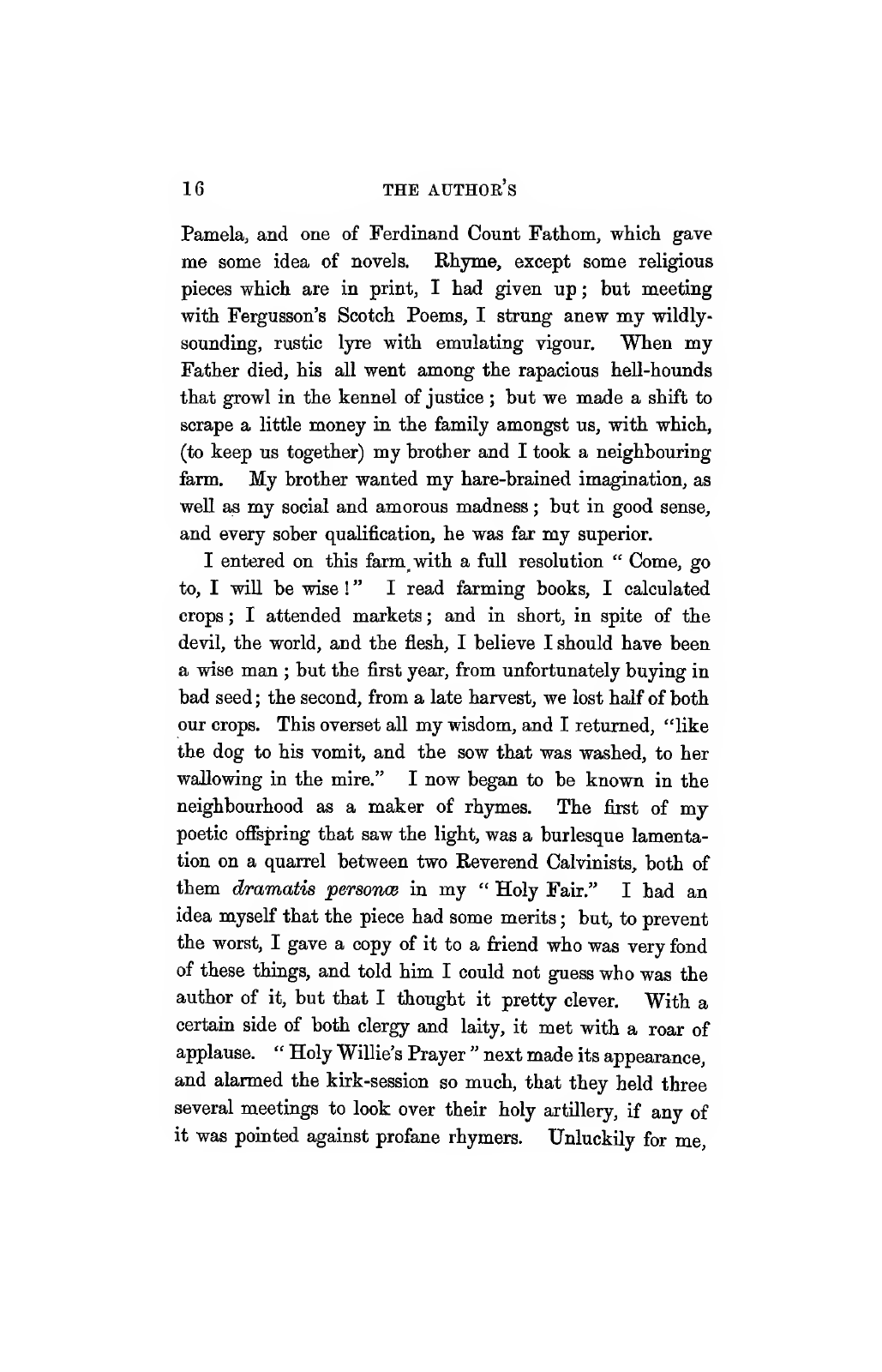
He described entering the farm with a determination to manage it well. He read agricultural books, calculated crops and attended markets. In his account, bad seed damaged the first year's prospects and a late harvest the second; he estimated that they lost half their crops.
Writing continued amid those difficulties. Burns began to gain a local reputation for his verse, including satires on disputes among the clergy. By 1786 he had surrendered his share of the farm to Gilbert while considering employment in Jamaica. Mossgiel remained the family's base as Robert prepared his first book and sought a different way of earning a living.
An imagined portrait of William Burnes in later life. AI-assisted illustration · AIRT
William Burnes, the poet’s father, died at Lochlea in February 1784; the date is usually given as 13 February. The family took his remains back to Alloway kirkyard, near the home where Robert had been born. Robert commemorated him in an epitaph.
William had supported his family through gardening and farming. His sons remembered his teaching as well as his labour: arithmetic by candlelight, books borrowed or bought, and conversations during farm work. Robert’s later account also recalled the financial strain and litigation that troubled the final years at Lochlea.
After William’s death, Robert and his younger brother Gilbert gathered the family’s limited resources and farmed at Mossgiel. Robert described the purpose as keeping the family together. Their mother Agnes and their siblings remained part of that shared undertaking. The brothers now farmed to support the household.
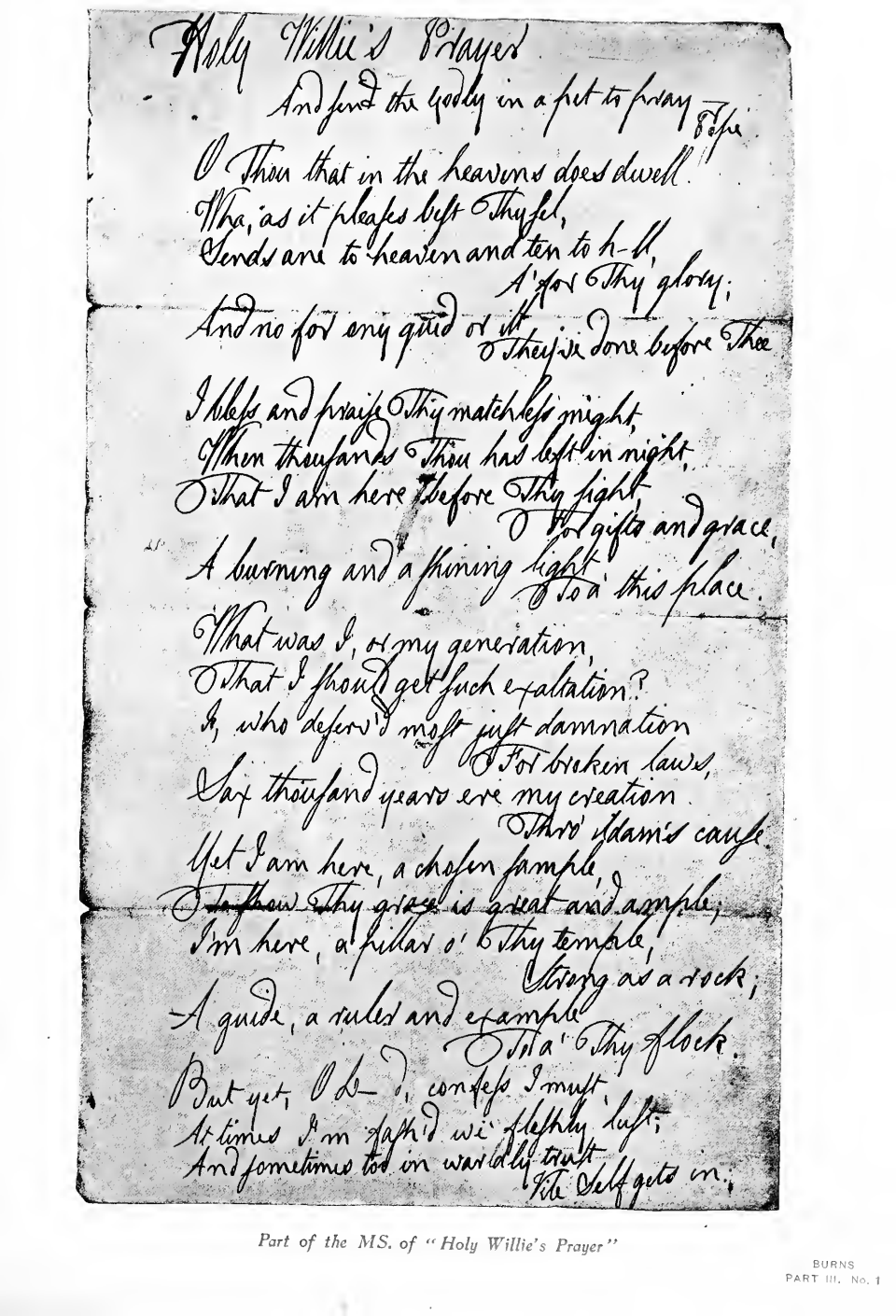
Open full imagePart of the manuscript of Holy Willie’s Prayer, reproduced in the Rare Print Collection of 1900. Rare Print Collection · 1900 · Cornell/IA · Licence · Source
Robert Burns wrote Holy Willie's Prayer amid the religious quarrels of Mauchline in 1785. His friend and landlord Gavin Hamilton had been in dispute with the local church authorities. William Fisher, an elder on the opposing side, supplied the historical figure behind the poem's speaker.
The poem gives Willie a prayer in which he praises his own privileged standing before God. He confesses drunkenness and sexual misconduct while finding excuses for himself, then calls for punishment against his enemies. Hamilton, the Ayr presbytery (the district church court) and the advocate Robert Aiken become targets of his anger.
Burns lets the speaker expose himself through his own reasoning. The local dispute becomes a comic demonstration of the different standards Willie applies to himself and other people. Burns later told John Moore that the poem had alarmed the parish church court. It circulated in manuscript before reaching print in a small Kilmarnock chapbook in 1789, carrying the Mauchline quarrel to readers beyond the parish.
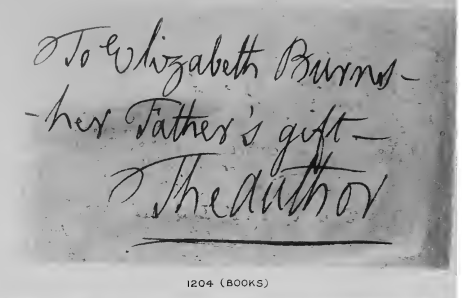
Open full imageBurns’s inscription to his daughter Bess in a gift copy of the 1793 Poems, reproduced in the Memorial Catalogue of 1898. Robert Burns · facsimile 1898 · Cornell · Licence · Source
Elizabeth Paton gave birth to Robert Burns’s first child in May 1785. Their daughter was named Elizabeth and became known as Bess. Later family accounts give her birthday as 22 May. She grew up in the care of Burns’s mother, Agnes Broun.
Burns addressed the baby in A Poet’s Welcome to his Love-Begotten Daughter. The poem answers the shame attached to a birth outside marriage with affection, humour and defiance. Its speaker promises the child a father’s love and a share in his last small coin.
Burns gave Bess a copy of his poems for her eighth birthday. The National Trust for Scotland identifies it as a 1793 Edinburgh edition. She later married John Bishop and had children of her own. Her familiar name helps distinguish her from two younger daughters of Burns also named Elizabeth: Anna Park’s daughter Betty and Jean Armour’s daughter Elizabeth Riddell.
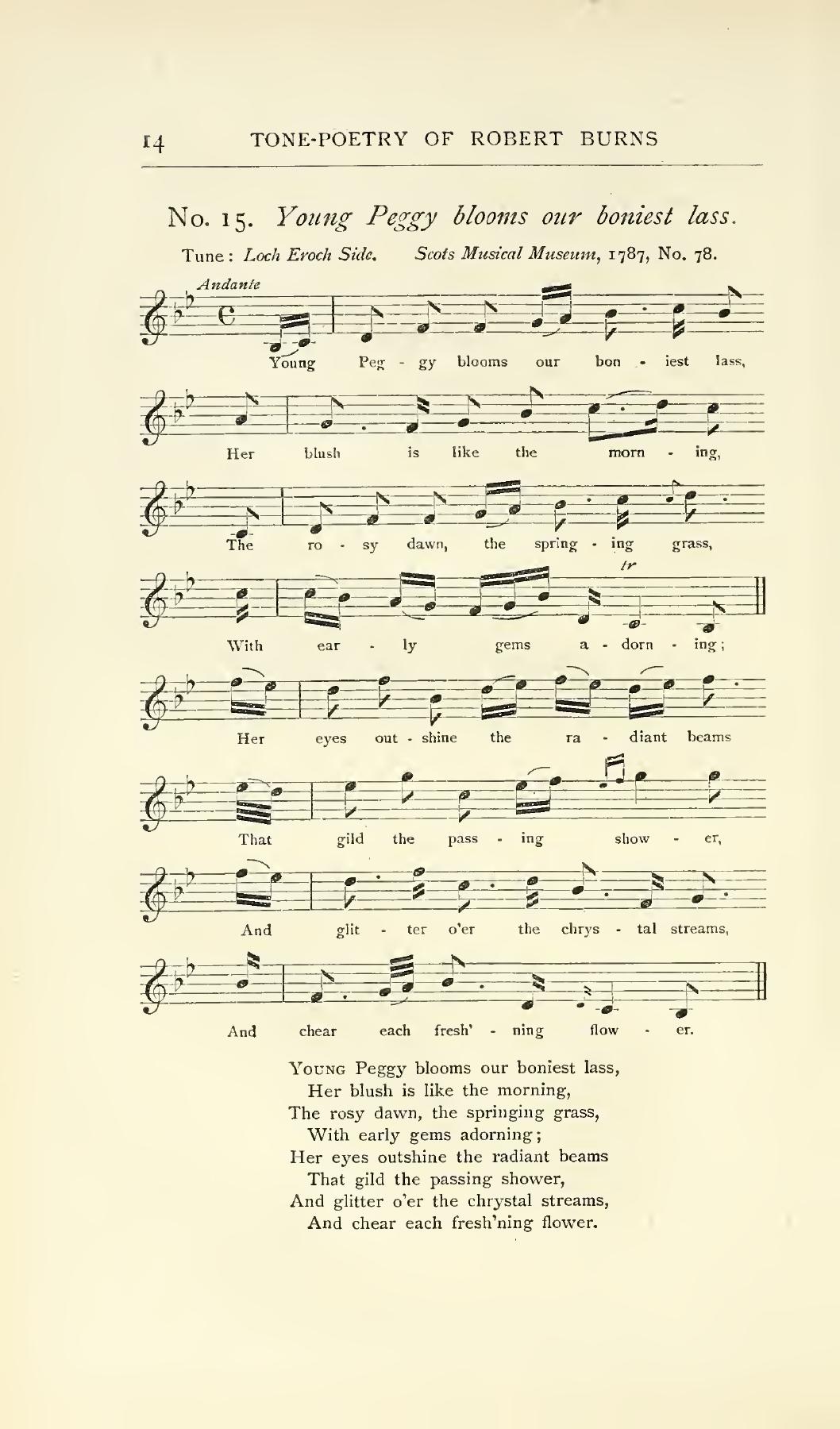
Open full imageYoung Peggy with the Loch Eroch Side setting, in James C. Dick’s song collection of 1903, page 14. James C. Dick · 1903 · NLS · Licence · Source
Robert Burns wrote Young Peggy for Margaret, or Peggy, Kennedy after being introduced to her through Mr Hamilton. In a letter addressed to Miss Kennedy he offered the song as a tribute to their acquaintance. Robert Chambers later placed the meeting in autumn 1785, drawing on a recollection from Burns's sister.
The song's surviving manuscript is headed with Peggy's initials and names The last time I came o'er the moor as its tune. Its praise compares her beauty with morning light, flowers and spring. The closing wishes look towards her protection and a happy marriage.
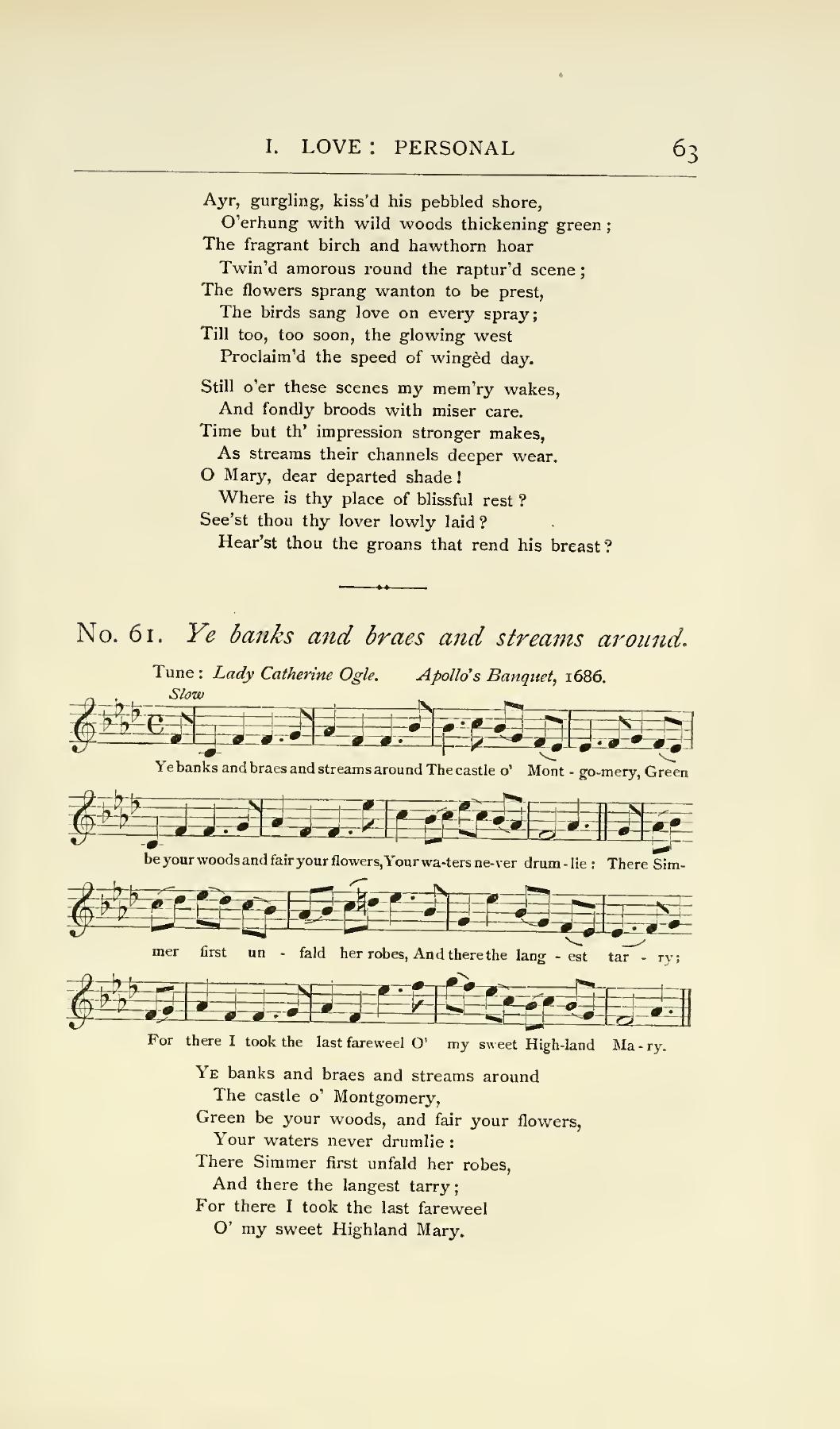
Peggy's later life brought a prolonged dispute over her relationship with Andrew M'Doual of Logan and the status of their child. Later writers also connected her story with Ye Banks and Braes. Burns addressed Young Peggy to Kennedy herself and wrote to her about their introduction. The autumn date rests on the later family recollection printed by Chambers.
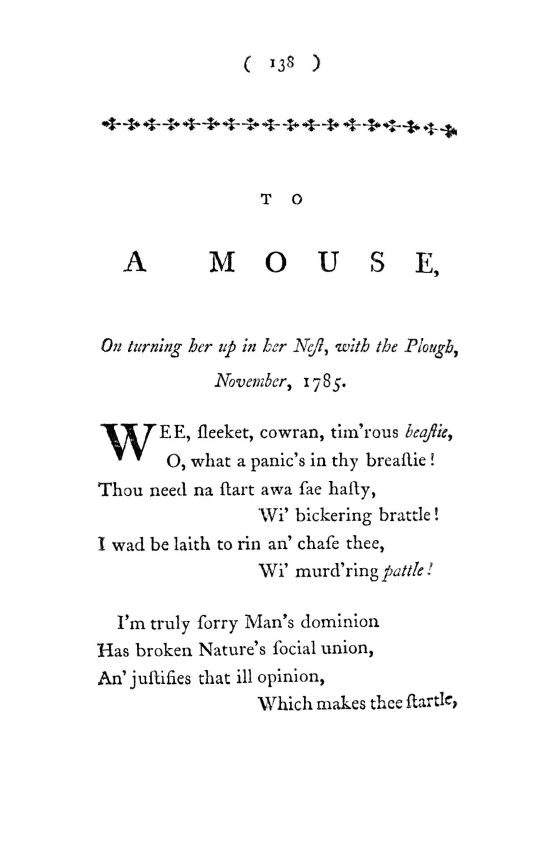
Open full imageThe opening of To a Mouse in the Kilmarnock Poems, 1786, page 138. Kilmarnock Poems · 1786 · Licence · Source
A plough breaks through a mouse’s nest in To a Mouse. The heading in Robert Burns’s 1786 Kilmarnock edition places the disturbance in November 1785. The speaker begins by trying to calm the frightened animal, then apologises for the damage human power has done to a fellow creature.
The nest is the centre of the poem’s sympathy. The mouse had built it from leaves and stubble in preparation for winter. One pass of the plough destroys that shelter just as colder weather approaches. The speaker accepts the mouse’s small taking of grain as part of its need to live.
From the ruined nest, the poem turns to the uncertainty of human plans. Both creatures can prepare and still suffer disaster. In the final stanza, the speaker imagines the mouse occupied with the present while he looks backwards with sorrow and forwards with fear.
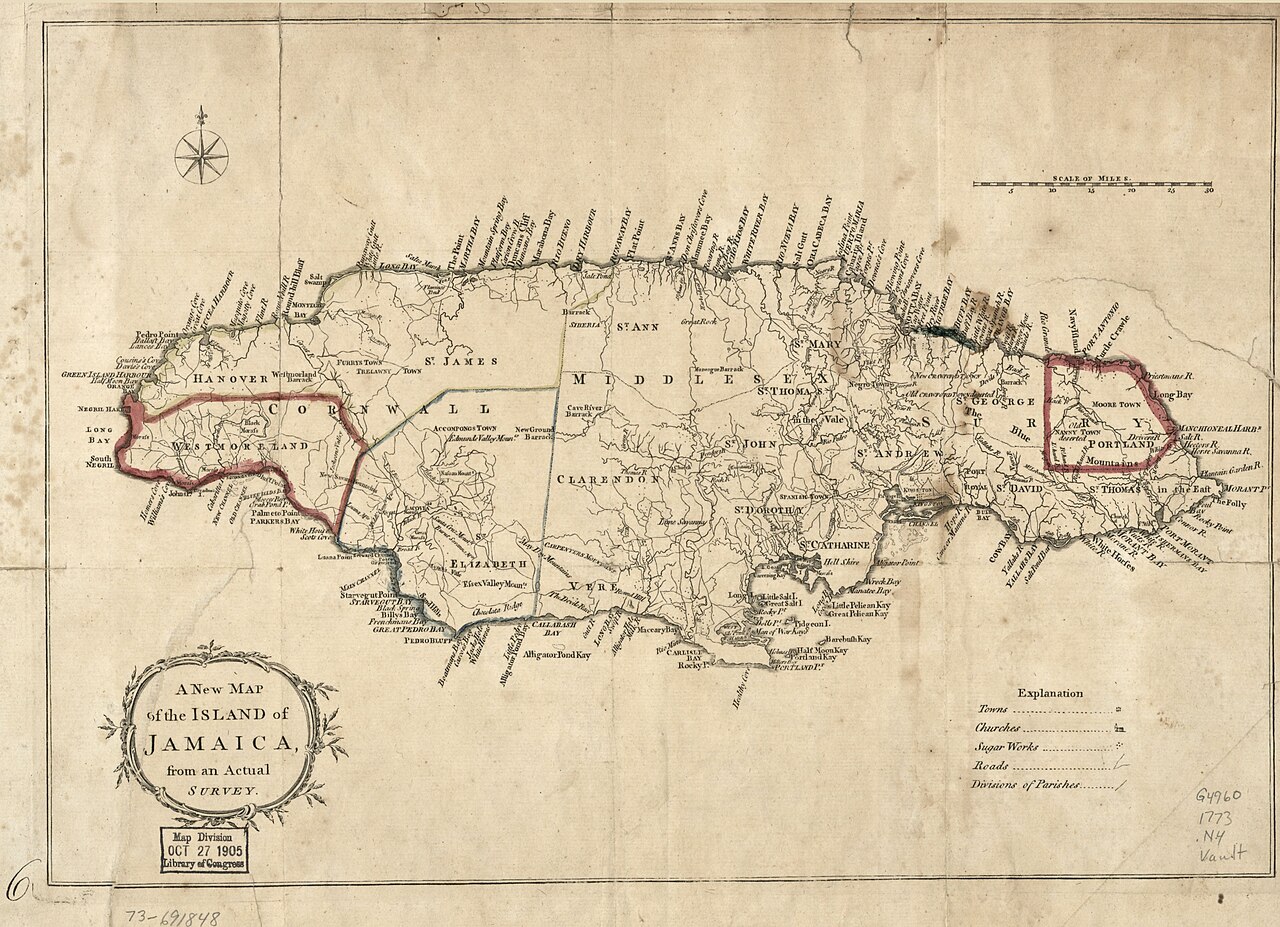
Open full imageJamaica on a map published in 1773, before Burns planned his journey. Library of Congress, map73691848; public domain. · Licence · Source
In 1786 Robert Burns prepared to leave Scotland for Jamaica. The proposed employment involved supervising enslaved labour. Farming at Mossgiel had disappointed him, his personal circumstances were troubled, and he gave up his share of the farm to his brother Gilbert.
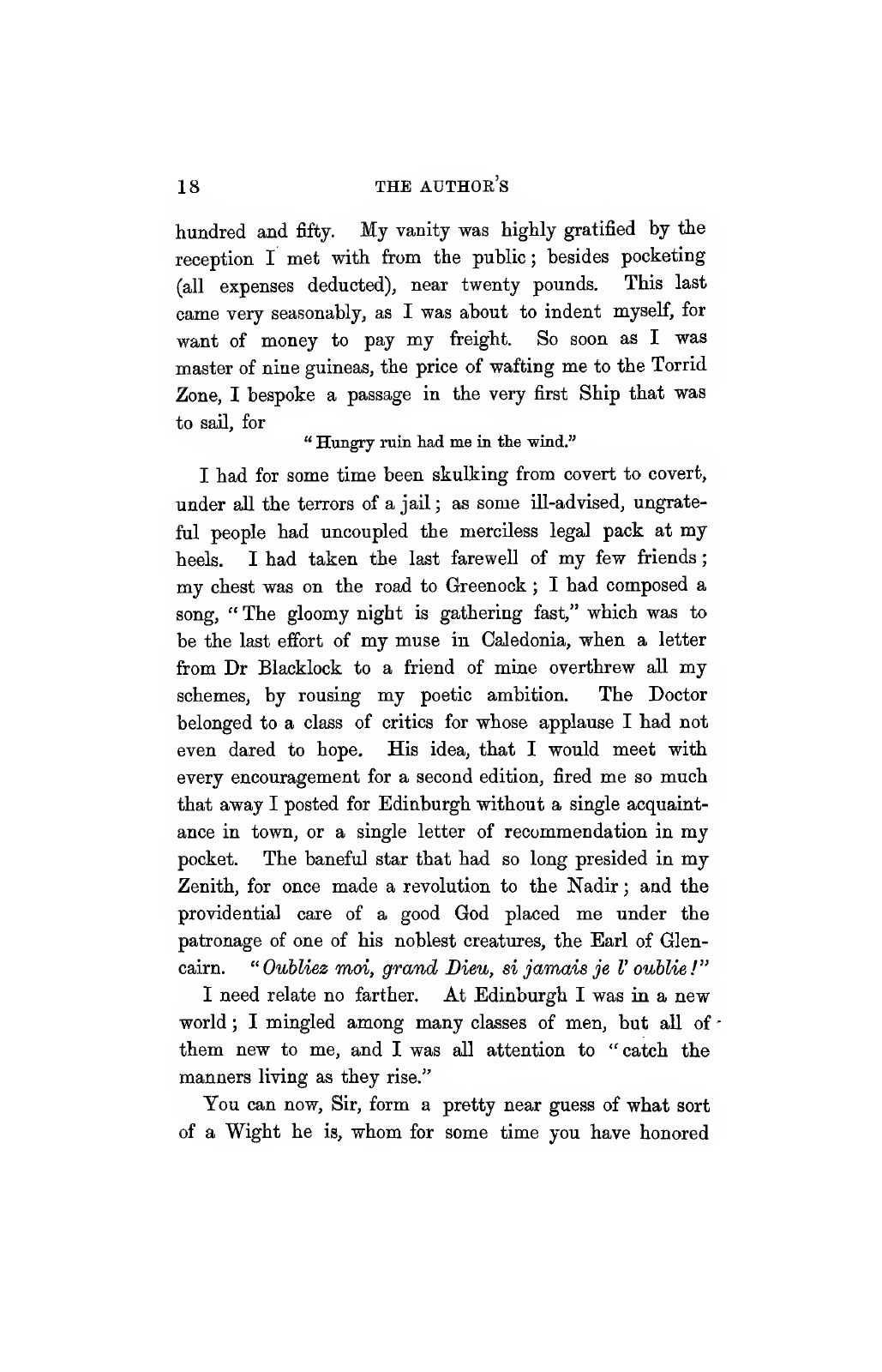
Before departing, Burns decided to publish his poems. In the account he sent John Moore the following year, he remembered taking subscriptions for about 350 copies and receiving nearly £20 after expenses. He said that, once he had nine guineas, he bought a steerage passage on a ship due to leave the Clyde.
Thomas Blacklock's praise encouraged the prospect of a second edition in Edinburgh. Burns described that encouragement as overturning his plans and directing his poetic ambition towards the city. He remained in Scotland. The proceeds from the book helped him pay for his passage, and its reception helped persuade him to stay.
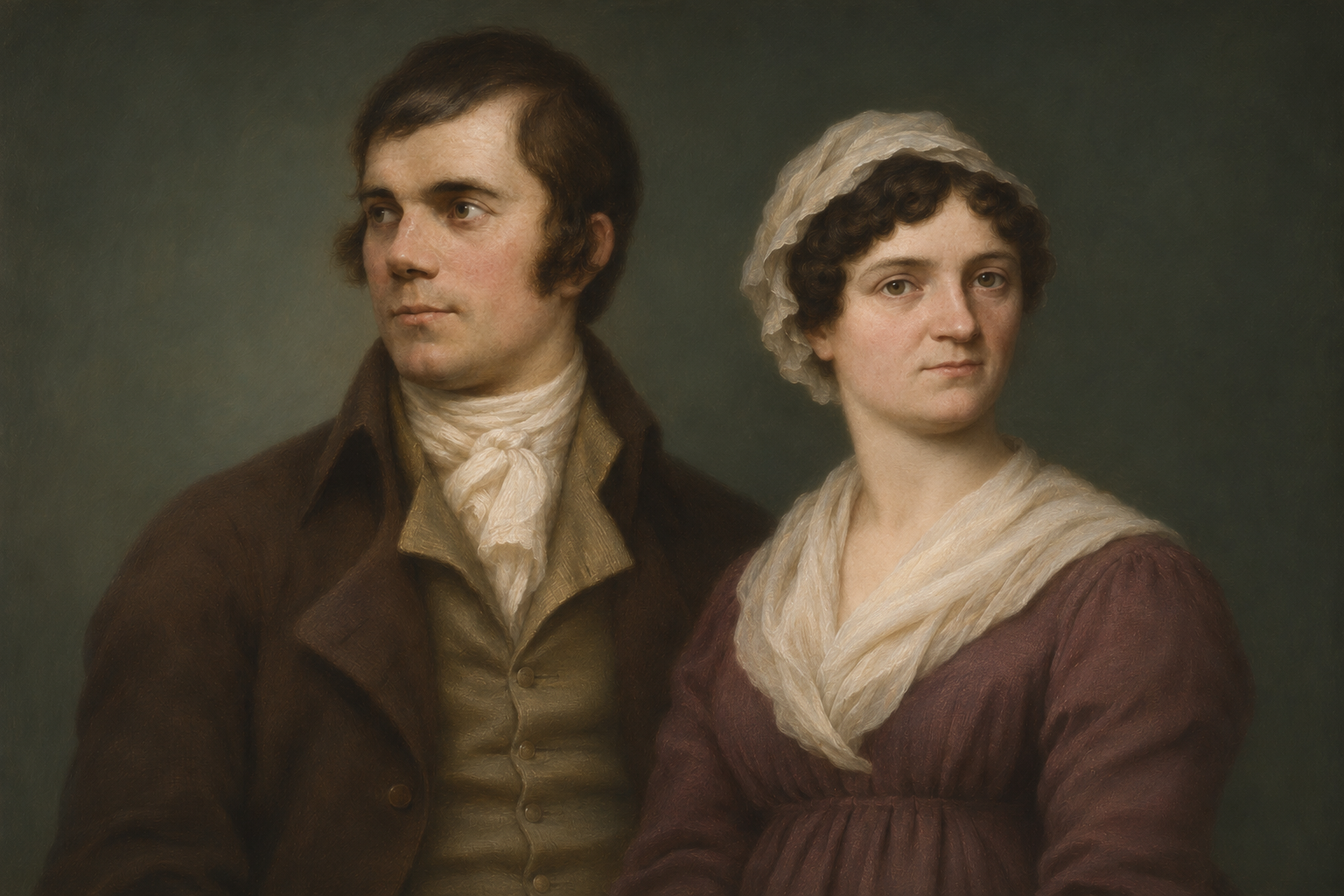
Open full imageAn imagined paired portrait of Robert Burns and Jean Armour in 1786. AI-assisted illustration · AIRT
In 1786 Robert Burns wrote to his supporter John Ballantyne about a marriage paper he and Jean Armour had exchanged. He said that Jean’s father, James Armour, had persuaded Robert Aiken to mutilate it. Burns described the news as deeply distressing. The dispute involved the couple, Jean’s family and people they knew.
Jean was pregnant. In September she gave birth to twins, Robert and Jean, while Burns’s first collection of poems was bringing him public attention. Their relationship continued. Their daughter died in infancy, and a second pair of twin girls died soon after birth in March 1788.
Later that year Robert and Jean established their married life. In August they acknowledged an earlier irregular marriage before Mauchline kirk session, the local church court. The acknowledgement survives in the session entry. The damaged paper is lost. Burns’s earlier letter preserves his own account of the conflict over it.
Open full imageA nineteenth-century imagining of Highland Mary, photographed about 1879–1889. Rijksmuseum · CC0 · Licence · Source
Mary Campbell worked in Gavin Hamilton's household at Mauchline. Her relationship with Robert Burns developed in the unsettled spring of 1786, when Jean Armour was pregnant and Burns was considering leaving Scotland. Mary died in October that year.
The relationship later became part of Burns's songwriting. When he sent Highland Mary to the music publisher George Thomson, he described its subject as one of the most interesting passages of his youth. He wanted the words joined to an air that would help preserve them, while recognising that his feelings might influence his judgement of the song.
Mary was remembered long after her death in poetry and commemoration. The song presents remembered affection through places, parting and bereavement. As the song circulated, listeners heard Burns’s account of a relationship that had ended years before. His letter to Thomson explains why the choice of air mattered to him. He hoped the music would keep the verses alive.
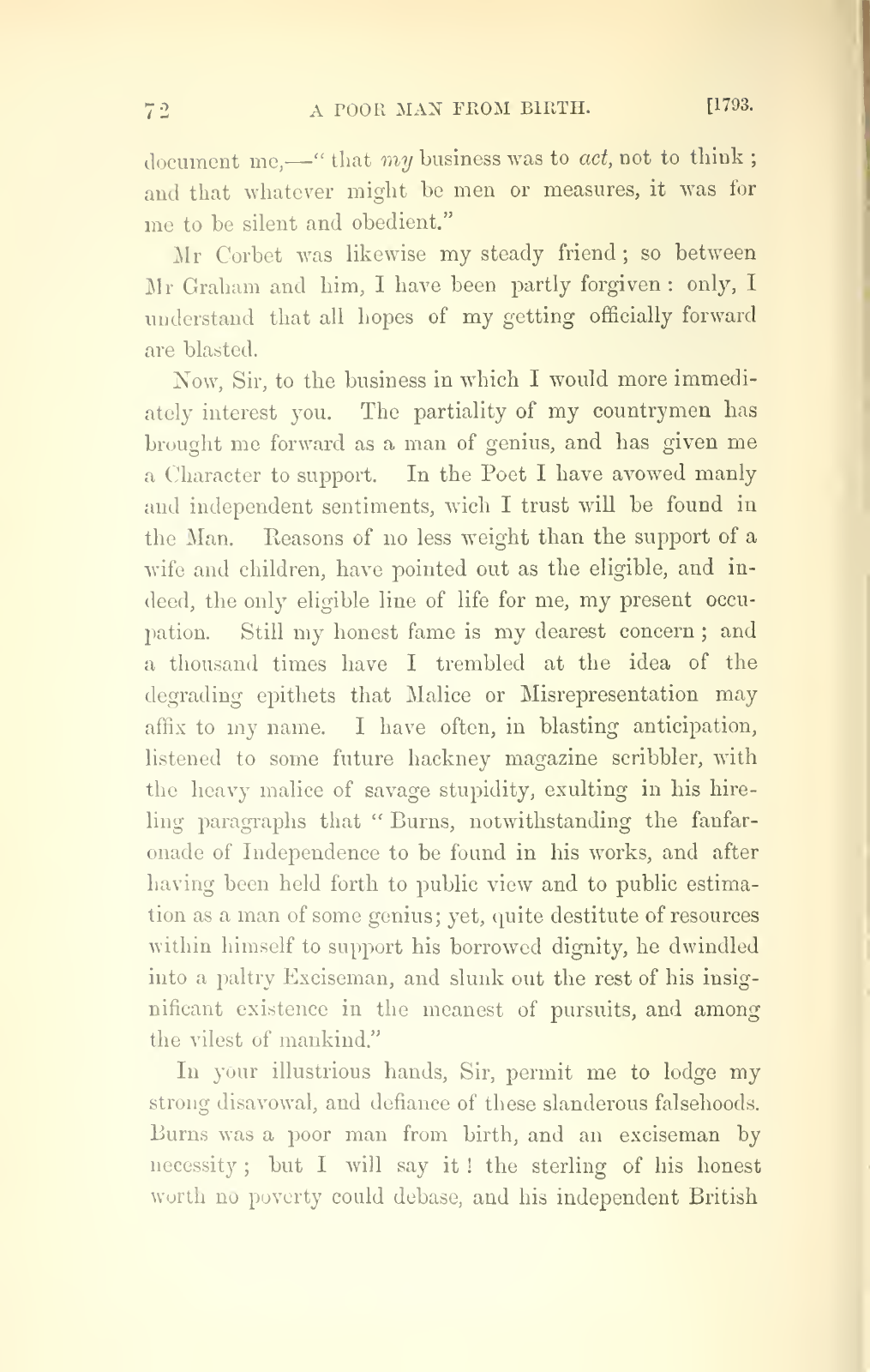
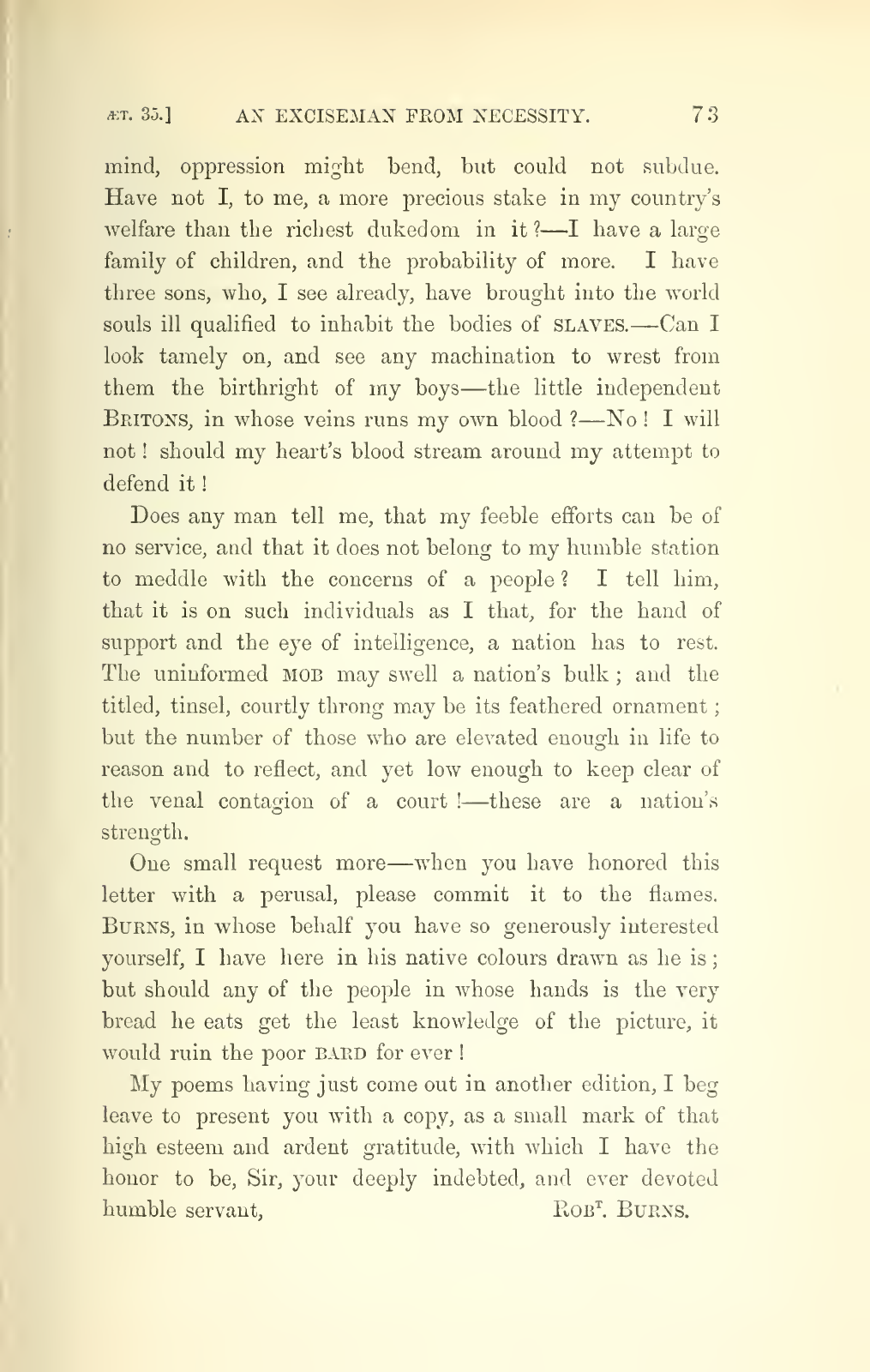
Open full imageThe farm-share passage in Burns’s autobiographical letter to John Moore of 1787, printed in 1878. Robert Burns · Scott Douglas, Works IV · 1878 · Licence · SourceView related pagesOpen full imageThe preceding page of the autobiographical letter, printed in 1878. Robert Burns · Scott Douglas, Works IV · 1878 · Licence · SourceOpen full imageThe continuation records the proceeds of publishing and the changed plan for Edinburgh. Robert Burns · Scott Douglas, Works IV · 1878 · Licence · Source
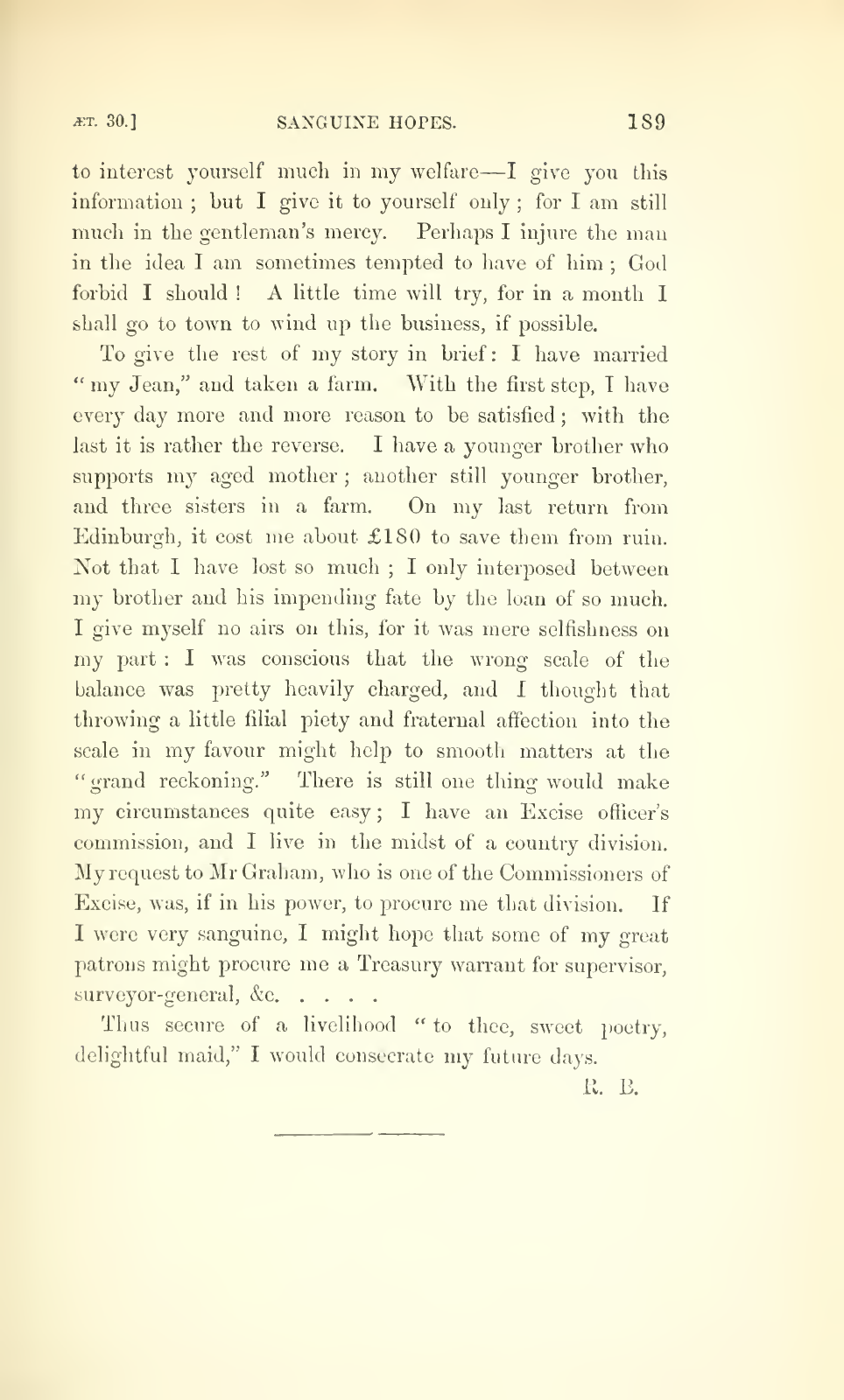
Robert Burns gave up his share in the family farm at Mossgiel to his brother Gilbert while preparing to leave Scotland in 1786. In his later account to John Moore, he described the share as only nominally his. He was considering employment in Jamaica, where the proposed work involved supervising enslaved labour.
Before leaving, he decided to publish his poems. Subscriptions helped support the Kilmarnock edition, printed by John Wilson. Burns recalled that the venture left him nearly twenty pounds after expenses, money that arrived when he was struggling to pay for a passage.
Encouraged by Thomas Blacklock and others, Burns went to Edinburgh to arrange another edition. Gilbert continued the farm in Ayrshire. In January 1789 Robert told Moore that he had advanced Gilbert £180, helping to keep their mother and siblings together on the land. His new income from books helped support the family on the farm.
Open full imageBurns thanks his subscribers in the preface to the Kilmarnock Poems, 1786. John Wilson · 1786 · Source
A printed proposal dated 14 April 1786 offered readers Scotch Poems by Robert Burns for three shillings a stitched copy. The book still had to be made. Printing would begin once enough subscribers had promised to buy copies to meet the expense.
The surviving sheet records names beside the quantities each subscriber undertook to purchase. Burns could see how many copies were wanted before he committed to printing the poems. Friends helped circulate proposals and gather orders; the arrangements depended on their replies returning to the author.
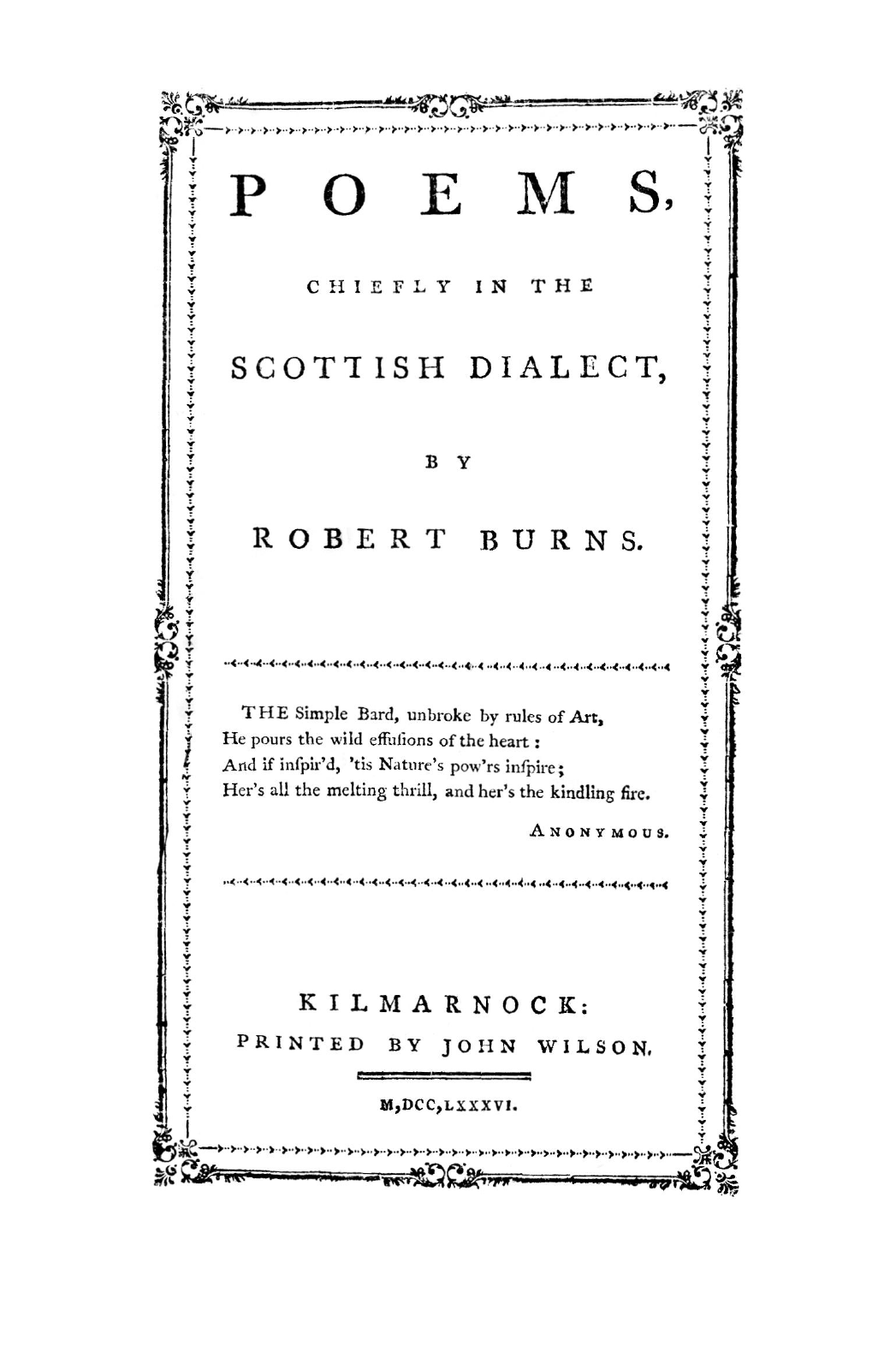
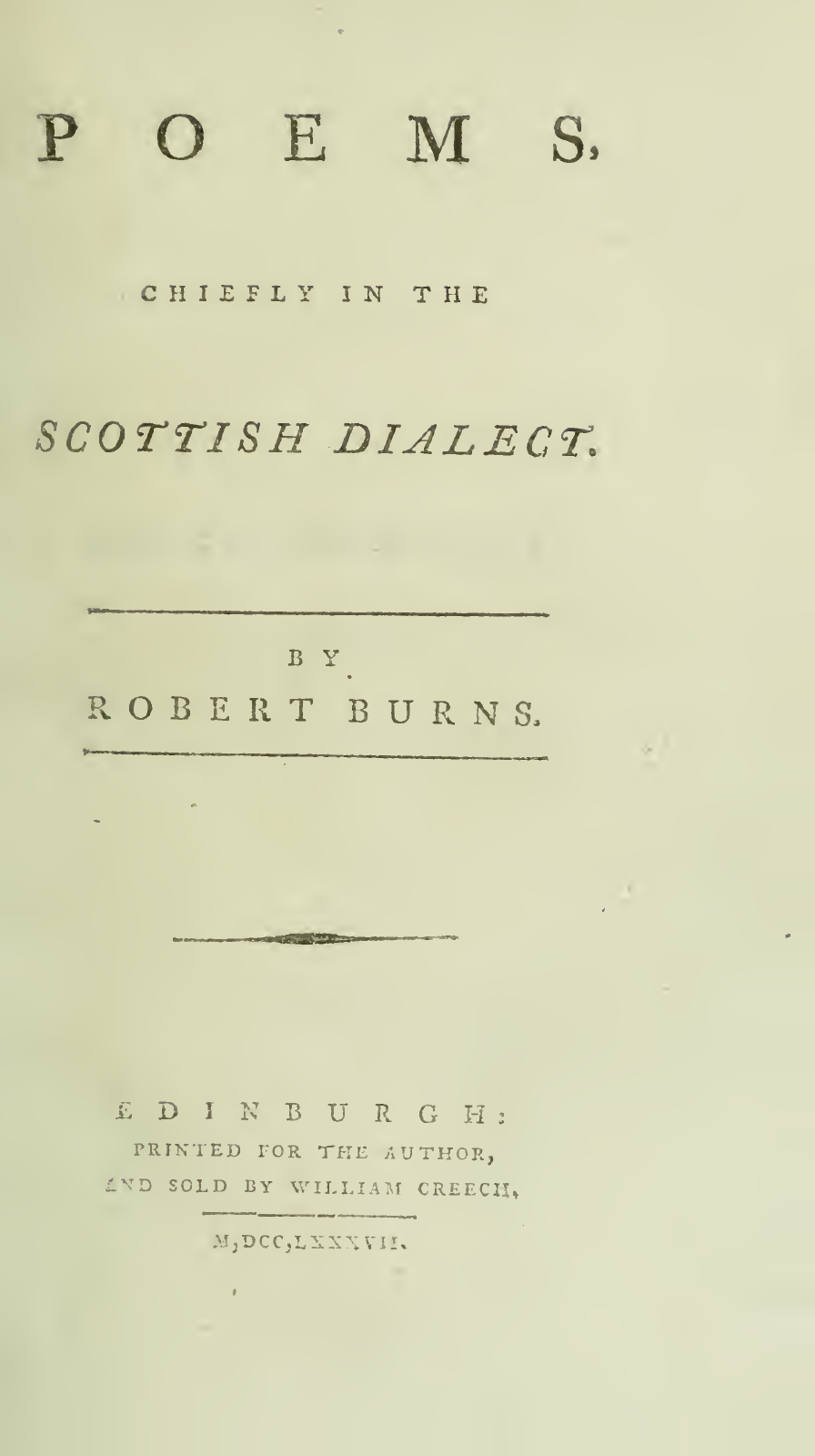
John Wilson printed the finished collection at Kilmarnock under the title Poems, chiefly in the Scottish dialect. Burns later recalled that subscriptions had covered about 350 copies. He connected the venture with his preparations for Jamaica and reported nearly £20 left after expenses. The poems had circulated locally. With orders in hand, Burns could pay to have them printed as a book.
John Wilson printed Robert Burns’s Poems, chiefly in the Scottish dialect at Kilmarnock in 1786. Before the book could be made, Burns and his friends gathered subscribers who promised to buy copies. The printed proposals offered a stitched volume for three shillings, with work to begin when enough support had been secured to meet the expense.
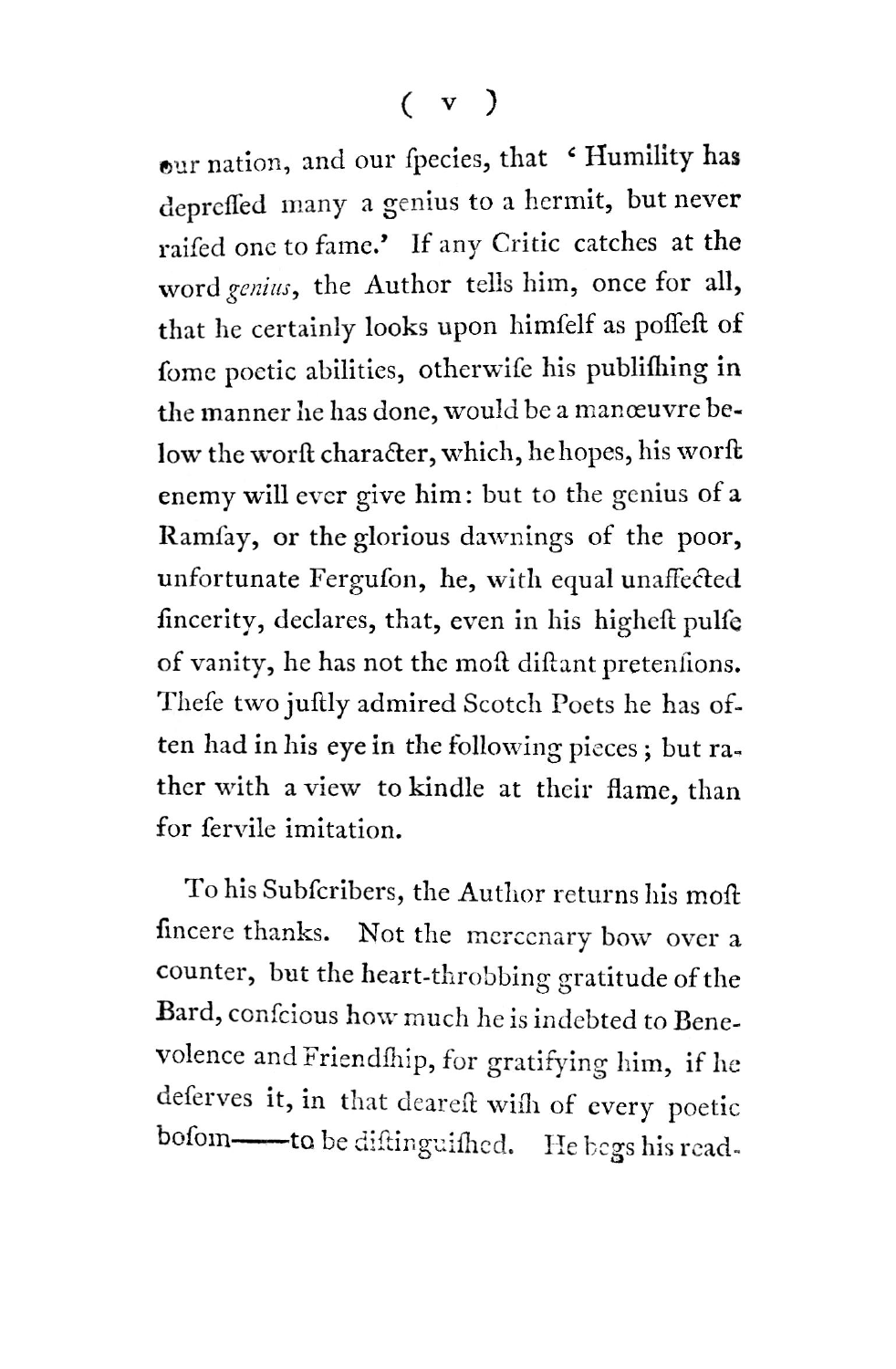
Burns had written the poems while working on farms. In his preface Burns acknowledged Allan Ramsay and Robert Fergusson, thanked his subscribers and described the encouragement he had received from friends. His work was now available for strangers to judge.
The edition found readers, but another printing still required money in advance. Burns later told Robert Aiken that Wilson would undertake a second edition if he paid the paper costs first. He could not afford that arrangement. The first book had attracted readers. Burns still needed a way to pay for another edition.
Jean Armour gave birth to twins, Robert and Jean, on 3 September 1786. Their father was Robert Burns, whose first collection of poems had appeared that summer. The children arrived during a troubled period in their parents' relationship and before the household later established at Ellisland.
The baby Jean died in infancy. Her brother survived and became known as Robert Burns junior, distinguishing him from his father and from another son named Robert, born to Jenny Clow. Relatives helped look after the boy. In January 1789 Gilbert Burns wrote that the little boy was staying at Mossgiel with his grandmother and aunts while Robert and Jean were establishing their new home.
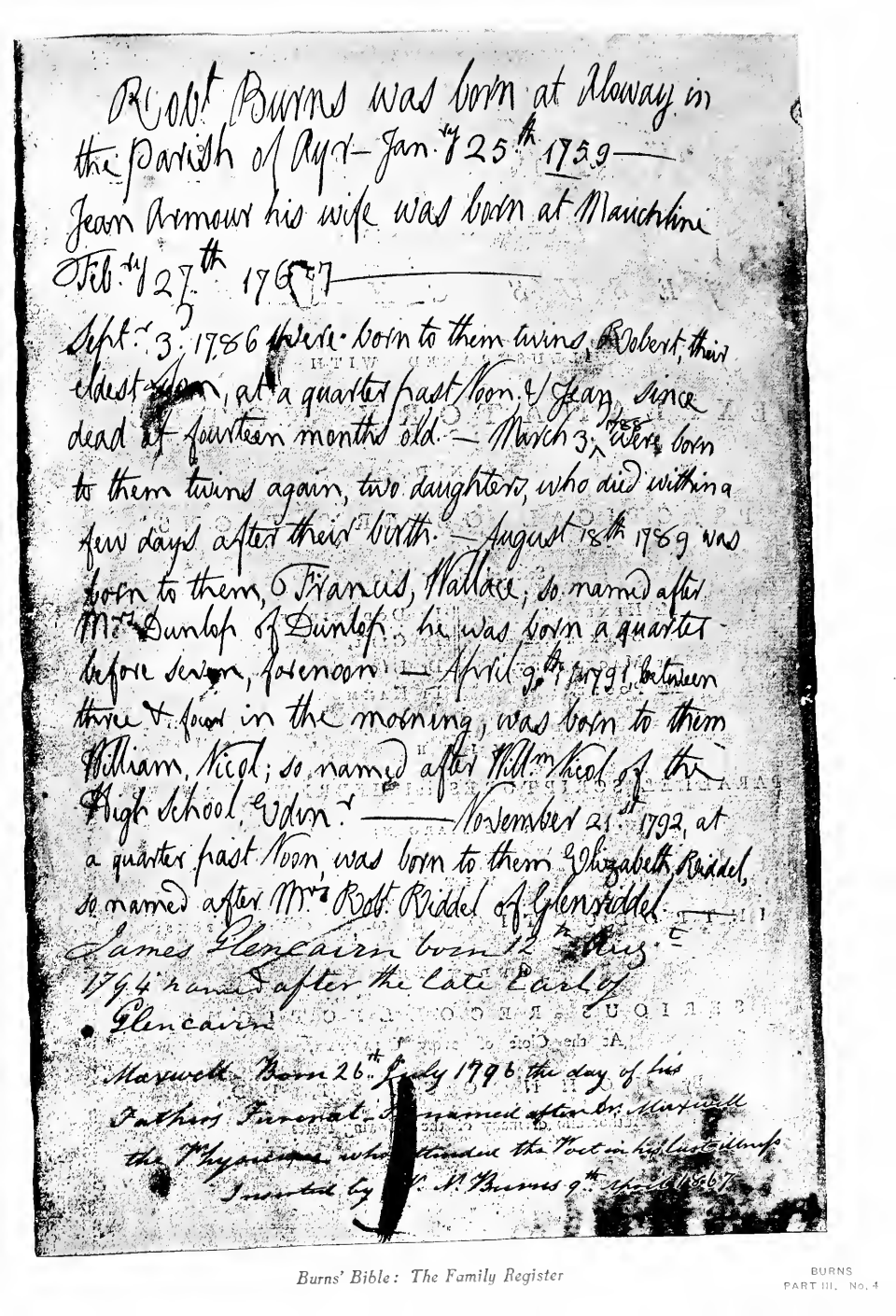
Robert junior grew up to study in Edinburgh and Glasgow and work in London. He was one of three of Jean Armour's children to reach adulthood, alongside William Nicol and James Glencairn. The family register records his birth. He went on to outlive his father by many decades.
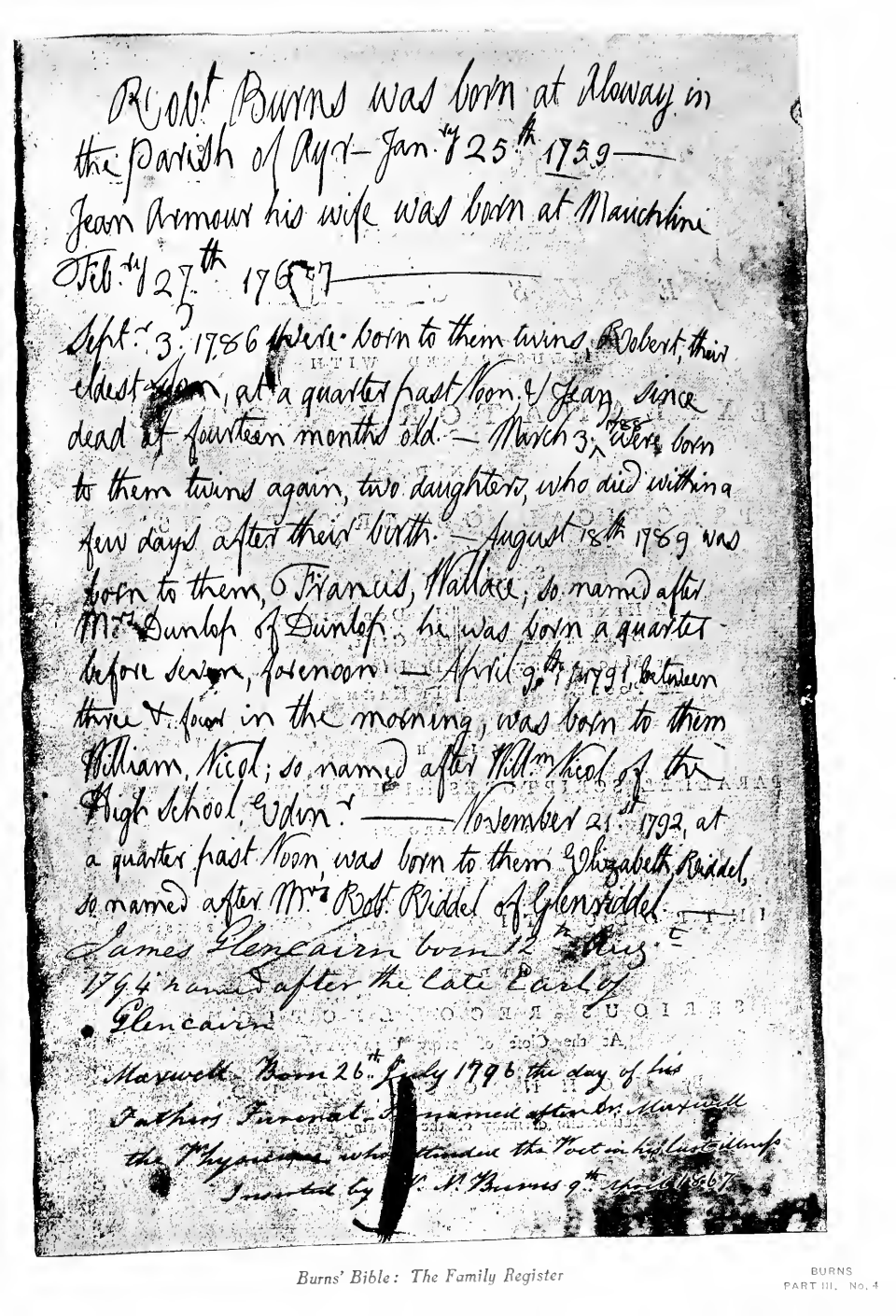
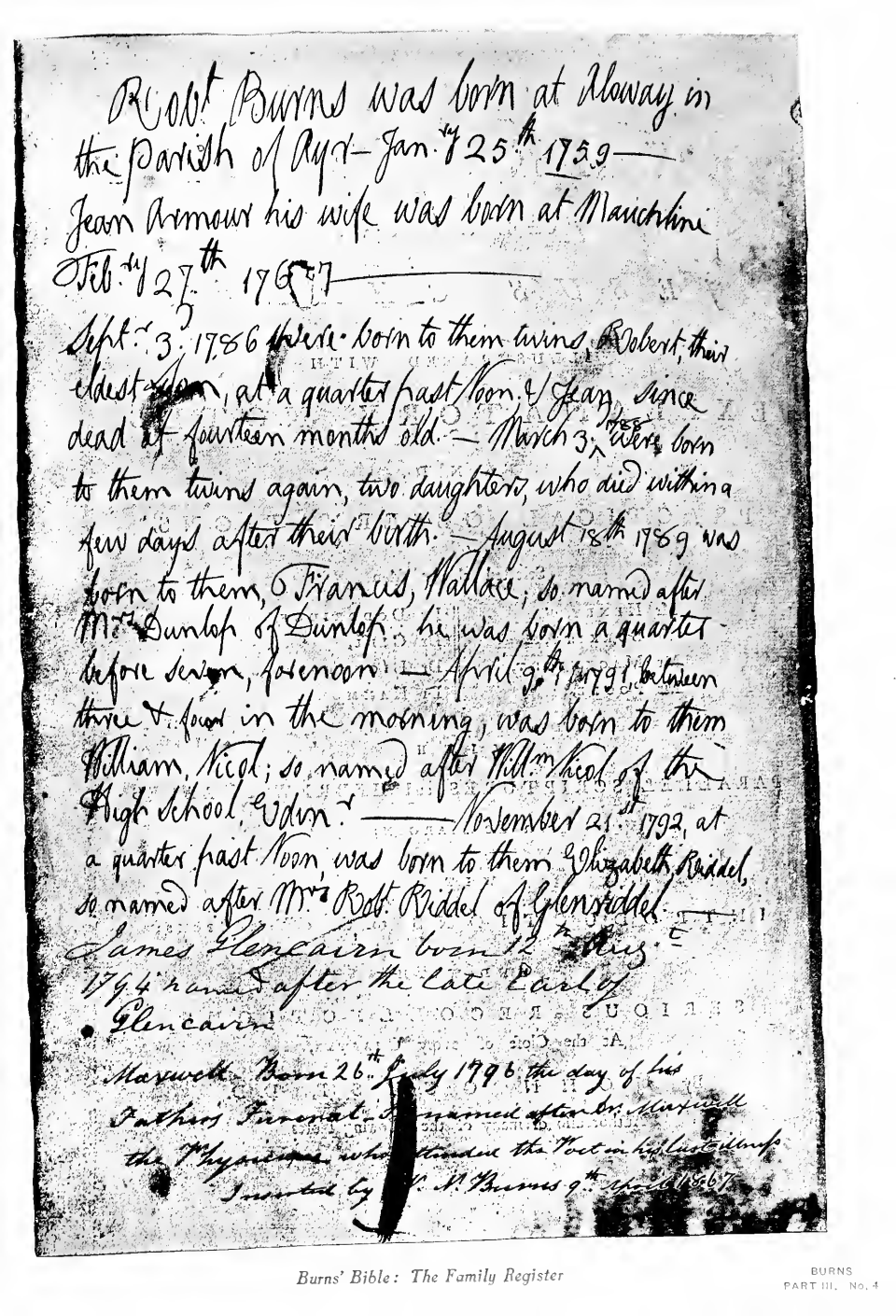
Open full imageThe family register from Burns’s Bible, reproduced in the Rare Print Collection of 1900. William Nicol Burns added the entry for Maxwell in 1867. Rare Print Collection · 1900 · Cornell/IA · Licence · Source
Jean Armour gave birth to twins, Robert and Jean, on 3 September 1786. Their father, the poet Robert Burns, had published his first collection at Kilmarnock only weeks earlier. The children arrived during a troubled period in their parents’ relationship: Burns and Jean had exchanged a marriage paper, and Burns said that her father had arranged for it to be damaged.
The daughter took her mother’s name; her twin brother took her father’s. Little Jean died in October 1787, aged about one. Robert survived into adulthood. By January 1789 he was staying at Mossgiel with his grandmother Agnes Broun, his aunts and his uncle Gilbert, while his parents were establishing their home at Ellisland.
Jean and Robert were the first of nine children born to Burns and Jean Armour. Three of those children—Robert, William Nicol and James Glencairn—survived to adulthood.
Open full imageThe title page of Burns’s Edinburgh Poems, 1787. Edinburgh Poems · 1787 · Source
Thomas Blacklock praised Robert Burns's first collection in a letter to the Reverend George Lawrie in September 1786. He admired the feeling of the serious poems and the wit of the livelier ones, and wanted a second, larger edition to reach more readers.
Blacklock was himself a poet and had been blind since infancy. Professor Dugald Stewart had earlier read three of Burns's poems to him, prompting him to ask to become a subscriber. Lawrie helped carry the poems into this circle of readers, and Blacklock hoped to bring them to the attention of Hugh Blair.
Gavin Hamilton passed the encouragement on to Burns. Burns later remembered it arriving while he was preparing to leave for Jamaica. Praise from a critic he respected made a further edition in Edinburgh seem possible. He went to the city that November, where the work of finding supporters and negotiating with a bookseller began. A copied letter had helped change the direction of his plans.
Open full imageA nineteenth-century imagining of Highland Mary, photographed about 1879–1889. Rijksmuseum · CC0 · Licence · Source
Mary Campbell died in October 1786, during the year Robert Burns published his first collection of poems. She had worked in Gavin Hamilton’s household at Mauchline, and her relationship with Burns developed during that unsettled spring. Jean Armour was pregnant, while Burns was considering employment in Jamaica.
Years after Mary’s death, Burns sent Highland Mary to the collector George Thomson, describing its subject as an especially affecting passage of his youth. He wanted the words joined to an air that would help them endure and recognised that his feelings might influence his judgement of the song.
In the song Burns put his memories of Mary into words for others to sing. Mary also became the subject of many later commemorations. The song and the letter to Thomson give us Burns’s own recollection of her.
Open full imageFrances Dunlop. Historical reconstruction · Irvine / Robinson, 1840 Photo: Roger Griffith · CC BY-SA 4.0 · Licence · Source
Frances Dunlop asked Robert Burns for six copies of his poems. Replying from Mossgiel on 15 November 1786, he said he could find only five. He thanked her for her praise and explained that he expected to go to Edinburgh to arrange another edition, promising to visit her on his return.
Dunlop had been drawn to the book by The Cotter's Saturday Night. Gilbert Burns later remembered a friend placing the volume before her during a period of illness and low spirits. Her pleasure in the poem led to an order for copies and an invitation to its author.
Her praise for his treatment of William Wallace prompted memories of his own childhood reading and a walk to Leglen Wood. Their correspondence developed into discussions of poetry, ambition and the pressures of public attention. Dunlop also helped circulate his work and introduced it to the physician and novelist John Moore. Their friendship began with the order for those books.
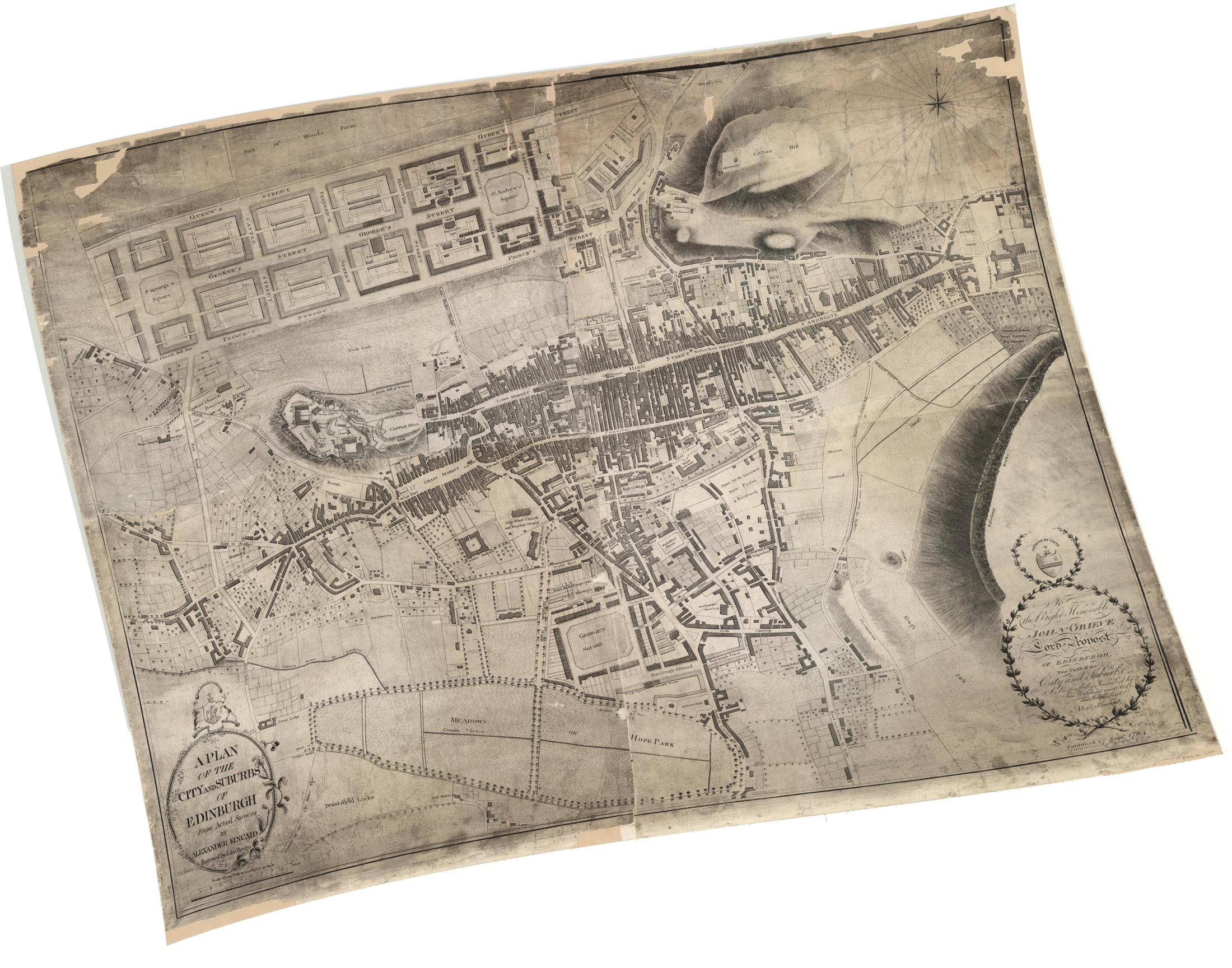
A plan of the city and suburbs of Edinburgh, by Alexander Kincaid, 1784. Alexander Kincaid, 1784 · Visualising Urban Geographies / NLS / University of Edinburgh · CC BY 3.0 · Source · Licence
Robert Burns arrived in Edinburgh in late November 1786, after his Kilmarnock poems had made his name. John Richmond, an acquaintance from Mauchline, helped him find accommodation. Richmond later recalled sharing a room and a bed with Burns in Mrs Carfrae’s house in Baxter’s Close, off the Lawnmarket.
Soon after arriving, Burns was meeting people who could help him with the book. In December he told John Ballantyne of support from the Earl of Glencairn and friendships with Hugh Blair, Dugald Stewart and Henry Mackenzie. The bookseller William Creech became the contact through whom correspondents could reach him.
A larger edition of the poems took shape over the winter. Subscribers ordered copies, a portrait was prepared and Burns corrected the text. The room he shared with Richmond gave him somewhere to stay while he sought readers for the new edition.
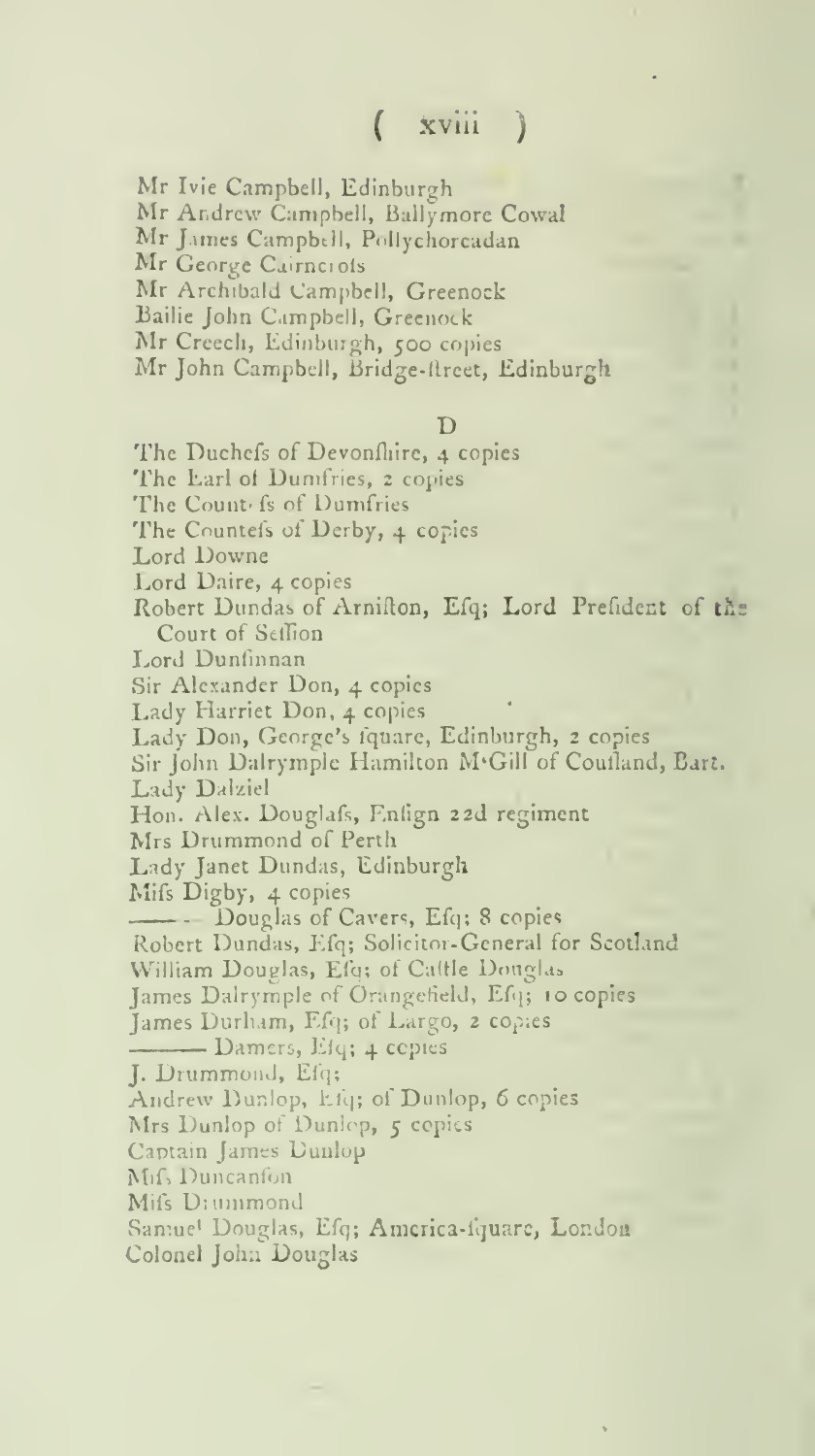
Open full imageSubscribers to Burns’s Edinburgh edition. Edinburgh Poems · 1787 · Source
Robert Burns wrote from Edinburgh to the Ayr banker John Ballantyne on 13 December 1786 with news of support for his next book. Dalrymple of Orangefield had introduced him to the Earl of Glencairn, whose influence helped secure orders from the Caledonian Hunt. Burns was also meeting writers and professors, including Dugald Stewart, Hugh Blair and Henry Mackenzie.
Someone had left ten guineas for him at James Sibbald's shop. Burns discovered that the donor was Patrick Miller and accepted an invitation to Miller's house. He was nearly agreed with the bookseller William Creech over producing the new edition and expected to send subscription papers to his friends.
The attention made him uneasy as well as hopeful. Burns told Ballantyne that he feared being brought too suddenly before fashionable and learned readers. At the end of the letter he asked Ballantyne to send correspondence through Creech’s bookshop.
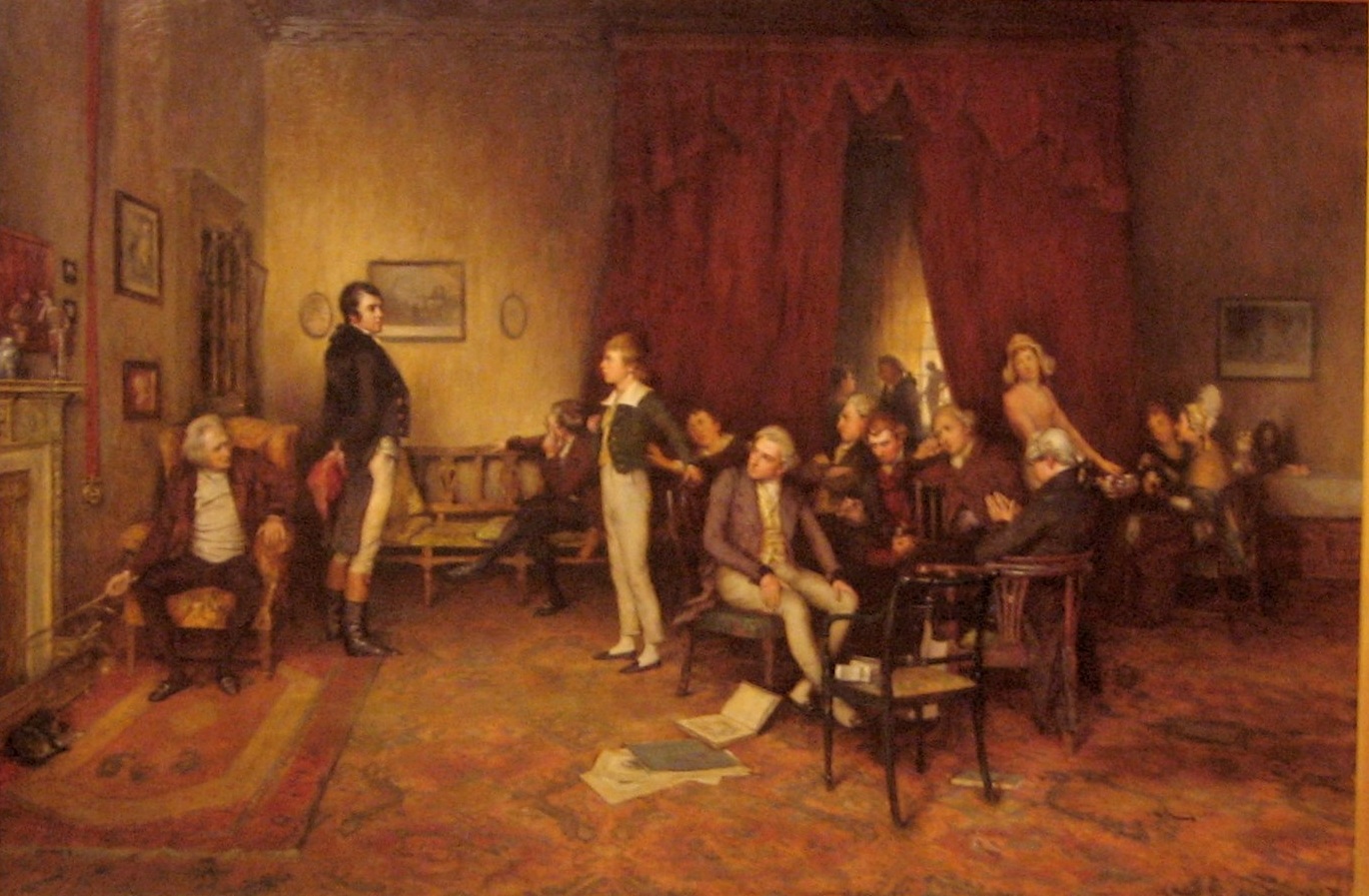
Open full imageThe Meeting of Burns and Scott, Charles Martin Hardie, 1893. A later imagining of their Edinburgh encounter. Charles Martin Hardie / Dunedin Public Art Gallery · Licence · Source
Walter Scott was fifteen when he met Robert Burns at Professor Adam Ferguson’s house in Edinburgh during the winter of 1786–87. Scott later remembered the younger guests sitting quietly while the adults talked. He already admired Burns and hoped for an introduction.
A print showed a dead soldier in the snow beside his dog, widow and child, with verses beneath it. Scott recalled Burns being moved to tears and asking who had written the lines. Scott knew the answer, John Langhorne, and whispered it to a friend, who passed it on. Burns acknowledged him with a look and a word.
Scott wrote this recollection about forty years later. He could still describe Burns’s manner and the pleasure that brief acknowledgement gave him, although he could no longer quote the conversation distinctly. Among those writers and thinkers, it was the schoolboy’s knowledge of the verses that brought him to Burns’s attention.
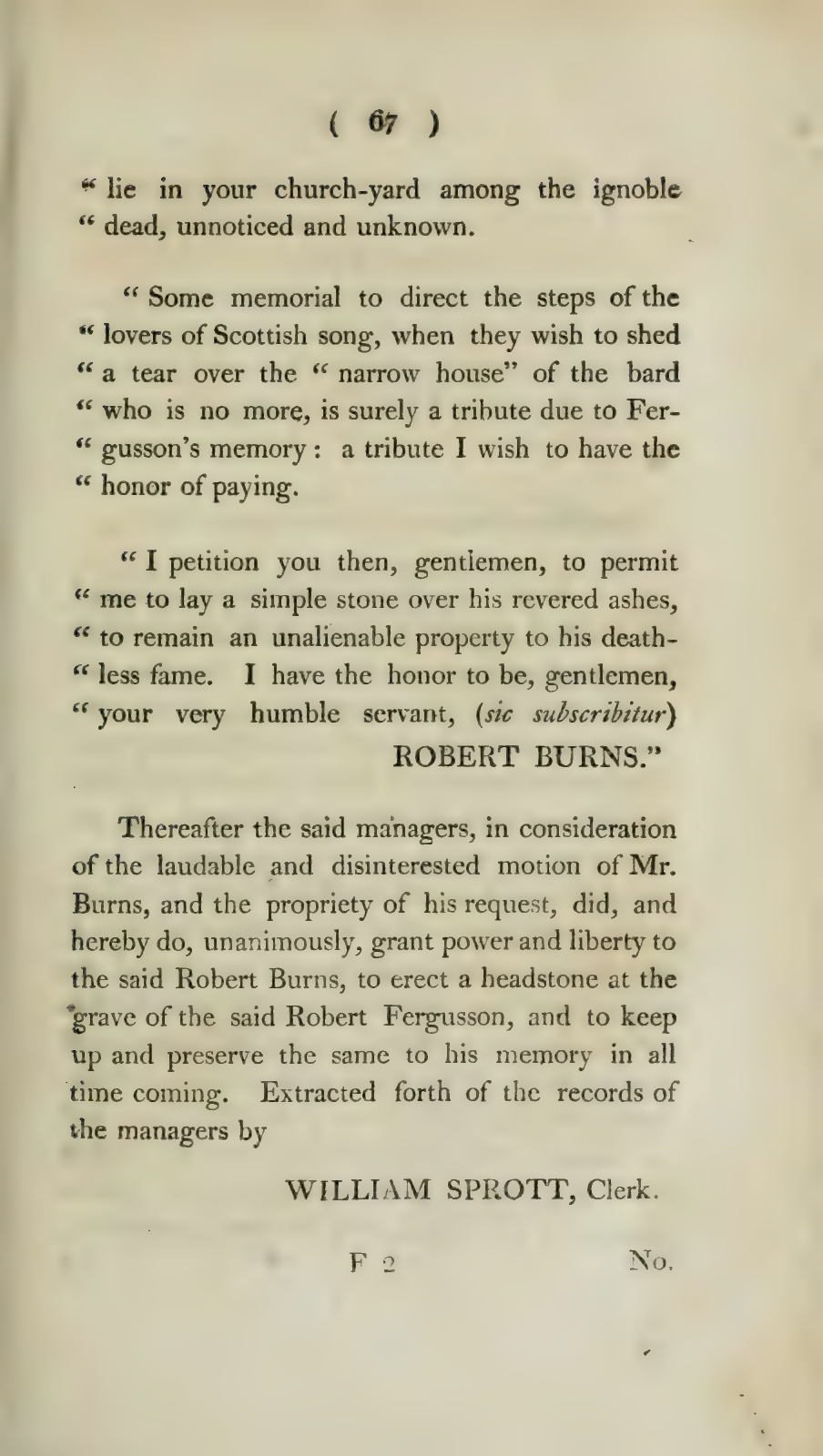
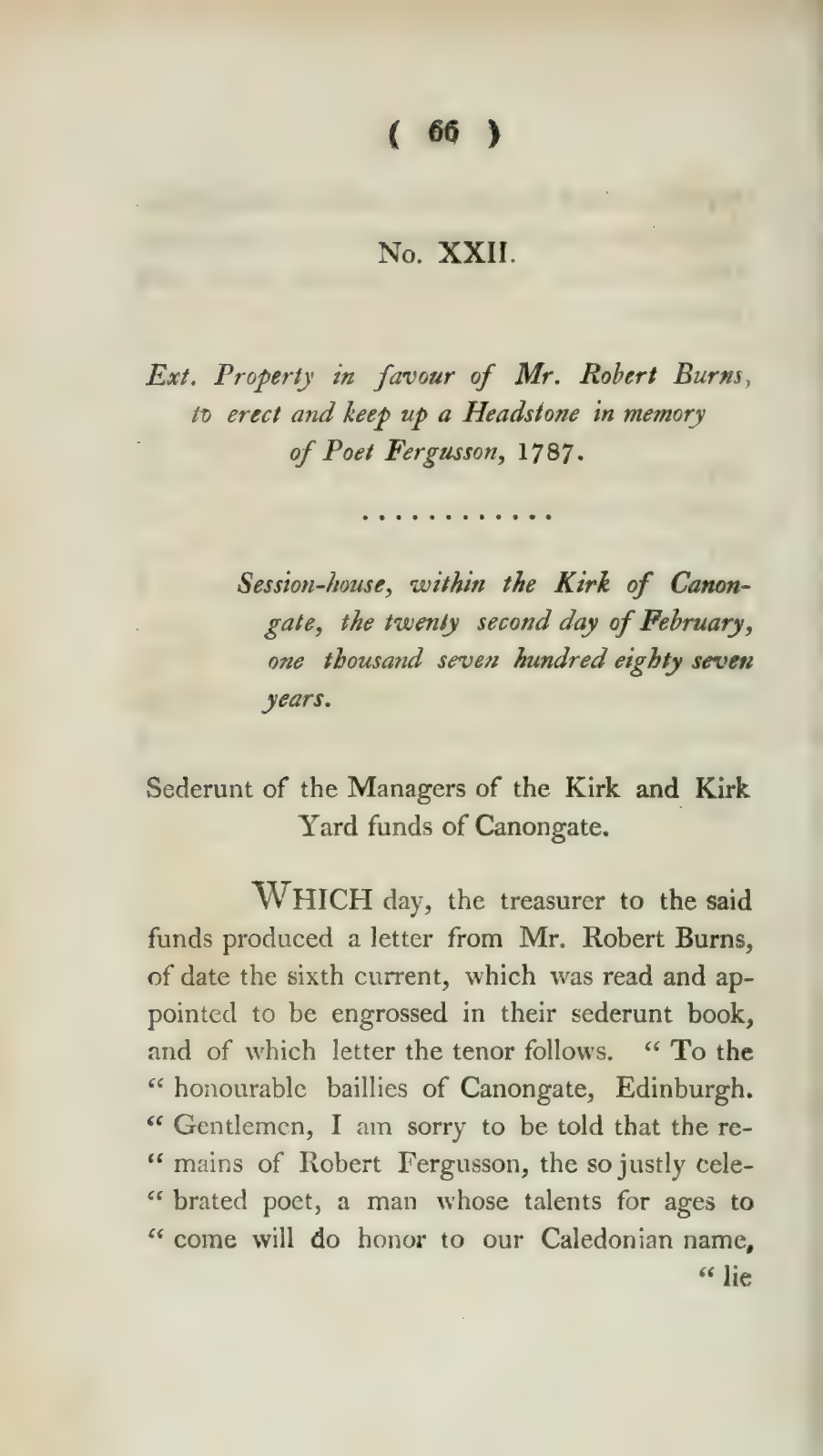
Open full imageBurns’s petition for a memorial to Robert Fergusson, printed in Currie’s Works II, 1800. Robert Burns · Currie, Works II · 1800 · Licence · SourceOpen full imageThe opening of the petition and the managers’ meeting record, printed on page 66. Robert Burns · Currie, Works II · 1800 · Licence · Source
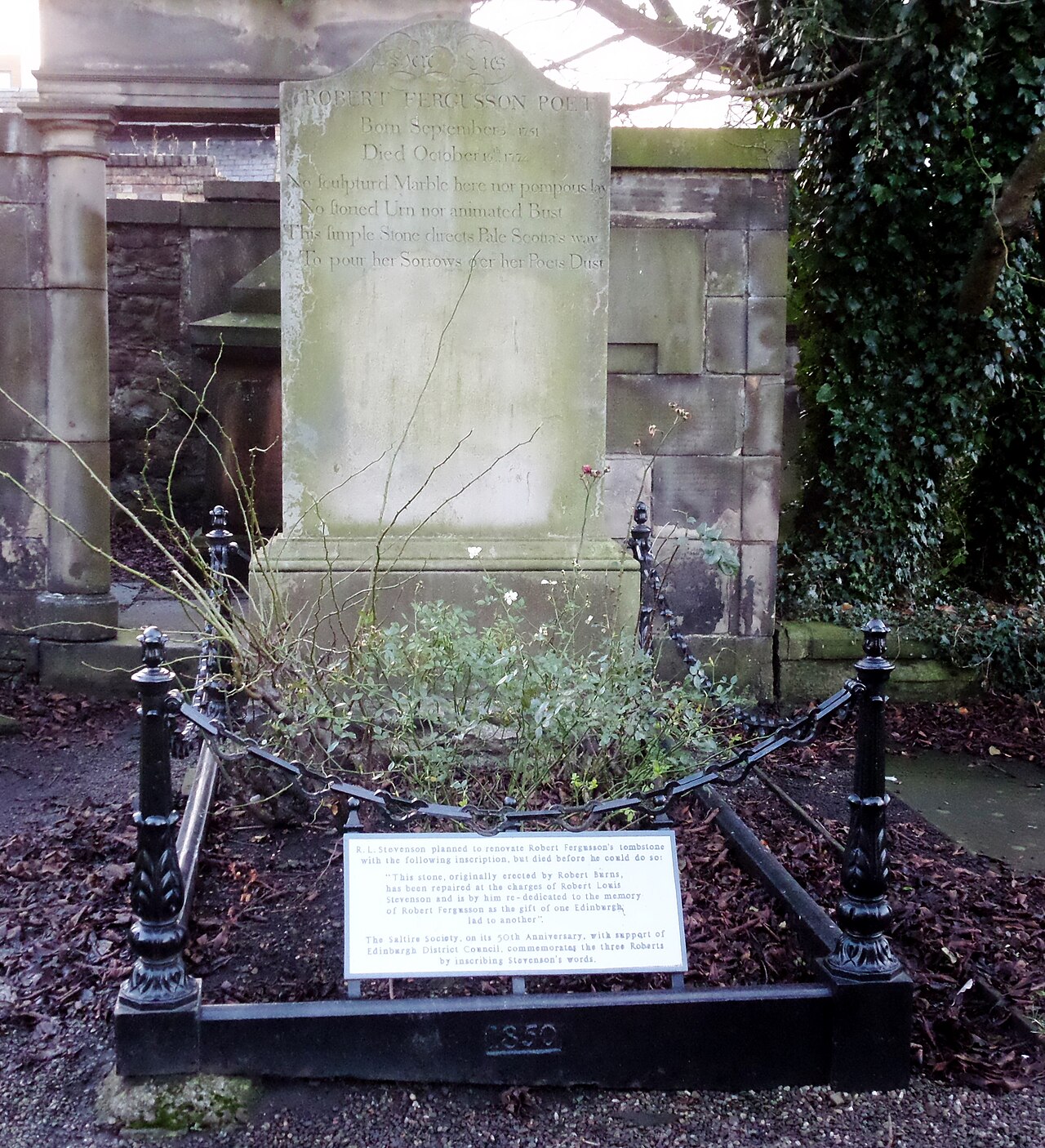
Robert Burns asked permission on 6 February 1787 to place a stone over Robert Fergusson's grave in Edinburgh's Canongate kirkyard. Fergusson's Scots poetry had helped encourage his own writing. As Burns prepared a new edition of his poems, he wanted the earlier poet's burial place to be identifiable to readers.
The decision lay with the managers of the kirk and kirkyard funds, who granted permission on 22 February. Burns offered to pay for a memorial and supplied an epitaph, honouring Fergusson in verse as well as in stone.
Robert Burn, the architect who undertook the work, completed the stone two years later, in 1789. The memorial gave later visitors a place to find Fergusson's grave. Burns's growing success had allowed him to honour a poet whose example he believed had helped renew his own ambition.
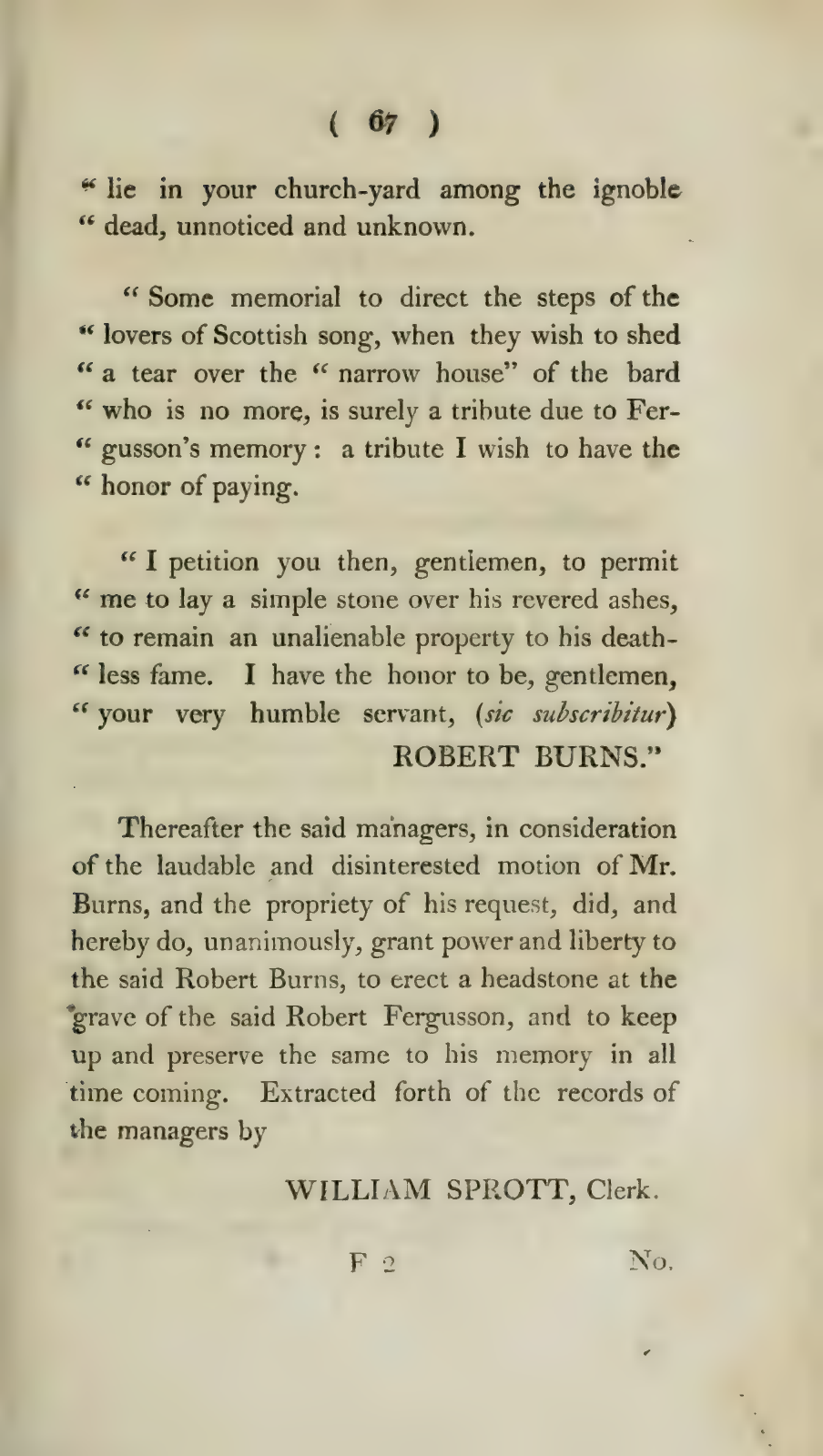
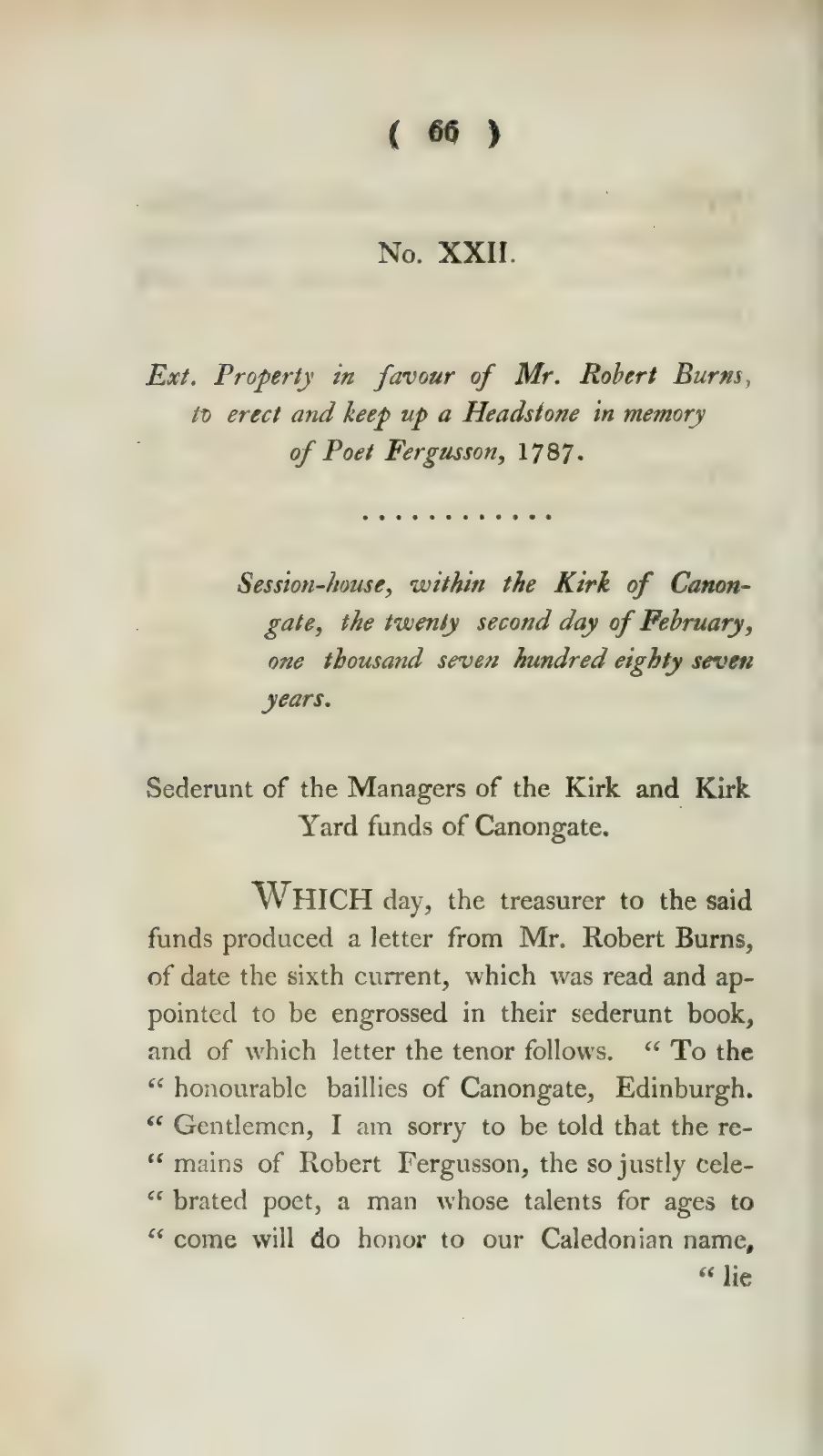
Open full imageThe managers’ permission to erect and preserve Fergusson’s headstone, printed in 1800. Currie, Works II · 1800 · Licence · SourceOpen full imageThe opening of the petition and the managers’ meeting record, printed on page 66. Robert Burns · Currie, Works II · 1800 · Licence · Source
On 22 February 1787 the managers of the Canongate kirk and kirkyard funds gave Robert Burns permission to erect and preserve a stone over Robert Fergusson’s grave. Burns had petitioned them earlier that month, offering to mark the burial place of the Scots poet whose writing had encouraged his own.
Burns was then in Edinburgh preparing an enlarged edition of his poems. As his own poems were finding readers, he could help keep Fergusson’s name before them. A visible memorial would allow readers to find Fergusson’s grave and recognise the poet buried there.
The managers’ decision gave Burns permission to begin, but the stone took another two years to complete. Robert Burn, the architect, finished it in 1789 with an epitaph supplied by Burns. The petition Burns made during his first Edinburgh winter left visitors a place to remember Fergusson in the Canongate kirkyard.
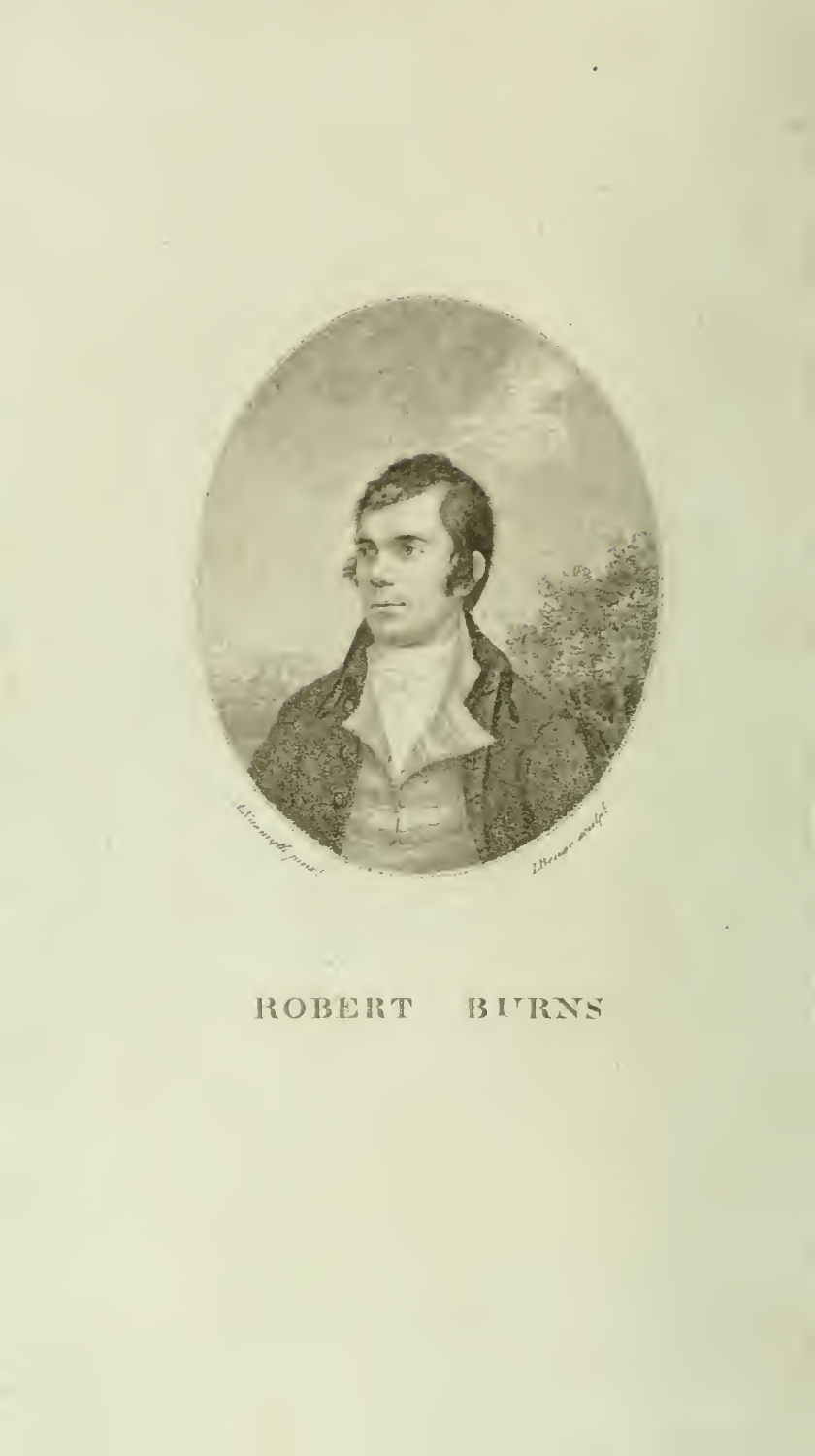
Open full imageEngraved portrait of Robert Burns. Beugo after Nasmyth · 1787 · Source
Robert Burns expected his Edinburgh edition to appear within a week or ten days when he wrote to John Ballantyne on 24 February 1787. The printer still needed the subscribers’ names, and the engraving of Burns’s portrait was under way.
Burns asked his friend to send any subscription papers held in Ayr directly to William Creech, the Edinburgh bookseller. He said he was obliged to print the names against his own wishes. The list would record the readers and supporters who had promised to buy copies.
He joked about appearing opposite his title page if the engraving could be finished in time. John Beugo made the engraved portrait after Alexander Nasmyth's painting. The volume eventually appeared in April, later than Burns expected in this letter. When Burns wrote, the printer still had to bring the names, portrait and poems together in the finished volume.
Open full imageBurns correcting a proof for the Edinburgh poems, in an imagined scene. AI-assisted illustration · AIRT
By 22 March 1787 Robert Burns had corrected the last proof of the poems for his Edinburgh edition. Writing to his correspondent Frances Dunlop, he reported that 3,000 copies had been printed. The glossary and the subscribers’ names still had to be completed before the volume was ready.
The scale had grown beyond the original plan. Subscriptions connected the publishing venture with readers and supporters beyond Edinburgh; the printed list included large orders as well as individual purchasers. William Creech sold the book, while William Smellie printed it.
The poems were ready. The volume still needed the glossary to help readers with the Scots and the list to record their support. The finished edition appeared in April, with John Beugo’s engraving after Alexander Nasmyth’s portrait at the front. Buyers encountered the poet’s likeness, dedication and subscribers before reaching the poems.
Open full imageThe title page of Burns’s Edinburgh Poems, 1787. Edinburgh Poems · 1787 · Source
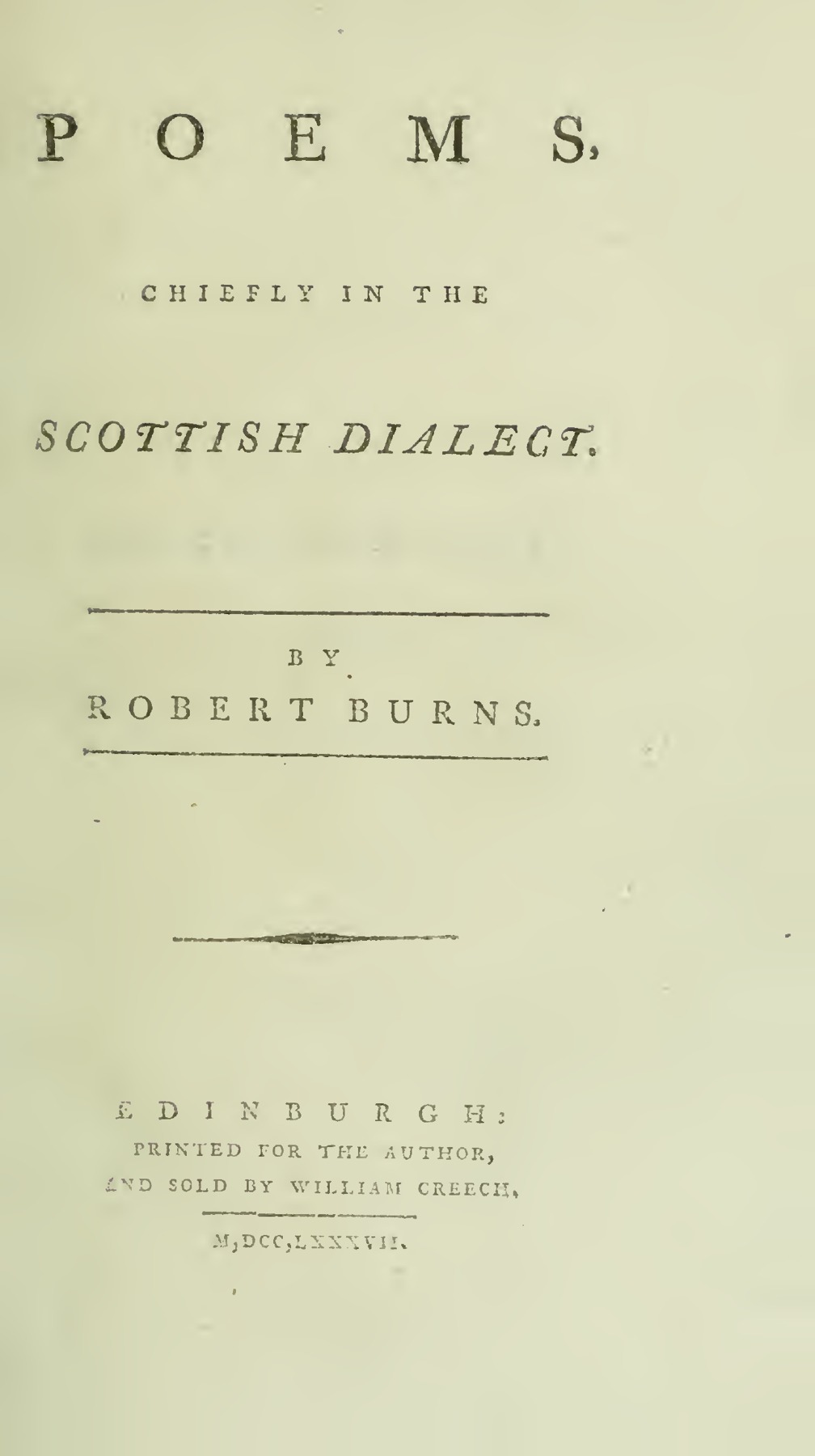
Robert Burns's enlarged collection of poems appeared in Edinburgh in April 1787. William Smellie printed it for the author, and William Creech sold it. The book followed the success of the Kilmarnock edition and months of introductions, subscription gathering and preparation in the capital.
Readers encountered an engraved portrait by John Beugo after Alexander Nasmyth, a dedication to the Caledonian Hunt and a long list of subscribers before reaching the poems. The printed orders included one hundred copies for the Hunt and five hundred for Creech. In March Burns had told Frances Dunlop that he had printed three thousand copies, while still completing the glossary and subscription list.
The new edition reached more readers, and Burns was still dealing with sales after leaving Edinburgh. From his travels in May, Burns answered queries about orders, prices and omitted subscribers. His accounts with Creech took much longer to settle.
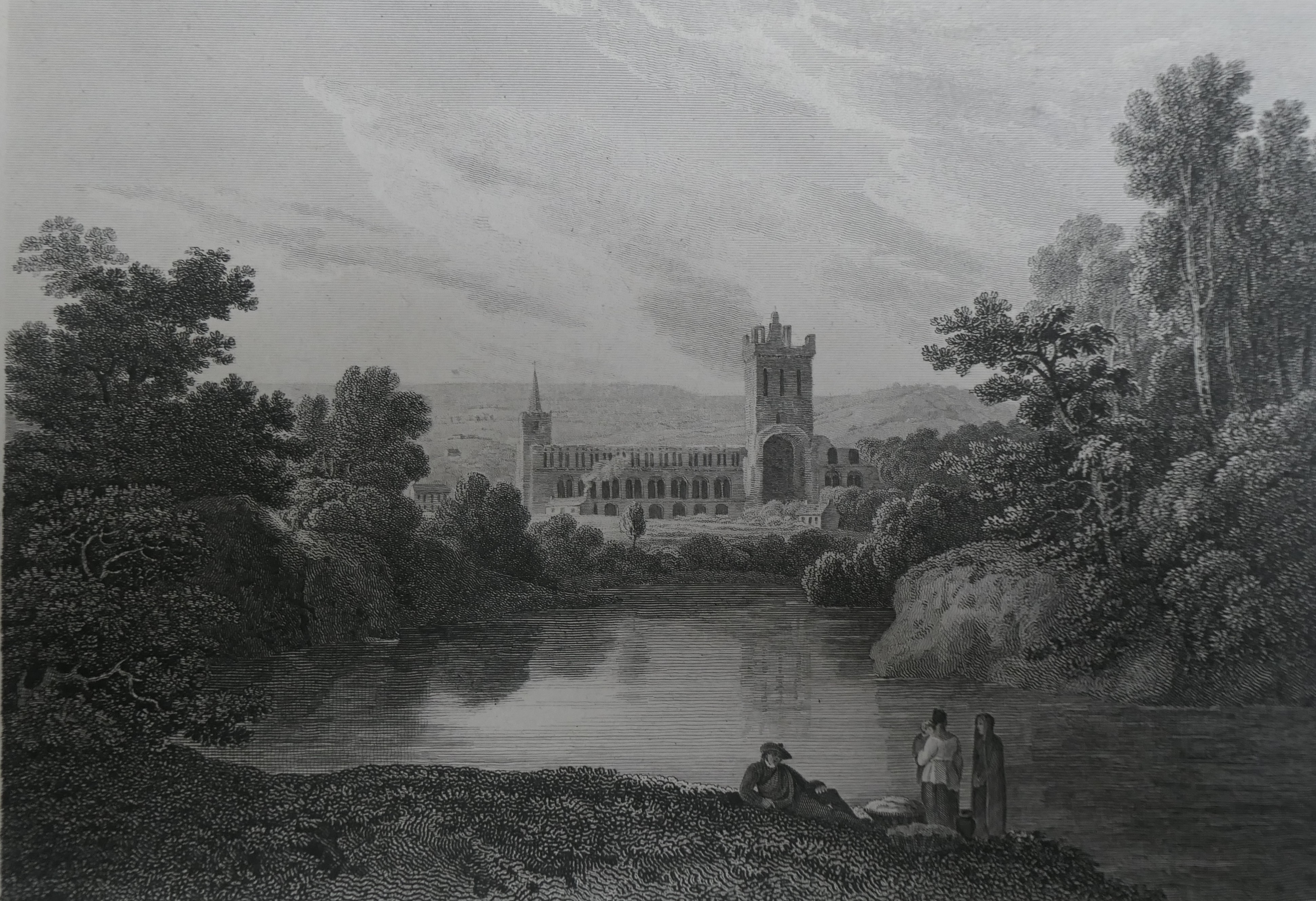
Open full imageJedburgh Abbey in an engraving published in 1814. John Greig after George Arnold, 1814; public domain. · Licence · Source
Robert Burns left Edinburgh on horseback in May 1787, soon after the enlarged edition of his poems appeared. Robert Ainslie accompanied him for part of a journey through the Borders. Ainslie’s family at Berrywell, near Duns, provided an early stopping place, and introductions brought Burns into other households along the route.
Burns travelled through places associated with Scottish history and song. He also kept an eye on the farms. Around Roxburgh he commented on soil, climate, roads, turnips and sheep husbandry. He had worked the land himself and written about it.
At Jedburgh he met the minister and historian Thomas Somerville and received the freedom of the burgh. Burns kept up the work of selling his book as he visited new places and met new people. He wrote to Creech from Selkirk and acknowledged payment for copies of the poems from Berrywell.
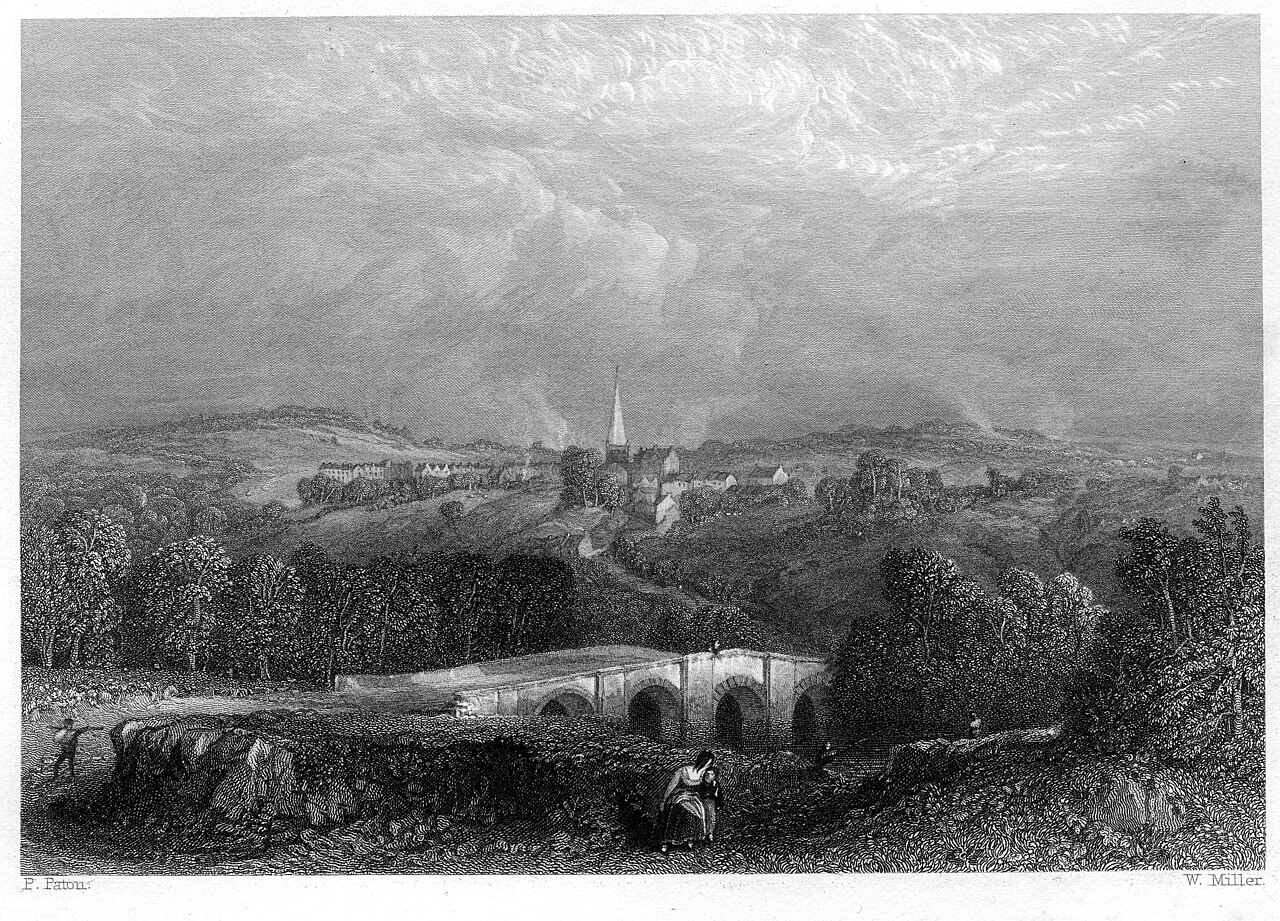
Open full imageSelkirk in an engraving dated 1846. William Miller after P. Paton,1846; public domain. · Licence · Source
After a wet day's riding, Robert Burns stopped at an inn in Selkirk and wrote to his Edinburgh bookseller William Creech on 13 May 1787. He enclosed a verse epistle, saying that he had composed it almost on the spot. Travel had left him exhausted, but he still had news and poetry to send back to the city.
Burns had already visited much of East Lothian and the Borders. He told Creech that he intended to begin a tour through northern England the following week. The day before writing, he had dined with Lady Harriet, the sister of his patron the Earl of Glencairn.
Burns had set out soon after the Edinburgh edition of his poems appeared. He continued to meet people connected with his supporters and to correspond about the book while away. From the inn at Selkirk he sent Creech both news of his journey and a new poem.
Open full imageThe title page of the Edinburgh edition of Burns’s Poems, 1787. Robert Burns · Edinburgh edition, 1787 · Licence · SourceView related pagesOpen full imageBurns’s letter to Pattison, 17 May 1787, printed in Scott Douglas’s Works IV, 1878. Robert Burns · Scott Douglas, Works IV · 1878 · Licence · SourceOpen full imageThe continuation of the letter to Pattison, with instructions about prices and further copies. Robert Burns · Scott Douglas, Works IV · 1878 · Licence · Source
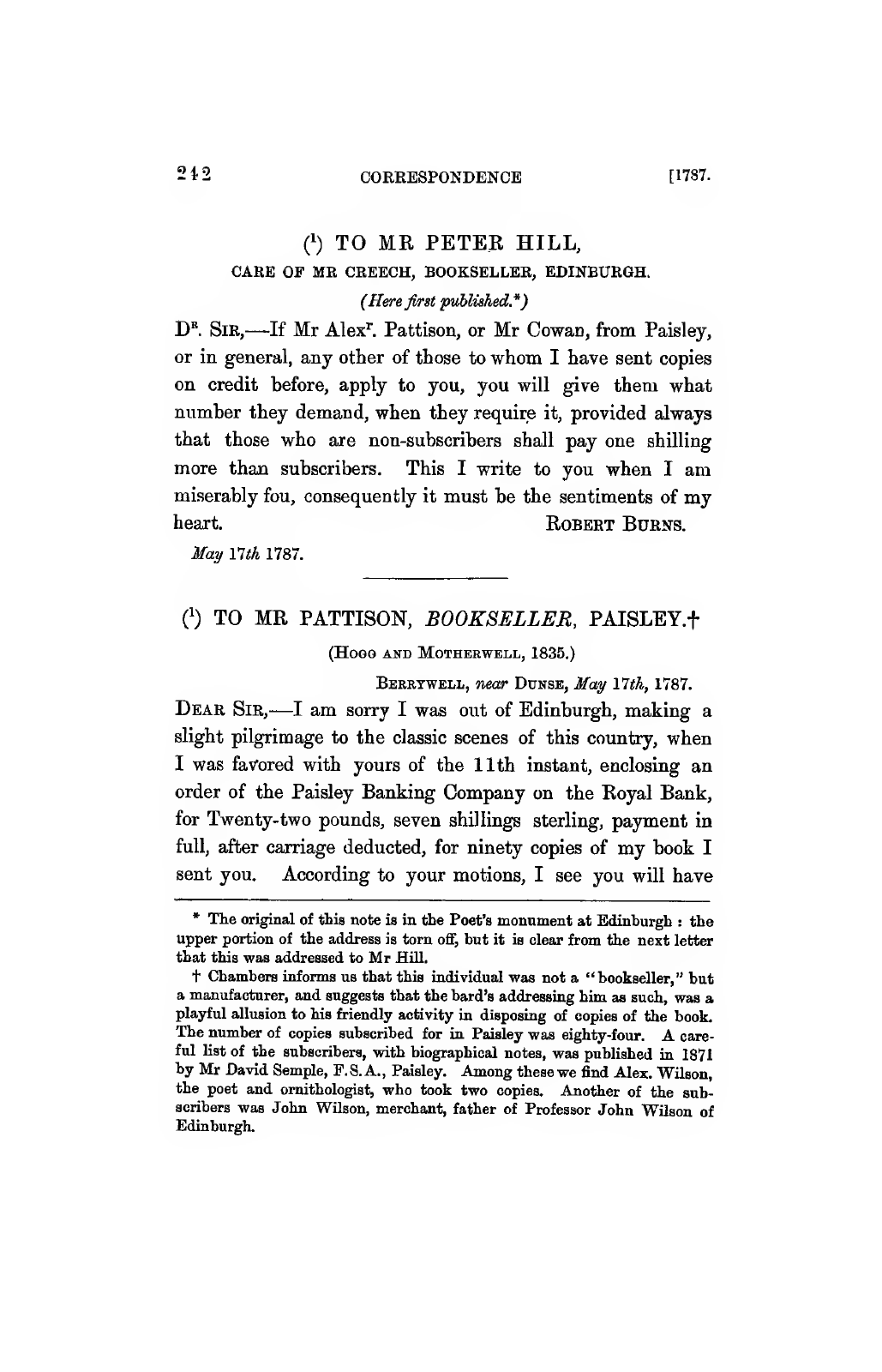
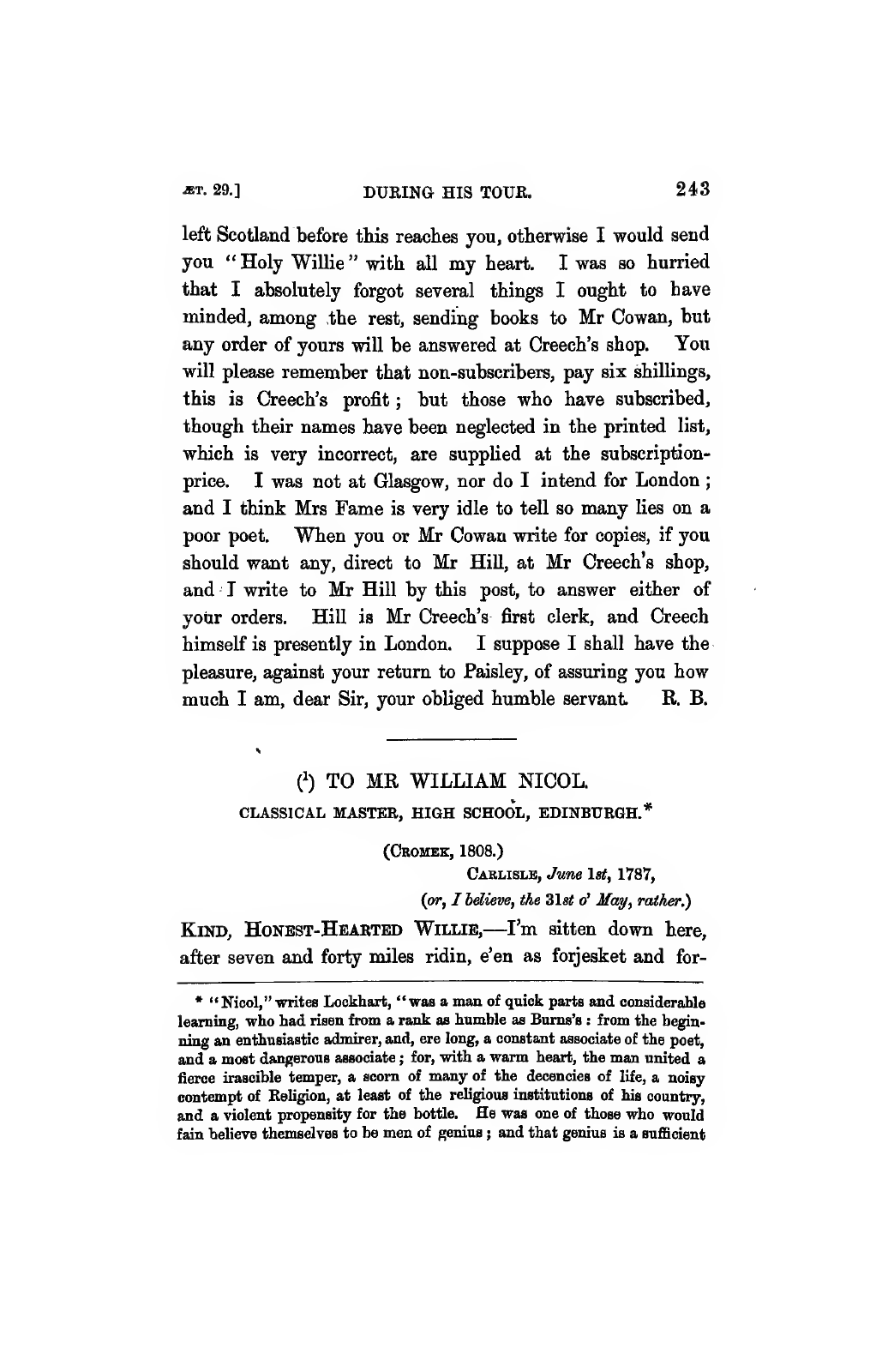
Robert Burns was travelling in the Borders when money arrived for ninety copies of his Edinburgh poems. Writing from Berrywell on 17 May 1787, he acknowledged £22 7s from a Paisley bookseller, after the cost of carriage had been deducted.
The letter dealt with customers as well as payment. Some subscribers’ names had been omitted from the printed list, but Burns said they should still receive their copies at the subscription price. Other buyers would pay six shillings. William Creech, the Edinburgh bookseller, was away in London; his clerk Peter Hill could supply further orders.
The poems had appeared the previous month, yet publication left many small transactions to complete. Copies had to travel, transport costs had to be allowed for and purchasers needed clear instructions. Burns kept answering booksellers and collecting the proceeds while he travelled.
Open full imageMossgiel Farm, in an illustration reproduced in The National Burns, 1878. The National Burns · 1878 · Licence · Source
Robert Burns returned to his family at Mossgiel after travelling through the Borders and northern England in the spring of 1787. James Currie placed his arrival at about 8 June. He had been away during the preparation and publication of his Edinburgh edition, followed by weeks on the road.
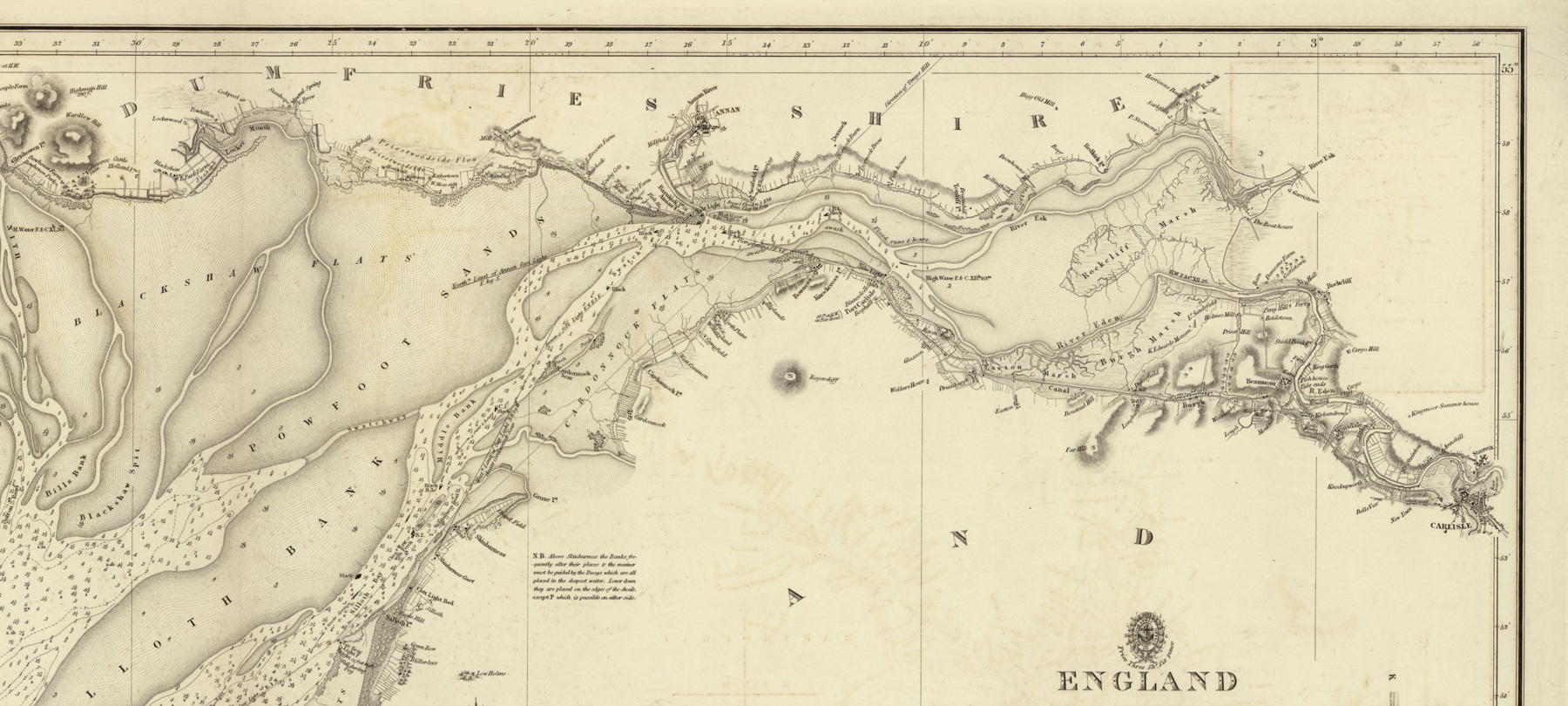
Currie's account traces the return through Carlisle and Annan, then Dumfries and Sanquhar. Earlier stages had taken Burns through Alnwick, Warkworth, Morpeth and Newcastle. His correspondence shows that the journey also included the continuing business of selling his poems: from Berrywell in May he answered a bookseller about ninety copies and their payment.
Burns returned to the family household after the attention his poems had received in Edinburgh and beyond. His mother and siblings still lived at Mossgiel, where Gilbert continued to farm. By late June Burns was travelling in the western Highlands and writing from Arrochar.
The opening of the Highland tour journal, dated 25 August 1787, as printed in Scott Douglas’s Works IV, 1878. Robert Burns · Scott Douglas, Works IV · 1878 · Source · Licence
On 28 June 1787 Robert Burns wrote to Robert Ainslie from Arrochar during a journey through the western Highlands. His letter names Inveraray as the previous stage and Dumbarton as the place where he intended to spend the following night. Those details give a short itinerary within a much livelier account of what he saw.
Burns described mountains, streams, scattered flocks and the people making their living among them. His language was severe towards both the country and its inhabitants. He judged the landscape partly through the experience of a farmer, concerned with what land could produce and the circumstances of those working it.
Earlier that year his Borders journal had noticed prosperous farms and agricultural improvements. The western journey brought different conditions into view. He wrote about how people made a living in the Highlands to Ainslie, who had travelled with him on part of the Borders tour.
Open full imageThe opening of the Highland tour journal, dated 25 August 1787, as printed in Scott Douglas’s Works IV, 1878. Robert Burns · Scott Douglas, Works IV · 1878 · Licence · SourceView related pagesOpen full imageThe journal continues through Linlithgow and West Lothian. Robert Burns · Scott Douglas, Works IV · 1878 · Licence · Source
Robert Burns was back in Edinburgh in August 1787 before setting out on a northern tour with William Nicol, a schoolmaster in the city. The capital remained a base for his work and friendships after the publication of his enlarged collection that April.
Earlier in the year Burns had travelled through the Borders and northern England, returned to his family at Mossgiel and visited the western Highlands. His account of his life, sent to John Moore from Mauchline on 2 August, ended by saying that he needed to be in Edinburgh and intended to leave the following day.
From Edinburgh he would set out through Perthshire and the Highlands with Nicol. Visits to hosts, musicians and historic places supplied material for his journal and letters. He was back among friends and attending to his publishing business between a visit to his family and another tour.
Open full imageMount Oliphant imagined in Burns’s time, by Monro S. Orr, published in Auld Ayrshire of Burns, 1906. Monro S. Orr · 1906 · Licence · Source
On 2 August 1787 Robert Burns wrote a long account of his life to John Moore, the physician and novelist who had taken an interest in his poetry. Writing at Mauchline after months of travel, Burns described how he had grown up, worked and learned before becoming a published author.
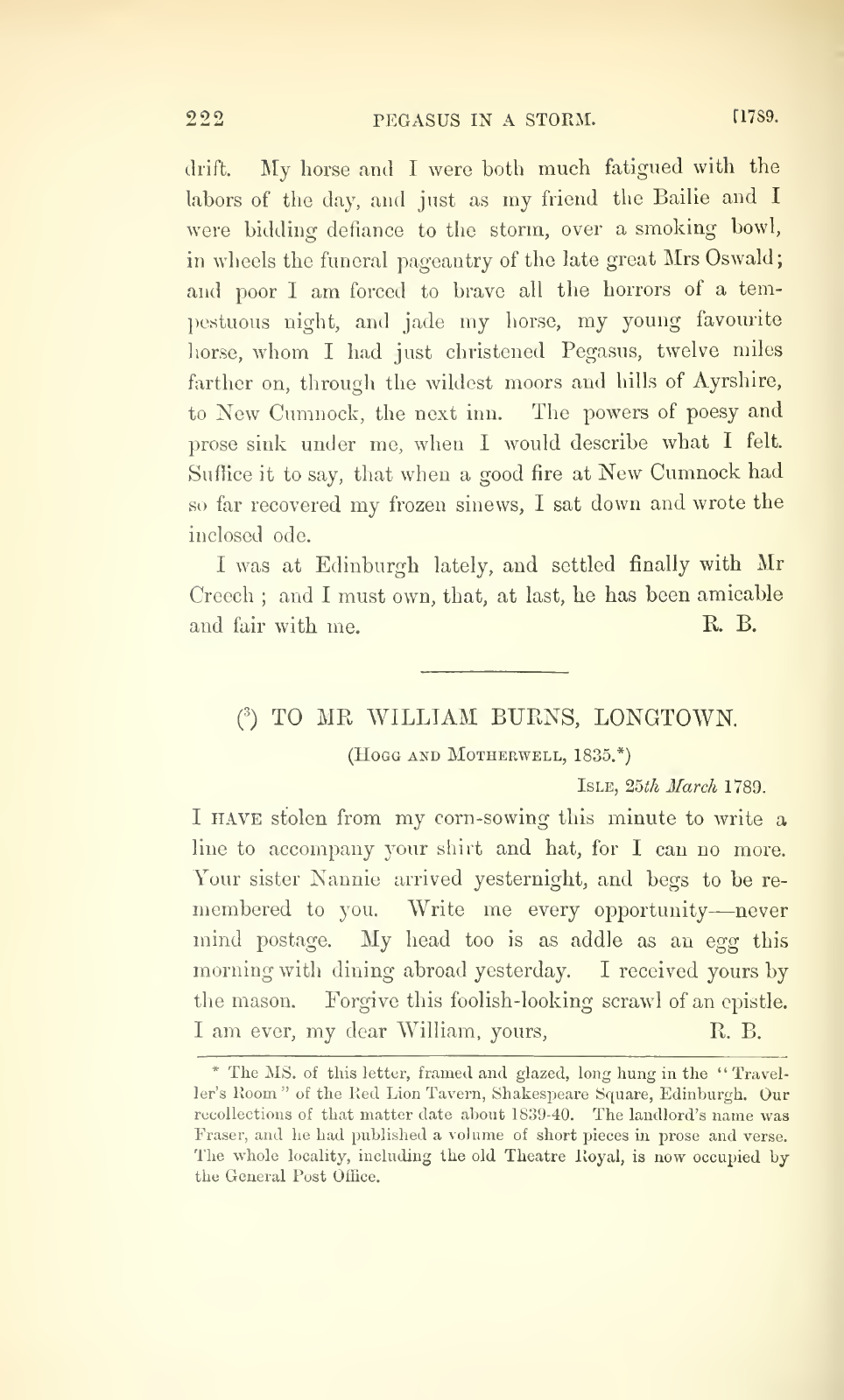
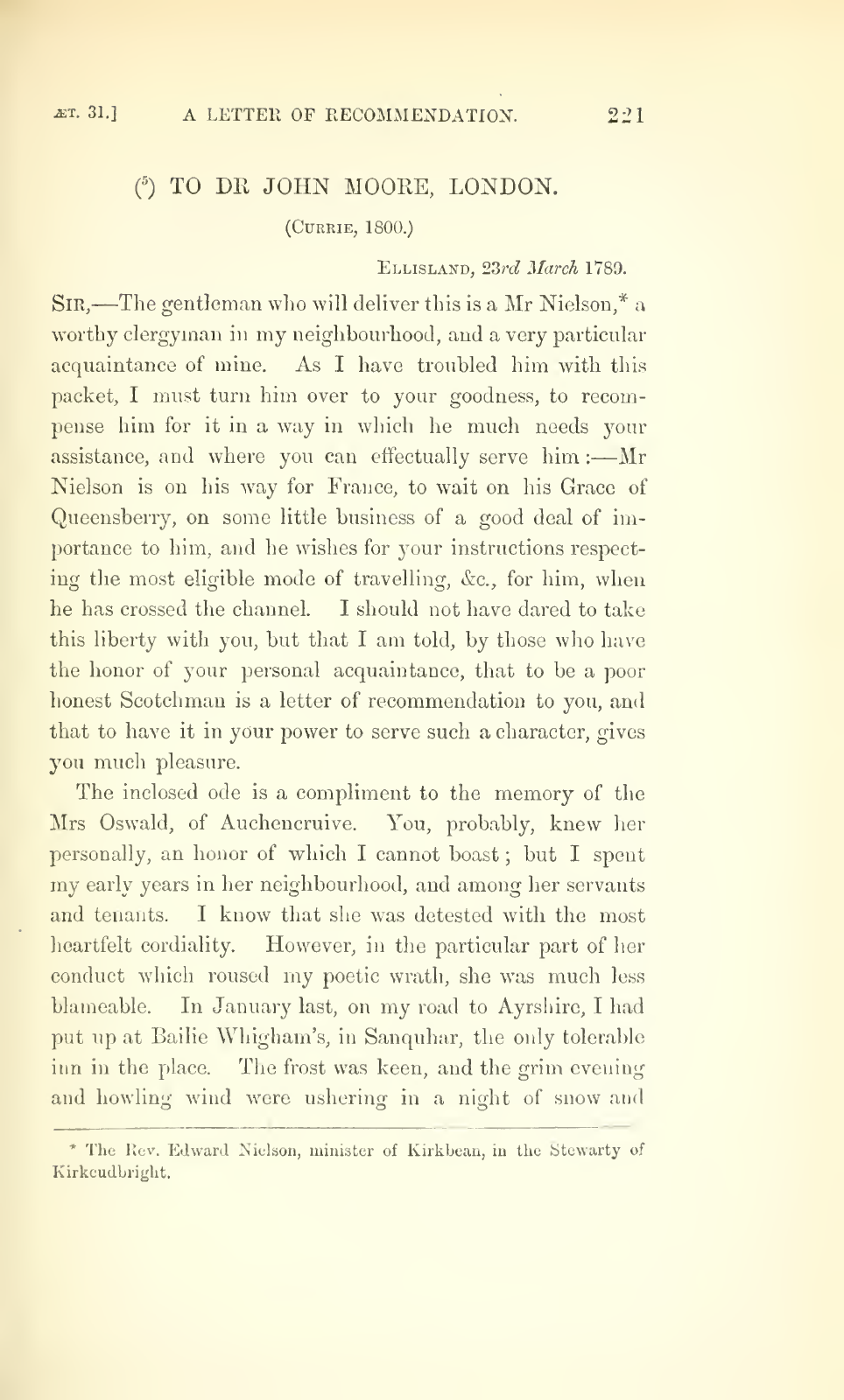
The childhood he recalled involved sustained labour. Robert ploughed, his younger brother Gilbert drove the team, and both threshed corn. He remembered the family’s efforts to reduce expenses and his anger at threatening letters sent to his father during their farming difficulties.
Burns also recalled what he read. Books came from teachers, neighbours and friends; he studied songs while driving a cart or walking to work. Later he read agricultural authors and calculated crops for the farm at Mossgiel. He described how he found time and books for his education while working on farms under financial pressure.
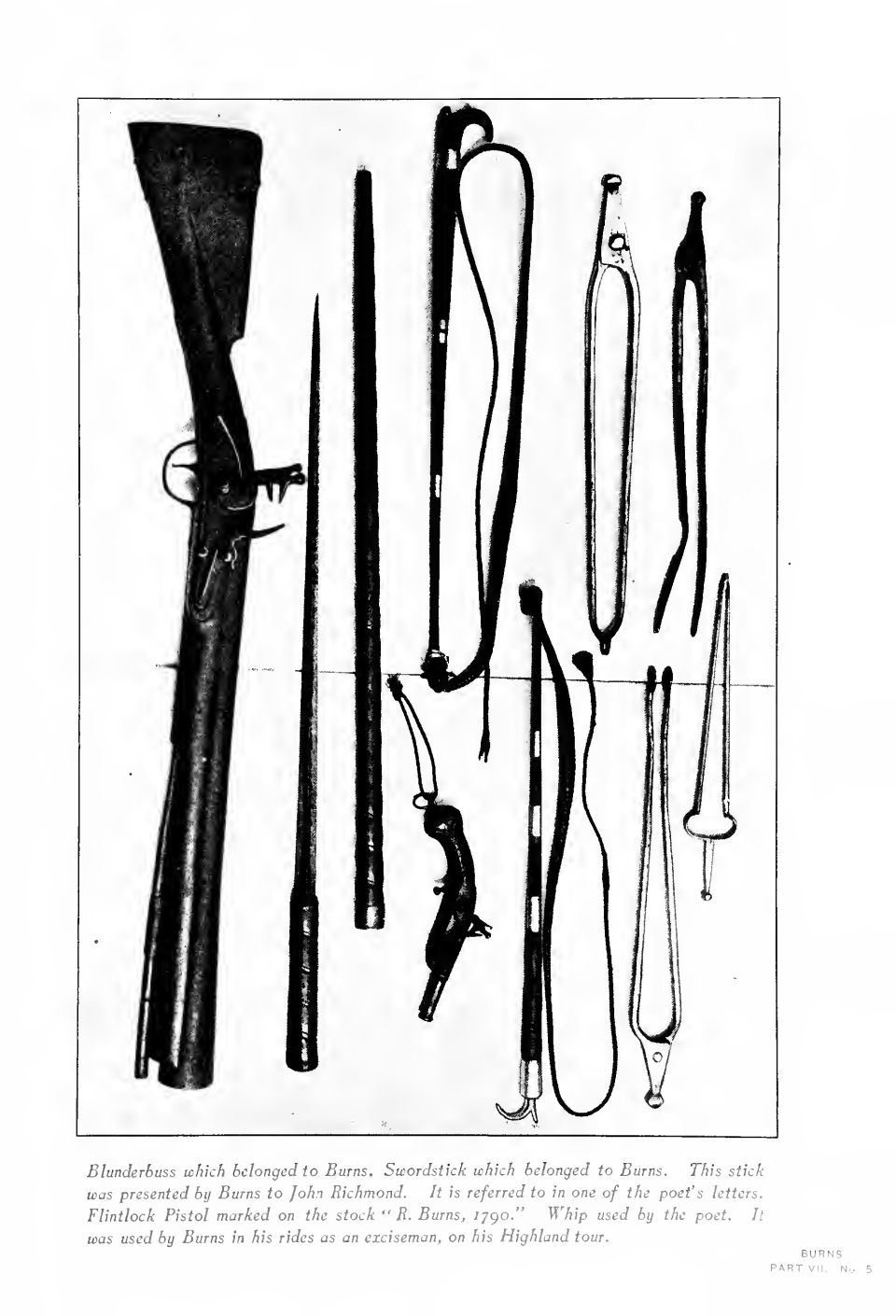
Open full imageWeapons and whips attributed to Burns in the Rare Print Collection of 1900. The accompanying caption connects a whip with his Excise rides and Highland tour. Rare Print Collection · 1900 · Cornell/IA · Licence · Source
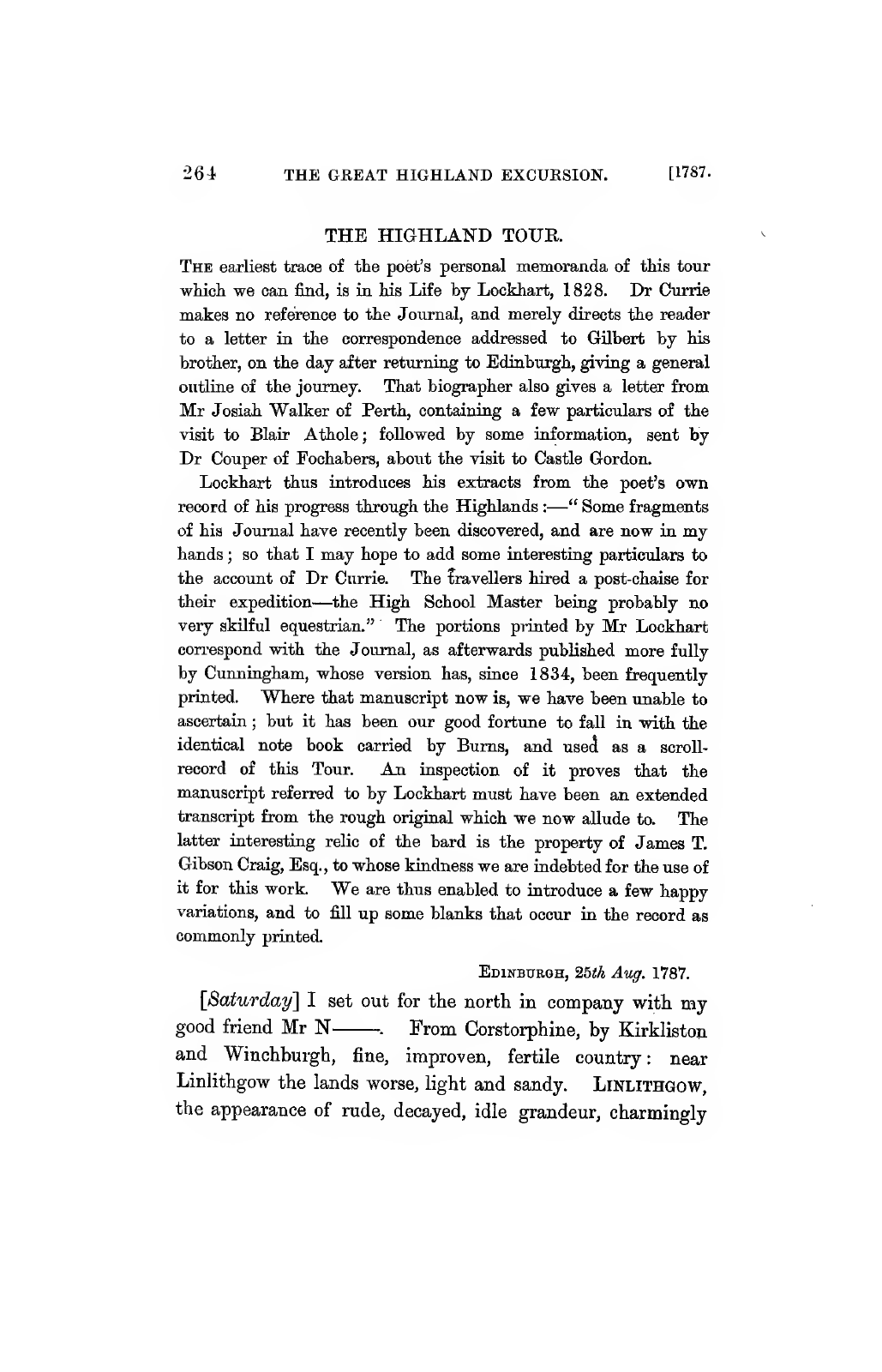
Robert Burns set out with the Edinburgh schoolmaster William Nicol on a northern tour in late August 1787. The journal printed by John Gibson Lockhart begins on 25 August. Burns anticipated entertainment from his companion's distinctive humour as they left for a journey through central Scotland and the Highlands.
The route led through Linlithgow and the Stirling district towards Perthshire. Buildings and historical associations caught Burns's attention: at Linlithgow he considered the palace and church, and at Bannockburn he imagined the Scottish army advancing into battle.
Music and hospitality also shaped the journey. At Dunkeld he heard the fiddler Niel Gow, while Blair Atholl brought meetings with the ducal family and Josiah Walker, whom he already knew. Visits farther north generated letters, poems and new contacts. In his journal Burns recorded the historic places he stopped at and the people and music he encountered as he travelled north.
The opening of the Highland tour journal, dated 25 August 1787, as printed in Scott Douglas’s Works IV, 1878. Robert Burns · Scott Douglas, Works IV · 1878 · Source · Licence
Robert Burns travelled north with the Edinburgh schoolmaster William Nicol in late summer 1787. At Dunkeld he heard the fiddler Niel Gow and visited his home. The journey continued through Killiecrankie to Blair Atholl, where Burns met the ducal family and renewed his acquaintance with Josiah Walker, then a tutor in the household.
Walker later remembered the visit and suggested that descriptive verse would be an appropriate response to their hosts’ hospitality. After leaving Blair, Burns visited the Falls of Bruar and sent verses from Inverness. In The Humble Petition of Bruar Water, the river asks for trees to provide shade along its banks.
Burns made brief notes in his journal as he travelled. Walker’s later recollection describes the company at Blair in more detail. In the poem, Burns gives the river its own voice to ask for the trees.
Open full imageA plan of the city and suburbs of Edinburgh, by Alexander Kincaid, 1784. Alexander Kincaid, 1784 · Visualising Urban Geographies / NLS / University of Edinburgh · CC BY 3.0 · Licence · Source
Edinburgh was a stopping place between Robert Burns's journeys during the autumn of 1787. Later biographers place a stay with the schoolmaster William Nicol between their northern tour and Burns's travels with James Adair. The sequence is clearer than the precise dates: Adair's own later account gives August, while another chronology places the longer Adair journey in October.
Nicol had accompanied Burns through Perthshire and the Highlands. Adair's journey took him to the Hamilton family at Harviestoun and to places around the River Devon. Both journeys connected Burns with people whose acquaintance continued through letters after he returned to the city.
In October Burns wrote from Edinburgh to James Hoy at Gordon Castle. He asked for song words for James Johnson’s collection, one of several letters in which he drew on people he had met during his travels to find material for publication.
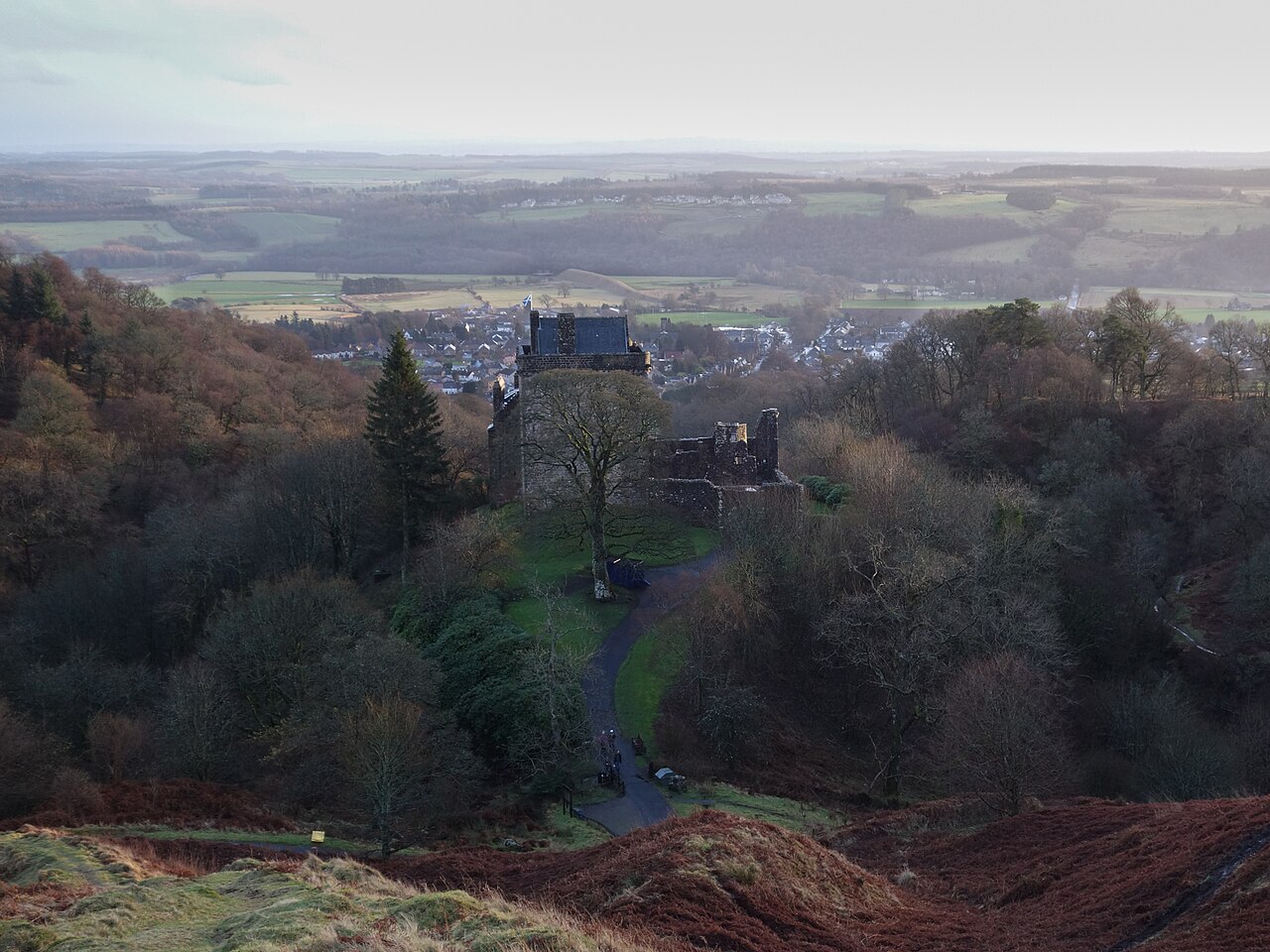
Open full imageCastle Campbell and the surrounding countryside, photographed in 2014. Doug Lee / Geograph, CC BY-SA2.0. · Licence · Source
Robert Burns travelled with James Adair through the Stirling district in 1787 and stayed with the Hamilton family at Harviestoun, near the River Devon. Adair later remembered about ten days of visits and excursions. They went to Castle Campbell, the Devon waterfalls and Clackmannan, where the elderly Mrs Bruce playfully conferred a knighthood on both men with a sword she possessed.
Burns introduced him to Charlotte Hamilton, whom he subsequently married. Charlotte became the subject of Burns’s song The Banks of the Devon.
The month of this visit is disputed. Adair’s account, printed by James Currie, places their departure in August; later chronology places the longer tour in October. Adair remembered who was there, where they went and how he met the woman he later married.
Open full imageGordon Castle in a nineteenth-century print after Thomas Allom, dated to the 1840s. After Thomas Allom,1840s; public domain. · Licence · Source
Robert Burns wrote to James Hoy at Gordon Castle on 20 October 1787 to ask for the words of Cauld Kail in Aberdeen. Hoy had repeated the Duke of Gordon's version during Burns's visit. Back in Edinburgh, Burns wanted a copy for James Johnson's Scots Musical Museum.
His letter explains the collaboration behind the collection. Johnson was gathering Scottish songs, and the musician Stephen Clarke supervised their musical arrangement. Burns and other helpers collected older poetry or supplied words for an air that needed them. Burns wanted forgotten authors to be named where possible, while offering to respect Hoy's wishes over credit for the duke's song.
He also complained that William Nicol, his travelling companion, had hurried him away from Gordon Castle. The interrupted visit had nevertheless produced material worth pursuing. Burns gave William Cruikshank's address in St James's Square for the reply, so Hoy could send the words for the collection.
Open full imageMauchline’s old kirk and churchyard in an early nineteenth-century engraving. Hew Ainslie’s Pilgrimage · via Wikimedia Commons · Licence · Source
Jean Burns, the infant daughter of Robert Burns and Jean Armour, died in October 1787, aged about one. A later family chart gives 20 October as the date. She had been born on 3 September 1786 with her twin brother Robert, the couple’s first children.
The twins arrived during a difficult period in their parents’ relationship, when a marriage paper and the opposition of Jean Armour’s father had become subjects of dispute. Their father’s poems were beginning to reach a much wider readership. Young Jean’s death came before her parents established their household at Ellisland.
Her brother survived. A letter from Gilbert Burns, Robert’s younger brother, places the little boy at Mossgiel with his grandmother and aunts on New Year’s Day 1789. Jean Armour later bore seven more children to Burns. Three of her sons—Robert, William Nicol and James Glencairn—reached adulthood.
Open full imageGordon Castle in a nineteenth-century print after Thomas Allom, dated to the 1840s. After Thomas Allom,1840s; public domain. · Licence · Source
James Hoy sent Robert Burns the song words Burns had requested after his visit to Gordon Castle. Burns replied from Edinburgh on 6 November 1787, thanking him and praising the Duke of Gordon's song. James Johnson was sending books as directed, and Burns enclosed the publisher's thanks.
Burns admired the freedom and happiness of expression he found in the best Scottish songs. He placed the duke's work beside that of John Skinner, author of Tullochgorum, and Alexander Ross of Lochlee, while recalling Allan Ramsay and Robert Fergusson. His praise led to a challenge for anyone who considered songwriting an easy occupation: they should try doing it themselves.
He wanted to repay Hoy's kindness with unpublished verses and promised to send some before leaving Edinburgh. Burns’s thanks to Hoy came with an account of why he admired the song. A request made for Johnson's Scots Musical Museum had brought a contribution that Burns valued, and an opportunity to explain the artistic skill he heard in Scottish song.
Open full imageMargaret Chalmers, in an engraving after John Irvine published in The Land of Burns, 1840. After John Irvine · 1840 · Licence · Source
An injured leg confined Robert Burns during his second Edinburgh winter. On 12 December 1787 he told Margaret Chalmers that he was under a surgeon’s care after a fall involving a drunken coachman. His letter describes the bruised limb and his low spirits, but also the reading and literary exchanges occupying his time.
He had been working through the Bible and had ordered a carefully bound copy. He enclosed a proof of The Banks of the Devon for Chalmers to give to Charlotte Hamilton, and promised another song for Chalmers herself.
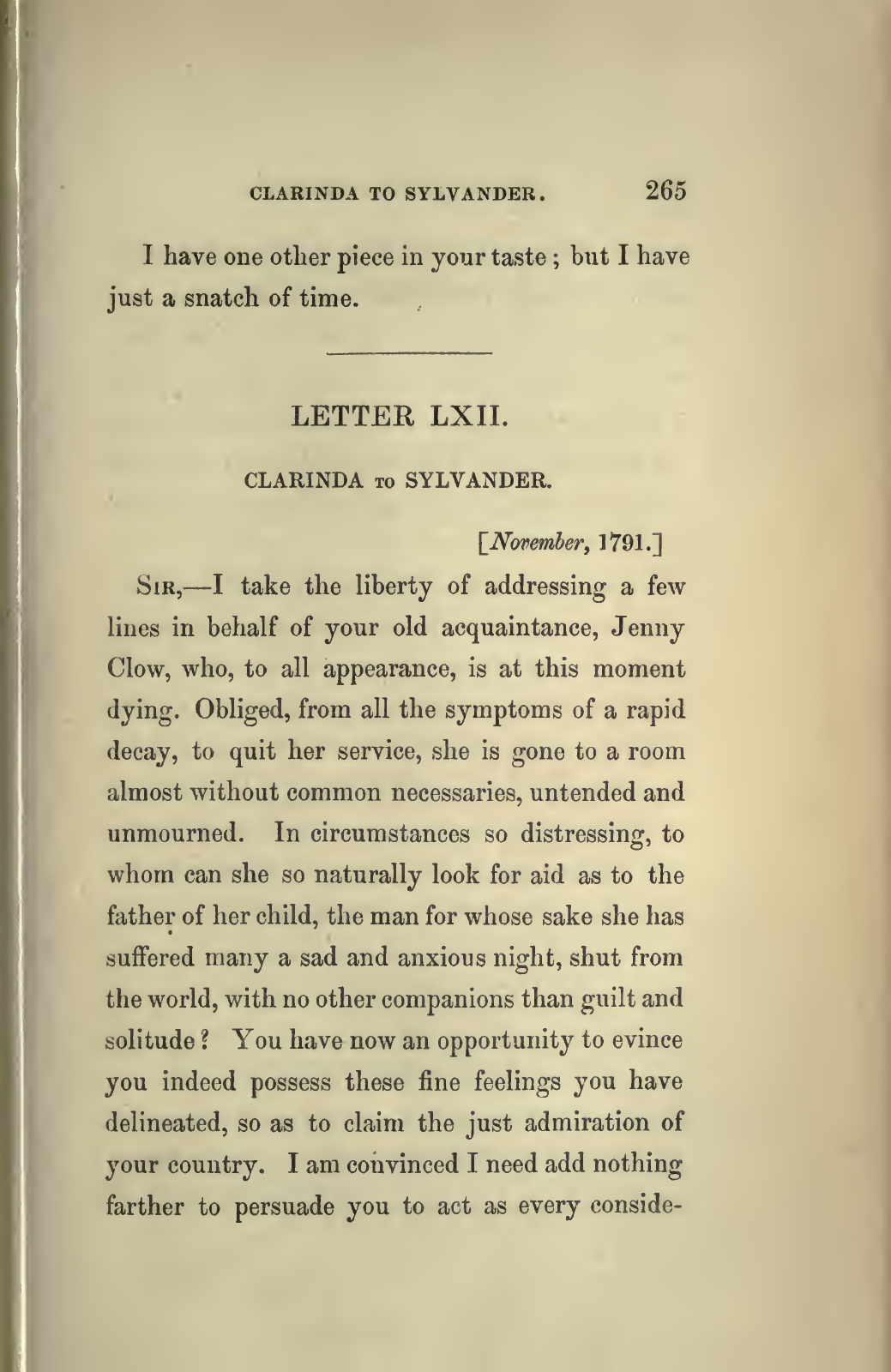
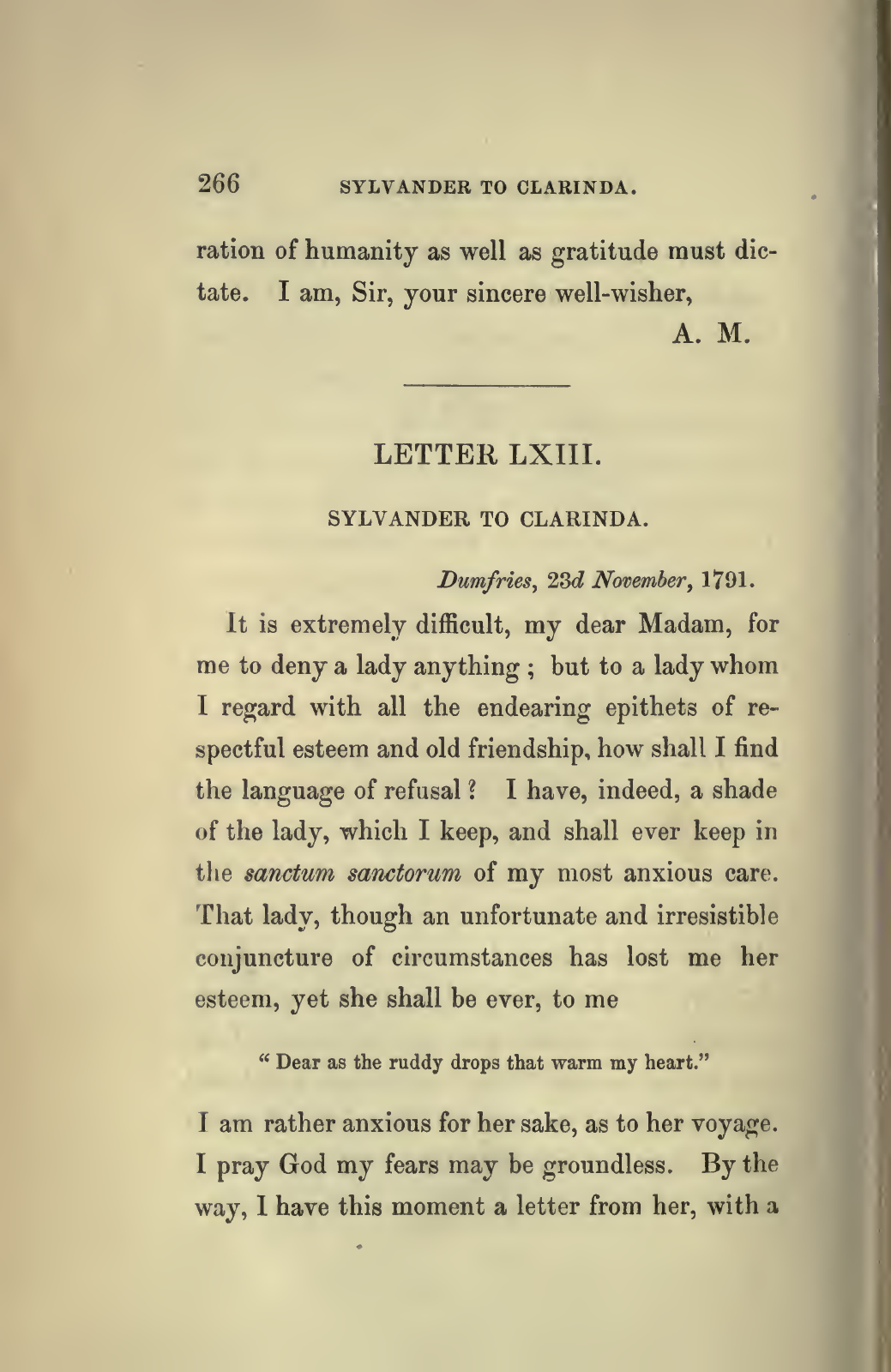
The same day he wrote to Agnes McLehose, a new acquaintance whose poetry he admired. Their exchange developed into the correspondence in which they used the names Sylvander and Clarinda. With his injured leg keeping him indoors, Burns used letters to keep up his song work and his correspondence with his new acquaintances in Edinburgh.
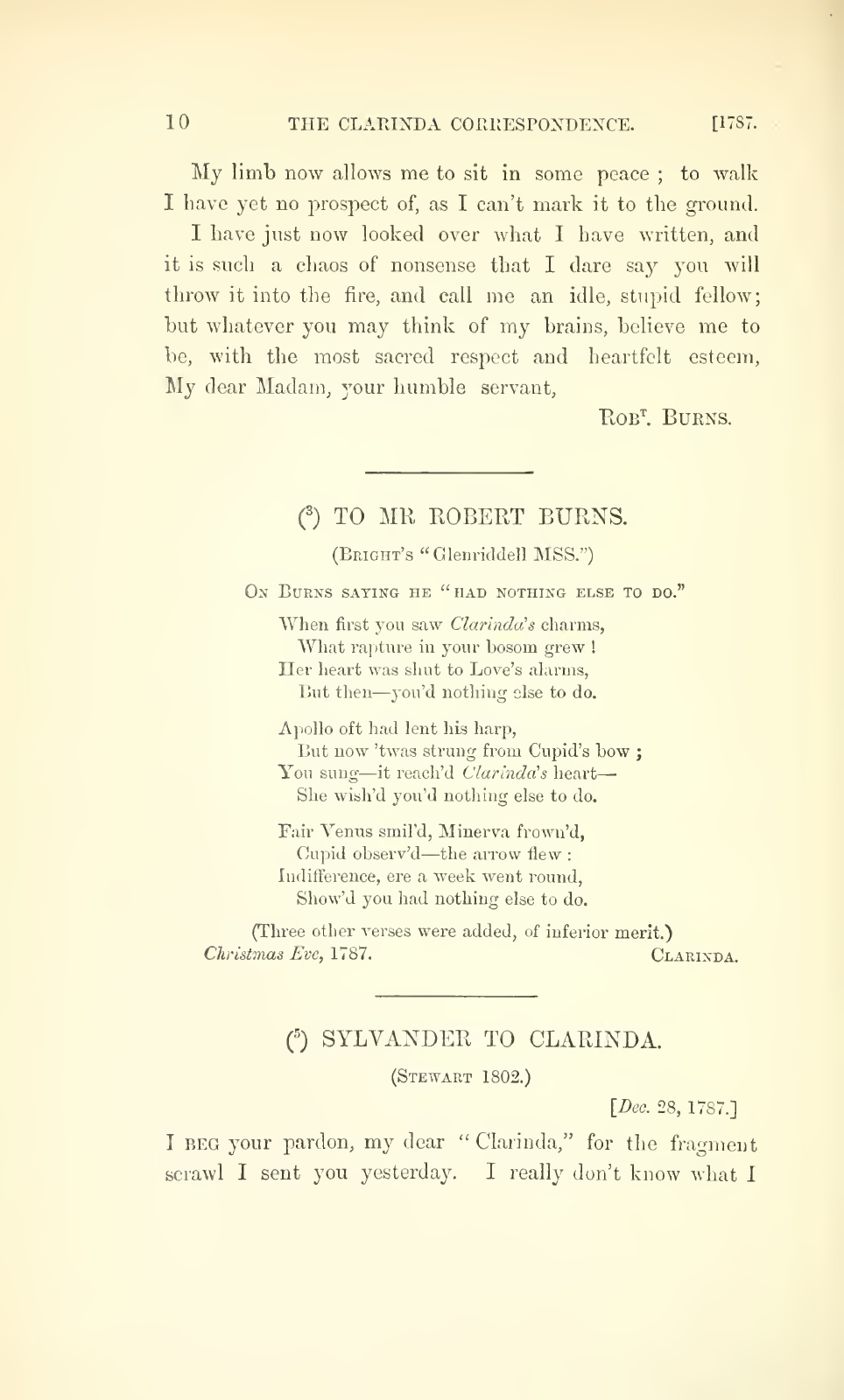
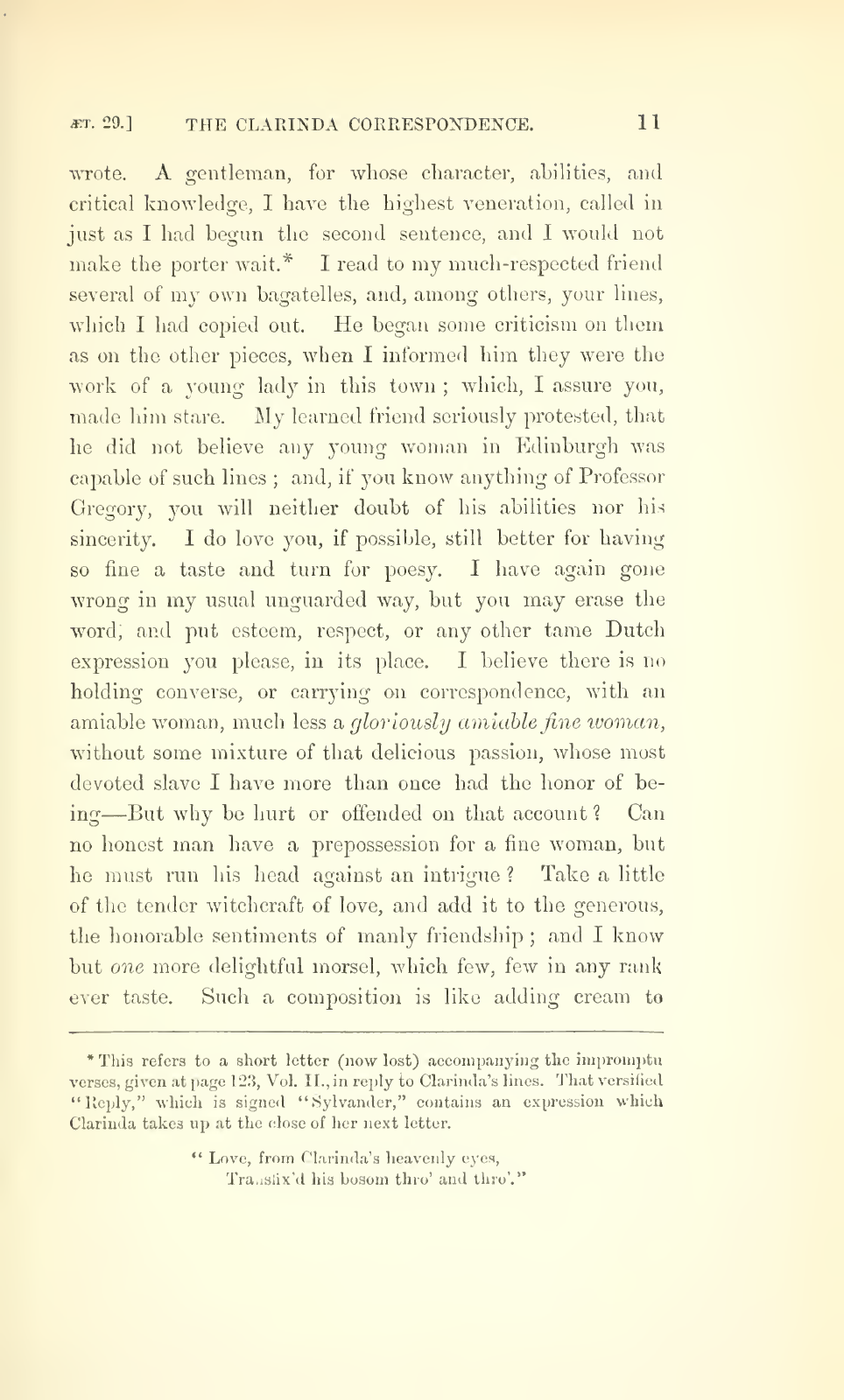
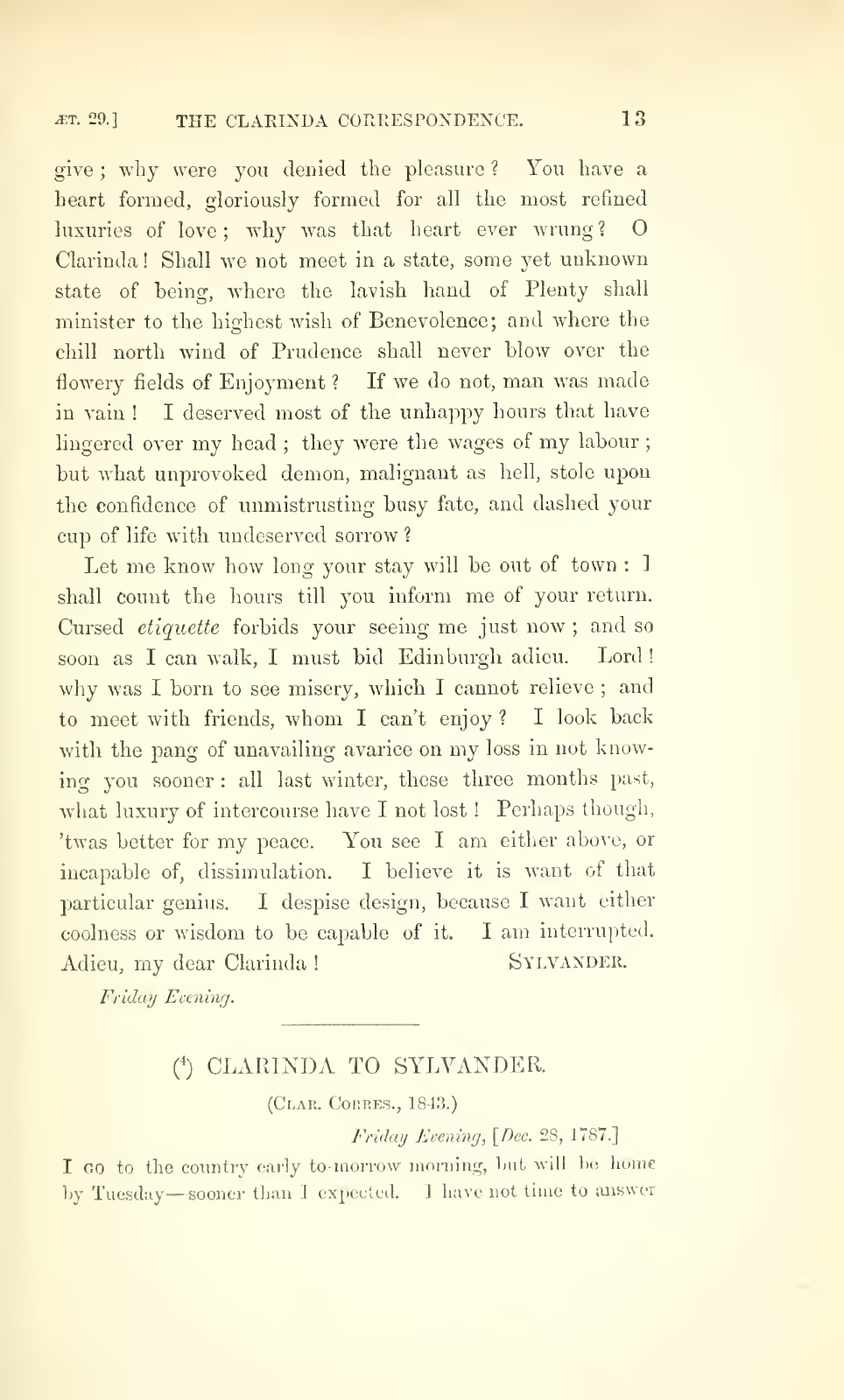
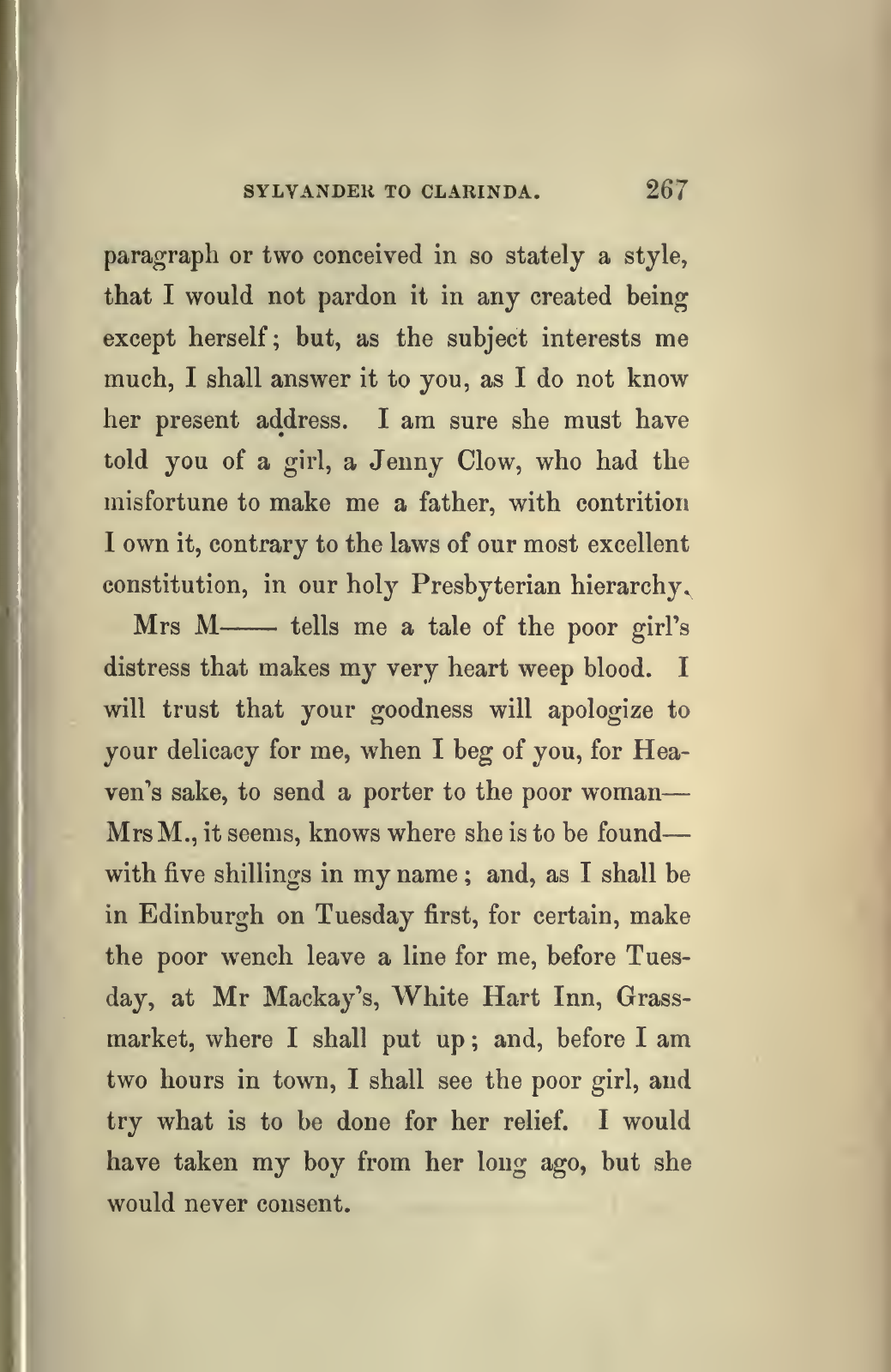
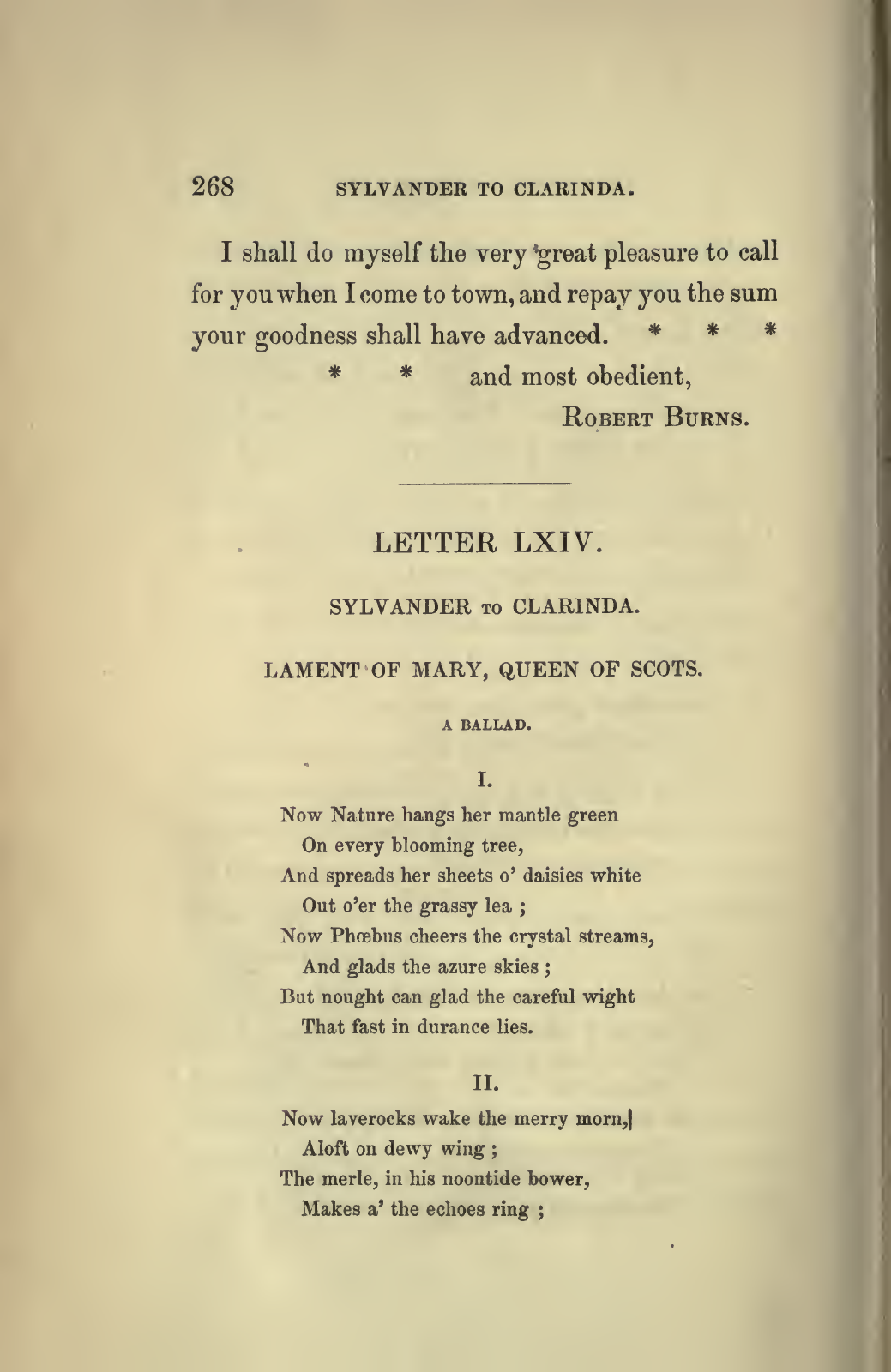
Burns limits the copying of enclosed verses in his letter to Clarinda of 28 December 1787, printed in Scott Douglas’s Works in 1895. Robert Burns · Scott Douglas, Works V · 1895 · Source · Licence
Agnes McLehose questioned the terms of her growing friendship with Robert Burns in December 1787. She was married, although separated from her husband, and was concerned about Burns addressing her with the language of affection. On 20 December he replied to that objection.
Their acquaintance had begun in Edinburgh and developed rapidly through letters. Burns was restricted by an injured leg, and much of their intimacy grew on paper. McLehose wrote poetry herself, giving them literary work to discuss alongside their feelings and religious convictions.
Burns and McLehose wrote about what their affection meant for their friendship. Burns defended his feelings, while McLehose's concerns remained part of the exchange. By the end of the month he was calling her Clarinda and adopting the name Sylvander for himself. They adopted these literary names while discussing how a married woman and an admiring correspondent should conduct their relationship.
Open full imageBurns limits the copying of enclosed verses in his letter to Clarinda of 28 December 1787, printed in Scott Douglas’s Works in 1895. Robert Burns · Scott Douglas, Works V · 1895 · Licence · SourceView related pagesOpen full imageLetter context, Scott Douglas V, printed page 10. Robert Burns · Scott Douglas, Works V · 1895 · Licence · SourceOpen full imageLetter context, Scott Douglas V, printed page 11. Robert Burns · Scott Douglas, Works V · 1895 · Licence · SourceOpen full imageLetter context, Scott Douglas V, printed page 13. Robert Burns · Scott Douglas, Works V · 1895 · Licence · Source
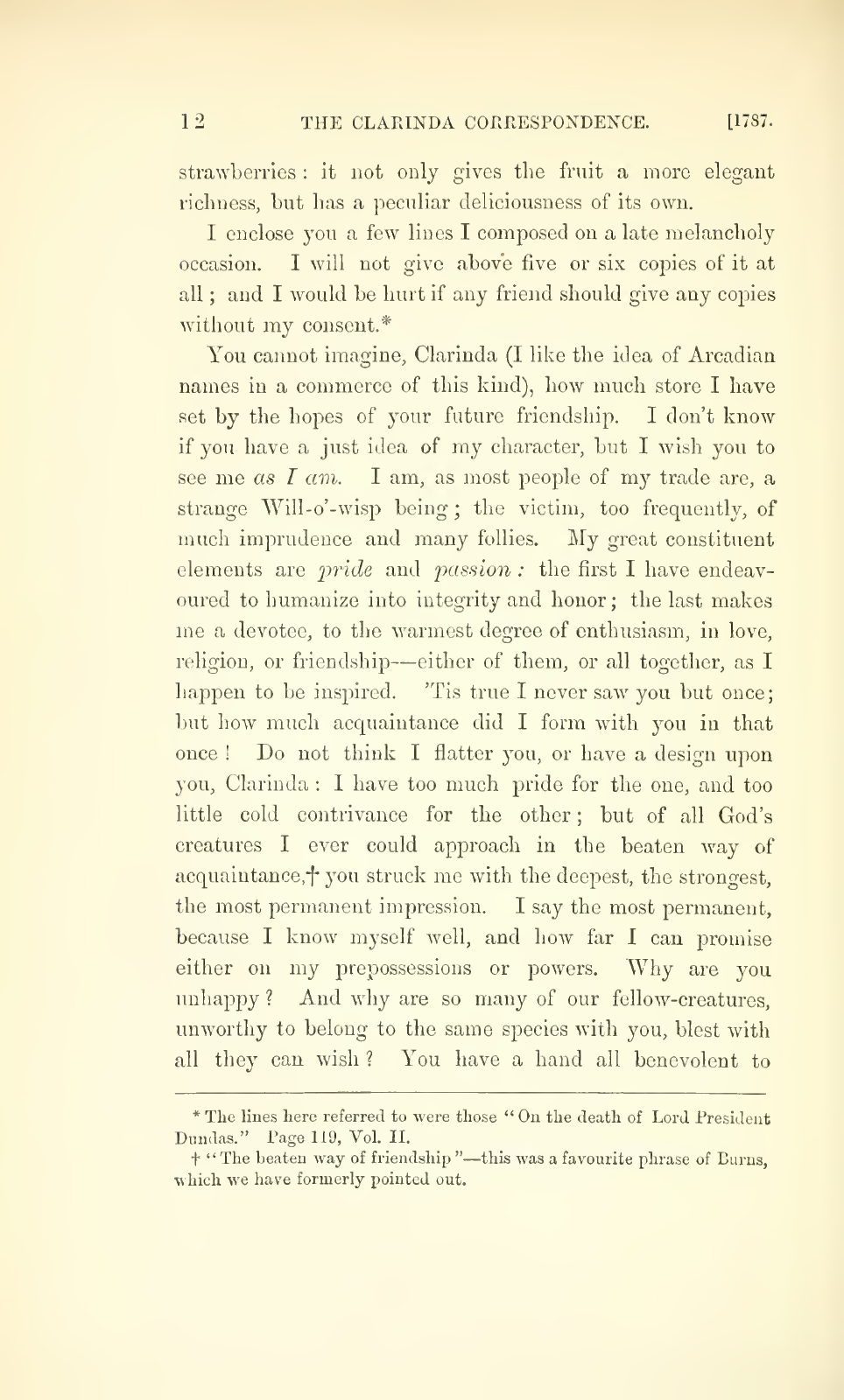
By 28 December 1787 Robert Burns was addressing Agnes McLehose as Clarinda. They had recently met in Edinburgh, and an increasingly intimate correspondence was developing while an injured leg restricted his movements. In this letter he said that he had seen her only once.
McLehose was separated from her husband, and their letters discussed the terms of the attachment as well as poetry. Burns responded to her concerns about a married woman receiving his addresses. Literary names offered the correspondents another way of speaking to one another: she was Clarinda, while he became Sylvander.
The December letter also concerned the circulation of verse. Burns restricted further copying of lines he enclosed. A poem could pass from writer to recipient and then to other readers, and he wanted control over that movement. While they could seldom meet, their relationship continued through the letters they wrote and kept.
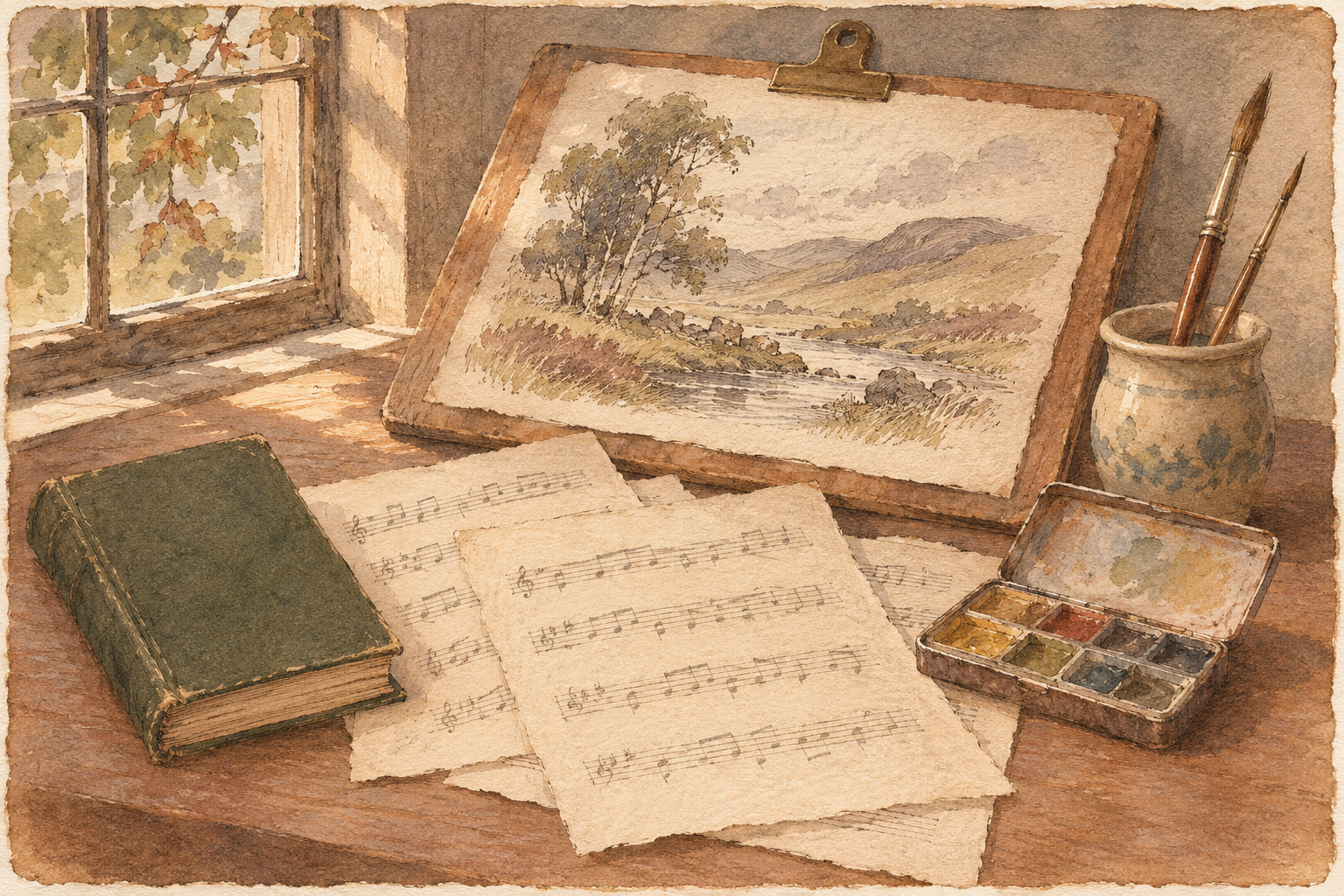
An imagined still life of music, books and illustration. AI-assisted illustration · AIRT
Robert Burns told the songwriter John Skinner on 14 February 1788 that the second volume of James Johnson's Scots Musical Museum had been published that day. He was sending Skinner a copy as a mark of respect and hoped their acquaintance would continue.
The letter also sought more material. Burns asked for songs to the tunes of Dumbarton Drums and the Marquis of Huntly's reel, as well as a song written by another ploughman. Collecting depended on correspondents who could supply words, tunes and information about their authors.
Skinner's own work made authorship especially important. Burns had heard Tullochgorum attributed to several people and wanted Skinner's name included with his contributions in a later volume. He was helping assemble a collection in which familiar songs could reach readers with their writers identified. When Burns told Skinner that the second volume was out, he was already asking for songs for the next.
A plan of the city and suburbs of Edinburgh, by Alexander Kincaid, 1784. Alexander Kincaid, 1784 · Visualising Urban Geographies / NLS / University of Edinburgh · CC BY 3.0 · Source · Licence
In February 1788 Robert Burns was preparing to leave Edinburgh after a winter of song work, correspondence and unfinished publishing business. On 14 February he told the songwriter John Skinner that the second volume of James Johnson’s Scots Musical Museum had appeared that day. He sent a copy and asked for further contributions.
Burns intended to leave the following day. On 24 February he wrote again, reporting that he had reached Mossgiel in Ayrshire the previous day.
Returning south meant decisions about his livelihood and family. He was considering Ellisland, the farm offered by Patrick Miller near Dumfries, while the accounts for his Edinburgh poems remained unsettled. While preparing to set up another home, Burns could still ask for songs and pursue payment by letter.
Burns and John Tennant considering the land at Ellisland, in an imagined scene. AI-assisted illustration · AIRT
Robert Burns returned to Edinburgh in March 1788 with two substantial matters to arrange: a lease for Ellisland farm and the accounts from his Edinburgh poems. William Creech, the bookseller who had sold the edition, still had business to settle with him.
The farm negotiations were with Patrick Miller of Dalswinton. Writing to Margaret Chalmers on 14 March, Burns announced that he had completed the bargain the previous evening. Ellisland stood beside the Nith, a few miles above Dumfries. He expected to begin building a house and bringing lime to the land at Whitsunday.
These arrangements would require money and sustained practical work. He meant to use the proceeds from the edition to pay for the house and get the farm working. The accounts continued to trouble him after he left Edinburgh, and later letters describe further attempts to obtain payment. By the end of the visit he had secured the farm, and the book accounts were still open.
Open full imageJean Armour with her twin daughters, March 1788. AI-assisted illustration · AIRT
Jean Armour gave birth to twin daughters at Mauchline in March 1788. Their father was Robert Burns. Neither girl’s name survives in the transmitted family register, and both died soon after birth.
Jean and Burns had already had twins, Robert and Jean, in September 1786. Their first daughter died in October 1787; their son survived. The second pair arrived while Burns was moving between Edinburgh, Ayrshire and negotiations for a new farming life near Dumfries.
Later in 1788 the parents acknowledged their earlier irregular marriage before Mauchline kirk session, the local church court, and established a household at Ellisland. The twins were born before that move. All four daughters born to Jean Armour died in childhood.
Open full imageJean Armour with her twin daughters, March 1788. AI-assisted illustration · AIRT
Jean Armour gave birth to twin daughters in March 1788. Their father was Robert Burns, who was then arranging the lease of Ellisland and trying to settle the accounts from his Edinburgh poems. The girls' names were not preserved in the family register.
These were Jean's second twins. Her son Robert and daughter Jean had been born in September 1786; the little Jean died the following year. Both girls born in March 1788 also died soon after birth. Robert and Jean lost the three girls before they set up home together at Ellisland.
Later that year Burns described Jean learning dairy work from his mother and sisters while he prepared the farm in Dumfriesshire. In January 1789 Gilbert Burns wrote that their surviving son Robert was staying with his grandmother and aunts at Mossgiel, while his parents established the new home.
Open full imageThe shared register passage records twin daughters born on 3 March 1788 who died within a few days. Burns family register · Rare Print Collection, 1900 · Cornell/IA · Licence · Source
One of the unnamed twin daughters born to Jean Armour and Robert Burns died soon after her birth in March 1788. Her sister also died that month. The surviving family register leaves both girls unnamed.
Jean had already lost her first daughter, also named Jean, in October 1787. That child’s twin brother Robert was still alive. The second pair were born and died before their parents made their home together at Ellisland.
During the following months Burns negotiated the farm and Jean learned dairy work from his mother and sisters. In August the couple acknowledged an earlier irregular marriage before Mauchline kirk session.
Open full imageThe shared register passage records twin daughters born on 3 March 1788 who died within a few days. Burns family register · Rare Print Collection, 1900 · Cornell/IA · Licence · Source
One of the unnamed twin daughters born to Jean Armour and Robert Burns in March 1788 died that same month. Her sister also died soon after their birth. The family register lists both girls without naming them.
Jean had already lost another daughter, also called Jean, in 1787. Her surviving child was Robert, the boy born with that first daughter in September 1786. The deaths of the second twins left the couple with one surviving child from their relationship as they prepared to establish a home at Ellisland.
Their family would grow again during the Ellisland years, with Francis Wallace and William Nicol born in 1789 and 1791. Both girls are recorded among the nine children born to Jean and Robert. Only three of those children, Robert, William and James, reached adulthood.
Open full imageBurns and John Tennant considering the land at Ellisland, in an imagined scene. AI-assisted illustration · AIRT
Robert Burns inspected Ellisland with John Tennant, an experienced farmer, before writing to its owner Patrick Miller on 3 March 1788. He wanted to take the farm near Dumfries, but the terms had to allow him to make exhausted land productive.
He expected to need four horses to carry lime and building materials, and pasture for the cows. He asked to delay the lease’s start until Martinmas and to keep the existing £50 rent for three years while improvements were made. If Miller would not waive the difference, Burns proposed paying it through later additions.
The letter also offered limits on cropping towards the end of the tenancy and manure for land put down to grass. Burns was negotiating the money, time and resources required for a new family livelihood. These were proposed terms; the bargain was still being worked out.
Open full imageEllisland farmhouse, in a modern photograph by Roger Griffith. · Source
Robert Burns told Margaret Chalmers on 14 March 1788 that he had taken a lease of Ellisland farm. He had completed the bargain with Patrick Miller of Dalswinton the previous evening. The farm stood beside the River Nith, between five and six miles above Dumfries.
Burns expected to begin building a house and carrying lime at Whitsunday. Establishing the farm would require buildings, improved ground and the money and labour to make both possible. Earlier negotiations had included questions about grazing, horses and the rent during the first years.
His letter to Chalmers acknowledged how difficult it would be to settle his mind into the routine of business after the activity of Edinburgh. He nevertheless wanted to meet the work with determination. Ellisland offered a place for Robert and Jean Armour to establish their household, while the practical tasks described in the letter still lay ahead.
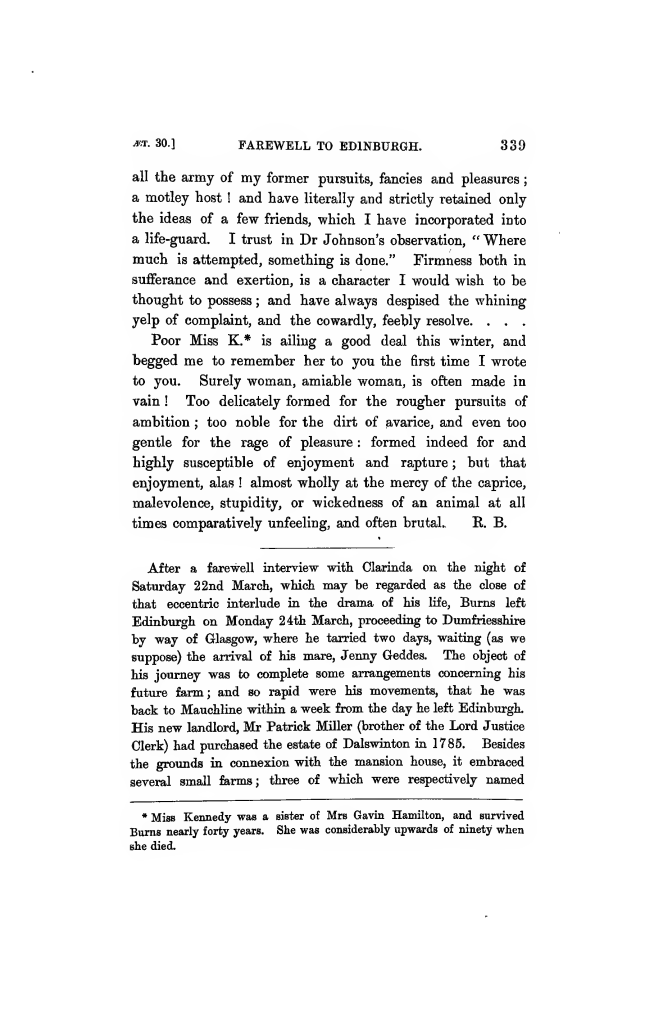
Open full imageThe Miss K passage in Burns’s letter of 14 March 1788, printed by Scott Douglas in 1878, page 339. William Scott Douglas · 1878 · Cornell/IA · Licence · Source
On 14 March 1788 Robert Burns wrote from Edinburgh to his friend Margaret Chalmers with news of a farm and an ailing acquaintance. He had completed a bargain with Patrick Miller for the lease of Ellisland, beside the River Nith near Dumfries. He expected to begin building a house at Whitsunday and admitted that returning to the routine of business would require an effort.
He then passed on a greeting from Miss K, who had been unwell during the winter. She had asked him to remember her to Chalmers when he next wrote. Burns followed this message with an angry reflection on how women’s happiness could depend on men’s conduct.
The letter gives only an initial. In his later edition, William Scott Douglas identified her as Miss Kennedy, a sister of Mrs Gavin Hamilton, and said that she survived Burns by nearly forty years.
Sources
The Works of Robert Burns, volume IV: Prose · Scott Douglas IV (1878), printed pp338–339; Burns to Margaret Chalmers14March1788; p339 editorial footnote identifies MissKennedy
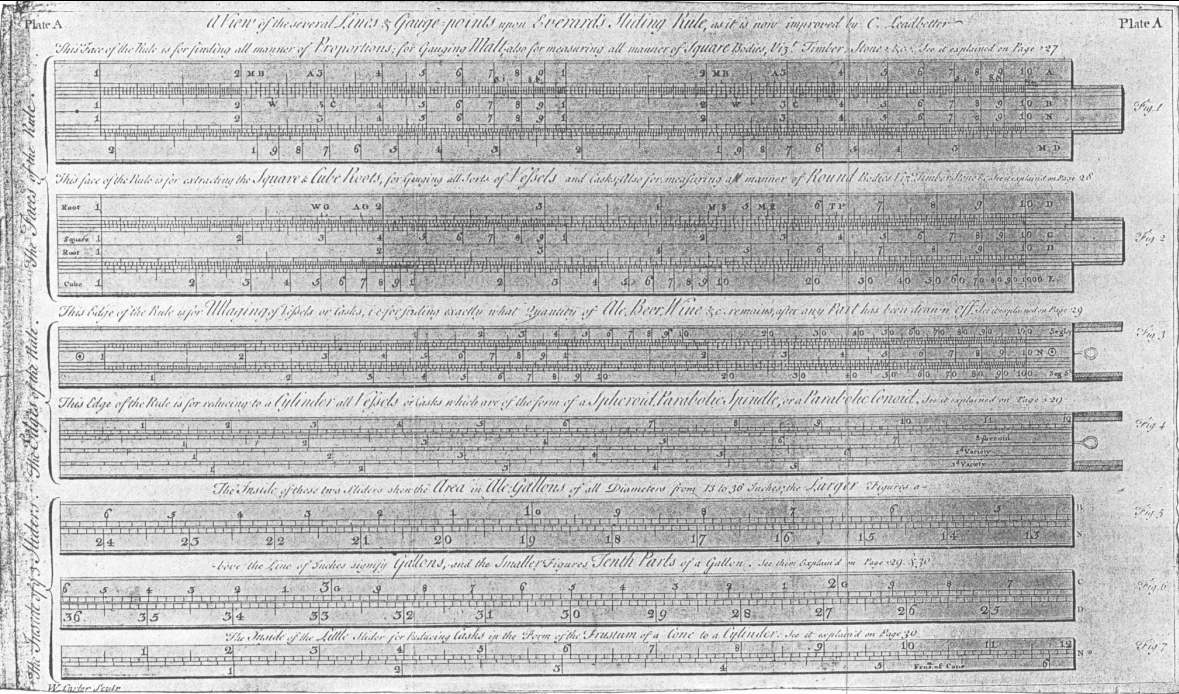
Open full imageA gauging slide rule from Charles Leadbetter’s Royal Gauger of 1755. Royal Gauger, 1755 · reproduced by Florian Cajori · Licence · Source
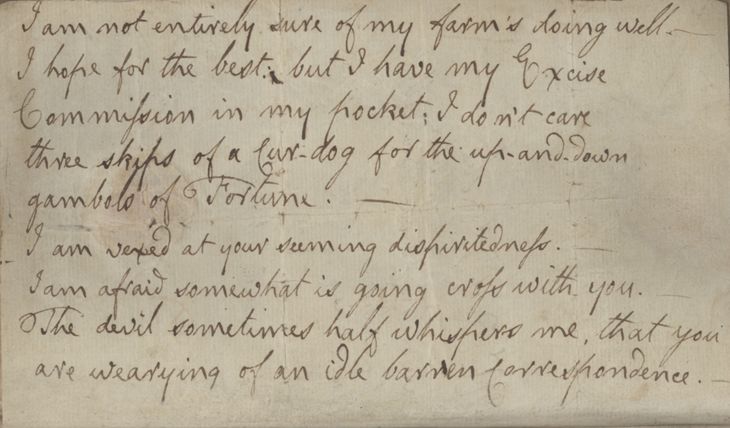
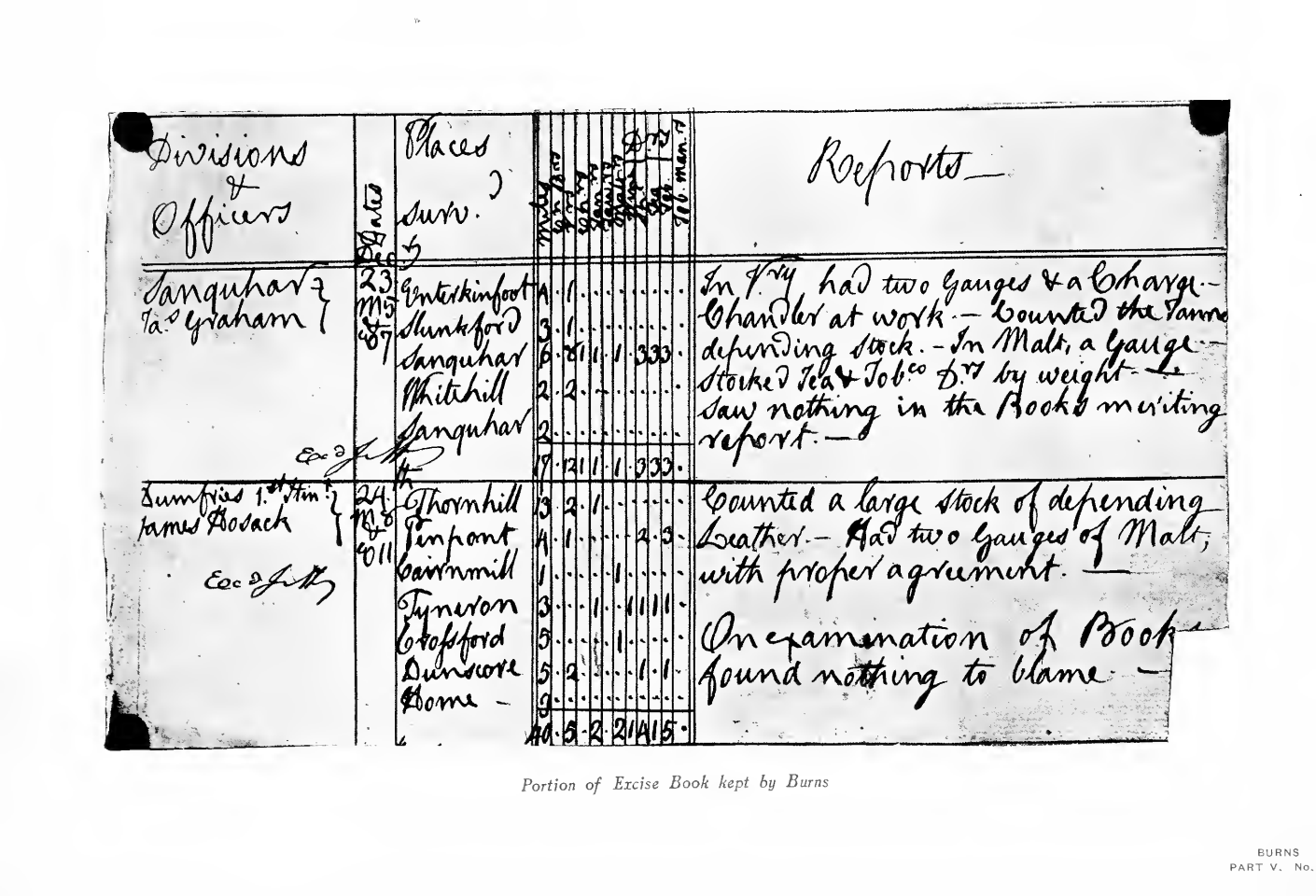
James Findlay, the Excise officer at Tarbolton, received instructions on 31 March 1788 to train Robert Burns for the service. The course was to last six weeks. Findlay and his supervisor would then report on whether Burns was qualified for the work.
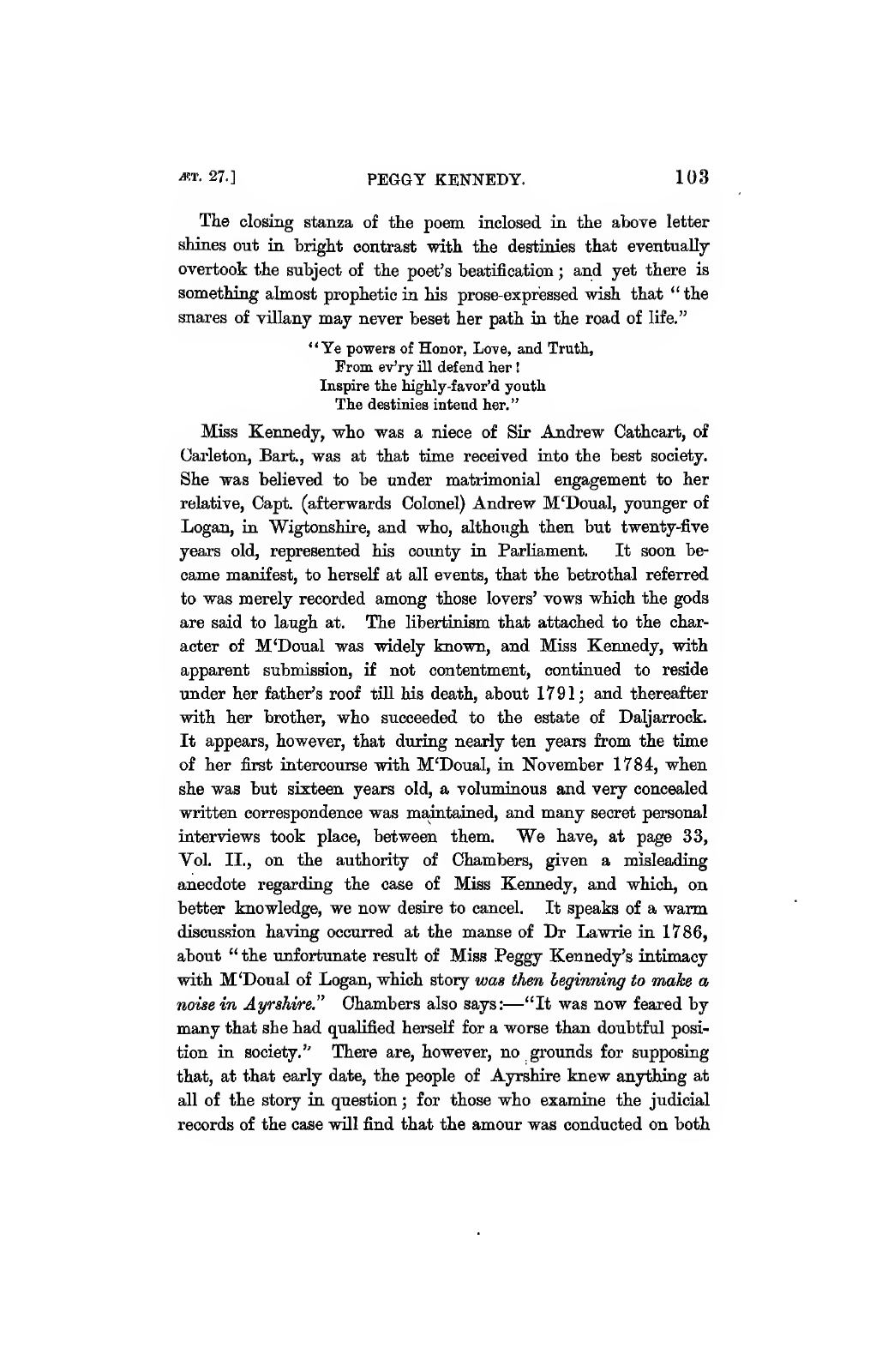
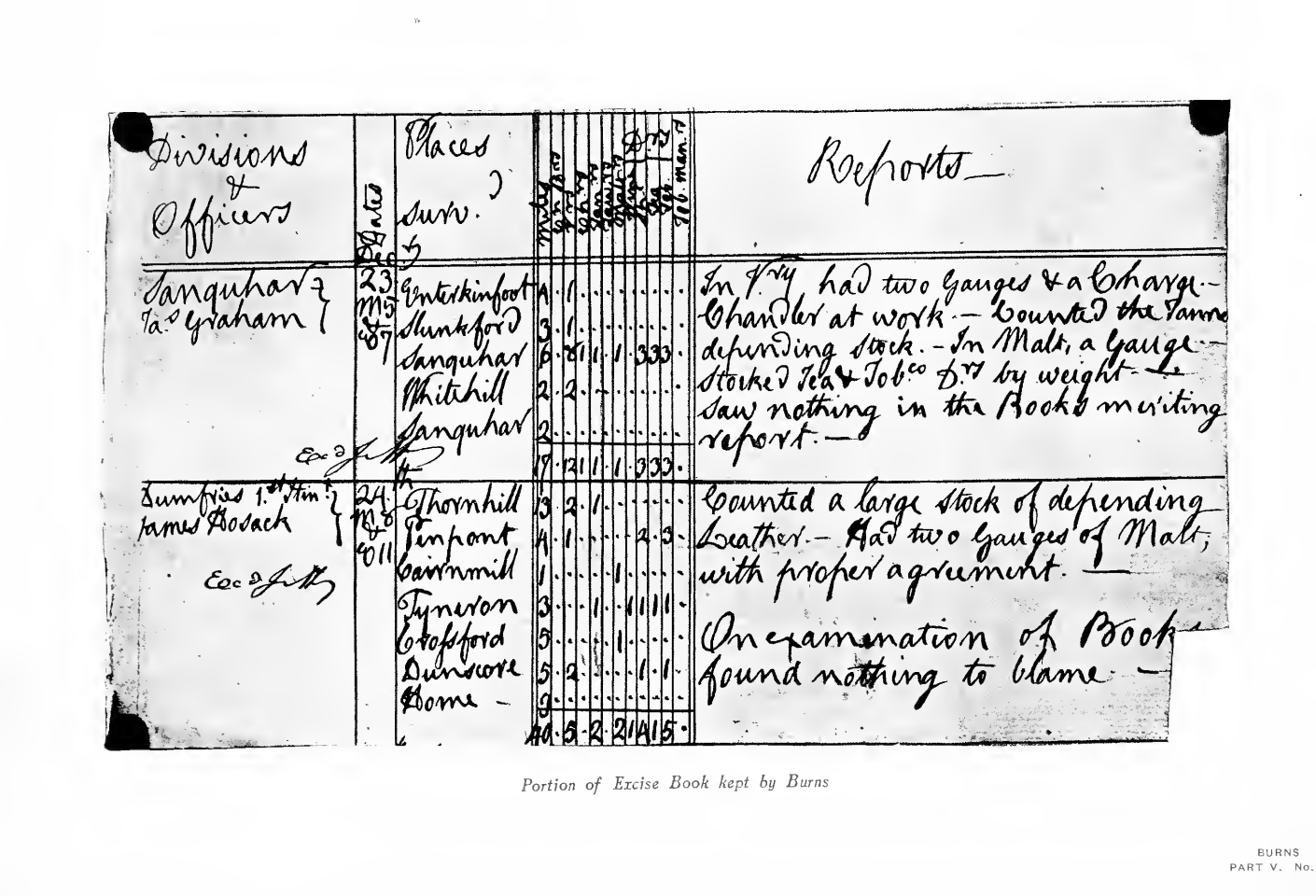
An officer needed to measure taxable goods, inspect traders' premises and keep reliable records. Burns was to learn gauging—the calculation of quantities from measurements—as well as the inspection of businesses handling goods such as malt, candles and leather. Keeping the Excise books was part of the training, alongside practical inspection.
Burns was arranging this preparation while taking Ellisland farm. An Excise appointment offered another possible income if farming proved insufficient. He received his commission in July and began paid duties later. Learning the job meant acquiring a set of calculations, procedures and records on which assessments of tax would depend.
Open full imageOf a’ the airts the wind can blaw, with Miss Admiral Gordon’s Strathspey, in James C. Dick’s 1903 collection. James C. Dick · 1903 · National Library of Scotland · Licence · SourceView related pagesOpen full imageThe second stanza appears at the top of page 71, above the next song. James C. Dick · 1903 · National Library of Scotland · Licence · Source
Robert Burns described Of a’ the Airts as a compliment to his wife, Jean Armour, composed during the honeymoon. James C. Dick later placed its writing at Ellisland in June 1788, while Jean was still in Ayrshire. Burns’s own note establishes the occasion; the precise month comes from Dick’s account.
The song’s speaker looks west towards Jean across woods, rivers and hills. Flowers recall her appearance and birdsong recalls her voice, keeping the absent woman present in his thoughts. William Marshall’s Miss Admiral Gordon’s Strathspey supplied the melody.
Burns was beginning work at Ellisland, while Jean learned dairy work from his mother and sisters before joining him. In the song, those preparations give way to the repeated movement of the singer’s thoughts towards her. Johnson later published the words and Marshall’s air as I love my Jean.
Open full imageJean learns dairy work from Agnes and one of Burns’s sisters, in an imagined scene. AI-assisted illustration · AIRT
Robert Burns had been at Ellisland for only two days when he wrote to Frances Dunlop on 13 June 1788. He described living in an old smoky room, surrounded by unfamiliar responsibilities and separated from the people he loved. Jean Armour had yet to join him.
He confirmed to Dunlop that he was married and explained how Jean was preparing for their new household. During his absence, she was learning dairy and other rural work from his mother and sisters. He praised her ability to learn and her energy in carrying out the tasks.
Running the dairy would take skill and labour of its own while Robert worked the land. Agnes Broun and her daughters could pass on experience gained in their own household. Burns told Dunlop that the concerns of his wife and family would take precedence in his thoughts, with poetry following close behind.
Open full imageThe chest catalogued as Burns’s Excise chest in the 1898 Memorial Catalogue. Memorial Catalogue, 1898 · Cornell/IA · Licence · Source
Robert Burns’s Excise commission was dated 14 July 1788. It authorised him to measure and weigh taxable goods, keep accounts and report infringements. The range extended beyond beer and spirits to commodities such as malt, candles, soap, paper, hides, tea and coffee.
He had pursued this qualification while arranging his tenancy at Ellisland. Instruction under the Tarbolton officer James Findlay covered gauging, trade inspections and the keeping of Excise books. The training taught him to check what traders declared for tax against what he found on the premises.
The commission provided eligibility for work, and Burns held it before beginning paid duties. In February 1789 he still described it as a resource if farming disappointed him. Later that year he obtained a division containing Ellisland, adding a salary and substantial travelling duties to the work of the farm.
The title page of the Edinburgh edition of Burns’s Poems, 1787. Robert Burns · Edinburgh edition, 1787 · Source · Licence
William Creech still owed Robert Burns about £50 in August 1788, according to a letter Burns sent from Ellisland to William Cruikshank. The Edinburgh edition had appeared more than a year before, but its financial business was still unfinished.
Cruikshank, an Edinburgh schoolmaster, had been Burns's host during his time in the city. Burns told him that he expected another short visit to Edinburgh, when they could discuss matters in person. A disagreement involving Creech and William Nicol also came into the exchange. Burns was reluctant to intervene while the bookseller still owed him money.
The letter combined that caution with personal news and poetry. Burns complained that his injured knee remained troublesome and asked Cruikshank to mark corrections on the verses he enclosed. As Burns began farming beside the Nith, he was still waiting for money from his Edinburgh bookseller and relying on friends in the city for criticism of his verses.
Mauchline’s old kirk and churchyard in an early nineteenth-century engraving. Hew Ainslie’s Pilgrimage · via Wikimedia Commons · Source · Licence
In August 1788 Robert Burns and Jean Armour appeared before Mauchline kirk session, the local church court, and acknowledged an irregular marriage made some years earlier. The entry records their public acknowledgement of an existing union. Their earlier marriage paper had become the subject of a bitter family dispute, described by Burns in a letter to John Ballantyne.
By this time the couple had already had two pairs of twins. Their first son, Robert, survived, while their three daughters had died in infancy. Burns was establishing a farm at Ellisland near Dumfries, and Jean was learning dairy work from his mother Agnes and his sisters.
Jean’s training helped prepare her for work on the farm, and relatives helped with work and childcare as the couple set up home. Burns’s letters from this period speak of her as his wife and praise her energy in learning the tasks ahead.
Open full imageAgnes McLehose appeals to Burns on Jenny Clow’s behalf in November 1791, in the correspondence printed in 1843. Agnes McLehose · 1843 edition · University of Toronto / IA · Licence · SourceView related pagesOpen full imageCorrespondence context, printed page 266: the appeal closes and Burns’s reply begins. 1843 edition · University of Toronto / IA · Licence · SourceOpen full imageCorrespondence context, printed page 267: Burns’s reply continues. 1843 edition · University of Toronto / IA · Licence · SourceOpen full imageCorrespondence context, printed page 268: Burns’s reply closes above the following poem. 1843 edition · University of Toronto / IA · Licence · Source
Jenny Clow gave birth to a son named Robert in November 1788. His father was Robert Burns. Jenny had worked for Agnes McLehose in Edinburgh and carried letters during the correspondence in which McLehose and Burns called themselves Clarinda and Sylvander.
Burns was living at Ellisland with plans for a household with Jean Armour. In January 1789 he asked his friend Robert Ainslie, an Edinburgh lawyer, to discover where Jenny was living. He expected to visit the city and said that settling the matter with her was an important purpose of the journey.
Jenny kept her son with her. By November 1791 she was seriously ill and in poverty, and McLehose appealed to Burns for help. Burns acknowledged the child and asked for money to be sent to Jenny through an intermediary. Jenny died in 1792. Her son’s life after her death remains uncertain.
An imagined still life of music, books and illustration. AI-assisted illustration · AIRT
Frances Dunlop’s reunion with an old schoolfriend prompted Robert Burns to write about friendship across the years. Replying on 17 December 1788, he sent her Auld Lang Syne. Dunlop and Miss Stuart had been apart for about forty-five years.
Burns described the song as old and praised an earlier poet’s fragment. Its history includes older words and phrases as well as Burns’s work upon them. In the version associated with him, two companions remember childhood together, long separation and the present offer of a hand and a shared drink.
The letter preserves one of the song’s early surviving versions. Dunlop’s news gave Burns a setting in which to send it: one friendship renewed in life accompanied another renewed through singing.
Open full imageThe storming of the Bastille, drawn by Jean-Pierre Houël in 1789. Jean-Pierre Houël · Paris Musées / Carnavalet · CC0 · Licence · Source
The French Revolution began in 1789, bringing arguments about liberty and political authority into urgent public discussion. On 14 July a crowd took the Bastille fortress and prison in Paris. News reached British readers through newspapers, private letters and official reports, whose accounts differed sharply in their interpretation of what had happened.
The London Gazette described closed shops, interrupted work and armed citizens replacing the established police. A private letter from Paris conveyed the excitement and fear of an eyewitness. The British ambassador's later report challenged exaggerated accounts of deaths and expected the royal family's position to recover.
For Robert Burns, political opinion would become entangled with his employment as an Excise officer, collecting taxes on goods. Writing to Frances Dunlop in early January 1793, he said that his principles had attracted official suspicion and that he intended to be more guarded in public. He also expressed his dread of war. The upheaval in France formed part of the political world in which he worked and wrote.
Open full imageRobert Fergusson’s grave in Canongate Kirkyard, photographed in 2017. Roger Griffith (Rosser1954), CC BY-SA 4.0. · Licence · Source
Robert Fergusson’s memorial stone in the Canongate kirkyard was completed in 1789. Robert Burns had obtained permission for it two years earlier, during his first Edinburgh winter, and supplied its epitaph. The architect Robert Burn carried out the work.
Fergusson’s Scots poems had encouraged Burns to return to writing with renewed energy. When Burns’s own Kilmarnock collection brought him to Edinburgh, he sought a visible marker for the grave of the poet he admired. His petition of 6 February 1787 offered to provide the stone; the managers granted permission on 22 February.
The stone made Burns’s admiration public. Readers visiting the Canongate kirkyard could find Fergusson’s grave and read the epitaph Burns had provided.
Open full imagePart of the manuscript of Holy Willie’s Prayer, reproduced in the Rare Print Collection of 1900. Rare Print Collection · 1900 · Cornell/IA · Licence · Source
An eight-page Kilmarnock chapbook printed The Prayer of Holy Willie in 1789. It is the earliest known edition of the satire, taking its printed history into Robert Burns's lifetime. The small publication followed several years in which the poem had circulated in manuscript.
Burns had written it around the quarrels involving his friend Gavin Hamilton and the church authorities in Mauchline. Its speaker, based on the elder William Fisher, excuses his own misconduct while asking God to punish his opponents. The chapbook's title identifies Willie as a hypocritical elder, and its introductory address presents the work as an exposure of hypocrisy.
Craig Lamont's bibliography records the surviving copy and Patrick Scott's research connecting its production with John Wilson's shop. Older editions sometimes gave a later date for the poem’s first appearance in print. This modest printing allowed a poem rooted in local conflict to circulate beyond handwritten copies and the people who first recognised its targets.
Open full imageYoung Robert with his grandmother and an aunt at Mossgiel, in an imagined scene. AI-assisted illustration · AIRT
On New Year’s Day 1789 Gilbert Burns sent family greetings from Mossgiel to his brother Robert at Ellisland. Among those joining the message was Robert the Second: the young son of the poet and Jean Armour. The boy was staying with his grandmother Agnes Broun, his aunts and his uncle Gilbert in Ayrshire.
His parents were establishing their new home beside the Nith in Dumfriesshire. Burns had taken the farm in 1788, while Jean learned dairy work from Agnes and Robert’s sisters before joining him. The family at Mossgiel helped with both the knowledge and the care that the move required.
Gilbert’s greeting places the boy at Mossgiel on New Year’s Day. He had been born with his twin sister Jean in September 1786; she died in infancy. He survived to adulthood, later studying in Edinburgh and Glasgow and working in London.
Open full imageGilbert Burns, in a silhouette after Howie. Memorial Catalogue, 1898 · Cornell · Licence · Source
Robert Burns estimated in January 1789 that his Edinburgh book would bring him about £400, including £100 for copyright. Writing from Ellisland to John Moore, he explained that part of the total still depended on a further settlement with William Creech, his bookseller.
The money had already helped other members of the family. Burns told Moore that he had lent Gilbert about £180 to prevent financial collapse at the farm where their mother, younger brother and sisters depended on him. He was careful to count the money as a loan to his brother, not a permanent loss.
Burns had also married Jean Armour and taken Ellisland. He was increasingly dissatisfied with the farm and wanted paid Excise employment to make his circumstances easier. The letter connects the proceeds of poetry with several obligations: establishing his own household, supporting relatives at Mossgiel and finding dependable work. The expected £400 was still an estimate, while those demands were already present.
Agnes McLehose appeals to Burns on Jenny Clow’s behalf in November 1791, in the correspondence printed in 1843. Agnes McLehose · 1843 edition · University of Toronto / IA · Source · Licence
Robert Burns asked his Edinburgh friend Robert Ainslie to find Jenny Clow on 6 January 1789. Jenny had borne Burns a son, also named Robert, the previous November. Burns expected to visit Edinburgh in four or five weeks and said that settling a legal matter with her was one of his principal reasons for coming.
Ainslie was a lawyer and could help establish where she was living. Jenny had worked for Agnes McLehose, the correspondent Burns called Clarinda, and had carried letters during their exchange. Burns now had responsibilities towards her son as well.
The January letter describes a proposed settlement. Later correspondence shows that support remained a pressing matter. In November 1791 McLehose appealed to Burns about Jenny’s illness and poverty, and he requested that money be sent to her. Jenny’s son remained with his mother during that period.
Open full imageBurns plans an Edinburgh visit in his letter to John Moore, 4 January 1789, printed in 1895. Robert Burns · Scott Douglas, Works V · 1895 · Licence · SourceView related pagesOpen full imageThe opening of the letter to John Moore, dated 4 January 1789. Robert Burns · Scott Douglas, Works V · 1895 · Licence · SourceOpen full imageThe preceding page of the letter, including Burns’s estimate of the proceeds of the Edinburgh edition. Robert Burns · Scott Douglas, Works V · 1895 · Licence · Source
Robert Burns travelled to Edinburgh in early 1789 to settle the remaining business of his poems with William Creech. The enlarged edition had appeared in April 1787, and Burns was still waiting for a final account nearly two years later.
In January Burns told John Moore that he expected to go to the city in about a month. He estimated total proceeds of around £400, including copyright, and said that part still depended on Creech's settlement. At Ellisland, money from the book had to support a new household and farm, while Burns had also lent substantial help to his brother Gilbert.
By 23 March the visit was behind him. Writing again to Moore, Burns reported that he had settled finally with Creech and acknowledged that the bookseller had been amicable and fair at the end. The visit closed an account that had been open since the book came out and changed Burns’s view of how Creech had dealt with him.
Open full imageA fragment of Burns’s letter to Robert Ainslie, 1788, mentioning his Excise commission. Robert Burns · University of South Carolina, G. Ross Roy Collection · Licence · Source
By 9 February 1789 Robert Burns had completed his Excise instruction and held a commission, although he had not yet begun paid duties. Writing to his cousin James Burness, he described it as a resource to fall back on if farming failed to meet his needs. Profits from his poems had helped him begin life at Ellisland.
The household also supported younger relatives. His uncle Robert had died in January. The uncle’s daughter Fanny had come to live with Burns, who intended to keep her until she was old enough to enter service. Her brother William had spent the winter there before a planned apprenticeship to a mason.
At Ellisland Burns was supporting his own household and helping Fanny and William until they could earn a living. The unused commission offered another possible source of income if the land proved insufficient.
Open full imageBurns reports the final settlement with Creech in his letter to John Moore, 23 March 1789. Robert Burns · Scott Douglas, Works V · 1895 · Licence · SourceView related pagesOpen full imageThe opening of the letter to John Moore, dated 23 March 1789. Robert Burns · Scott Douglas, Works V · 1895 · Licence · Source
Robert Burns told John Moore on 23 March 1789 that he had finally settled his accounts with William Creech. He had recently visited Edinburgh and now acknowledged that the bookseller had been amicable and fair with him at the end.
This was a change from the frustration expressed in earlier letters. The Edinburgh poems had appeared in April 1787. In January 1789 Burns was still estimating what they would yield and complaining about delays in obtaining a statement. He had also allowed that his judgement of Creech might be unjust and that time would tell.
Burns was writing from Ellisland, where the proceeds of publication had helped establish his farming life and support his wider family. The poems had been printed and sold long before the accounts were closed. Settling with Creech finished the business Burns had begun during his Edinburgh success.
Open full imageRobert and Jean singing psalms at Ellisland, imagined from Burns’s letter of June 1789. AI-assisted illustration · AIRT
On 4 June 1789 Robert Burns described life at Ellisland to Mr M’Auley. His days included holding the plough, tending corn and attending to the dairy. The farm beside the Nith required continuing physical work while he made a home there with his wife Jean Armour.
Burns recalled Jean joining him in psalm singing and praised her voice in old songs as well. Their household made music together, alongside the songs he was helping prepare for publication.
Jean had learned dairy work from Burns’s mother Agnes and his sisters before moving to Ellisland. Their experience supported the new undertaking, just as family members at Mossgiel helped care for the couple’s eldest boy. The letter describes the work the household lived on and the singing Burns and Jean shared.
Open full imageJean with her sons Robert and the newborn Francis at Ellisland, in an imagined scene. AI-assisted illustration · AIRT
Francis Wallace Burns was born to Jean Armour in August 1789, during the family's years at Ellisland. The family chronology gives 18 August as his birth date. His parents named him in honour of Frances Dunlop, a close friend and correspondent of his father, Robert Burns.
As the family grew, Robert worked to establish the farm and its buildings. Jean used the skills she had learnt from his mother and sisters, including dairy work. Francis joined his older brother Robert; the daughters previously born to Jean had died in infancy.
Francis lived through the family's move to Dumfries and his father's death in 1796. Jean's letter of 1804 records that he had died the previous year, before taking up a cadet's place arranged through James Shaw. He had been expected to leave for the East Indies in spring 1804. The cadetship would have been the start of his working life.
Open full imageBurns riding through Dumfriesshire on Excise duty. AI-assisted illustration · AIRT
Robert Burns had secured paid work collecting taxes for the Excise by 1 November 1789. Writing to Robert Ainslie, he explained that his division included his house and farm at Ellisland and brought an annual salary of £50. He had entered directly as an officer, without first serving in the waiting position of an expectant.
The post added income to a farming venture that was proving demanding. It also added expenses and travel. Three days later Burns told Richard Brown that he had ten parishes to ride and estimated the extra annual costs at £10 or £12.
Burns defended the occupation by pointing to the support it provided for his wife and children. Measuring goods, inspecting traders and keeping books now had to fit beside farming, building and writing. His farm lay within his Excise division, and he still had both jobs to do.
Open full imageWeapons and whips attributed to Burns in the Rare Print Collection of 1900. The accompanying caption connects a whip with his Excise rides and Highland tour. Rare Print Collection · 1900 · Cornell/IA · Licence · Source
Robert Burns had ten parishes to ride through in his new Excise district. Writing to Richard Brown on 4 November 1789, he described a workload that left him scarcely any spare time. His home and farm at Ellisland lay within the division, and he still had the work of the farm to do alongside his rounds.
The Excise collected taxes on goods and checked the traders who handled them. An officer travelled between premises, measured quantities and maintained records. Burns had completed training and received a commission before obtaining this paid work.
The salary was £50 a year, but Burns estimated that the appointment would add £10 or £12 to his expenses. His household could count only on what was left once the costs of doing the job were paid. Burns’s letter to Brown sets the salary beside what Burns had to do for it, riding a large district with a great deal of business to attend to.
Open full imageBurns and a fellow Excise officer: an imagined working scene, 1789. AI-assisted illustration · AIRT
Robert Burns credited fellow officers Mitchell and Alexander Findlater with helping him as he began Excise work. In a letter of 9 December 1789 he acknowledged their assistance and sent verses made during his rides on duty. In his new job he had to ride the district, and he had fellow officers to turn to for help.
The appointment required him to inspect taxable goods, record measurements and account for the revenue. His division included Ellisland, where he was still farming, and extended over ten parishes. The salary added support for his family, but the riding and inspections left little spare time.
Burns nevertheless continued making poems and songs. He made the verses during his rides on duty. The other officers offered encouragement and practical help as he learnt to do the work and keep the books.
Open full imageFarm work at Ellisland: an imagined scene, 1789. AI-assisted illustration · AIRT
Farming, building and marketing were pressing on Robert Burns by December 1789. In a letter to the provost of Lochmaben, dated 20 December, he complained of trying to make one guinea do the work of three. Getting Ellisland established was taking both time and money.
Burns had taken the farm beside the Nith in 1788. A house, improved land and a working household all required preparation. Jean Armour's dairy work formed part of the farm's economy, while Robert had also begun paid Excise duties across a district of ten parishes.
The letter to Maxwell turns financial strain into an energetic complaint about business. Burns considers several subjects he might write about before admitting how exhausted he is by practical affairs. Within weeks he would tell his brother Gilbert that he wanted to leave the farm. In December he was still trying to make the same money cover the farm, the building and the trips to market.
Open full imageOf a’ the Airts, with Miss Admiral Gordon’s Strathspey, in Dick’s 1903 collection, page 70. NLS · Dick 1903 · Source
James Johnson’s Scots Musical Museum printed I love my Jean as song 235 in 1790. Its words are familiar from the opening Of a’ the Airts, in which the singer’s thoughts turn west towards Jean. William Marshall’s Miss Admiral Gordon’s Strathspey supplied the air.
Burns had described the lyric as a honeymoon compliment to his wife, Jean Armour. The song keeps her close through remembered sights and sounds: flowers suggest her appearance and birdsong her voice. Woods, rivers and hills separate the couple, but every feature around the singer recalls her.
Marshall’s melody was already in print when Burns wrote the words. Johnson’s collection brought them together for other singers under a title that named the beloved woman directly. Later editors sometimes printed additional stanzas by other writers, extending the two-stanza lyric Burns had supplied.
Open full imageBurns’s letter to Gilbert, 11 January 1790, printed in Scott Douglas’s Works, volume V. Robert Burns · Scott Douglas, Works V · 1895 · Licence · Source
Robert Burns told his brother Gilbert on 11 January 1790 that Ellisland was ruining his enjoyment of life. He called the farm a ruinous affair and wanted to be clear of it. The letter came after months of building, farming and financial pressure, with paid Excise work now adding to his responsibilities.
Burns told Gilbert how badly the farm was affecting his nerves and spirits. Gilbert, still farming at Mossgiel, knew the demands and uncertainties of agricultural work. Robert was writing to someone familiar with both the occupation and the family's earlier difficulties.
The short letter also tells Gilbert about the theatre. Burns had attended performances by a visiting theatre company and supplied its manager with a prologue for New Year's Day. Writing for an audience continued while he wanted to leave the farm. Burns wanted to leave in January 1790. He finally gave up Ellisland in 1791.
Open full imageBurns at a locked storeroom, illustrating the access problem described in his letter about Lorimer’s stock. AI-assisted illustration · AIRT
Robert Burns had to explain a discrepancy in a trader’s stock to his supervisor, Alexander Findlater. In an undated letter placed in 1791 by the editor Scott Douglas, Burns defended the quantities he had recorded for Lorimer before the trader went to Edinburgh.
The difficulty came during Lorimer’s absence. Burns said that he found only Mrs Lorimer, who could not give him access to the goods. He admitted that these visits might as well have been entered in the books as key absent. Without access he had been unable to check the stock against his records.
Burns promised a thorough inspection the following morning and a report of the facts. He was concerned that the discrepancy reflected badly on his own conduct. He needed access to the goods so that he could check the figures and explain the discrepancy to his supervisor.
Weapons and whips attributed to Burns in the Rare Print Collection of 1900. The accompanying caption connects a whip with his Excise rides and Highland tour. Rare Print Collection · 1900 · Cornell/IA · Source · Licence
Francis Grose's Antiquities of Scotland printed Tam o' Shanter with its account of Alloway church in 1791. Grose was collecting information about old buildings, and Robert Burns supplied a poem that turned a local supernatural story into a comic tale.
Tam is a farmer returning from a drinking session in Ayr. At the ruined kirk he sees witches dancing, becomes absorbed in the spectacle and shouts his approval. The dancers pursue him, and his mare Maggie escapes across the bridge with her tail torn away. Burns had sent Grose an account of local tales containing much of this outline.
The poem circulated in proof as well as through publication. Grose sent Burns a dozen proof copies, one of which Burns forwarded to John Moore. Grose's Antiquities appeared in parts, carrying the poem to readers interested in Scotland's old buildings. In Grose’s work, the poem appeared alongside the account of the ruined church where Burns set Tam’s encounter.
On 12 January 1791 Robert Burns signed a receipt for £2 10s paid by George Gracie of Carronbridge. The county justices had imposed the fine on 3 September 1790.
Burns was still farming at Ellisland when he began paid Excise work in a division that included the farm. His duties included inspecting taxable goods, checking declarations and accounting for money collected. Officers could receive a share of fines and seizures in addition to their salaries.
Burns correcting a proof for the Edinburgh poems, in an imagined scene. AI-assisted illustration · AIRT
Robert Burns sent John Moore a proof of Tam o' Shanter in February 1791. Francis Grose had supplied him with a dozen copies, and Burns used one to thank Moore for his encouragement. The poem was connected with Grose's account of Alloway church in The Antiquities of Scotland.
The letter also reported progress in Burns's paid employment. His name had been placed on the Excise supervisors' list, although he was still working as an ordinary officer. He expected seniority eventually to bring an appointment. Promotion mattered to the future he hoped to provide for his children.
In the same letter Burns discussed poems and Moore's novel Zeluco, then turned to income, patronage and his sons' prospects. He regretted the death of the Earl of Glencairn, whose support he valued. From Ellisland, Burns sent the proof of a new poem alongside news of the job he hoped would improve his family’s circumstances.
Burns correcting a proof for the Edinburgh poems, in an imagined scene. AI-assisted illustration · AIRT
Alexander Fraser Tytler offered criticism of Tam o’ Shanter while Robert Burns was preparing the poem for readers in 1791. Burns’s February reply agreed to remove lines attacking lawyers and priests. Their tongues and hearts had appeared among the grotesque horrors inside Alloway kirk.
Another suggestion, concerning the ending, was harder to satisfy. Burns considered the criticism but struggled to find an alteration that preserved the effect he wanted. Tytler had been able to read the poem and propose changes before it went into print.
The tale follows a farmer riding home from Ayr, who interrupts a witches’ dance and escapes on his mare, Maggie. It was supplied for Francis Grose’s antiquarian account of Alloway church. Tytler’s advice arrived as Burns was deciding what to keep in the printed poem.
Open full imageSweet are the banks, the earlier version of the Doon song, printed in James C. Dick’s 1903 collection. James C. Dick · 1903 · NLS · Licence · Source
Robert Burns sent Alexander Cunningham a newly sketched song on 11 March 1791. It began Sweet are the banks, the banks o' Doon. Burns apologised for the extra sheet of postage and asked his friend to judge what he had written that evening.
He already had a musical plan. The words were intended for Ballendalloch's Reel, an air he also knew as Cambdelmore, and he explained how the short stanzas fitted its phrasing. He hoped to give the song to James Johnson for the fourth volume of the Scots Musical Museum.
The lyric moves from a flowering riverbank to the pain of betrayed affection. Its bird, rose and thorn would recur as Burns revised the song into other versions, including the familiar Ye Banks and Braes. The letter shows which tune Burns had in mind when he first asked Cunningham for criticism, before the later words and setting became familiar.
Open full imageElizabeth “Betty” Burns in later life, in a nineteenth-century photograph. Memorial Catalogue, 1898 · Cornell · Licence · Source
Anna Park gave birth to Robert Burns’s daughter Elizabeth in March 1791, reportedly on the 31st. Known as Betty, the child grew up in the household of Burns and his wife Jean Armour. Jean’s own son William Nicol was born shortly afterwards, in April.
Betty was one of three daughters of Burns named Elizabeth. His eldest, Bess, was Elizabeth Paton’s child. Elizabeth Riddell was later born to Jean. Their familiar names and mothers help distinguish lives that continued through different households.
Betty’s connection with Jean endured long after Burns died. She married John Thomson in Dumfries in 1808 and had children of her own. In 1833 Jean sent her money to help the children, writing from the home where she had remained as Burns’s widow. Betty lived until 1873, outliving Jean and Jean’s three adult sons.
Open full imageWilliam Nicol Burns in later life, after Sir Daniel Macnee. Memorial Catalogue, 1898 · Cornell/IA · Licence · Source
William Nicol Burns was born to Jean Armour on 9 April 1791, while the family was living at Ellisland. His name honoured William Nicol, the Edinburgh schoolmaster who had travelled with his father, Robert Burns, through the Highlands in 1787.
The household was growing amid the demands of the farm and Robert's Excise employment. Jean also brought up Betty, Robert's daughter with Anna Park, who had been born shortly before William. Later in 1791 the family left Ellisland for Dumfries, where government service became the principal source of support.
William was five when his father died. In Jean's letter of 1804 he was the only son still at home, attending school while his brothers' education and prospects took them elsewhere. He later entered East India Company service and eventually returned to Britain. In 1851 he bought the family's last Dumfries home to preserve the house he had lived in as a child.
Open full imageHarvest work at Ellisland, in an imagined scene with Burns. AI-assisted illustration · AIRT
Harvest work made Robert Burns hesitate over an invitation from the Earl of Buchan in 1791. Buchan was arranging a ceremony honouring the poet James Thomson, and Burns had to consider whether he could leave Ellisland at the busiest point of the agricultural year.
His letter is dated differently in the editions, to August or September. Before he could accept, he had to see whether he could leave Ellisland while the crop was being brought in. His household depended on the farm.
This was Burns’s final season at Ellisland. On 1 September he told Thomas Sloan that he had sold his crop a week earlier and believed it had fetched a good price. By autumn he was disposing of the remaining farm interests and looking towards life in Dumfries, where Excise employment would become his main livelihood.
Open full imageThe crop auction at Ellisland, August 1791. AI-assisted illustration · AIRT
Robert Burns told Thomas Sloan on 1 September 1791 that he had sold the crop at Ellisland a week earlier. He thought it had fetched a good price. The sale was one step towards ending his farming life there and moving his household into Dumfries.
His account of the auction was far from orderly. Burns described a prolonged fight among the buyers and drunken disorder in the house. The letter gives his own lively report of the day, alongside his satisfaction with the price obtained for the crop.
The sale followed years of difficulty in making the farm pay while also carrying out Excise duties. Burns still had further arrangements to make over the lease and remaining possessions. By October he reported selling the lease back to Patrick Miller and preparing another auction around Martinmas. In September the crop had been sold, and Burns still had to dispose of the rest of the farm’s stock and move his family.
Open full imageBurns asks Corbet for a port division, in the letter printed by Scott Douglas under October 1791. Robert Burns · Scott Douglas, Works V · 1895 · Licence · Source
Robert Burns asked William Corbet, the Excise supervisor-general, to help him obtain a port division in a letter placed in October 1791. He was seeking better employment as he prepared to leave farming at Ellisland. His friend Frances Dunlop had offered assistance through her acquaintance with Corbet’s wife.
Burns found it difficult to ask for help. A port division could improve the income and prospects of his household. Jean and the children depended increasingly on his government employment.
He was also listed for eventual promotion to supervisor. That placed him in a queue for advancement; it did not mean he already held the post. In another letter from this period he warned Robert Ainslie against addressing him as supervisor. A better division and a higher position were related ambitions, pursued through different arrangements within the service.
Open full imageBurns tells Peter Hill about the planned auction, in a letter printed under October 1791. Robert Burns · Scott Douglas, Works V · 1895 · Licence · SourceOpen full imageThe continuation of the letter to Peter Hill, ending above the divider. Robert Burns · Scott Douglas, Works V · 1895 · Licence · Source
Robert Burns was preparing to dispose of his remaining possessions at Ellisland in October 1791. Writing to the Edinburgh bookseller Peter Hill, he reported that he had sold the farm lease back to Patrick Miller and expected to hold a roup—an auction—around Martinmas in November.
The crop had already been sold. This further sale would help complete the withdrawal from a farm that Burns had struggled to manage alongside his Excise duties. Establishing Ellisland had required a house, improvements and working stock; leaving it meant settling what would happen to those investments and possessions.
Burns hoped that his government employment would soon bring advancement. By the end of the year he and Jean had moved their household to Bank Street in Dumfries. When Burns wrote in October, he had settled the lease and was still preparing the auction. His family would increasingly rely on his Excise salary.
Robert Burns and his family left Ellisland in 1791 and moved into a small flat in Bank Street, Dumfries, overlooking the Whitesands and the River Nith. Jean Armour and the children entered a town household whose chief support would be Burns’s Excise employment.
Leaving the farm required several stages. Burns sold the crop, returned the lease to Patrick Miller and prepared to auction the remaining possessions around Martinmas. Buildings, livestock and cultivated land had tied up money as well as labour during the Ellisland years.
In Dumfries his prospects depended more directly on his division and opportunities within the revenue service. He was seeking a better posting and eventual promotion. Poetry and song continued alongside that work, sustained through correspondence with friends and publishers. The household depended on his Excise pay through his final years in Dumfries.
Open full imageBurns’s account of his Excise rank and £70 annual income, printed in Scott Douglas’s Works, volume VI. Robert Burns · Scott Douglas, Works VI · 1895 · Licence · SourceOpen full imageThe opening of the letter to Robert Ainslie, on the preceding printed page. Robert Burns · Scott Douglas, Works VI · 1895 · Licence · Source
Robert Burns corrected a friend's impression that he had already become an Excise supervisor. In an undated letter to Robert Ainslie, placed around 1791–92 by editors, he reported a cash income of £70 a year but made clear that the higher appointment had yet to come.
Burns had entered the service while farming at Ellisland. After giving up the farm and moving to Dumfries, Excise employment became the main support of his household. A supervisor's post offered the prospect of greater income and responsibility, and he had secured a place on the list of officers awaiting advancement.
Being on that list did not immediately give him the job. He had to wait his turn or take temporary duties when another officer was absent. Burns wanted friends to use his proper title. He told Ainslie how much he earned as he waited for promotion.
Agnes McLehose appeals to Burns on Jenny Clow’s behalf in November 1791, in the correspondence printed in 1843. Agnes McLehose · 1843 edition · University of Toronto / IA · Source · Licence
On 23 November 1791 Robert Burns replied from Dumfries to Agnes McLehose about Jenny Clow, the mother of his young son Robert. McLehose had described Jenny’s illness and poverty and appealed to him for help.
Burns acknowledged the child and asked for five shillings to be sent to Jenny through an intermediary. He promised to repay the advance when he reached Edinburgh. He expected to arrive the following Tuesday and proposed staying at the White Hart Inn in the Grassmarket, where Jenny could leave a message for him.
The letter also records his account of an earlier proposal to take the boy into his care, which he said Jenny had refused. Burns and McLehose wrote to each other as Sylvander and Clarinda. Here they were arranging help for a seriously ill woman and her child.
Open full imageAe Fond Kiss with Rory Dall’s Port, printed in James C. Dick’s song collection of 1903. James C. Dick, 1903 · National Library of Scotland · Licence · Source
Robert Burns had ten minutes before the post left Dumfries on 27 December 1791. A letter had just arrived from Agnes McLehose, the woman he addressed as Clarinda, and he used the remaining time to send her songs. Among them was Ae Fond Kiss, with the tune named above it: Rory Dall's Port.
Burns and McLehose had developed their Edinburgh acquaintance through an intimate correspondence, writing as Sylvander and Clarinda. By this time she was preparing to go to Jamaica, where her estranged husband lived. The song imagines a final kiss and parting, then follows the speaker through despair, remembered affection and a blessing for the departing woman.
Burns told McLehose that they were intended for the collection of which she already owned three volumes, promising her the fourth. Ae Fond Kiss appeared in that fourth volume of James Johnson's Scots Musical Museum in 1792. Singers could now learn from the printed volume a farewell Burns had sent privately to McLehose.
Open full imageAe Fond Kiss, with Rory Dall’s Port, in Dick’s 1903 collection, page 81. NLS · Dick 1903 · Source
Ae Fond Kiss appeared as song 347 in the fourth volume of James Johnson’s Scots Musical Museum in 1792. The air was Rory Dall’s Port, the tune Robert Burns had named when he sent the words to Agnes McLehose the previous December.
McLehose was the correspondent he called Clarinda. His letter of 27 December 1791 described songs recently composed for the collection and promised her its fourth volume. Burns meant the songs he sent her to appear in print.
The lyric imagines a final kiss and separation, moving through despair and remembered affection towards a blessing for the departing woman. The repeated farewell returns after those changes of feeling. Johnson’s publication made the words and their named air available to singers beyond the original exchange of letters. A song that travelled first to one correspondent could now be learned from a musical page.
Open full imageTwo Doon versions, including the Caledonian Hunt’s Delight setting, in Dick’s 1903 collection, page 112. NLS · Dick 1903 · Source
The familiar version of Ye Banks and Braes appeared in the fourth volume of James Johnson's Scots Musical Museum in 1792. Printed as The Banks o' Doon, number 374, it joined Robert Burns's words to the air The Caledonian Hunt's Delight.
Burns had worked through earlier versions. In March 1791 he sent Alexander Cunningham a draft beginning Sweet are the banks, the banks o' Doon, with a different tune and shorter lines. Another version opened with Ye flowery banks. The words and musical phrasing changed as the song developed.
The published lyric asks how the riverbanks and birds can remain cheerful while the singer suffers from betrayed affection. The singer remembers taking the rose and being left with its thorn. The longer phrases of the chosen air gave those questions room to unfold. Johnson's volume brought this revised form into print before the earlier drafts were made widely available by later editors.
Open full imageThe Solway Firth on an Admiralty chart surveyed in 1837, showing its banks, channels and opposing shores. Admiralty / National Library of Scotland, CC BY 4.0 (cropped) · Licence · Source
Walter Crawfurd went to Dumfries on 26 February 1792 to warn the supervisor and revenue officers about an expected smuggling landing in the Solway. He left someone to watch for the vessel and bring news. Robert Burns was among the officers who would take part in the operation.
The warning set observation and communication in motion before any attempt to board. Late the next evening a messenger arrived, and Crawfurd and John Lewars set off. Burns and two other officers were to follow as quickly as they could.
Crawfurd’s journal follows the operation over several days. The vessel’s armed crew made reinforcements necessary, and the final approach took place on 29 February. From Crawfurd’s first warning, the officers needed to pass on news, assemble men and keep watch for changes in the vessel’s position.
Sources
Burns Chronicle and Club Directory, second series volume IX · p 47/PDF 86
Open full imageRevenue officers preparing to set out, in an imagined scene. AI-assisted illustration · AIRT
A messenger reached the revenue officers on the evening of 27 February 1792 with news of a suspected smuggling vessel in the Solway. Walter Crawfurd and John Lewars set out, leaving Robert Burns and two other officers to follow as quickly as they could.
Crawfurd's journal describes the preparations. The previous day he had gone to Dumfries to warn the supervisor and officers, while someone remained on watch for the vessel. By the next morning Crawfurd had reached Annan. Officers and soldiers searched houses before approaching the shore, where the vessel was held by the lack of water.
The first approach revealed a more difficult task. Crawfurd found armed men aboard, and the officers sought reinforcements. Lewars returned towards Dumfries while Crawfurd fetched soldiers from Ecclefechan. These movements preceded the final approach on 29 February, when Burns led one of three parties. By then the officers had gone from keeping watch on the vessel to bringing in soldiers for the seizure.
Sources
Burns Chronicle and Club Directory, second series volume IX · Meikle1934, Crawfurdjournal26–29February pp47–48
Open full imageAn imagined view of Crawfurd’s first approach to the smuggling vessel. AI-assisted illustration · AIRT
Walter Crawfurd approached a smuggling vessel in the Solway on 28 February 1792 after searching houses near Annan with soldiers. The vessel was held by shallow water. When an attempt to approach drew a threat of gunfire, Crawfurd went aboard alone and found twenty-four armed men.
The officers decided to gather more help. John Lewars went to Dumfries while Crawfurd fetched soldiers stationed at Ecclefechan. Robert Burns was part of the revenue force preparing for the next attempt.
Crawfurd recorded what he found aboard and how the officers obtained reinforcements. On the following day the officers and soldiers returned in three parties, with Burns leading one. They crossed towards the vessel under fire and found it deserted after the crew escaped. The first approach had established the strength of the opposition and the need for a larger force.
Sources
Burns Chronicle and Club Directory, second series volume IX · pp 47–48/PDF 86–87
Open full imageAn imagined view of the revenue parties approaching Rosamond on 29 February 1792. AI-assisted illustration · AIRT
Robert Burns led one of three parties approaching a stranded smuggling vessel in the Solway on 29 February 1792. Walter Crawfurd's journal names him alongside Crawfurd and Quartermaster Manly. Forty-four dragoons had joined the revenue officers for the operation.
Deep water and a strong current separated them from the vessel. Crawfurd described men wading towards it under fire, with orders to wait until they were close before firing themselves. Before they reached the ship, its crew escaped towards the English shore. The officers boarded a deserted vessel that had been damaged by the departing smugglers.
Taking possession was followed by more work. The ship had to be guarded, repaired and moved before it could be sold. An expense account written largely by Burns records the labour and cost. Burns worked with other officers and soldiers to take the vessel. His part in the work continued after they boarded.
Sources
Burns Chronicle and Club Directory, second series volume IX · Meikle1934 pp47–50; Crawfurdjournal and expenseaccount
Open full imageTea chests and paperwork, illustrating Burns’s question about permits in 1792. AI-assisted illustration · AIRT
Robert Burns wrote to the general supervisor John Leven about boxes of tea whose paperwork had not arrived. He had sealed and secured Lawson’s tea, and three more boxes were expected. He asked whether the additional goods could be seized because they would not match the permit and would arrive outside its allowed time.
The letter, editorially dated March 1792, shows how Excise work depended on documents travelling with commodities. Quantities, destination and permitted timing all mattered when an officer decided whether a consignment complied with the rules.
Burns enclosed something else for Leven: The Deil’s awa wi’ th’ Exciseman. He said he had composed the ballad and sung it at one of Collector Mitchell’s Excise Court dinners. Leven received both Burns’s question about the tea and a ballad Burns had sung to his Excise colleagues.
Open full imageAn imagined schooner on the Solway’s tidal shallows, illustrating the setting of the Rosamond seizure. AI-assisted illustration · AIRT
The schooner Rosamond of Plymouth was advertised for sale at the Coffee House in Dumfries on 19 April 1792. Revenue officers had seized it in the Solway in February. By the time of the advertisement, it lay at Kelton, where prospective buyers could inspect it by applying to the collector.
The offer included the hull, rigging, longboat and other equipment, available together or in separate lots. Four mounted four-pounder carronades were listed among the contents. Recovering the vessel had required repairs and guarding after the smugglers damaged it before escaping.
An expense account written largely by Robert Burns records carpenters, seamen, soldiers and other workers employed after the seizure. The sale figures list money for the guns but do not identify their buyer. After weeks of guarding and repairing the ship, the revenue officers offered it and its equipment for public sale in Dumfries.
Sources
Burns Chronicle and Club Directory, second series volume IX · Meikle1934 pp49–50: account,advertisement,sale figures
Open full imageThe family register from Burns’s Bible, reproduced in the Rare Print Collection of 1900. William Nicol Burns added the entry for Maxwell in 1867. Rare Print Collection · 1900 · Cornell/IA · Licence · Source
Jean Armour, Robert Burns’s wife, gave birth to Elizabeth Riddell Burns in late 1792, after the family had moved from Ellisland to Dumfries. The transmitted family register gives 21 November; another family account gives 21 September. Burns’s letter to Frances Dunlop on 6 December confirms that a daughter had recently arrived.
The child was one of three daughters of Burns named Elizabeth. Elizabeth Paton’s daughter was known as Bess, and Anna Park’s daughter as Betty. Elizabeth Riddell was Jean’s child and grew up within the Dumfries household supported by Burns’s Excise employment.
Writing to Dunlop, Burns reflected on the number of people who depended on his efforts and on the practical consequences of his own death. Elizabeth lived only a few years, dying in 1795. The December letter places her birth in the family’s first years in Dumfries, though the two family accounts give different dates.
Open full imageHighland Mary, with the Lady Catherine Ogle tune, in Dick’s 1903 collection, page 63. NLS · Dick 1903 · Source
Robert Burns sent Highland Mary to George Thomson while discussing the old air Katherine Ogie. He liked the melody but disliked its existing words. His new lyric gave it a subject drawn from a relationship that still moved him: the memory of Mary Campbell.
The song blesses the countryside where the lovers parted, recalls their meetings and pledges, then confronts Mary's death. The speaker's affection survives through remembrance. In the accompanying letter Burns hoped a suitable setting would help the verses become known, while acknowledging that his own feelings might influence his judgement of them.
The letter is dated 14 November 1792 in Cunningham's edition and 1793 in Dick's study. Both preserve the exchange about words and melody. Thomson printed the song in 1799. Burns sent Thomson a song about Mary Campbell for an older air several years before the lyric appeared in print.
Open full imageBurns’s Excise permit dated 30 November 1792, reproduced in Waddell’s 1881 edition. Waddell · 1881 · Licence · Source
A permit signed by Robert Burns on 30 November 1792 authorised the movement of one cask containing ten gallons of foreign rum. The form named the stock from which the rum would leave and the stock into which it would be received. It also specified carriage by cart and limited the time allowed.
Burns was working as an Excise officer in Dumfries. Taxable goods had to be followed through declarations, inspections and written permissions. A cask moving between premises therefore required details that allowed officers to check both the quantity and the journey.
The document survives in a printed facsimile. Its completed fields and Burns’s signature record a routine act of administration within his working day. Burns wrote permits, stock entries, receipts and reports for the government job that supported his family.
Open full imageBurns writing his appeal to Robert Graham of Fintry. AI-assisted illustration · AIRT
Robert Burns learned in December 1792 that his political conduct had attracted official attention. Collector Mitchell had told him of an order to make enquiries. Burns responded by appealing to Robert Graham of Fintry, an Excise commissioner who had helped his career.
His government salary supported Jean and their children in Dumfries. In the letter, Burns denied disaffection to the government and asked Graham to consider what losing the appointment would mean for his family. The inquiry threatened the livelihood on which the household depended after the departure from Ellisland.
Burns also hoped to advance in the service. Political suspicion could affect those prospects as well as his present employment. His subsequent letters show him waiting for reassurance and trying to avoid further controversy. By early January he told Frances Dunlop that correspondence with Graham had settled the immediate difficulty. In December he had feared for both his job and his family’s income.
Open full imageBurns announces a daughter in his letter to Frances Dunlop, 6 December 1792, printed in Scott Douglas’s Works. Robert Burns · Scott Douglas, Works VI · 1895 · Licence · SourceOpen full imageThe opening of the letter to Frances Dunlop, dated 6 December 1792. Robert Burns · Scott Douglas, Works VI · 1895 · Licence · SourceOpen full imageThe end of the letter to Frances Dunlop, above the following letter to Mary Peacock. Robert Burns · Scott Douglas, Works VI · 1895 · Licence · Source
Robert Burns announced the arrival of a daughter in a letter to Frances Dunlop on 6 December 1792. His wife Jean Armour had recently given birth to Elizabeth Riddell, adding another child to their Dumfries household.
The news led him to reflect on the people who depended on his work. His fear of dying had acquired a particular urgency because Jean and the children needed the living he earned. Since leaving Ellisland, his Excise employment had become the family’s chief support.
Elizabeth’s exact birthday is reported differently in the family accounts: the transmitted register gives 21 November, while another account gives 21 September. When Burns wrote in December, Elizabeth had recently been born. He told Dunlop what the arrival meant to him as the man earning the family’s living.
Frances Dunlop. Historical reconstruction · Irvine / Robinson, 1840 Photo: Roger Griffith · CC BY-SA 4.0 · Source · Licence
Twenty names stood ahead of Robert Burns on the list of officers awaiting promotion to Excise supervisor. He explained the position to Frances Dunlop in a letter begun on 31 December 1792 and continued on 2 January. He expected to wait several years for a permanent post.
Temporary work offered another possibility. Burns might take the place of a supervisor who was ill or elderly, but that could require leaving his family. Such an uncertain appointment would not justify moving Jean and the children with him. A promotion useful for income and experience could therefore create a difficult separation.
At the same time, questions about his political principles made him reluctant to press his claims. Burns wanted that concern settled before attracting more attention from his superiors. He told Dunlop that he intended to keep quiet about politics, while continuing to confide his feelings to her. Burns wanted to advance, but his family still depended on the post he already held.
A letter to George Thomson discussing the setting of Scots Wha Hae, reproduced in the Rare Print Collection of 1900. Rare Print Collection · 1900 · Cornell/IA · Source · Licence
George Thomson’s Select Collection of Original Scottish Airs began appearing in 1793. The Edinburgh collector wanted Scottish songs presented with carefully prepared words, accompaniments and arrangements, and Robert Burns became one of his principal correspondents and contributors.
Their letters show songs being made through requests and disagreement as well as cooperation. Burns supplied words, recommended tunes and explained why particular airs moved him. Thomson considered what would suit his publication and consulted other musicians.
For Scots Wha Hae, Thomson preferred a different melody from the one that had inspired Burns. Changing the tune meant changing the shape of the short closing lines. Burns tried revisions and eventually defended the form he wanted. The letters show how the poet and collector made decisions about words and tunes that composers and performers would bring to the public.
Burns distinguishes the original and altered copies in his letter to George Thomson of 7 April 1793, printed in 1895. Robert Burns · Scott Douglas, Works VI · 1895 · Source · Licence
Robert Burns offered the farmer Robert Cleghorn a new version of an old bawdy song in an undated note placed under 1793 by William Scott Douglas. He supplied the opening, There was twa wives, and twa witty wives, and named an air resembling Tak your auld cloak about ye.
He described his new words as a revision of a song already in circulation. His exchange with Cleghorn formed part of a wider habit of collecting, altering and sharing songs with friends. A familiar tune could give new words an immediate setting for singing.
The editor printed the opening and suppressed the rest of the song.
Open full imageBurns inspecting malt, in an imagined scene based on his account of the visit. AI-assisted illustration · AIRT
Robert Edgar disputed an accusation of fraud, and Robert Burns answered by describing an Excise inspection made with John Lewars. Edgar had given notice of an operation involving malt, but the officers arrived to find the kiln covered with grain that was almost dry.
Burns measured it and asked whether that was all. According to his written account, Edgar showed him one barn but resisted access to another until the officers threatened to force the door. Inside they found bags of malt still warm from the kiln.
The document, catalogued as 1793, preserves Burns’s answer to Edgar’s petition. It brings together the notice entered in the books, the quantities measured and the goods found on the premises. Once Edgar challenged the charge, Burns had to explain in writing why he thought the inspection justified it.
Burns writing his appeal to Robert Graham of Fintry. AI-assisted illustration · AIRT
Robert Burns could report relief to Frances Dunlop on 5 January 1793. The political difficulty that had threatened his welfare, he wrote, had been put right after correspondence with Robert Graham of Fintry, one of the Excise commissioners.
Days earlier Burns had been worried about enquiries into his political principles. The Excise paid the main income for Jean and their children in Dumfries. Burns hoped to become a supervisor, but suspicion from his employers could put both his current job and his chances of promotion at risk.
The reassurance did not end his anger about the people whose remarks had brought him under notice. In the same letter he reflected on the harm caused by insinuations and careless talk. Dunlop had become a correspondent to whom he could describe that experience openly. His employment continued, although later letters show that he remained concerned about what the episode might mean for advancement.
Open full imageBurns distinguishes the original and altered copies in his letter to George Thomson of 7 April 1793, printed in 1895. Robert Burns · Scott Douglas, Works VI · 1895 · Licence · SourceView related pagesOpen full imageThe dated opening of Burns’s letter to Thomson, 7 April 1793, printed in 1895. Robert Burns · Scott Douglas, Works VI · 1895 · Licence · SourceOpen full imageThe letter continues on page 240, discussing songs and their treatment. Robert Burns · Scott Douglas, Works VI · 1895 · Licence · SourceOpen full imageThe letter continues on page 241, discussing songs and their treatment. Robert Burns · Scott Douglas, Works VI · 1895 · Licence · SourceOpen full imageThe letter continues on page 242, discussing songs and their treatment. Robert Burns · Scott Douglas, Works VI · 1895 · Licence · Source
On 7 April 1793 Robert Burns sent the song collector George Thomson two versions of a song: the original for Andrew Erskine and an altered copy intended for Thomson’s publication. William Scott Douglas later identified the song as Anna, also known as The Gowden Locks of Anna.
A piece suitable for private circulation might require alteration for a musical collection offered to a wider audience. Douglas’s fuller printing of the letter also preserves Burns’s enthusiastic praise of the song.
Later editors disagreed about the words and who wrote them. Cunningham doubted Burns would have praised the song so highly. The 1911 Merry Muses attributed a concluding stanza to another writer.
Open full imageBurns corrects the report of his dismissal in a letter to Erskine, 13 April 1793, printed in 1895. Robert Burns · Scott Douglas, Works VI · 1895 · Licence · SourceView related pagesOpen full imageThe opening of Burns’s letter to John Francis Erskine, 13 April 1793, as printed in 1895. Robert Burns · Scott Douglas, Works VI · 1895 · Licence · SourceOpen full imageThe letter to Erskine continues, including Burns’s account of Corbet’s rebuke and his employment. Robert Burns · Scott Douglas, Works VI · 1895 · Licence · SourceOpen full imageThe conclusion of Burns’s letter to Erskine, with his signature. Robert Burns · Scott Douglas, Works VI · 1895 · Licence · Source
Rumour had gone as far as Robert Burns's dismissal from the Excise by April 1793. Writing to John Francis Erskine on 13 April, Burns corrected that report: he remained in the service. His account followed the political enquiries that had alarmed him at the end of the previous year.
Burns described a rebuke conveyed through William Corbet, a senior Excise officer, and feared that the episode had harmed his chances of advancement. A regular salary supported his family in Dumfries. Promotion would improve that income, but depended on the judgement and assistance of people above him in the service.
The letter distinguishes the rumour from the position Burns actually occupied. He still had his employment, while his confidence in future promotion had suffered. He continued working and seeking advancement, eventually taking temporary charge for an absent supervisor in late 1794. When he wrote in April, Burns still feared the rebuke would damage his chances of promotion.
The opening of the Highland tour journal, dated 25 August 1787, as printed in Scott Douglas’s Works IV, 1878. Robert Burns · Scott Douglas, Works IV · 1878 · Source · Licence
John Syme later recalled Robert Burns producing the address known as Scots Wha Hae during their journey through Galloway in July 1793. The song imagines Robert Bruce speaking to his followers before battle, calling them to choose resistance and freedom despite the danger.
Burns gave George Thomson a different account in a letter assigned to September. There he described an evening walk and the effect of an old air, Hey, tutti, taitie, traditionally associated with Bannockburn. Thinking about the tune had suggested Bruce’s address and reminded him of more recent struggles for liberty.
Syme and Burns may have been describing different stages of the writing.
Open full imageBurns on an evening walk, in an imagined scene inspired by his letter to George Thomson. AI-assisted illustration · AIRT
An evening walk and an old tune led Robert Burns to imagine Robert Bruce addressing his followers before battle. In a letter to George Thomson assigned to September 1793, he described the air Hey, tutti, taitie and its traditional association with Bannockburn. The result was the song now known as Scots Wha Hae.
Burns remembered being moved by the tune when Fraser played it on the hautboy, or oboe. Its association with an earlier struggle for freedom also brought more recent struggles to his mind. He left those contemporary events unnamed in the letter.
In the lyric, Bruce calls his men to choose resistance and liberty. John Syme gave a separate account, placing the writing during their Galloway journey in July 1793.
Open full imageAuld Lang Syne with the older Museum air, in Dick’s 1903 collection, page 208. NLS · Dick 1903 · Source
Robert Burns sent Auld Lang Syne to George Thomson in September 1793, saying that he had taken it down from an old man’s singing. His account presented the piece as a recovered song worth preserving for another generation of singers.
The words had a longer and more complicated history. The phrase and older songs using it predated Burns, while his surviving versions show work on their arrangement and expression. The childhood memories of running over hills, picking daisies and paddling in a stream are generally accepted as Burns’s contributions.
Thomson received one version within that developing history. When he published the song in 1799, its stanza order followed the version Burns had sent, and he paired it with the melody that became familiar. Burns’s account of the old man’s singing and Thomson’s printed edition record two different points in the song’s history.
Burns distinguishes the original and altered copies in his letter to George Thomson of 7 April 1793, printed in 1895. Robert Burns · Scott Douglas, Works VI · 1895 · Source · Licence
Robert Burns lent John McMurdo a manuscript collection of Scots songs in December 1793. He asked for it back within five or six days, to be left with Mr Clint at the King's Arms. Burns said he had gathered the songs over several years and had no other copy.
The book's value lay partly in that accumulated work. Losing it would mean losing the results of considerable effort. In William Scott Douglas's printing of the letter, Burns also explains that very few of the songs were his own. Collecting and preserving other people's songs formed a substantial part of the enterprise.
Along with the manuscript, Burns sent six guineas and an account to settle a debt. Later readers have associated his collection with The Merry Muses of Caledonia, published after his death. The letter establishes the loan and his concern for the manuscript; its precise contents cannot be matched throughout to that later printed book.
Open full imageBurns describes the pay and duties of Excise posts in his letter to Patrick Heron, printed in 1895. Robert Burns · Scott Douglas, Works VI · 1895 · Licence · SourceView related pagesOpen full imageThe opening of the letter to Heron; this 1895 edition assigns it to March 1795. Robert Burns · Scott Douglas, Works VI · 1895 · Licence · SourceOpen full imageThe conclusion of the letter to Heron, with Burns’s wish for literary leisure and his initials. Robert Burns · Scott Douglas, Works VI · 1895 · Licence · Source
Robert Burns explained his ambitions within the Excise to Patrick Heron in a letter dated to 1794 or 1795. A supervisor might earn between £120 and £200 a year, he estimated, but the work would be incessant. A collectorship offered the prospect of a better living with more time available for literature.
Burns was supporting Jean Armour and their children in Dumfries. Government employment gave the household its principal income after the family left Ellisland. Promotion depended on seniority, vacancies and the influence of people able to assist him.
Burns explained to Heron why he wanted a post that would leave him time to write. He wanted enough income to support his family and enough leisure to continue literary work. The letter makes that ambition explicit, while showing his awareness that a higher salary could come with duties that consumed the very time he hoped to gain.
Open full imageScott Douglas’s later account of Peggy Kennedy’s child and marriage case, published in 1878, page 104. William Scott Douglas · Works IV · 1878 · Licence · SourceOpen full imageThe preceding page of Scott Douglas’s account, headed Peggy Kennedy. William Scott Douglas · Works IV · 1878 · Licence · Source
Margaret, or Peggy, Kennedy gave birth to a child in January 1794, according to William Scott Douglas's later account of her relationship with Andrew M'Doual of Logan. The birth brought the long relationship into a public dispute over marriage and the child's legitimacy.
Robert Burns had known Peggy earlier and written Young Peggy for her. Later writers also connected her experiences with Ye Banks and Braes. Burns had sent an early version of the Doon song to Alexander Cunningham in March 1791, nearly three years before the child’s birth.
Peggy sought recognition that she and M’Doual were married. She died in February 1795 while the proceedings were still at an early stage, and the case continued for her daughter. Scott Douglas’s account follows decisions and reversals over marriage, legitimacy and financial provision. The proceedings began years after the dated draft of the song.
Open full imageCandle-making in an eighteenth-century French workshop, from the Encyclopédie. Musée Carnavalet / Paris Musées · CC0 · Licence · Source
On 7 January 1794 Robert Burns proposed reducing the number of Excise divisions in Dumfries. Writing to Robert Graham of Fintry, he argued that the taxable businesses could be redistributed without weakening the collection of revenue. He offered to take responsibility for the brewer and victuallers himself.
The businesses involved also included chandlers, who made candles, and stocks of tea and spirits. Burns thought the officers had too little work even in the busiest division, and described a practical rearrangement of their duties.
Personal relationships complicated the proposal. He asked Graham to conceal his authorship because Alexander Findlater was a close friend and he feared offending him by intervening in his department. He also requested protection for the officer whose post would disappear, describing him as a good officer with small children and debts. Burns wanted to reduce the number of posts and support the officer whose post would go.
Sources
nts.org.uk · NTS 01/67,7 January 1794,full letter incl PS
Open full imageA letter to George Thomson discussing the setting of Scots Wha Hae, reproduced in the Rare Print Collection of 1900. Rare Print Collection · 1900 · Cornell/IA · Licence · Source
The Morning Chronicle printed the poem now known as Scots Wha Hae in May 1794. James C. Dick records this newspaper appearance in his study of Robert Burns's songs. Its imagined speaker is Robert Bruce, calling his followers to choose freedom and resistance before battle.
Burns had sent the words to George Thomson in 1793 with the air Hey, tutti, taitie in mind. He associated that tune with Bannockburn through tradition and told Thomson that the older struggle had also stirred thoughts of more recent contests for liberty.
The words were therefore reaching readers while their musical setting was still the subject of discussion. Thomson preferred Lewie Gordon, which required alterations to the short closing lines. Later editions carried different combinations of tune and text. Newspaper readers could read Bruce’s address before singers saw which tune and words Thomson would publish together.
Open full imageJames Glencairn Burns in later life, after William Tweedie. Memorial Catalogue, 1898 · Cornell/IA · Licence · Source
James Glencairn Burns was born on 12 August 1794, a son of Robert Burns and Jean Armour. His earliest years were spent in Dumfries, where his father worked for the Excise. He was still a very young child when Burns died in July 1796.
Jean continued raising the family with assistance from friends and the proceeds of publication. By 1804 James was at the Bluecoat School in Newgate Street, London. James Shaw had arranged the place, and James McClure had accompanied the boy south. Jean described those arrangements in a letter to Maria Riddell.
James later entered the East India Company’s service and became able to help his mother financially. He eventually retired to Britain and lived in Cheltenham. He went from the Burns household in Dumfries to school in London and a career in the service of Britain’s empire.
Open full imageA page from Burns’s Excise book. Rare Print Collection · 1900 · Cornell / Internet Archive · Licence · Source
Robert Burns temporarily took charge as an Excise supervisor in December 1794 because the regular holder of the post was ill. Writing to Frances Dunlop in a letter continued into January, he described unfamiliar duties and a workload that left him scarcely ten minutes to write.
He had been seeking advancement for several years. Supervisors oversaw other officers, bringing greater responsibility and the prospect of better pay. Burns still hoped for a permanent appointment and believed that his earlier political difficulties were now behind him.
The temporary role took him beyond his usual town work. In February 1795 he wrote from Ecclefechan, where snow had stopped his progress while on duty. Even there he turned to the possibilities of a tune in a letter to George Thomson. The appointment gave Burns the experience he had been seeking. It also meant travelling beyond Dumfries and finding time to write around unfamiliar duties.
Open full imageThe opening of Ye Banks and Braes with Caledonian Hunt’s Delight, in James C. Dick’s song collection of 1903. James C. Dick, 1903 · National Library of Scotland · Licence · Source
Robert Burns recommended The Caledonian Hunt’s Delight to the song collector George Thomson and repeated competing accounts of how its melody had begun. The letter is placed in 1794. Burns knew it as the air suited to the song now familiar as Ye Banks and Braes.
One story came through the musician Stephen Clarke. James Miller had supposedly tried to invent a Scots tune by playing on a harpsichord’s black keys, and Clarke had improved the result. Burns also reported claims of an Irish origin and of a melody brought from the Isle of Man.
Burns felt able to recommend the air whatever its origin. He had already worked through different versions of the words and now passed on three accounts of the melody.
The Miss K passage in Burns’s letter of 14 March 1788, printed by Scott Douglas in 1878, page 339. William Scott Douglas · 1878 · Cornell/IA · Source · Licence
Peggy Kennedy died in February 1795 while the legal proceedings over her relationship with Andrew M'Doual of Logan were still at an early stage. William Scott Douglas's later account dates her death and describes the continuation of the case for her daughter.
Peggy had sought recognition of a marriage and of her child's legitimacy after giving birth in January 1794. The dispute outlived her, with decisions subsequently challenged and financial provision eventually awarded for the daughter. Her death left others to pursue a claim she had begun.
Robert Burns had written Young Peggy years earlier, offering praise and wishes for her future happiness. Later commentators also connected her story with Ye Banks and Braes, although the song's dated draft precedes the child's birth and public proceedings. The songs helped keep Peggy’s name familiar. Scott Douglas’s account follows the later events in her life and the case continued on her daughter’s behalf.
Open full imageAn imagined winter scene in eighteenth-century southern Scotland. AI-assisted illustration · AIRT
Snow stopped Robert Burns at Ecclefechan while he was travelling on supervisory Excise duty in February 1795. He had arrived the previous evening, and on 7 February wrote to George Thomson that he could proceed neither onwards nor homewards.
The temporary supervisory work had begun after an incumbent officer became ill. It brought unfamiliar duties and travel beyond Burns’s ordinary town work in Dumfries. He still hoped that a permanent appointment would improve his family’s income.
His letter from Ecclefechan mixed irritation and comedy with musical business. Confined by the weather, he returned to a tune he thought would make an excellent song. Excise duty had brought Burns to the village. Snow delayed his journey and gave him time to write to Thomson about the songs they were preparing.
Burns distinguishes the original and altered copies in his letter to George Thomson of 7 April 1793, printed in 1895. Robert Burns · Scott Douglas, Works VI · 1895 · Source · Licence
Robert Burns sent Robert Cleghorn Clarke's Gaffer Gray on 21 August 1795 with careful instructions. He had no time to make a copy himself, so Cleghorn was to copy it and return the original. Burns also asked for Peggy Ramsay to be sent back with it.
The permission to copy was limited. Cleghorn was warned against passing copies to other people. Burns was sharing songs within a chosen friendship and trying to retain control of the papers he lent.
The letter also recalled Cleghorn's recent visit to Dumfries and conveyed greetings from Jean Burns, John Syme and Dr Maxwell. Burns collected and revised songs partly through friendships like this one. On this occasion he set clear terms. Cleghorn could make a copy for himself as long as he returned the original and did not pass copies to anyone else.
Open full imageMauchline’s old kirk and churchyard in an early nineteenth-century engraving. Hew Ainslie’s Pilgrimage · via Wikimedia Commons · Licence · Source
Elizabeth Riddell Burns died in the autumn of 1795, still a small child. She was the daughter of Robert Burns and Jean Armour, born after the family moved into Dumfries. Later accounts place her death in September, and Charles Rogers reports that she died and was buried at Mauchline.
Burns had announced her arrival to Frances Dunlop in December 1792. The news led him to reflect on the family depending on his efforts and on the consequences if he were to die. His Excise employment supplied their chief income.
Elizabeth’s death meant that Jean had lost all four daughters born to her. The first Jean and the unnamed twin girls had died in infancy. Robert, Francis Wallace, William Nicol and James Glencairn were the surviving sons as Burns’s own health worsened in the following year.
Open full imageBrow Well, photographed in 2013. Burns stayed at Brow during his final illness. Roger Griffith · CC BY-SA 3.0 · Licence · Source
Robert Burns wrote from Brow on 7 July 1796 to ask his friend Alexander Cunningham for help protecting his income. He was seriously ill and had gone to the Solway coast for sea bathing. In the letter he described a prolonged rheumatic illness and his fear that recovery was slipping beyond reach.
His absence from Excise duty threatened the money available to his wife Jean Armour and their children. Burns asked Cunningham to approach Commissioner Graham of Fintry about allowing his full salary to continue. He explained that Jean was expecting another child and that the reduced payment would leave the family in difficulty.
Burns turned to people who had helped him before. Graham had supported his entry into the Excise, and Cunningham could put his appeal to the commissioner. Burns was trying to secure practical support for the household while he was too ill to do his ordinary work.
Open full imageBurns’s letter to his brother Gilbert of 10 July 1796, reproduced in the Rare Print Collection of 1900. Rare Print Collection · 1900 · Cornell/IA · Licence · Source
On 10 July 1796 Robert Burns wrote to his brother Gilbert about serious debts. He was ill at Brow on the Solway, where medical advice had sent him for sea-bathing and country quarters. He attributed his financial difficulty partly to the long illness and partly to his own spending after moving into Dumfries.
Another letter that day concerned his wife Jean Armour, who was expecting a baby. Burns asked her father, James Armour, to send Jean’s mother from Fife to help her. Jean thought the birth might be a fortnight away, and Burns feared he would still be absent when she needed support.
Illness made it harder for Burns to work and added to his expenses. While he was trying to deal with his debts at Brow, he was also trying to get help for Jean and the children at home.
Open full imageBurns’s house in Dumfries, photographed by Andrew Bowden in 2011. Burns and Jean moved here in 1793; the building is now a museum. Andrew Bowden · CC BY-SA 2.0 · Licence · Source
Robert Burns sent two urgent appeals for money on 12 July 1796. One went to George Thomson, the Edinburgh editor for whom he had supplied songs. The other went to his cousin James Burness in Montrose. Burns was gravely ill and frightened by an unpaid account.
He asked Thomson for £5 and offered to repay the advance through further work on songs. To his cousin he asked for £10, explaining his reduced income and the needs of his wife and children. Both letters show how the fear of prison for debt added to the distress of his last illness.
Burns was trying to raise money quickly. With Thomson, he could offer new songs in return for an advance. With his cousin, he could explain what his illness and reduced earnings meant for his family. Both letters were written only nine days before his death.
Open full imageBurns’s house in Dumfries, photographed by Andrew Bowden in 2011. Burns and Jean moved here in 1793; the building is now a museum. Andrew Bowden · CC BY-SA 2.0 · Licence · Source
Back in Dumfries on 18 July 1796, Robert Burns again wrote to James Armour asking him to send his wife to help their daughter Jean. Jean was expecting another baby at any moment, while Burns feared that his own illness would prove fatal.
He had already made the request from Brow eight days earlier. At that point he was seeking treatment by sea-bathing and staying away from home. He was home again in Dumfries and still too ill to manage without help.
Burns died on 21 July. Jean gave birth to Maxwell later that month, remaining in the Dumfries house with the children. In that last letter to Jean’s father, Burns was trying to make sure someone could be with her at the birth while he was so ill.
Burns’s house in Dumfries, photographed by Andrew Bowden in 2011. Burns and Jean moved here in 1793; the building is now a museum. Andrew Bowden · CC BY-SA 2.0 · Source · Licence
Robert Burns died at Dumfries on 21 July 1796, aged thirty-seven. He had been ill for months and had recently stayed at Brow on the Solway coast, hoping that sea bathing would help him recover. His final letters were concerned with money, his Excise salary and the support of his family.
Jean Armour was expecting another child. Their son Maxwell was born later in July, after his father's death. The household had already suffered the deaths of several children, and Jean now faced bringing up the survivors without Burns's earnings.
Friends began organising assistance. John Syme and Alexander Cunningham helped raise money, while a collected edition of the poems and correspondence offered a longer-term source of support. James Currie's four-volume edition appeared in 1800. From the beginning, gathering Burns’s writings for publication was also a way to provide for his family.
Open full imageJean Armour with the newborn Maxwell, in an imagined portrait. AI-assisted illustration · AIRT
Jean Armour gave birth to Maxwell Burns in July 1796, shortly after the death of his father, Robert Burns. The older family accounts give different days for the birth. Maxwell was named after William Maxwell, the physician who attended the poet.
Burns’s last letters had asked Jean’s father, James Armour, to send her mother to help with the approaching birth. Jean remained in the family’s Dumfries house after becoming a widow. Friends organised financial assistance, and the publication of Burns’s works later contributed to support for her and the children.
Maxwell lived until April 1799. Jean recorded his death in a postscript to her 1804 letter to Maria Riddell, which also described the education and prospects of the surviving boys. He was the youngest of the nine children born to Burns and Jean, and the one born after his father’s death.
Open full imageAuld Lang Syne with the older Museum air, in Dick’s 1903 collection, page 208. NLS · Dick 1903 · Source
The fifth volume of James Johnson's Scots Musical Museum printed Auld Lang Syne in 1796. It appeared as song 413, with an air that differs from the melody now usually sung at New Year. Robert Burns had helped Johnson assemble the collection, supplying and revising songs as well as finding older material.
On the printed page, the music sits above words about old friendship. The invitation to buy a pint comes before the memories of running over hills, picking daisies and paddling in a stream. Distance has separated the companions, but an offered hand and a shared drink renew their acquaintance.
Several versions of the song survive. Burns had sent words to Frances Dunlop in 1788 and to George Thomson in 1793. Thomson's collection would join the lyric to its familiar melody in 1799. Johnson's page preserves the earlier published musical setting and its particular sequence of verses.
Open full imageEngraved portrait of Robert Burns. Beugo after Nasmyth · 1787 · Source
Robert Heron published a memoir of Robert Burns in 1797, within a year of the poet’s death. Readers were already being offered an account of the life behind the poems, before James Currie’s larger collected edition appeared in 1800.
Readers soon came to know Burns through the accounts of his life as well as through his poems. Editors chose which incidents to tell, judged how he had behaved and connected poems with events in his life. Their choices influenced how readers thought of him.
Currie’s later edition combined biography, correspondence and verse in four volumes and was intended to help support Burns’s widow Jean Armour and their children. Its scale made it influential, but readers already had a different account of Burns’s life from Heron. Subsequent family correspondence, especially from Burns’s brother Gilbert, challenged editorial choices and pressed for a different presentation of his conduct and character.
The Miss K passage in Burns’s letter of 14 March 1788, printed by Scott Douglas in 1878, page 339. William Scott Douglas · 1878 · Cornell/IA · Source · Licence
Margaret Kennedy's attempt to establish a marriage with Andrew McDouall of Logan continued after her death. Known as Peggy, she had been admired in a song by Robert Burns. Her relationship with McDouall led to the birth of a daughter in January 1794 and a dispute over the child's standing.
William Scott Douglas's later account reports that a court decision in 1798 recognised the marriage and the daughter's legitimacy. The Court of Session subsequently reversed it. Douglas also records an award of £3,000 for the daughter's provision and damages due to her mother. Peggy had died in February 1795, before the proceedings reached that outcome.
Later writers linked her experience with Ye Banks and Braes. Burns had already sent a draft to Alexander Cunningham in March 1791, before the child’s birth or the public litigation. It was later writers who brought Peggy’s legal case and the song together.
Open full imageTitle page of The Merry Muses of Caledonia, dated 1799. G. Ross Roy Collection · University of South Carolina Libraries · Licence · Source
A collection called The Merry Muses of Caledonia appeared with the date 1799, three years after Robert Burns’s death. Its title described songs selected for the Crochallan Fencibles, an Edinburgh convivial club associated with Burns’s circle. The title named neither Burns as author nor a printer.
The book gathered bawdy songs with tune directions, including familiar titles in forms that differed from those in ordinary song collections. Burns had participated in collecting, revising and circulating such material among friends, but the published volume contained songs that had been written or adapted by different people.
Later editions added material and changed the book’s presentation, sometimes encouraging readers to treat everything as Burns’s own work. The 1799 title page gives no author. For each song there are separate questions about who wrote or adapted the words, who passed them on and which tune the book names.
Open full imageHighland Mary, with the Lady Catherine Ogle tune, in Dick’s 1903 collection, page 63. NLS · Dick 1903 · Source
Highland Mary reached readers of George Thomson's Scotish Airs in 1799, three years after Robert Burns's death. Burns had sent the song to Thomson during their earlier correspondence about suitable words for Scottish melodies. He wanted it sung to Katherine Ogie, an air he admired whose existing words had disappointed him.
The new lyric remembered Mary Campbell, a woman Burns had loved in his youth. It blessed the countryside around Montgomery's castle, recalled a farewell beneath the trees and turned towards the grief of the person left behind. Burns told Thomson that the song recalled an important part of his youth and that he felt particularly attached to it.
James C. Dick's later study records that Burns had wanted the song included in Thomson's first volume. Thomson published it later. Burns had sent him a song about his own life, and it became available to other singers when it appeared in the collection.
A letter to George Thomson discussing the setting of Scots Wha Hae, reproduced in the Rare Print Collection of 1900. Rare Print Collection · 1900 · Cornell/IA · Source · Licence
George Thomson printed Robert Burns’s address Scots Wha Hae with the tune Lewie Gordon in 1799. The pairing followed an exchange in which Thomson had preferred that air to Hey, tutti, taitie, the melody that had inspired Burns.
The difference affected the words. A new musical shape required alterations to the short fourth lines that give the address its force. Burns tried revisions, acknowledged that criticism had helped him improve the poem, and eventually resisted further changes that he thought would weaken it.
The lyric imagines Robert Bruce calling his followers to battle. After Burns died, singers could try the version that resulted from those exchanges. In 1801 Thomson printed it with Hey, tutti, taitie, recognising the greater energy that air gave the words. The two printings show how Thomson paired the same address with different tunes and how Burns’s short fourth lines had to fit the music.
Open full imageAuld Lang Syne with the familiar Thomson air, in Dick’s 1903 collection, page 209. NLS · Dick 1903 · Source
George Thomson's collection joined Auld Lang Syne to its now familiar melody in 1799. Printed as number 68, the song included an instrumental introduction and accompaniment, with additional voices arranged to join the chorus. Robert Burns had died three years earlier.
Thomson had received a version from Burns in September 1793. Its sequence placed the invitation to buy a pint at the end, after memories of childhood and the offer of a hand. The published arrangement followed that order. James Johnson's earlier printing in 1796 had used another air and placed the drinking stanza before the childhood recollections.
Singers could sing about the same old friends to two different tunes. Related melodies existed before Thomson's edition, and the tune's earlier history has prompted competing claims. In 1799 Burns’s words appeared in print with the melody that people would later sing together at New Year and other gatherings.
Open full imageJean Armour in later life, engraved by G. Cook after Gilfillan and reproduced in 1881. G. Cook after Gilfillan · 1881 · Licence · Source
Maxwell Burns died in April 1799, before his third birthday. He was the youngest child of Robert Burns and Jean Armour, born in July 1796 after his father’s death. Jean had been raising him in the family’s Dumfries home.
The precise day of his birth and death is reported differently in family accounts. Jean herself recorded his death in a postscript to a letter to Maria Riddell in 1804. By then she had also lost Francis Wallace, who died in 1803 before a planned departure for the East Indies.
The main part of Jean’s letter follows the surviving boys into education and hoped-for employment. Robert was at college, James Glencairn was at school in London and William Nicol remained at home. Jean put the news about Maxwell in the postscript, after telling Maria how the boys she was bringing up were getting on.
Open full imageThe title page of the first volume of Burns’s Works, edited by James Currie and published in 1800. Historical edition · 1800 · Internet Archive · Licence · Source
James Currie's four-volume Works of Robert Burns appeared in 1800 to help Jean Armour and her children after Burns’s death. Currie, a Liverpool physician, brought together a life, poems and correspondence. He had met Burns only once, in Dumfries in 1792.
John Syme helped set the project in motion. Currie initially offered to assist him, but Syme declined the principal editorial role. Requests from Mrs Dunlop and other friends encouraged Currie to undertake it. Syme and Burns's brother Gilbert travelled to Liverpool to explain and arrange the manuscripts and help select material.
Currie’s choice of material shaped the version of Burns’s life that readers encountered. Currie said that he had left out subjects likely to provoke political hostility. An edition intended to support the family needed purchasers with differing views. In his dedication Currie thanked the friends and relatives whose knowledge made the edition possible. Readers would come to know Burns through those manuscripts and through what Currie chose to print.
Open full imageThe title page of the first volume of Burns’s Works, edited by James Currie and published in 1800. Historical edition · 1800 · Internet Archive · Licence · Source
James Currie dated the dedication of his collected Works of Robert Burns to 1 May 1800. The Liverpool physician had met Burns only once, but now presented his life, letters and poems in four volumes. The edition was intended to help support Burns’s widow Jean Armour and their children.
Currie acknowledged the work of John Syme and Burns’s brother Gilbert. They had travelled to Liverpool, explained and arranged manuscripts, and helped choose material. Syme had promoted a family subscription and encouraged the publication before Currie accepted the principal editorial role.
In choosing what to print, Currie said he had left out subjects likely to stir political animosity. He was offering an account of Burns’s character in an edition that needed buyers of differing political loyalties.
Open full imageAn imagined scene of the nine men who commemorated Burns at the cottage in 1801. AI-assisted illustration · AIRT
Nine men gathered at Robert Burns's birthplace in 1801 to commemorate him. Hamilton Paul, who attended and supplied verses, later named the company in his 1819 edition of Burns. Several had known the poet or his family, giving the occasion a close connection with the life being remembered.
John Ballantine had received The Twa Brigs, and Robert Aiken was the dedicatee of The Cotter's Saturday Night. Patrick Douglas had helped arrange Burns's proposed employment in Jamaica. William Crawford's father had employed Burns's father as a gardener. Primrose Kennedy, Hew Fergusson, David Scott and Thomas Jackson completed the company with Paul.
Ballantine had asked Kennedy and Fergusson to arrange Paul's contribution. The gathering included verse as well as recollections from the start. Paul recalled that larger numbers came in subsequent years, eventually outgrowing even an added room. A small meeting of friends and admirers became a recurring occasion at the cottage.
Open full imageGreenock Burns Club minute books listed in the 1898 catalogue of the 1896 Burns Exhibition. Memorial Catalogue of the Burns Exhibition,1898,p.400. · Licence · Source
Greenock’s Burns club dates its beginnings to 1801, five years after Robert Burns died. Its early members formed a society whose meetings and anniversary dinners brought local admirers of the poet together year after year.
The club’s history draws partly on accounts by writers who saw its first minute book before its loss was discovered in 1927. Two inscribed leaves survive. The book had formerly been an Excise volume, said in its inscription to have come from Burns’s house through Adam Pearson.
The inscription tied the club’s records to Burns’s life as an Excise officer. In 1896 the book could still be lent to the Glasgow Burns Exhibition, whose catalogue listed three Greenock minute books covering 1801–1884. The books show how successive members ran the club and kept up the annual commemoration.
Open full imageScots Wha Hae with Hey, tutti, taitie, in James C. Dick’s 1903 collection. James C. Dick - 1903 - NLS · Licence · Source
In 1801 George Thomson printed Scots Wha Hae with Hey, tutti, taitie, the air Robert Burns had wanted for it. Thomson had previously published the song with Lewie Gordon in 1799. The change followed an argument in their correspondence about how words and tune should work together.
Burns imagined Robert Bruce addressing his army before Bannockburn. The old air stirred him, and its short phrases suited the urgent choices in the speech: follow, retreat, submit or fight. Thomson preferred another melody, which required Burns to lengthen some of the short closing lines.
Burns tried revisions but eventually resisted further changes, believing they would weaken the ode. Thomson's later publication acknowledged the greater energy of the original air. With the air Burns had defended, singers could give the short endings of Bruce’s appeals their full force.
Open full imageGreenock Burns Club minute books listed in the 1898 catalogue of the 1896 Burns Exhibition. Memorial Catalogue of the Burns Exhibition,1898,p.400. · Licence · Source
Greenock Burns Club’s later history places its first anniversary dinner at the White Hart Hotel on 29 January 1802. The club had begun the previous year, establishing a regular gathering around the memory and work of Robert Burns.
The date reflects an early stage in the development of birthday commemorations. The customary celebration eventually settled on 25 January, Burns’s birthday. At Greenock, the first minute book preserved the business through which members organised and sustained their society.
That book was later exhibited in Glasgow in 1896, alongside further volumes carrying the club’s records through the nineteenth century. Its eventual disappearance makes the surviving leaves and accounts by earlier readers important to the club’s history. Other clubs would go on to commemorate Burns with their own dinners, performances and anniversary meetings far beyond Ayrshire.
Open full imageBurns’s birth on 25 January 1759, entered in the family register. Burns family register · Rare Print Collection, 1900 · Cornell/IA · Licence · Source
The annual commemoration of Robert Burns settled on 25 January, his birthday, after an early mistake over the date. The National Trust for Scotland's account places a celebration on 29 January 1802, followed by the corrected birthday in 1803. The gathering at his Alloway birthplace in 1801 had begun the sequence.
Those early meetings drew on people who had known Burns and his writing. Hamilton Paul remembered contributing verses to the first cottage gathering, where John Ballantine and Robert Aiken were among the company. Later attendance grew until the available rooms became too small.
Once the date was settled, organisers could plan each year’s gathering around Burns’s birthday. Clubs and local societies could meet in different places while observing the same anniversary. At these annual dinners, each company chose the speeches, readings and songs for its own gathering.
Open full imageJean Burns’s 1804 letter to Maria Riddell, recalling Francis Wallace’s death and describing her surviving sons. Jean Burns · National Library of Scotland / Library of Congress · Licence · Source
Francis Wallace Burns died in July 1803, aged thirteen. He was a son of Robert Burns and Jean Armour, born during their years at Ellisland. His father had died in 1796, leaving Jean to raise the surviving children in Dumfries.
Friends were helping arrange the boys’ education and employment. James Shaw had obtained a cadetship for Francis, who was expected to leave for the East Indies in the spring of 1804. His death ended that plan before he could go.
Jean described the loss in her 1804 letter to Maria Riddell. The same letter followed Robert’s college studies, James Glencairn’s schooling in London and William Nicol’s life at home. Her account of Francis’s death came in the same letter as news of what friends were doing for his brothers. Later accounts give 9 July as the day of his death.
Jean Burns’s 1804 letter to Maria Riddell, recalling Francis Wallace’s death and describing her surviving sons. Jean Burns · National Library of Scotland / Library of Congress · Source · Licence
Jean Armour, Robert Burns's widow, answered Maria Riddell's request for family news in 1804 from the Dumfries house she had shared with her husband. Her sons' education and future employment filled much of the letter. Robert, the eldest, was studying at Glasgow College after an earlier winter in Edinburgh; Jean hoped that James Shaw would help obtain a London position for him.
James Glencairn was already in London at the Bluecoat School in Newgate Street. Shaw had arranged that place, and James McClure had taken the boy south. William Nicol was still at home with his mother.
The letter also recorded losses. Francis Wallace had died in 1803, before taking up the East India Company cadetship arranged for him. Maxwell, born shortly after his father's death, had died in 1799. Jean closed by thanking Riddell.
Open full imageElizabeth “Betty” Burns in later life, in a nineteenth-century photograph. Memorial Catalogue, 1898 · Cornell · Licence · Source
Elizabeth Burns, known as Betty, married John Thomson in Dumfries in 1808. She was Robert Burns’s daughter with Anna Park and had been raised by his wife, Jean Armour, alongside Jean’s own children. Her marriage certificate survives in the museum collections.
Betty’s adult household remained connected with the woman who had brought her up. Jean, now Burns’s widow, continued living in Dumfries. In a letter dated 20 February 1833 she sent Betty money to help with her children and included news of her own health.
The letter carries that family relationship more than forty years beyond Betty’s birth. A later photograph identifies her by her married name, Mrs Thomson. She lived until 1873, surviving Jean and all three of Jean’s sons who reached adulthood. Jean had helped raise Betty and was still helping Betty’s children decades after the marriage.
Open full imageTwo Doon versions, including the Caledonian Hunt’s Delight setting, in Dick’s 1903 collection, page 112. NLS · Dick 1903 · Source
Readers of Robert Hartley Cromek's Reliques of Robert Burns encountered an earlier form of Ye Banks and Braes in 1808. It opened with Ye flowery banks o' bonie Doon. The familiar version had already appeared in James Johnson's Scots Musical Museum in 1792.
The earlier text travelled with an undated letter to John Ballantine, Burns's friend in Ayr. Burns described drying wet clothes by a fire in a small country inn when a soldier arrived. The soldier was going to Ayr. When Burns found out, he used the chance to send Ballantine the words of his latest song.
Cromek's publication let readers see another stage in the song's development. The banks, birds and betrayed affection remained, while the lines differed from those already in print. Publication had reversed the order of composition: a later version became familiar before this earlier draft was widely available.
Open full imageCadell and Davies invite Gilbert Burns to edit a new edition, 18 August 1815, printed in the Burns Chronicle in 1898. Cadell & Davies · Burns Chronicle · 1898 · Licence · Source
On 18 August 1815 the publishers Cadell and Davies invited Gilbert Burns, Robert Burns’s younger brother, to prepare a new and improved edition of the poet’s works. Gilbert had already supplied family testimony for James Currie’s influential collection of 1800.
He accepted the editorial discussion with conditions. In his September reply he wanted responsibility for material selected under his name. He believed that Cromek’s Reliques had appeared without the opportunity for review he should have received. The publishers answered that Cromek had assured them of his approval.
The invitation opened a disagreement about who could authorise the printed family account. Gilbert later proposed changes to the choice and arrangement of letters and sought restoration of passages Currie had altered. Gilbert was asking the publishers to let him decide how they used his recollections in the next edition.
Sources
Annual Burns Chronicle and Club Directory, No. VII · EarnockMSS pp 13–15
Annual Burns Chronicle and Club Directory, No. VII · BurnsChronicleVII1898,pp.18–19,Gilbert26November1816
Part of Gilbert Burns’s letter to Cadell and Davies of 20 February 1816, printed in the Burns Chronicle in 1898. Burns Chronicle · 1898 · Toronto/IA · Source · Licence
Gilbert Burns set conditions before agreeing to help prepare a new edition of his brother Robert's works. Writing to the publishers Cadell and Davies on 8 September 1815, he wanted responsibility for the material selected under his name. He had contributed to James Currie's earlier edition and knew how family testimony could pass through an editor's hands.
Robert Hartley Cromek's Reliques was a particular grievance. Gilbert believed it had appeared without the opportunity for review that he should have been given. The publishers' invitation to make a new and improved edition therefore raised questions about authority as well as the supply of additional material.
Gilbert was Robert’s brother, and his own statements had appeared in the published account of Robert’s life. His reply asked the publishers to recognise that involvement in a collection carried responsibility for its contents. In that first reply Gilbert set out who he thought should decide what went before readers.
Sources
Annual Burns Chronicle and Club Directory, No. VII · AnnualBurnsChronicleVII1898 EarnockManuscripts pp13–16,8September1815letter
Hermon Cawthra’s replacement sculpture in the Burns Mausoleum, photographed in 2015. Billy McCrorie · CC BY-SA 2.0 · Source · Licence
Robert Burns’s remains were transferred to a mausoleum in St Michael’s churchyard, Dumfries, on 19 September 1815. He had died in the town in July 1796. The new monument gave his grave a much more conspicuous place within the churchyard and within the growing practice of visiting sites associated with his life.
The mausoleum formed part of the public commemoration that developed after his death. Readers encountered Burns through editions, clubs and anniversary gatherings; visitors could also approach his burial place. The monument brought those acts of remembrance into a permanent architectural setting.
Its appearance continued to change. A sculptural group by Peter Turnerelli later deteriorated and was replaced in 1936 by a work by Hermon Cawthra. Replacing the sculpture was one of the decisions later generations made as they cared for the grave.
Sources
J.G.Lockhart, Life of Robert Burns (held1905edition) · Lockhart1905, pp.296–297
Open full imageCadell and Davies’s letter to Gilbert Burns of 24 October 1815, printed in the Burns Chronicle in 1898. Burns Chronicle · 1898 · Toronto/IA · Licence · Source
The publishers Cadell and Davies replied to Gilbert Burns on 24 October 1815 about a disputed permission. Gilbert had objected to the way Robert Hartley Cromek's Reliques of Robert Burns had appeared. The publishers said that Cromek had assured them of Gilbert's approval.
The disagreement mattered because Gilbert was being asked to help prepare another edition of his brother's works. He wanted control over the material selected under his name. Having supplied recollections and assistance to earlier editors, he was concerned about what readers might assume he had authorised.
Gilbert’s understanding differed from what the publishers said Cromek had told them. The letters show Gilbert and the publishers trying to agree who could decide what the next edition would contain. When these letters appeared in the Burns Chronicle in 1898, readers could follow a dispute that the title page of a completed edition would scarcely reveal.
Sources
Annual Burns Chronicle and Club Directory, No. VII · AnnualBurnsChronicleVII1898 EarnockManuscripts pp13–16,24October1815reply
Open full imagePart of Gilbert Burns’s letter to Cadell and Davies of 20 February 1816, printed in the Burns Chronicle in 1898. Burns Chronicle · 1898 · Toronto/IA · Licence · Source
Gilbert Burns urged Cadell and Davies to select his brother Robert’s correspondence more carefully in a letter dated 20 February 1816. He believed that publishing too many casual letters weakened the impression of Robert’s abilities. A new edition offered an opportunity to change what readers encountered.
Gilbert proposed omitting some letters addressed to Robert, choosing more carefully from Cromek’s Reliques and arranging additional letters chronologically. He also wanted explanatory notes about the Scottish peasantry, so that readers could understand the society in which the poet had grown up.
Gilbert also wanted to defend his brother’s reputation. He thought Currie had overstated the irregularities of Robert’s later life. When his own recollections did not cover a matter, he sought testimony from others.
Sources
Annual Burns Chronicle and Club Directory, No. VII · pp 16–18
Annual Burns Chronicle and Club Directory, No. VII · pp 17–18
Open full imageGilbert Burns, in a silhouette after Howie. Memorial Catalogue, 1898 · Cornell · Licence · Source
Robert Burns's brother Gilbert asked for his own words to be restored in a letter of 26 November 1816 to Cadell and Davies. James Currie had altered passages in Gilbert's letter to Mrs Dunlop when preparing the earlier edition of Robert Burns's works. Gilbert was now involved in plans for a new edition and wanted those changes reconsidered.
He also singled out a footnote about Robert's early companions. He had intended that material privately, rather than for publication. The objection concerned the use of family testimony as well as its wording: information supplied to an editor could reach readers in a form or setting its author had not expected.
Gilbert’s business delayed his editorial work. He favoured printing in Edinburgh because the daily coach could carry proofs for correction. Restoring a passage depended on practical arrangements for receiving pages, checking them and getting changes back to the printer.
Sources
Annual Burns Chronicle and Club Directory, No. VII · AnnualBurnsChronicleVII1898 pp18–19,26November1816letter
Open full imageBurns’s inscription to his daughter Bess in a gift copy of the 1793 Poems, reproduced in the Memorial Catalogue of 1898. Robert Burns · facsimile 1898 · Cornell · Licence · Source
Elizabeth Burns, usually known as Bess, died in January 1817; a later family chart gives 8 January as the date. She was Robert Burns’s eldest child, born in 1785 to Elizabeth Paton, and had grown up in the care of her grandmother Agnes Broun.
Burns welcomed her birth in a poem that promises affection despite the social shame attached to a child born outside marriage. Years later he gave her a copy of his poems, identified as a 1793 Edinburgh edition presented for her eighth birthday.
Bess married John Bishop, an overseer at Polkemmet, and had a family of her own. She died long before her younger half-sister Betty, Anna Park’s daughter, who lived until 1873. Both daughters were named Elizabeth. Bess grew up with Agnes Broun, while Jean Armour brought up Betty in her own household.
Open full imageBurns and Coila at the plough: Samuel Rawle's 1816 engraving after Turnerelli's model for the Dumfries memorial. Rawle after Burney and Turnerelli / KU Leuven Libraries · Licence · Source
Peter Turnerelli's sculptural group was completed for the Burns Mausoleum in September 1817. It showed Robert Burns at the plough, with a muse casting her mantle over him. The figure joined the working farmer to the poet, making inspiration the central scene visitors encountered inside the monument.
Burns's remains had already been transferred to the mausoleum in St Michael's churchyard, Dumfries, on 19 September 1815. Subscription had paid for a more substantial memorial than his original plain gravestone. John Syme helped promote the campaign, and the Prince Regent was among its supporters.
The sculpture became part of the continuing care of the grave. It later deteriorated, and Hermon Cawthra produced a replacement unveiled in 1936. Cawthra retained the scene of inspiration at the plough while revising the farmer's clothing and implement. Although the original sculpture had deteriorated, Cawthra kept Turnerelli’s central idea.
An engraving of Burns Cottage dated 1805 in M’Bain’s illustration list, from the period when the cottage served as an inn. Engraving, 1805 · M’Bain, Burns’ Cottage · Wikimedia Commons · Source · Licence
John Keats visited Robert Burns’s birthplace at Alloway in 1818. Charles S. Dougall’s later account prints the sonnet associated with that visit and describes Keats’s irritation with the cottage’s landlord. By then the family home had become a public house and a destination for readers seeking contact with Burns’s life.
In the sonnet, Keats imagines occupying the room of the poet he admires. The floor, window and surrounding meadow offer physical points of contact, while drink and disappointed imagination complicate the act of literary homage. The visitor can stand in a place Burns knew, yet struggles to turn the experience into the feeling he expected.
Keats’s account of the visit also shows the cottage in use as an inn, long before the Burns Monument trustees acquired and restored it for later generations of visitors.
Open full imageJames Glencairn Burns, in a portrait by William Tweedie. Memorial Catalogue, 1898 · Cornell · Licence · Source
James Glencairn Burns was helping his mother Jean financially by January 1818. Jean had been widowed since Robert Burns's death in 1796, and friends and benefactors had helped support her household. Now one of her surviving sons could contribute to her living.
Her brother-in-law Gilbert welcomed the change in a letter from Grant's Braes dated 10 January. He told Jean that he was delighted by James's generosity and supported her decision to decline further help from Ramsay Maule. He suggested writing to thank Maule for his kindness. Gilbert also thought James would feel hurt if his mother continued accepting that assistance while he was providing for her.
Gilbert was pleased that Jean's health was improving and that she intended to visit during the summer. A room upstairs had been newly repaired, ready for her stay. He asked her to pass on thanks to the woman who had been caring for her and writing on her behalf.
Sources
NTS Gilbert to Jean10January1818, NTS/02/25/BRN/03/04/20 · Gilbert Burns to Jean Burns, Grant's Braes,10January1818, NTS/02/25/BRN/03/04/20, first page: heading and lower-half James/Maule passage; upper-half health/visit/room/care passage
An imagined portrait of Agnes Broun in later life. AI-assisted illustration · AIRT
Agnes Broun, Robert Burns’s mother, died at her son Gilbert’s home at Grant’s Braes in East Lothian on 14 January 1820, according to Charles Rogers’s family history. She had lived with Gilbert for many years and was buried in Bolton churchyard near Haddington.
At Alloway she had managed a household and a small dairy while her husband William Burnes worked as a gardener. As their children grew, the family moved into farming. Agnes later helped pass dairy skills to Robert’s wife Jean before the new household at Ellisland was established.
She outlived Robert by more than twenty years. Gilbert’s home provided her later residence, while his letters and recollections preserved much of the account of their working childhood. Her death came far from Alloway, where she and William had made their first home together.
Open full imageBurns's monument at Alloway in an illustration from Robert Wilson's railway guide, 1852. Robert Wilson, railway guide,1852; National Library of Scotland. · Licence · Source
A monument to Robert Burns opened at Alloway in 1823, close to the cottage where he had been born. Admirers had raised money for a permanent place of commemoration in the landscape associated with his childhood and writing. The monument gave visitors another destination beside the birthplace itself.
The two places later came under connected care. In 1880–81 the Burns Monument trustees acquired the cottage and set about removing additions to present an earlier form of the building. Writing in 1904, Charles S. Dougall admired their work and described it as a restoration of the cottage of 1759.
When the monument opened, the cottage had yet to be restored. Later trustees had to decide how to present the buildings and collections. Visitors could go from the monument raised in Burns’s honour to the small house where he was born.
Open full imageElizabeth “Betty” Thomson, Burns’s daughter, in a later-life photograph published in the 1898 Memorial Catalogue. Memorial Catalogue, 1898 · Cornell / Internet Archive · Licence · Source
Jean Burns sent money to Betty Thomson on 20 February 1833 to help with her children. Jean was Robert Burns’s widow. Betty, born Elizabeth Burns to Anna Park in 1791, had been brought up by Jean alongside her own children.
Betty had married John Thomson in Dumfries in 1808 and established a household of her own. In the letter Jean gave Betty news of her health as well as sending money for the children.
Jean continued living in the Dumfries home associated with her married life and died in March 1834. Betty survived until 1873. More than forty years after taking Betty into her household, and long after Burns’s death, Jean was helping to provide for Betty’s children.
Jean Burns’s 1804 letter to Maria Riddell, recalling Francis Wallace’s death and describing her surviving sons. Jean Burns · National Library of Scotland / Library of Congress · Source · Licence
Jean Armour died in Dumfries on 26 March 1834, nearly thirty-eight years after her husband Robert Burns. She had remained in the town where they made their last home and where she brought up their surviving children. Her long widowhood included further bereavements, the boys' education and their departure for work away from Scotland.
Her eldest son Robert returned from London in 1833, shortly before her death. William Nicol and James Glencairn had made careers in the East India Company's service. Their earnings eventually helped support their mother, alongside assistance organised earlier through friends and the publication of Burns's works.
Jean also kept in touch with Betty, Burns's daughter by Anna Park, whom she had raised. A letter in 1833 sent money for Betty's children and news of Jean's health. Jean’s care thus extended to the children of the girl she had raised with her sons.
An imagined still life of music, books and illustration. AI-assisted illustration · AIRT
The sixth volume of an annotated edition of The Scotish Musical Museum appeared in 1839. Its title credited James Johnson’s original publication and advertised extensive notes by the late William Stenhouse, with further illustrations. The notes accompanied the collection in which many songs associated with Robert Burns had first appeared.
Burns had worked with Johnson by supplying words, revising older material and helping gather songs. The original volumes brought music and text together for singers. Later annotation added accounts of origins, authorship and the people connected with individual pieces.
Those notes represent another stage in the songs’ history. They preserve information and judgements made after Burns’s lifetime, alongside the earlier musical pages. The expanded edition brought Johnson’s collection and Burns’s contributions together with the later editors’ notes.
Open full imageWilliam Nicol Burns, after Sir Daniel Macnee. Memorial Catalogue, 1898 · Cornell · Licence · Source
William Nicol Burns bought his parents' last home in Dumfries in 1851 to preserve it. His father Robert had died there in 1796, and his mother Jean Armour had continued living in Dumfries until her death in 1834. By the time of the purchase, William was an older man with a long career of his own behind him.
He had served in the East India Company's Madras Presidency and eventually retired to Britain. His brother James Glencairn also returned after service in India, while their eldest brother Robert had come back to Dumfries from employment in London.
By buying the house, William helped preserve the place where his family had last lived together with his father. Museum portraits and photographs of the brothers record the adult lives that continued for decades beyond their father's thirty-seven years.
Open full imageThe Gowden Locks of Anna, printed as Yestreen I had a pint o’ wine in James C. Dick’s 1903 collection. James C. Dick - 1903 - NLS · Licence · Source
Allan Cunningham’s 1855 introduction to The Gowden Locks of Anna rejected the idea that Robert Burns could have called the song one of his finest love songs. Cunningham thought such praise showed bad taste. His judgement formed part of the editorial commentary through which readers encountered Burns’s bawdy writing.
A fuller letter printed later by William Scott Douglas complicated that judgement. Dated 7 April 1793, it records Burns praising a song, sending its original form for Andrew Erskine and an altered copy for George Thomson’s proposed publication. Douglas identified the song as Anna.
The disagreement concerns both the surviving text and an editor’s willingness to accept Burns’s own assessment. Later Merry Muses editions added further questions about a concluding stanza and the tune. Cunningham’s headnote shows how an editor’s view of Burns’s reputation could affect what he accepted as Burns’s own words.
Open full imageRobert Burns junior, in a photograph published in 1898. Memorial Catalogue, 1898 · Cornell · Licence · Source
Robert Burns junior, the eldest son of Robert Burns and Jean Armour, died in 1857. Charles Rogers's family history gives the date as 14 May. Robert had outlived his father by more than sixty years.
His mother had reported his education in a letter of 1804: a winter at Edinburgh College followed by two at Glasgow. Friends hoped to obtain employment for him in London. He later worked in the Stamp Office and returned to Dumfries in 1833, shortly before Jean's death.
Rogers visited him in 1856 and remembered a well-read man with a strong memory and a gift for conversation.
Open full imageIsabella Burns, in a portrait by Robert Taylor. Memorial Catalogue, 1898 · Cornell · Licence · Source
Isabella Begg, Robert Burns’s youngest sister, died at Alloway on 4 December 1858, according to Charles Rogers’s family history. She had returned to the district in 1843 after living in East Lothian, settling at Bridge House near the places associated with her childhood.
Born Isabella Burns in 1771, she married John Begg in 1793 and had a large family. He worked in estate and farm management and died after an accident in 1813. Isabella then lived successively at Ormiston and Tranent before moving west again.
Her later recollections contributed to accounts of her brother’s early life. Rogers records her burial in Alloway churchyard, where their father William had also been buried. Isabella could recall the family and their early years while books, monuments and anniversaries were making her brother famous to a later generation.
Open full imageThe title page of James Ballantine’s Chronicle of the Hundredth Birthday of Robert Burns, published in 1859. Historical edition · 1859 · Internet Archive · Licence · Source
James Ballantine gathered reports of 872 meetings in his Chronicle of the Hundredth Birthday of Robert Burns, published in 1859. The totals in his preface ranged from 676 in Scotland to 61 in the United States, with gatherings elsewhere in Britain, Ireland, the colonies and Copenhagen.
Local organisers used different combinations of songs, readings, speeches and music. At Galt in Canada West, women and men filled the town hall for recitations, a band, the Philharmonic Society and a pianist. The evening brought Burns's work into a programme made by several groups of performers.
Montreal connected its celebration to other towns by telegraph. An apparatus on the platform allowed greetings to pass while supper and speeches continued. Ballantine's book preserved these particular events alongside hundreds of others. The 872 meetings Ballantine recorded show how far the celebrations had spread from Burns’s birthplace.
Open full imageThe title page of James Ballantine’s Chronicle of the Hundredth Birthday of Robert Burns, published in 1859. Historical edition · 1859 · Internet Archive · Licence · Source
On 25 January 1859, a hundred years after Robert Burns’s birth, communities across Scotland and overseas celebrated with songs, speeches and recitations. James Ballantine’s published collection recorded 872 meetings, ranging from Scotland to North America and Copenhagen. The total describes the gatherings he assembled in his book.
At Galt in Canada West, women and men filled the town hall. Local musicians contributed a band, the Philharmonic Society and a pianist, Mr Veit, while speakers and reciters brought Burns’s words into the programme.
Montreal linked its celebration to others by telegraph. An apparatus stood on the platform in City Concert Hall, with wires running through the building to the street. During the evening, messages passed between gatherings in Canada and the United States. John Rose chaired the meeting; Scottish songs accompanied toasts to the Queen, the royal family and the armed forces. A century after Burns was born in an Ayrshire cottage, people were celebrating his birthday in their own towns and sending greetings across a national border.
Open full imageJames Glencairn Burns, in a portrait by William Tweedie. Memorial Catalogue, 1898 · Cornell · Licence · Source
James Glencairn Burns died on 18 November 1865, according to Charles Rogers's family history. A son of Robert Burns and Jean Armour, he had spent much of his working life in the East India Company's service before retiring to Britain. His career took him to Bengal and later to office as Judge and Collector at Cachar.
Jean wrote in 1804 that two family friends had helped James get to London. James Shaw had obtained a place for him at the Bluecoat School, and James McClure had taken him south. By 1818 James could help support his mother financially.
His own family suffered repeated losses. His first wife Sarah Robinson and their young son died in India in 1821; a daughter, Jean Isabella, died at sea in 1823. Another daughter survived, and James later remarried. He eventually lived in Cheltenham, where his brother William also settled after service in India.
Open full imageGreenshields’s letter of 9 June 1871, quoted in the 1911 Merry Muses, pages xxiv–xxv. Burns Federation, 1911 · Internet Archive · Licence · Source
A letter dated 9 June 1871, quoted in the 1911 Merry Muses, reports the destruction of manuscripts associated with Robert Burns’s bawdy songs. Greenshields of Kerse told the editor William Scott Douglas that he had burned material from the Pickering collection on moral grounds.
The 1911 editor discusses the episode while questioning how earlier writers had assigned songs to Burns. Douglas had received transcripts and information from Greenshields, but acknowledged that he had not seen the manuscripts themselves. The reported destruction left later readers dependent on what had already been copied or described.
The 1911 editor used Greenshields’s reported letter in a dispute about which bawdy songs could be attributed to Burns and what could be published under his name. The surviving quotation cannot reconstruct the contents of the destroyed papers or settle the authorship of every song associated with them.
Open full imageThe Burns Federation’s 1911 title page for The Merry Muses of Caledonia and A Vindication of Robert Burns. Historical edition · 1911 · Internet Archive · Licence · Source
An edition of The Merry Muses of Caledonia bearing the date 1827 was probably published around 1872, according to editor Valentina Bold. The discrepancy makes its title page a poor guide to when this particular version entered circulation. By then the collection had already acquired a complicated publishing history under Robert Burns's name.
The earliest surviving edition dates from 1799, after Burns's death. Its title names neither an author nor a printer, and its songs draw on a mixture of material. Burns had collected and revised bawdy songs as well as writing some himself. Later publishers could obscure those distinctions by presenting the whole book as his work.
Bold places the book dated 1827 among the editions issued long after Burns had collected and revised the songs. By then, publishers had changed both the selection of songs and the claims they made about who wrote them.
Open full imageWilliam Nicol Burns, after Sir Daniel Macnee. Memorial Catalogue, 1898 · Cornell · Licence · Source
William Nicol Burns died on 21 February 1872, according to later family accounts. He was a son of Robert Burns and Jean Armour, born at Ellisland in April 1791. His father died when he was five, and Jean continued raising him in Dumfries.
In her letter to Maria Riddell in 1804, Jean described William as still at school and the only child then remaining at home. He later entered the East India Company’s service, worked in the Madras Presidency and eventually retired to Britain, living in Cheltenham.
William also helped preserve his father’s memory. In 1851 he bought the family’s last Dumfries home, the house in which he had lived as a child. He survived both his brothers Robert and James, and lived to the age of eighty.
Open full imageElizabeth “Betty” Burns in later life, in a nineteenth-century photograph. Memorial Catalogue, 1898 · Cornell · Licence · Source
Elizabeth Burns, usually known as Betty, died in 1873. She was Robert Burns's daughter with Anna Park and had been brought up by Burns's wife Jean Armour in their household. Her life extended far beyond her father's death in 1796 and her childhood in Dumfries.
Betty married John Thomson in 1808 and had children of her own. Jean remained in contact. A letter dated 20 February 1833 sent money for the children and news of Jean's health, preserving a small act of practical care across the generations. The woman who had raised Betty was still helping her family decades later.
The family chronology gives Betty's death as 13 June 1873. By then Jean and the three adult sons of her marriage to Burns had also died. Jean’s letter connects Betty’s childhood in the Burns household with the family she later raised with John Thomson.
Open full imageSweet are the banks, the earlier version of the Doon song, printed in James C. Dick’s 1903 collection. James C. Dick · 1903 · NLS · Licence · Source
An early version of the song known as Ye Banks and Braes reached print in William Scott Douglas’s edition in 1877, according to James C. Dick’s later study. It begins Sweet are the banks, the banks o’ Doon and had travelled to Alexander Cunningham in a letter from Burns dated 11 March 1791.
Burns said that he had sketched the song that evening and asked Cunningham for criticism. He named a tune, Ballendalloch’s Reel, and explained how the short stanzas would fit it. The familiar longer-lined version appeared in the Scots Musical Museum in 1792 with a different air.
Readers could buy the longer version in 1792. The draft Burns had sent Cunningham the previous year reached print much later. Its recovery allowed readers to compare Burns’s changes in words, stanza form and musical intention.
Open full imageThe title page of the prose volume in William Scott Douglas’s edition of Burns, published in 1878. Historical edition · 1878 · Internet Archive · Licence · Source
William Scott Douglas withdrew a story about Margaret Kennedy when his fourth volume of Robert Burns's works appeared in 1878. He had earlier repeated Robert Chambers's account that Peggy's misfortune was discussed at Dr Lawrie's manse in 1786. Douglas now argued that the affair had remained secret until the birth of her child in 1794.
The correction affected a familiar explanation of Ye Banks and Braes. Later readers had connected its betrayed lover with Peggy, whom Burns had praised in Young Peggy. Yet Burns sent Alexander Cunningham a draft of the Doon song in March 1791, three years before the public crisis Douglas described.
Douglas's account also followed Peggy's attempt to establish a marriage with Andrew McDouall and secure her daughter's position. Douglas’s retraction put the public dispute after the letter in which Burns sent the song to Cunningham. The story that Peggy inspired it rested on later accounts.
Robert Burns Birthplace Museum, Alloway, photographed in 2015. Billy McCrorie · CC BY-SA 2.0 · Source · Licence
The Burns Monument trustees acquired Robert Burns’s birthplace at Alloway around 1880–81. The cottage had passed through other uses since the family left, including a long period as a public house. Admirers had already been visiting it for decades.
Charles S. Dougall, writing in 1904, dated the acquisition to 1881 and praised the trustees for removing additions and restoring what they believed to be the building’s earlier appearance. His account records a deliberate attempt to present visitors with a home resembling the one in which Burns had been born.
The trustees took responsibility for the cottage and its upkeep. Furniture, manuscripts and other objects associated with the poet could be displayed there and in an adjoining museum. Visitors could see the rooms the trustees had restored and learn about Burns’s life from the objects chosen for display.
Open full imageJohn Steell’s statue of Burns in New York’s Central Park, unveiled in 1880, in a modern photograph. Ad Meskens · CC BY-SA 3.0 · Licence · Source
A statue of Robert Burns was unveiled in New York's Central Park in October 1880. Scottish Americans who had already secured a memorial to Walter Scott commissioned the sculptor John Steell to create a companion figure. Burns took his place opposite Scott on the park's Mall.
The two statues were intended to match in size and style. People who had made their homes in America raised money to put two writers they admired in a prominent public space. In commissioning the pair, the community honoured two writers it admired and gave its Scottish literary inheritance a place in the city.
Public commemoration had already brought Burns's songs and poems into North American town halls during the 1859 centenary. After the Central Park campaign, visitors could come across the poet’s statue on a walk through the park, far from the Ayrshire and Dumfries places associated with his own life.
Open full imageBurns’s statue in the Octagon, Dunedin, photographed in 2011. Gary Mulder · CC BY-SA 4.0 · Licence · Source
Dunedin’s statue of Robert Burns was presented to the mayor and corporation on 24 May 1887. Made by John Steell, it stood in the Octagon after a campaign of fundraising and debate about its location and the poet it would honour.
The city had a family connection with Burns. The Reverend Thomas Burns, a leader of the Scottish settlement in 1848, was his nephew. Supporters raised money by public subscription, while opponents invoked the poet’s bawdy writing during discussion of the memorial.
The Octagon put a memorial to a Scottish poet in a civic space in Otēpoti, where Kāi Tahu have a continuing presence. People in Dunedin debated where Burns would stand and what they would celebrate about him. Later they made speeches and protested at the statue, and conservation work kept the figure standing.
The title page of the Memorial Catalogue, published in Glasgow in 1898 for the Burns Exhibition held in 1896. Memorial Catalogue · 1898 · Cornell/IA · Source · Licence
Andrew Gibson made a handwritten catalogue of 266 titles connected with Robert Burns in 1894. Based in Belfast, he had collected enough material for his own interest in Burns to be of use to other readers. The catalogue recorded the books before a major exhibition brought many of them to public attention.
Gibson lent more than three hundred items to the Burns Exhibition in Glasgow in 1896. The loan brought the Belfast collector’s books across the Irish Sea for the centenary. At the exhibition visitors could see them alongside manuscripts, portraits and other material the organisers had gathered.
The collection later stayed in Belfast. A public meeting in December 1900 led to a subscription which raised £1,000 to purchase it for the Linen Hall Library. It was handed over on 17 December 1901.
Open full imageCampsie and Dundee club programmes for 1896–97, reported in the Burns Chronicle of 1898. Burns Chronicle · 1898 · Toronto/IA · Licence · Source
Burns societies organised reading and performance throughout the year as well as annual dinners. Reports of the 1896–97 season at Campsie and Dundee, printed in the January 1898 Burns Chronicle, record what the local members put on.
Campsie’s programme included talks on Shakespeare and Dickens, discussion of the Burns Exhibition and prizes for children’s singing and recitation. Dundee held weekly meetings with literary papers, discussion and musical evenings. Women appeared among its speakers, including Miss Souter, Miss King and Mrs Watson.
The Chronicle carried these local reports alongside criticism, manuscripts and historical research. Clubs helped finance the annual and supplied accounts of their own work. The clubs brought people together around Burns’s name, and their programmes made room for other writers too. Children and adults had opportunities to perform between one birthday celebration and the next.
Sources
Annual Burns Chronicle and Club Directory, No. VII · p 110
Annual Burns Chronicle and Club Directory, No. VII · BurnsChronicleVII1898,prefacep.4,clubs support atGreenock
Open full imageThe title page of the Memorial Catalogue, published in Glasgow in 1898 for the Burns Exhibition held in 1896. Memorial Catalogue · 1898 · Cornell/IA · Licence · Source
The Burns Exhibition at the Royal Glasgow Institute opened on 15 July 1896 and ran until 31 October. Organised in the centenary year of Robert Burns's death, it brought together portraits, manuscripts, books and objects lent by clubs and private owners. Craibe Angus promoted the project, with help from the Burns Federation.
Specialists took responsibility for different parts of the display. William Young dealt with portraits, D. M'Naught with relics, George Neilson with manuscripts and F. T. Barrett with books. Andrew Gibson of Belfast was among the lenders, contributing more than three hundred items.
A memorial catalogue followed in 1898. It recorded the exhibition and the people who had made their possessions available, so readers could still trace the exhibits after the display closed and the loans went back. The entries register what appeared in Glasgow and what the lenders themselves reported about each object.
Sources
Memorial Catalogue of the Burns Exhibition (Glasgow1898) · MemorialCatalogue1898 title,contents,introductionxxiii–xxiv andlenderstatement PDF7,9–12,27–30
Open full imagePlan of the galleries used for the Glasgow Burns Exhibition of 1896, published in the 1898 Memorial Catalogue. Memorial Catalogue, 1898 · Cornell / Internet Archive · Licence · Source
Lord Rosebery addressed a gathering at St Andrew’s Halls in Glasgow on 21 July 1896, the centenary of Robert Burns’s death. The meeting was associated with the large Burns Exhibition then taking place at the Royal Glasgow Institute.
The exhibition had opened six days earlier and continued until the end of October. Portraits, manuscripts, relics and books arrived from private owners and institutions, so visitors could see objects connected with Burns as well as read his poetry. Craibe Angus promoted the project and the Burns Federation helped organise it.
Rosebery’s address formed part of that commemorative programme. Rosebery spoke on the anniversary itself, while the display brought objects associated with Burns and his reputation together in the city. A memorial catalogue published in 1898 recorded how the exhibition was organised and who lent the exhibits. It could still be consulted after the display closed.
Sources
Memorial Catalogue of the Burns Exhibition (Glasgow1898) · introxxiii–xxiv/PDF 27–28
Open full imageDuncan M‘Naught’s preface to the Burns Chronicle, January 1898, recalling pledges of support at Greenock. Burns Chronicle · 1898 · Toronto/IA · Licence · Source
Burns clubs pledged support for the Burns Chronicle at a meeting in Greenock in June 1897. The annual depended on that network for both money and material. Its editor later thanked the clubs in the preface to the January 1898 issue, acknowledging the help they had given.
The publication joined research and manuscripts to reports of local activity. Club life extended beyond the birthday dinner. The same issue described talks on Shakespeare and Dickens at Campsie, discussion of the Burns Exhibition, and prizes for children's singing and recitation. Dundee held weekly meetings with literary papers, discussion and music. Women were among its speakers.
The clubs sent in reports that readers could see outside the towns where the meetings took place. In return, members could read about discoveries and arguments over Burns in the Chronicle. The support pledged at Greenock helped keep that exchange going year to year.
Sources
Annual Burns Chronicle and Club Directory, No. VII · AnnualBurnsChronicleVII1898 prefacep4 andclubnotesp110
Open full imageThe title page of the Memorial Catalogue, published in Glasgow in 1898 for the Burns Exhibition held in 1896. Memorial Catalogue · 1898 · Cornell/IA · Licence · Source
The Memorial Catalogue of the Burns Exhibition appeared in Glasgow in 1898, preserving an account of an exhibition held two years earlier. The 1896 display had gathered portraits, manuscripts, books and objects associated with Robert Burns for the centenary of his death.
Specialists organised different parts of the catalogue. William Young handled portraits, D. M’Naught relics, George Neilson manuscripts and F. T. Barrett books. The descriptions of individual exhibits were supplied by their lenders, recording the accounts that accompanied borrowed objects.
After the exhibition closed, readers could still trace the owners and exhibit numbers and see how much material had been gathered. In 1896 private collectors and institutions had brought their possessions together for the public to see. Once those loans returned to their owners, the catalogue still gave readers a way to look up the objects, the editions and what lenders had claimed about them.
Sources
Memorial Catalogue of the Burns Exhibition (Glasgow1898) · title/PDF 7
Memorial Catalogue of the Burns Exhibition (Glasgow1898) · contentsPDF 9–12;disclaimerPDF 30
Open full imageThe cover of the seventh Annual Burns Chronicle and Club Directory, January 1898. Burns Chronicle · 1898 · Toronto/IA · Licence · Source
The seventh Annual Burns Chronicle and Club Directory appeared in January 1898. Edited by D. M'Naught, it combined reports from Burns societies with historical research and previously private correspondence. Readers could follow current club activity alongside disputes reaching back to the early editions of the poet's works.
Among the Earnock manuscripts were letters between Gilbert Burns and the publishers Cadell and Davies. Gilbert challenged selections, sought the restoration of words altered by James Currie and objected to the publication of material he had intended privately. The letters show Gilbert trying to influence what editors and publishers told readers about his brother.
The volume also recorded talks, music and children's competitions organised by local clubs. Its preface thanked those which had pledged support at Greenock the previous June. The societies whose meetings provided those reports helped keep the annual going. Their members could read the newly printed letters alongside accounts of what other clubs had been doing.
Sources
Annual Burns Chronicle and Club Directory, No. VII · AnnualBurnsChronicleVII1898 title,preface4,EarnockManuscripts13–19,clubnotesp110
Annual Burns Chronicle and Club Directory, No. VII · EarnockManuscripts Gilbert/CadellDavies1815–16
The title page of the Memorial Catalogue, published in Glasgow in 1898 for the Burns Exhibition held in 1896. Memorial Catalogue · 1898 · Cornell/IA · Source · Licence
Andrew Gibson’s Burns collection was handed to Belfast’s Linen Hall Library on 17 December 1901. A public subscription had raised £1,000 to purchase it following a meeting the previous December. Books assembled by one collector became a resource held for readers in the city.
Gibson had already made his collection known beyond Belfast. He lent more than three hundred items to the Glasgow Burns Exhibition in 1896, while a handwritten catalogue of 266 titles existed by 1894. Those figures describe different records of a collection that continued to develop.
The library kept the books together in Belfast, across the Irish Sea from Burns’s Scotland. Gibson had brought the books together and catalogued them, and the subscription made it possible for readers to consult the many editions of Burns he had collected.
Open full imageThe title page of Charles S. Dougall’s The Burns Country, published in 1904. Historical edition · 1904 · Internet Archive · Licence · Source
Charles S. Dougall's The Burns Country appeared in 1904 with fifty full-page illustrations from photographs by Thomas Ferguson. The book led readers through places connected with Robert Burns, combining descriptions and biography with images of buildings and landscapes.
At Alloway, Dougall described the restoration of the birthplace by the Burns Monument trustees. They had acquired the cottage in 1880–81 and removed additions in an attempt to recover its earlier appearance. He admired the result and presented it as a return to the cottage of 1759.
The photographs allowed readers to see such places before travelling, or to encounter them without making the journey. They also recorded the appearance offered to visitors at the beginning of the twentieth century. In Dougall’s text and Ferguson’s photographs, readers followed the poet’s life through the houses he knew, the roads he travelled and the countryside around them.
Open full imageWinnipeg’s Union Bank and City Hall in a 1905 postcard photograph by Cleven Photo. Cleven Photo · University of Alberta Library · public domain · Licence · Source
A Winnipeg newspaper reported New Year singing of Auld Lang Syne on 1 January 1907. Music historian M. J. Grant uses the report to trace the song’s association with the occasion before the broadcasts that later made Guy Lombardo’s orchestra famous for it.
The song invites people to remember old companionship, offer a hand and share a drink. Those actions made it suitable for gatherings in which a group marked a parting or renewed acquaintance. At New Year, the people gathered could sing about friends and times they remembered.
Radio and recordings would reach much larger audiences, but people were already singing the song together at celebrations. The newspaper gives a city and date for one such occasion, in Winnipeg in 1907, before New Year listeners came to know the song from broadcasts.
Open full imageThe Burns Federation’s 1911 title page for The Merry Muses of Caledonia and A Vindication of Robert Burns. Historical edition · 1911 · Internet Archive · Licence · Source
The Burns Federation published an edition of The Merry Muses of Caledonia in 1911 with an openly defensive purpose. Printed for subscribers and marked not for sale, it promised to vindicate Robert Burns against later books and accusations associated with his name. The introduction was signed Vindex.
Its editor attacked publishers who had added material to the collection and writers who used bawdy songs to condemn Burns. The edition also acknowledged changing some indelicate titles. In trying to recover the songs, the editors made choices of their own about what readers would see.
The earliest edition, dated 1799, had appeared after Burns's death and named no author or printer on its title page. Later versions blurred the distinction between songs he wrote, revised or collected. The Federation edition tried to defend his reputation by challenging those additions, and in doing so produced a version of the collection shaped by those arguments.
Sources
The Merry Muses of Caledonia · MerryMuses1911 title/introduction xvii–xxiii,xxviii–xxix
An imagined still life of music, books and illustration. AI-assisted illustration · AIRT
Early New Year broadcasting gave Auld Lang Syne and the sound of midnight a new reach in 1923–24. M. J. Grant traces American radio programming that included the song in 1923. In Britain, the broadcast of Big Ben at the turn of the year let people far from London hear the same chimes at midnight.
The song’s use at New Year already had a history in public gatherings. A Winnipeg newspaper had reported such singing in 1907. Radio let listeners in different towns and households hear the same celebration.
Guy Lombardo’s celebrated New Year broadcasts began later, in 1929. Those broadcasts made Lombardo’s performance especially familiar. The earlier examples show the song was already used for farewells and celebrations when it came to radio.
An imagined still life of music, books and illustration. AI-assisted illustration · AIRT
Guy Lombardo's New Year broadcasts began in 1929 and helped make Auld Lang Syne a recurring part of the American midnight celebration. His orchestra carried the song into homes through radio, so that a much larger audience could hear a song already used at partings and reunions.
The association with New Year was already established. Music historian M. J. Grant traces a Winnipeg newspaper account of singing it in 1907 and American radio programming in 1923. In Britain, the broadcast of Big Ben at the turn of 1923–24 helped listeners share the moment of midnight.
Lombardo’s broadcasts made his orchestra’s version particularly familiar. Burns's words about old companionship could be heard by people gathering in different places at the same time. The broadcast brought people listening in separate places together for the song at the turn of the year, as people had sung it together at reunions and departures.
Open full imageHermon Cawthra’s replacement sculpture in the Burns Mausoleum, photographed in 2015. Billy McCrorie · CC BY-SA 2.0 · Licence · Source
A replacement sculptural group by Hermon Cawthra was unveiled in Robert Burns’s mausoleum in Dumfries in 1936. Peter Turnerelli’s earlier group, completed in 1817, had deteriorated. Both works showed Burns at the plough with the muse casting her mantle over him.
Cawthra retained that image of poetic inspiration while changing the farmer’s clothing and the implement to give a more historically appropriate appearance. The work replaced a damaged sculpture and gave a new version of the scene.
Burns’s remains had been transferred to the mausoleum in 1815. Turnerelli’s sculpture had been added after the burial, and its deterioration eventually called for another sculptor’s work. Twentieth-century visitors saw Cawthra’s version of the familiar plough scene in the mausoleum built by earlier admirers.
Burns’s introduction to his first commonplace book, reproduced from his handwriting. Robert Burns; reproduction via Wikimedia Commons, public domain. · Source · Licence
Samuil Marshak's first anthology of Robert Burns translations appeared in 1947, according to Natalia Kaloh Vid's study of Burns in the Russian book market. Marshak's versions became influential through later Soviet editions, giving many readers access to the poems in Russian.
Marshak had to decide how his characters would sound in Russian. Burns's writing moves between Scots and English and gives speakers distinctive ways of expressing themselves. Marshak generally used standard Russian, with relatively few colloquial markers. That choice affected how readers encountered poems built around ordinary speech, such as the conversation between the animals in The Twa Dogs.
Other translators also entered the publishing history. A bilingual anthology edited by Yuri Levin in 1982 included several contributors, the original poems, notes and a Scots glossary. Readers could compare Russian versions with one another and consult Burns's own language. Russian readers who knew Burns through Marshak could also see how other translators had handled the Scots.
Open full imageThe Burns Federation’s 1911 edition, an earlier source used by the 1959 editors. Historical edition · 1911 · Internet Archive · Licence · Source
A new edition of The Merry Muses of Caledonia, prepared by James Barke, Sydney Goodsir Smith and J. DeLancey Ferguson, appeared in 1959. Valentina Bold counts 97 texts in it, compared with 86 in the collection bearing the date 1799. Some earlier items, including Anna and My Wife’s a Wanton Wee Thing, were omitted.
Successive editors made different choices about what to print. The earliest title had presented songs for the Crochallan Fencibles without naming Burns as author. Later publications associated the collection more closely with him and disagreed about which words he had written, revised or collected.
The 1959 editors expanded the number of songs available to readers while omitting some of the earlier collection’s contents. Individual songs retained distinct authorship histories. Readers buying the 1959 edition under the old title found a different selection of songs.
An imagined still life of music, books and illustration. AI-assisted illustration · AIRT
Jean Redpath moved to the United States in 1961 and developed her career on the folk-singing circuit. Born in Edinburgh and brought up in Fife, she carried a wide knowledge of traditional Scottish song into that work. Robert Burns became a major part of her sustained recording career.
Hamish Henderson recommended her to the American composer and arranger Serge Hovey. Their collaboration produced seven long-playing albums of Burns songs, giving listeners access to a substantial body of material beyond the most frequently performed favourites. Redpath also worked with Donald Low on recordings from The Scots Musical Museum, the collection to which Burns had contributed so much.
Redpath took an interest in the words and tunes behind the songs she performed. The books later preserved in her archive included editions of poems and letters, song scholarship and collections predating Burns. In America, her concerts and recordings introduced new audiences to the Scottish songs she had learned growing up and studied throughout her career.
Burns’s introduction to his first commonplace book, reproduced from his handwriting. Robert Burns; reproduction via Wikimedia Commons, public domain. · Source · Licence
The American edition of The Merry Muses of Caledonia, a collection of bawdy songs associated with Robert Burns, added a glossary by Sydney Goodsir Smith in 1964. Valentina Bold identifies this addition in her account of the collection’s changing editorial history.
A glossary helped readers approach Scots vocabulary in songs whose humour, sexual meanings and wordplay could depend on unfamiliar expressions. Smith’s explanations could influence how an American reader understood a joke or an unfamiliar phrase.
The volume followed the 1959 edition associated with James Barke, Smith and J. DeLancey Ferguson. Across successive editions, editors changed selections, discussed authorship and supplied new aids to reading. For the American edition, Smith made the language itself part of the material presented alongside the songs. Later editions would add further music, illustrations and commentary to the same evolving collection.
Burns’s introduction to his first commonplace book, reproduced from his handwriting. Robert Burns; reproduction via Wikimedia Commons, public domain. · Source · Licence
Janez Menart's Slovene volume Poezija, published in 1975, presented Robert Burns’s poetry to Slovene readers. His treatment of the poems later offered scholars a way to compare how translators handled Burns's mixture of literary language and ordinary speech.
In The Twa Dogs, the dogs Caesar and Luath discuss the lives of rich and poor. Each dog’s choice of words helps convey what he makes of the way rich and poor people live. Menart used colloquial and non-standard expressions without consistently adopting one Slovene regional dialect.
A study by Natalia Kaloh Vid and Mihaela Koletnik compared his version with Samuil Marshak's Russian translation. Marshak relied more heavily on standard language. The comparison, published in 2020, examined those lexical choices rather than every aspect of rhythm or verse form. In Menart’s volume, Slovene readers could hear the dogs speaking less formally without hearing a single regional dialect throughout.
Burns’s introduction to his first commonplace book, reproduced from his handwriting. Robert Burns; reproduction via Wikimedia Commons, public domain. · Source · Licence
A bilingual Burns anthology edited by Yuri Levin appeared in 1982, presenting several Russian translators alongside the original texts, notes and a Scots glossary. Natalia Kaloh Vid describes it as an alternative within a publishing history often associated chiefly with Samuil Marshak’s influential translations.
Putting versions together allowed readers to compare decisions about vocabulary and voice. Burns’s poems move between Scots and English and give speakers different social registers. The Russian versions showed the different ways translators had tried to reproduce those shifts.
The glossary helped readers follow the original Scots. Readers could consult Burns’s words as well as the Russian versions, testing how a passage had changed in translation. They could see how several translators had handled Burns’s words in the same volume.
Open full imageAn imagined still life of music, books and illustration. AI-assisted illustration · AIRT
Valentina Bold's 2009 edition of The Merry Muses of Caledonia retained earlier editorial work while adding music and new illustrations by Bob Dewar. It continued the history of a collection whose contents and presentation had changed repeatedly since the first surviving edition of 1799.
Burns had gathered, revised and written bawdy songs, often identifying the tunes to which they should be sung. Readers could use the music to sing the words as well as read them. Dewar’s illustrations accompanied material carried forward from earlier editions.
Bold's account of the publishing history explains why editions with the same title can differ substantially. The 1959 edition contained 97 texts against 86 in the 1799 collection, with omissions as well as additions; a 1964 American edition added a glossary. Bold gave readers a way to sing songs Burns had gathered, altered or written, as well as read them.
The title page of the prose volume in William Scott Douglas’s edition of Burns, published in 1878. Historical edition · 1878 · Internet Archive · Source · Licence
The University of Glasgow’s Editing Robert Burns for the 21st Century project began in 2009. It brought scholarly editions together with song recordings and online resources, so readers could study Burns’s words alongside the tunes and settings in which they were sung.
Editing involved returning to manuscripts, letters and earlier publications, whose differences could reveal how a piece had changed. Songs required attention to tunes and arrangements as well as words. Publishers and composers had continued making decisions after Burns’s death, so the later printed music also formed part of the history.
Nigel Leask’s volume of commonplace books, tour journals and miscellaneous prose appeared in 2014. Kirsteen McCue’s volume on the songs for George Thomson followed in 2021. Both volumes were part of the same programme, one devoted to Burns’s prose and the other to his work on Thomson’s songs.
Open full imageRobert Burns Birthplace Museum, Alloway, photographed in 2015. Billy McCrorie · CC BY-SA 2.0 · Licence · Source
The Robert Burns Birthplace Museum opened in January 2011 at Alloway. It gave manuscripts and objects a purpose-built setting near the cottage where Burns had been born, adding new exhibition space to a landscape long visited in his memory.
The displays organised his life and work around identity, inspiration, fame and creative work. Visitors read Scots in the displays as well as in the poems. They could see manuscripts alongside objects from the world in which Burns wrote.
The museum continued a much older history of collecting and preservation. The nearby monument had opened in 1823, and its trustees later acquired and restored the cottage. The new building provided space for the collection. Visitors could still go from the displays to the cottage and the other historic places they had long come to Alloway to see.
Open full imageBurns’s introduction to his first commonplace book, reproduced from his handwriting. Robert Burns; reproduction via Wikimedia Commons, public domain. · Licence · Source
Nigel Leask’s edition of Robert Burns’s commonplace books, tour journals and miscellaneous prose appeared in 2014. It opened the new collected edition associated with the University of Glasgow’s project begun in 2009.
The selection brought readers to writing outside the familiar printed poems and songs. Commonplace books gathered drafts, quotations and observations; journals recorded travel, people and places. The books show what he copied and drafted. The journals show what caught his attention on the road.
His journeys in 1787, for example, combined historical sites and hospitality with observations on roads, crops and the livelihoods of the people he met. The prose preserves things that readers of the poems alone could miss, from judging the state of the roads to noticing how people made a living. Leask edited these books and journals for the collected edition. The same programme also covered Burns’s letters and his songs with their music.
Open full imageThomas Cooper Library at the University of South Carolina, photographed in 2011. Dfscgt21 · CC BY-SA 3.0 · Licence · Source
After the singer Jean Redpath's death in 2014, her musical papers entered archives on both sides of the Atlantic. Material from her Scottish home went to the Centre for Robert Burns Studies at the University of Glasgow; her American papers went to the University of South Carolina. The division followed a career spent working between Scotland and the United States.
Redpath had recorded Burns extensively, collaborating with Serge Hovey on seven long-playing albums and with Donald Low on songs from The Scots Musical Museum. Her papers preserved work surrounding those finished performances as well as the published recordings themselves.
The Glasgow finding aid lists books, papers and recorded material. Editions of Burns's poems and letters sit beside song scholarship and collections of earlier songs. Commercial and non-commercial recordings are described separately. Researchers can consult the editions and song scholarship Redpath kept alongside the recordings of the songs she performed.
Burns’s introduction to his first commonplace book, reproduced from his handwriting. Robert Burns; reproduction via Wikimedia Commons, public domain. · Source · Licence
Natalia Kaloh Vid and Mihaela Koletnik compared Russian and Slovene translations of The Twa Dogs in a study published in 2020. Burns’s poem is built around a conversation between two dogs, Caesar and Luath, about rich and poor, making the speakers’ vocabulary part of its social meaning.
The researchers examined Samuil Marshak’s Russian text and Janez Menart’s Slovene version. Marshak largely used standard Russian with relatively few colloquial markers. Menart used more colloquial and non-standard expressions, without consistently reproducing one regional dialect.
Their comparison concerned lexical choices. It showed different ways of translating the relationship between everyday speech and literary language. A version may convey the argument while altering the social sound of the conversation. The researchers compared how the translators made the dogs speak when the associations of standard speech, dialect and everyday language differed in Russian, Slovene, Scots and English.
A letter to George Thomson discussing the setting of Scots Wha Hae, reproduced in the Rare Print Collection of 1900. Rare Print Collection · 1900 · Cornell/IA · Source · Licence
Kirsteen McCue's Burns's Songs for George Thomson appeared in 2021, presenting Robert Burns's contributions alongside their musical settings and detailed annotation. The edition followed songs through the collection for which Burns had written and revised words during the last years of his life.
George Thomson's publishing continued after Burns died in 1796. Later settings included work by Joseph Haydn and Ludwig van Beethoven. Readers can follow the words Burns sent and the introductions, accompaniments and arrangements added as Thomson’s collection developed.
The volume formed part of the University of Glasgow's Editing Robert Burns for the 21st Century project, begun in 2009. That programme linked scholarly editions with recorded songs and online resources. The surviving letters between Burns and Thomson record their discussions about tunes, revisions and how to make the songs work for singers.
Open full imageAn imagined Burns supper today. AI-assisted illustration · AIRT
In its 2026 account, the University of Glasgow’s Burns Supper research project reported celebrations on seven continents and in more than seventy countries. In that account, the project invited people to mark gatherings on a map and submit dates and local accounts.
The practice had developed from small early meetings into a varied international tradition. Hamilton Paul described nine men gathering at Burns’s birthplace in 1801. By the poet’s centenary in 1859, published reports followed songs, recitations and speeches across Scotland and overseas; Montreal even exchanged greetings with other celebrations by telegraph.
The map shows where people meet and records celebrations that vary in language, size and programme.
Thomas Cooper Library at the University of South Carolina, photographed in 2011. Dfscgt21 · CC BY-SA 3.0 · Source · Licence
Online catalogues list Robert Burns’s surviving papers and recordings of his work. The University of South Carolina presents manuscript facsimiles from the G. Ross Roy Collection, including poetry, letters and documents from Burns's work collecting taxes for the Excise. Related manuscripts written before 1830 place his papers beside other surviving records.
The collection also includes part of the glossary for the Edinburgh edition and a signed promise to repay money. In the same archive are papers Burns prepared for publication and papers he signed in the course of business. A reader can encounter the poet's handwriting in both a poem and a financial undertaking.
At Glasgow, Jean Redpath's finding aid describes the books, papers and recordings preserved from her career as a singer. It distinguishes commercial from non-commercial recordings and identifies the song scholarship she kept. By 2026, readers could follow Burns’s handwriting from a poem to an Excise document in one catalogue, and find the recordings and working library of a singer who spent years performing his songs in the other.