 Open full image
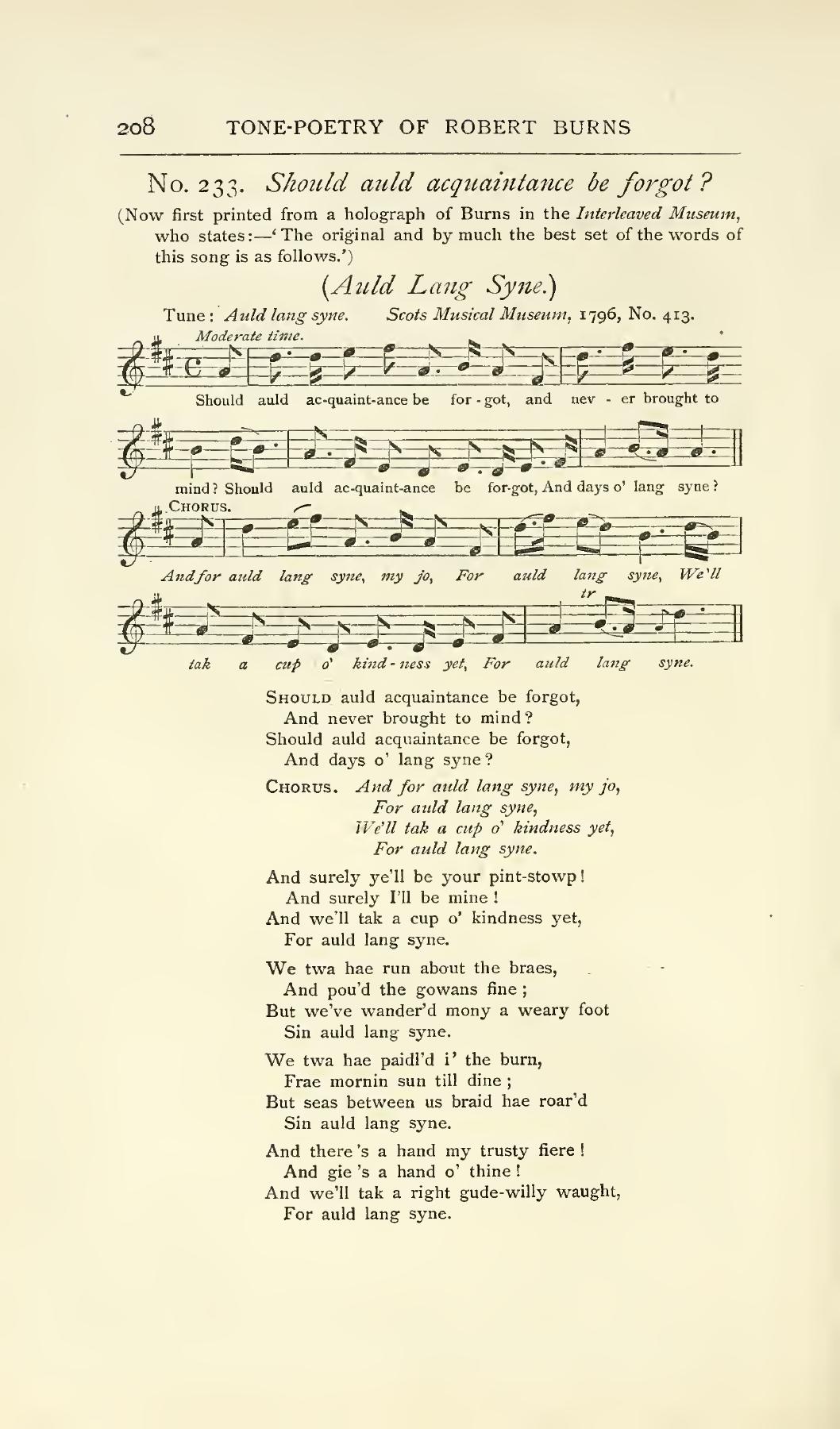
NLS · Dick 1903 · Source
Robert Burns sent Auld Lang Syne to George Thomson in September 1793, saying that he had taken it down from an old man’s singing. His account presented the piece as a recovered song worth preserving for another generation of singers.
The words had a longer and more complicated history. The phrase and older songs using it predated Burns, while his surviving versions show work on their arrangement and expression. The childhood memories of running over hills, picking daisies and paddling in a stream are generally accepted as Burns’s contributions.
Thomson received one version within that developing history. When he published the song in 1799, its stanza order followed the version Burns had sent, and he paired it with the melody that became familiar. Burns’s account of the old man’s singing and Thomson’s printed edition record two different points in the song’s history.
Sources
- The Complete Works of Robert Burns: poems, songs and correspondence · CCLXXIIISeptember 1793
- Auld Lang Syne: A Song and its Culture · Grant2021,pp.39–55, text transmission and authorship
- Thomson1799 no68: high-resolution reproduction of Morgan original · Thomson1799, song68, words and score