 Open full image
James C. Dick - 1903 - NLS · Licence · Source
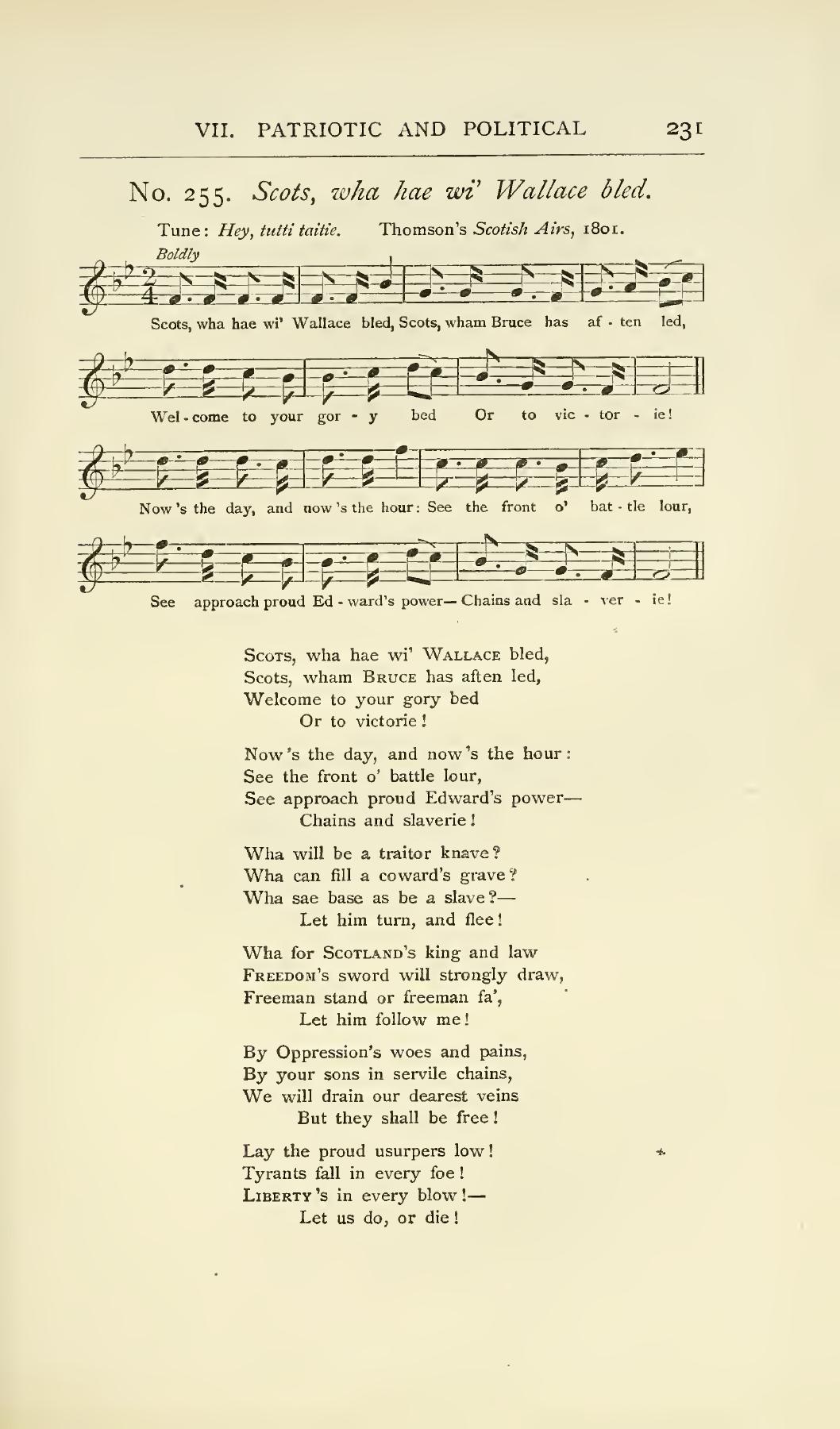
In 1801 George Thomson printed Scots Wha Hae with Hey, tutti, taitie, the air Robert Burns had wanted for it. Thomson had previously published the song with Lewie Gordon in 1799. The change followed an argument in their correspondence about how words and tune should work together.
Burns imagined Robert Bruce addressing his army before Bannockburn. The old air stirred him, and its short phrases suited the urgent choices in the speech: follow, retreat, submit or fight. Thomson preferred another melody, which required Burns to lengthen some of the short closing lines.
Burns tried revisions but eventually resisted further changes, believing they would weaken the ode. Thomson's later publication acknowledged the greater energy of the original air. With the air Burns had defended, singers could give the short endings of Bruce’s appeals their full force.
Sources
- The Songs of Robert Burns: now first printed with the melodies for which they were written · Dick1903 note255 pp448–449