 Open full image
Benard / Wellcome Collection - Public domain · Licence · Source
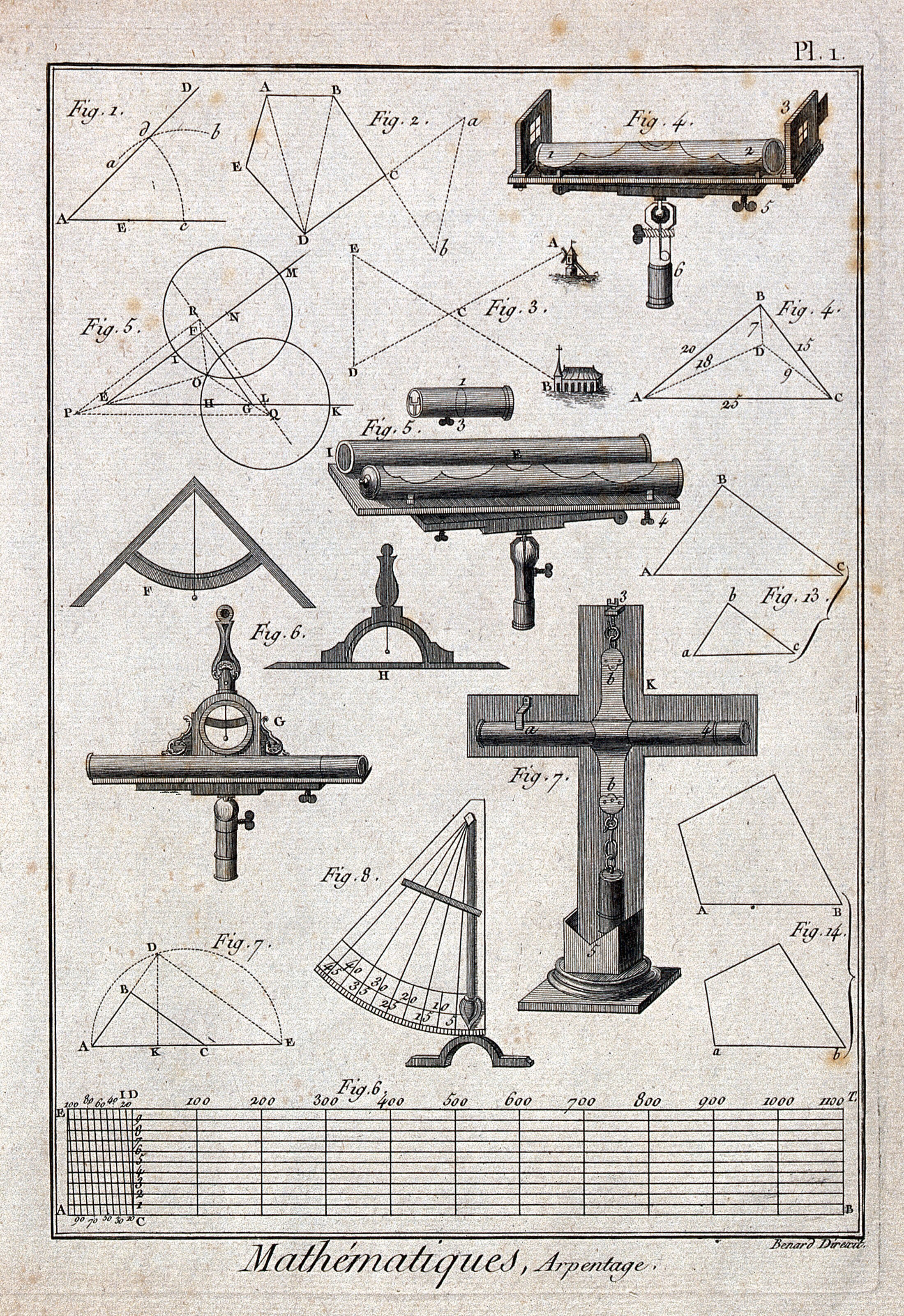
Robert Burns spent a summer studying practical mathematics at Kirkoswald. His brother Gilbert remembered him lodging with one of their mother's brothers while attending the parish school. Surveying gave geometry a use in measuring land; Burns also recalled learning to calculate areas and volumes and to construct sundials.
Writing to John Moore in 1787, Burns described the district as a smuggling coast. He sometimes met people engaged in the contraband trade and encountered drinking and noisy quarrels unfamiliar to him. His account moves between mathematical progress and a wider acquaintance with people.
Towards the end of the stay, he recalled becoming preoccupied with a girl who lived beside the school. The friendships Burns made that summer gave him a chance to carry on writing after school. He persuaded several schoolfellows to continue a literary correspondence after he went home. Reading their letters, keeping copies of his own and studying published examples helped him practise composition. Those exchanges extended the school friendships into a sustained exercise in writing.
Sources
- The works of Robert Burns; with an account of his life, volume I · Currie, Works I (1800), printed pp.67
- The Complete Works of Robert Burns: poems, songs and correspondence · Letter LXXIV, p.354
- British Sundial Society, The BSS Sundial Glossary · Entry dial: design/construction of sundials; held Kirkoswald story reference3