 Open full image
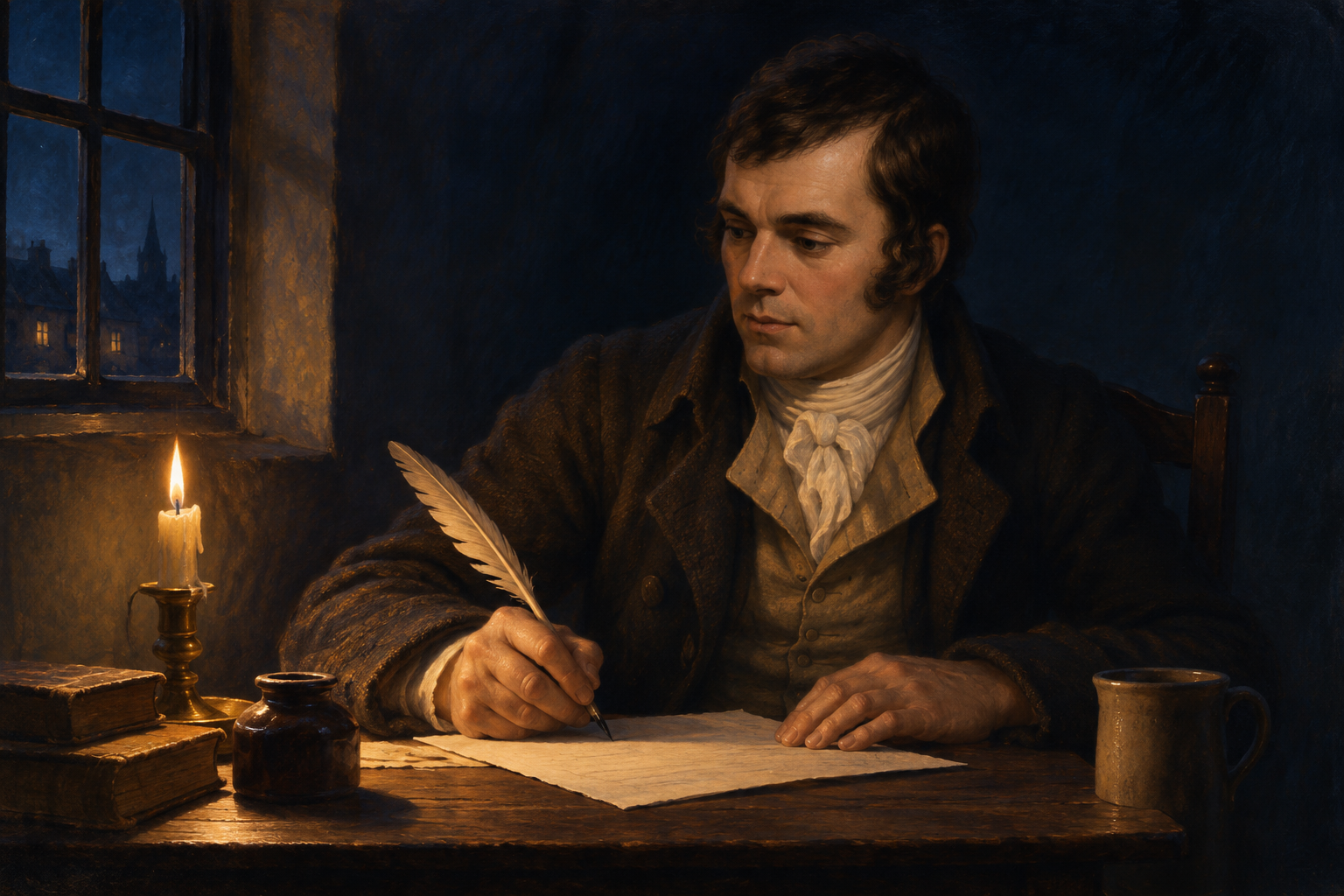
AI-assisted illustration · AIRT
Robert Burns learned in December 1792 that his political conduct had attracted official attention. Collector Mitchell had told him of an order to make enquiries. Burns responded by appealing to Robert Graham of Fintry, an Excise commissioner who had helped his career.
His government salary supported Jean and their children in Dumfries. In the letter, Burns denied disaffection to the government and asked Graham to consider what losing the appointment would mean for his family. The inquiry threatened the livelihood on which the household depended after the departure from Ellisland.
Burns also hoped to advance in the service. Political suspicion could affect those prospects as well as his present employment. His subsequent letters show him waiting for reassurance and trying to avoid further controversy. By early January he told Frances Dunlop that correspondence with Graham had settled the immediate difficulty. In December he had feared for both his job and his family’s income.
Sources
- The Works of Robert Burns, volume sixth: Prose · ScottDouglasVI1895 pp43–47, GrahamDecember1792 andDunlop31December–5January letters