 Open full image
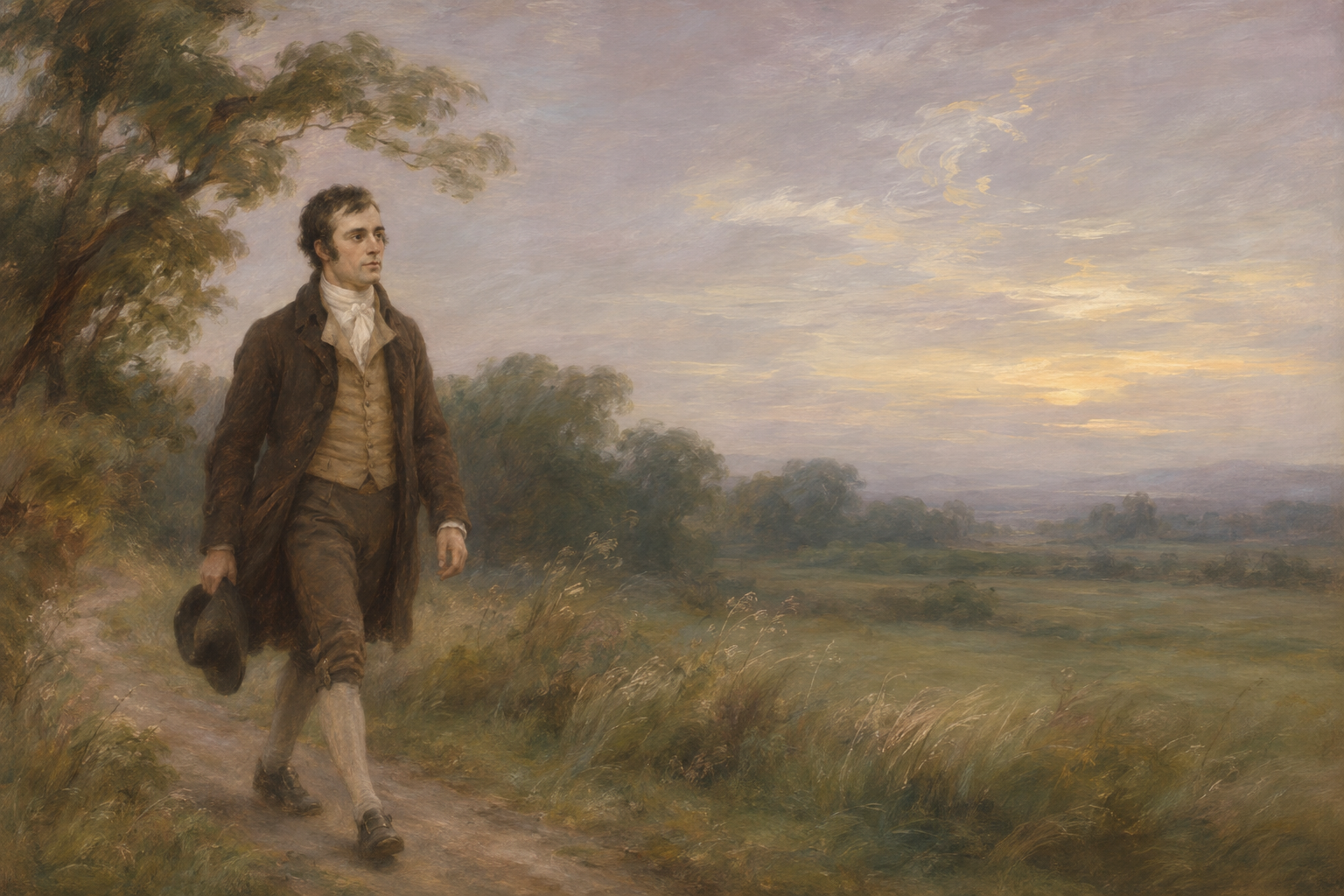
AI-assisted illustration · AIRT
An evening walk and an old tune led Robert Burns to imagine Robert Bruce addressing his followers before battle. In a letter to George Thomson assigned to September 1793, he described the air Hey, tutti, taitie and its traditional association with Bannockburn. The result was the song now known as Scots Wha Hae.
Burns remembered being moved by the tune when Fraser played it on the hautboy, or oboe. Its association with an earlier struggle for freedom also brought more recent struggles to his mind. He left those contemporary events unnamed in the letter.
In the lyric, Bruce calls his men to choose resistance and liberty. John Syme gave a separate account, placing the writing during their Galloway journey in July 1793.
Sources
- The Complete Works of Robert Burns: poems, songs and correspondence · LetterCCLXXISeptember1793
- The Songs of Robert Burns: now first printed with the melodies for which they were written · Dicknote255 pp448–449