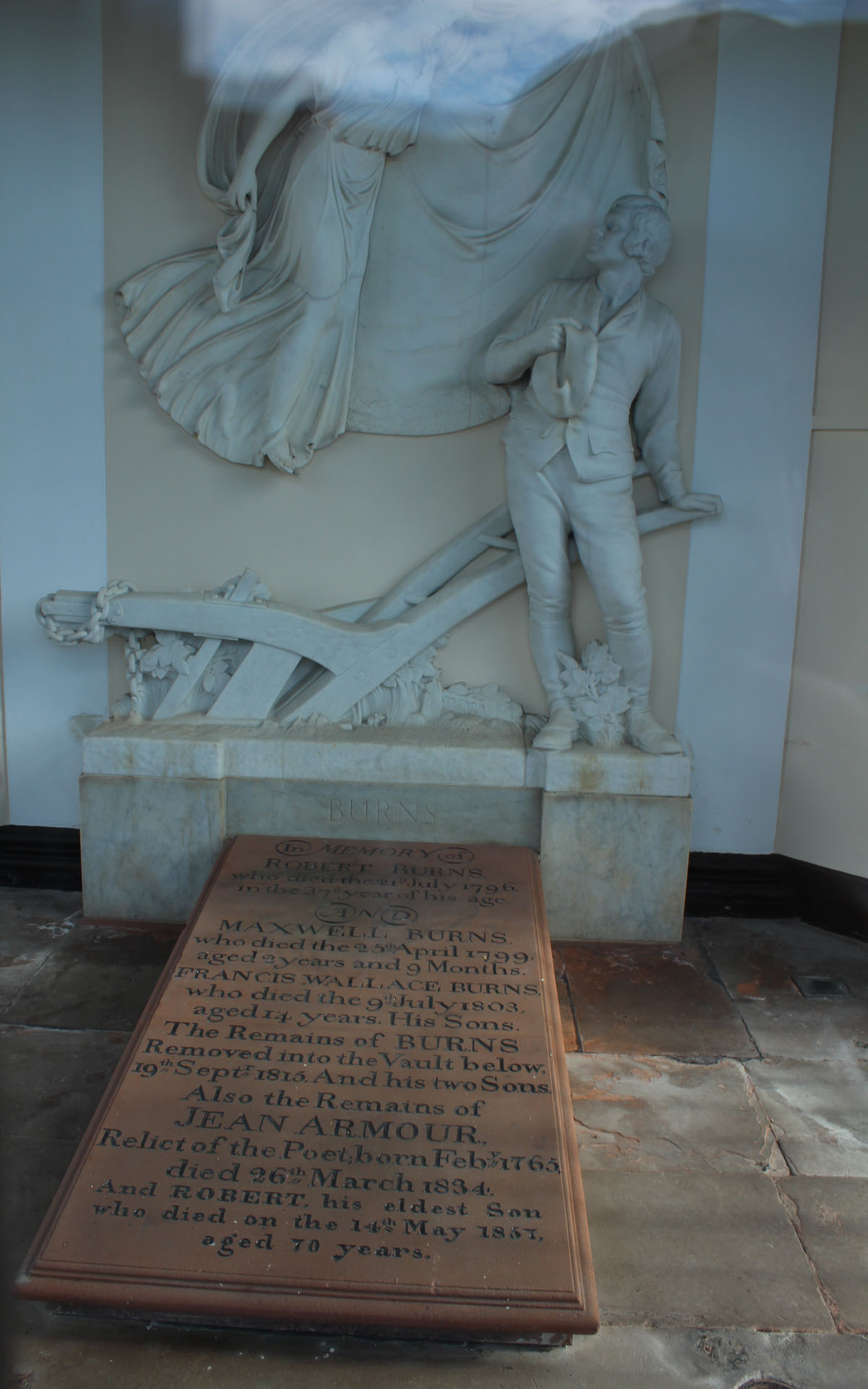
Billy McCrorie · CC BY-SA 2.0 · Source · Licence
Robert Burns’s remains were transferred to a mausoleum in St Michael’s churchyard, Dumfries, on 19 September 1815. He had died in the town in July 1796. The new monument gave his grave a much more conspicuous place within the churchyard and within the growing practice of visiting sites associated with his life.
The mausoleum formed part of the public commemoration that developed after his death. Readers encountered Burns through editions, clubs and anniversary gatherings; visitors could also approach his burial place. The monument brought those acts of remembrance into a permanent architectural setting.
Its appearance continued to change. A sculptural group by Peter Turnerelli later deteriorated and was replaced in 1936 by a work by Hermon Cawthra. Replacing the sculpture was one of the decisions later generations made as they cared for the grave.
Sources
- J.G.Lockhart, Life of Robert Burns (held1905edition) · Lockhart1905, pp.296–297
- Future Museum, Key to Robert Burns’ Mausoleum, BHBN081n / DUMFM:0198.415 · Mausoleum object description
- Robert Burns World Federation Newsletter16 (July2015) · Robert Burns World Federation newsletter July2015,p.8