Robert Burns · Scott Douglas, Works VI · 1895 · Licence · Source
View related pages
 Open full image
Robert Burns · Scott Douglas, Works VI · 1895 · Licence · Source
 Open full image
Robert Burns · Scott Douglas, Works VI · 1895 · Licence · Source
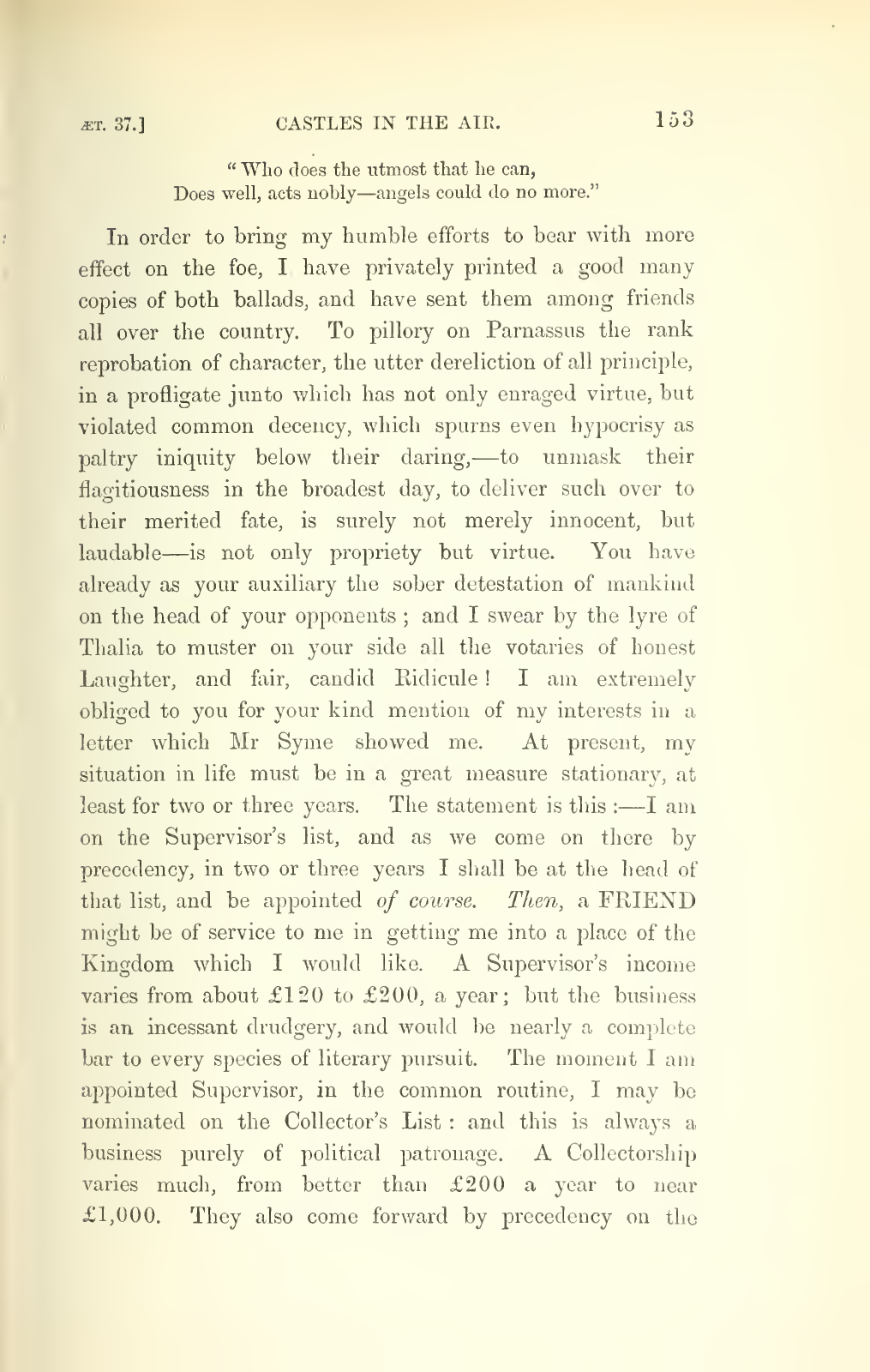
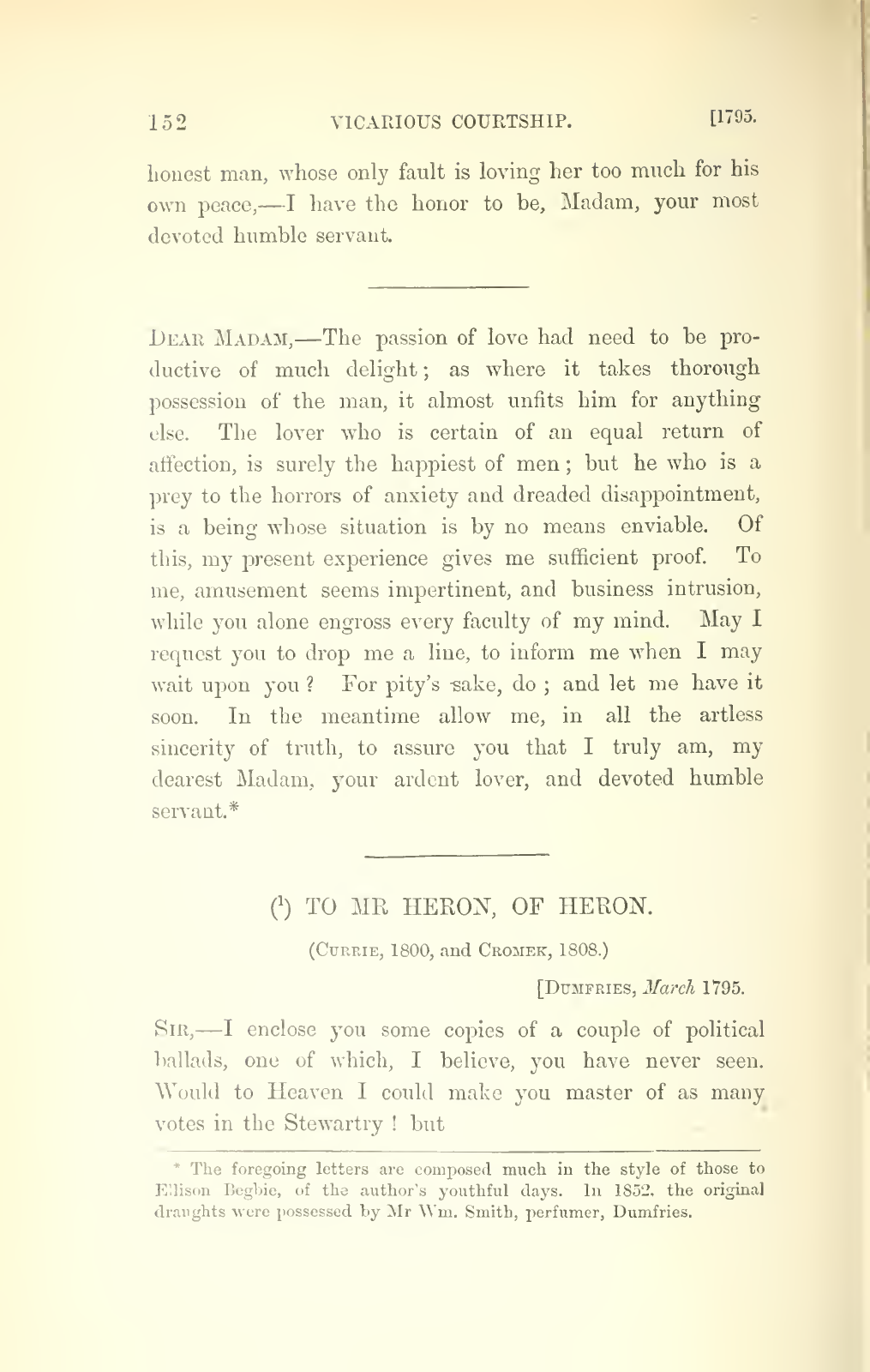
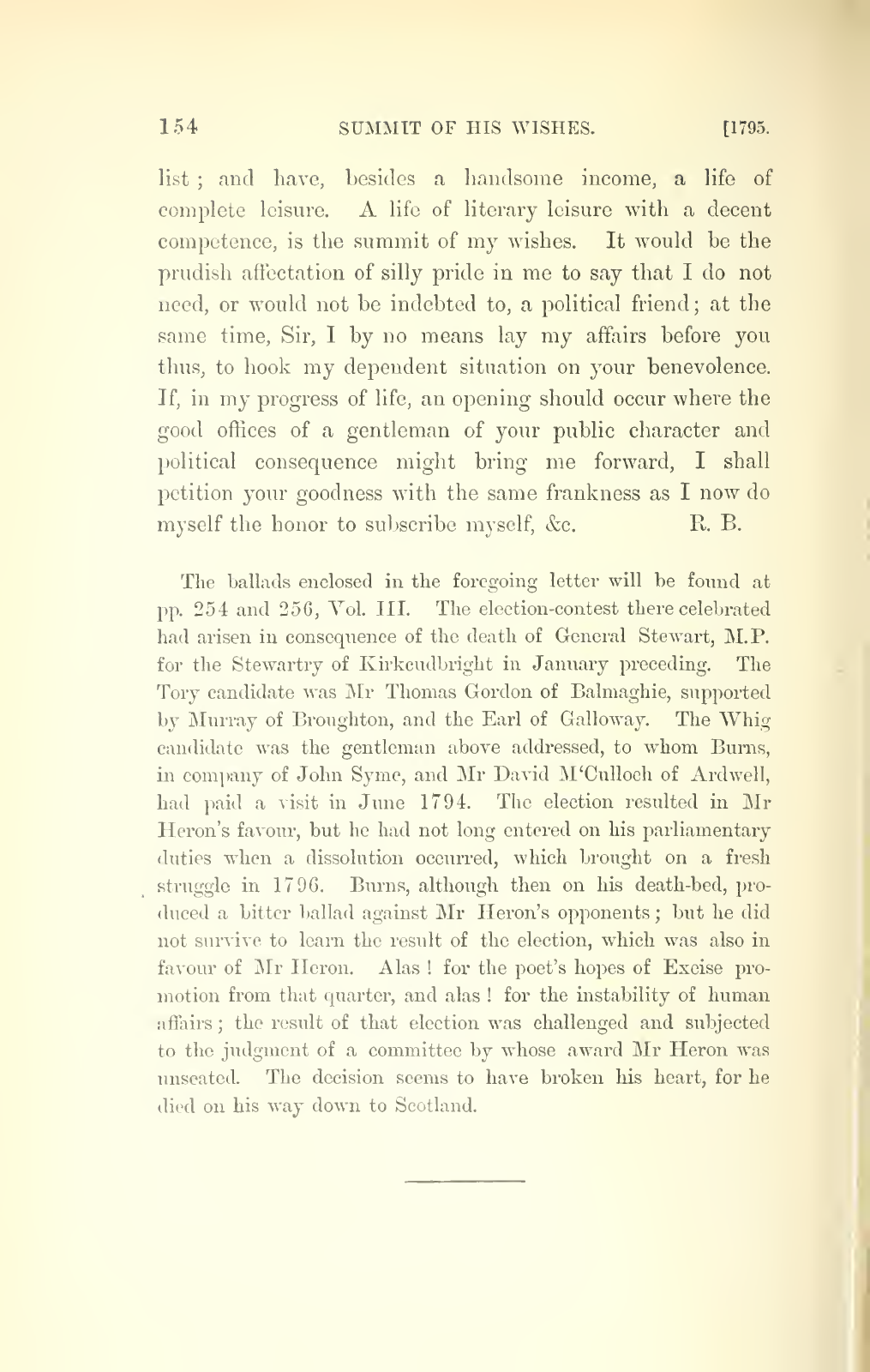
Robert Burns explained his ambitions within the Excise to Patrick Heron in a letter dated to 1794 or 1795. A supervisor might earn between £120 and £200 a year, he estimated, but the work would be incessant. A collectorship offered the prospect of a better living with more time available for literature.
Burns was supporting Jean Armour and their children in Dumfries. Government employment gave the household its principal income after the family left Ellisland. Promotion depended on seniority, vacancies and the influence of people able to assist him.
Burns explained to Heron why he wanted a post that would leave him time to write. He wanted enough income to support his family and enough leisure to continue literary work. The letter makes that ambition explicit, while showing his awareness that a higher salary could come with duties that consumed the very time he hoped to gain.
Sources
- The Complete Works of Robert Burns: poems, songs and correspondence · CCCXXIV pp 493–494