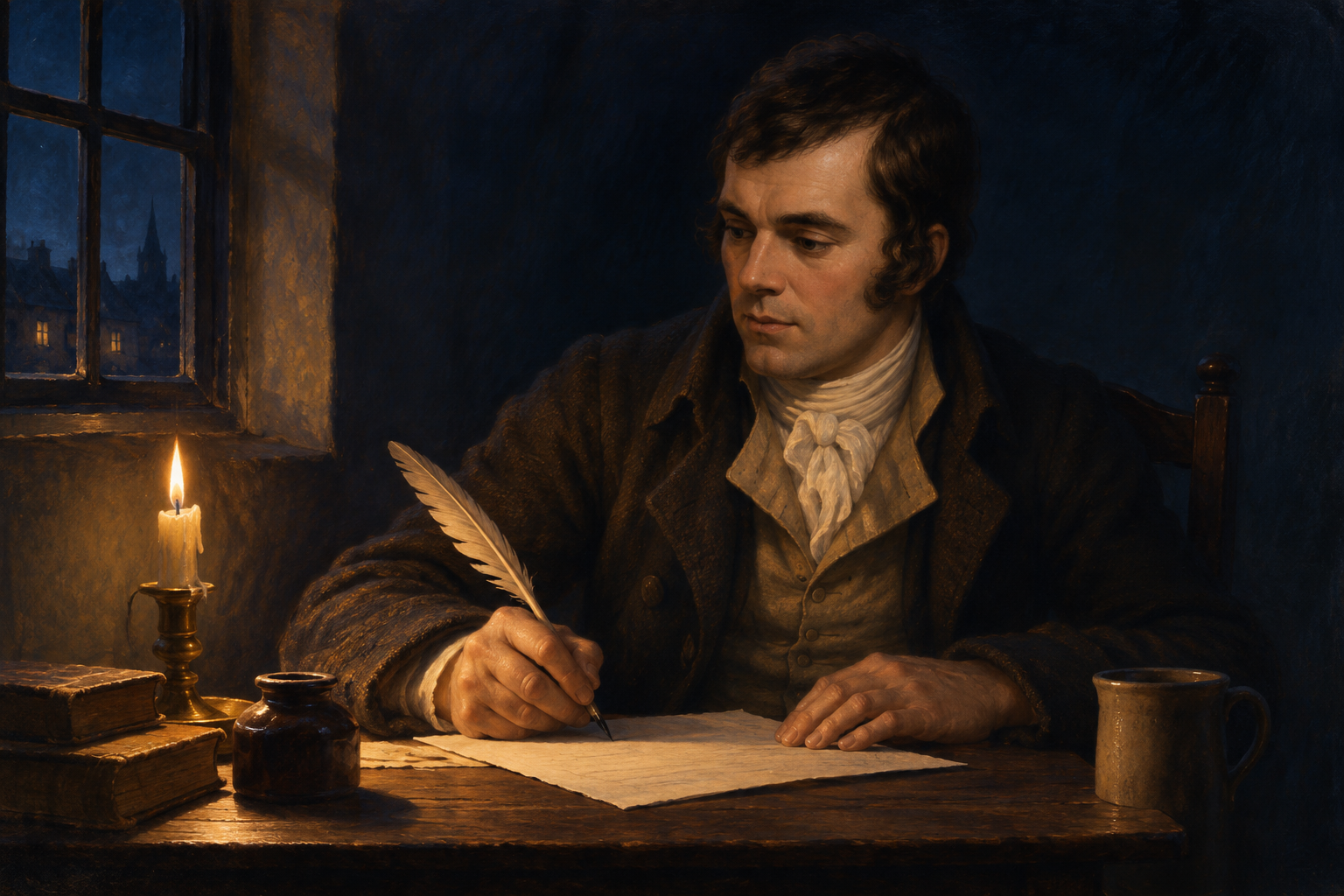
AI-assisted illustration · AIRT
Robert Burns could report relief to Frances Dunlop on 5 January 1793. The political difficulty that had threatened his welfare, he wrote, had been put right after correspondence with Robert Graham of Fintry, one of the Excise commissioners.
Days earlier Burns had been worried about enquiries into his political principles. The Excise paid the main income for Jean and their children in Dumfries. Burns hoped to become a supervisor, but suspicion from his employers could put both his current job and his chances of promotion at risk.
The reassurance did not end his anger about the people whose remarks had brought him under notice. In the same letter he reflected on the harm caused by insinuations and careless talk. Dunlop had become a correspondent to whom he could describe that experience openly. His employment continued, although later letters show that he remained concerned about what the episode might mean for advancement.
Sources
- The Works of Robert Burns, volume sixth: Prose · ScottDouglasVI p46/PDF74,5January1793continuation
- The Complete Works of Robert Burns: poems, songs and correspondence · ErskineletterCCLV13April1793