 Open full image
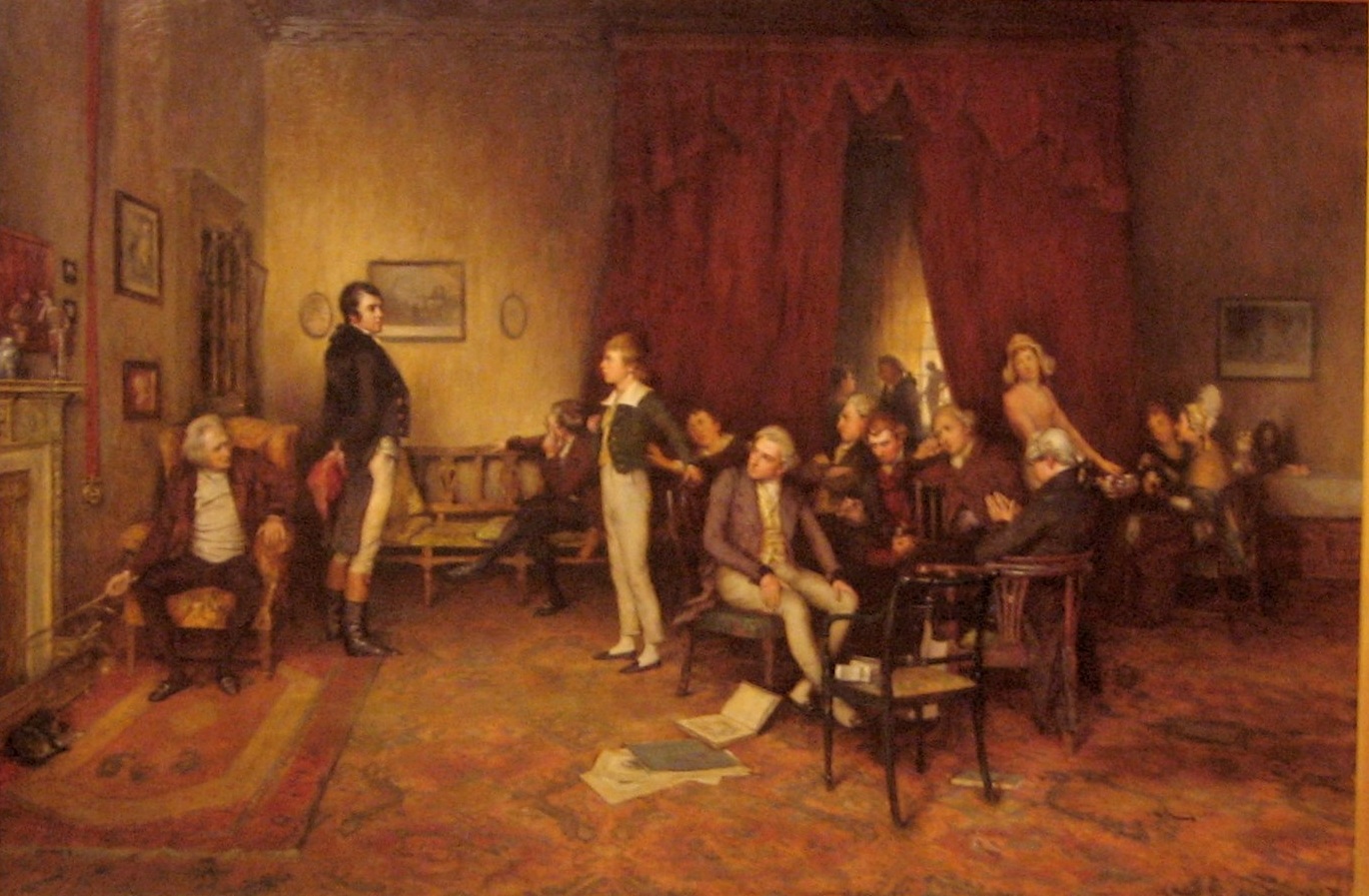
Charles Martin Hardie / Dunedin Public Art Gallery · Licence · Source
Walter Scott was fifteen when he met Robert Burns at Professor Adam Ferguson’s house in Edinburgh during the winter of 1786–87. Scott later remembered the younger guests sitting quietly while the adults talked. He already admired Burns and hoped for an introduction.
A print showed a dead soldier in the snow beside his dog, widow and child, with verses beneath it. Scott recalled Burns being moved to tears and asking who had written the lines. Scott knew the answer, John Langhorne, and whispered it to a friend, who passed it on. Burns acknowledged him with a look and a word.
Scott wrote this recollection about forty years later. He could still describe Burns’s manner and the pleasure that brief acknowledgement gave him, although he could no longer quote the conversation distinctly. Among those writers and thinkers, it was the schoolboy’s knowledge of the verses that brought him to Burns’s attention.