Burns’s planned voyage to Jamaica
On 19 June 1786 Charles Douglas wrote from Port Antonio in Jamaica to his brother Patrick in Ayrshire. He wanted someone who could read a letter and write back while he was away. The man Patrick found was Robert Burns. The post was on a sugar plantation, and taking it would mean helping Douglas supervise people forced to work there under slavery.[1][2]
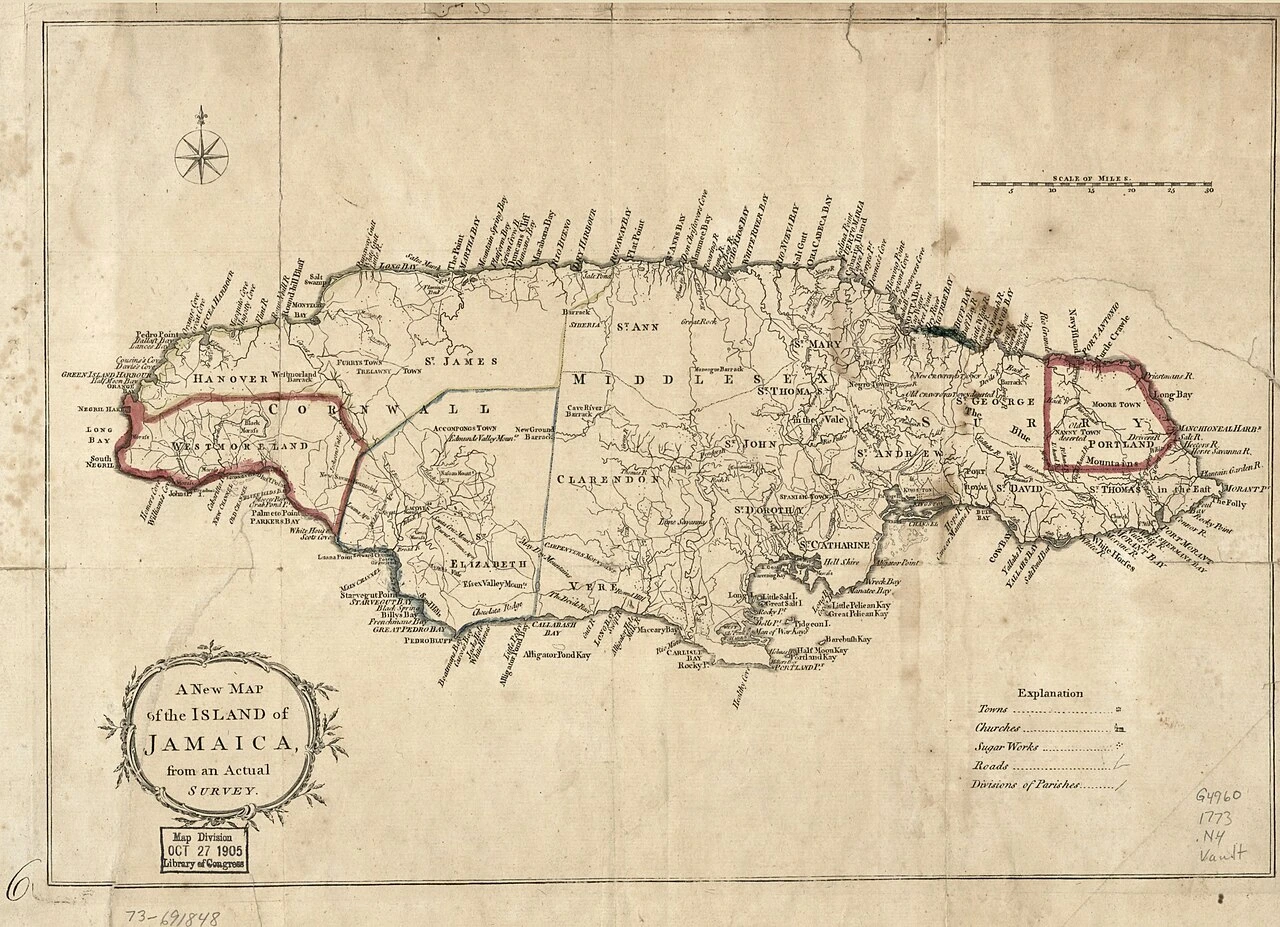
On a Jamaican sugar estate a man in this post was called a bookkeeper. His duties took him into the cane fields, where he helped enforce the work demanded of enslaved labourers. One of the people Charles Douglas enslaved appears by name in a later account drawn from records at Spanish Town. In December 1785, six months before Douglas wrote to his brother, Janet Colt had sold him a man named Andrew.[2][3]
A ship from the Clyde
By 30 July Burns could tell his friend John Richmond the name of the ship and its captain. He expected to board the Nancy within three weeks and sail with Captain Smith by way of Antigua. He was keeping his plans quiet. Jean Armour was pregnant, and Burns told Richmond that her father had obtained a warrant against him. He was staying first with one friend and then another.[4]
The Nancy was bound for Savanna-la-Mar. When Burns called on Patrick Douglas to settle the arrangements, Mr and Mrs White, who knew Jamaica, were there. As Burns told his friend James Smith, the Whites reckoned it would cost Charles Douglas upwards of £50 to get him from there to Port Antonio. They warned him about making the journey in the heat. Patrick changed the plan, and Burns expected to sail from Greenock on another ship.[4]
Meanwhile John Wilson had printed Burns’s poems at Kilmarnock. By late September Burns was weighing up a second edition. In a letter Richmond dated 27 September, Burns said another printing would keep him in Scotland a little longer. If it fell through, he still meant to leave after the harvest.[5][6]
On 20 November he asked John Ballantine for advice. Robert Aiken had heard nothing back from Edinburgh about a new edition, and Burns was thinking of going to the city himself the following week. He went, and the Edinburgh edition appeared in April 1787. He never sailed to Jamaica.[7][8]
What Burns remembered
In August 1787, writing to the physician John Moore, Burns put a price on the crossing. He remembered clearing nearly £20 on the Kilmarnock book. Until then he had considered binding himself to work in return for his passage. Once he had nine guineas, he said, he bought a place in steerage on a ship leaving the Clyde.[9]
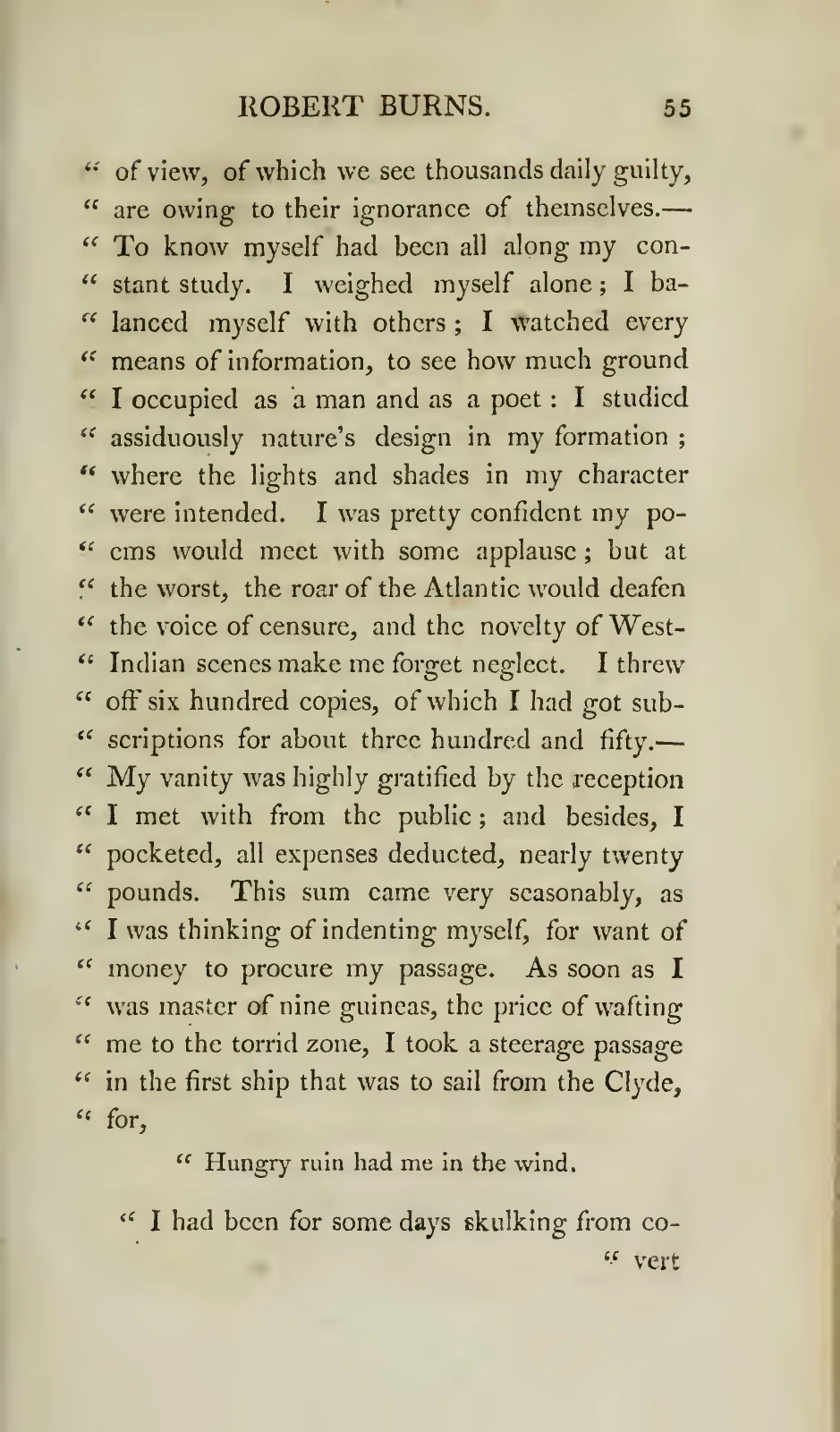
Burns told Moore that he had said his goodbyes and sent his chest on the road to Greenock. In his telling, a letter from the poet Thomas Blacklock to a friend turned him towards Edinburgh. Blacklock thought a second edition would find support there. Writing to Richmond the previous September, he was still weighing the chance of another printing. The word he used was “perhaps”.[9][6]
References
- Charles Douglas to Patrick Douglas, 19 June 1786, especially the second page. Robert Burns Birthplace Museum.
- Charles Douglas to Patrick Douglas, 8 August, with Patrick’s reply on the reverse. The museum’s catalogue describes the assistant overseer’s post and identifies Andrew.
- Stephen Mullen, The Glasgow Sugar Aristocracy, chapter 5, “Jamaica”, on bookkeepers and plantation labour. For the search of the Spanish Town records, see the account reprinted in “Burns, Slavery and the Douglases”.
- Burns to James Smith, Mossgiel, Monday morning, 1786, and to John Richmond, 30 July 1786, The Prose Works of Robert Burns, letters XV and XX, pp. 13–14.
- Robert Burns, Poems, Chiefly in the Scottish Dialect, title page, Kilmarnock, 1786.
- Burns to John Richmond, letter dated by Richmond, 27 September 1786. Robert Burns Birthplace Museum.
- Burns to John Ballantine, Mossgiel, 20 November 1786. Robert Burns Birthplace Museum.
- Stephen Mullen, “Robert Burns, Slavery and Abolition”, part 2, University of Glasgow, 2021, on the sailings and the Edinburgh edition.
- Burns to John Moore, 2 August 1787, in James Currie’s The Works of Robert Burns, volume I (1800), pp. 54–56.
Visit the planned Jamaica departure on the timeline
Read Three shillings for a poet, the story of the Kilmarnock edition