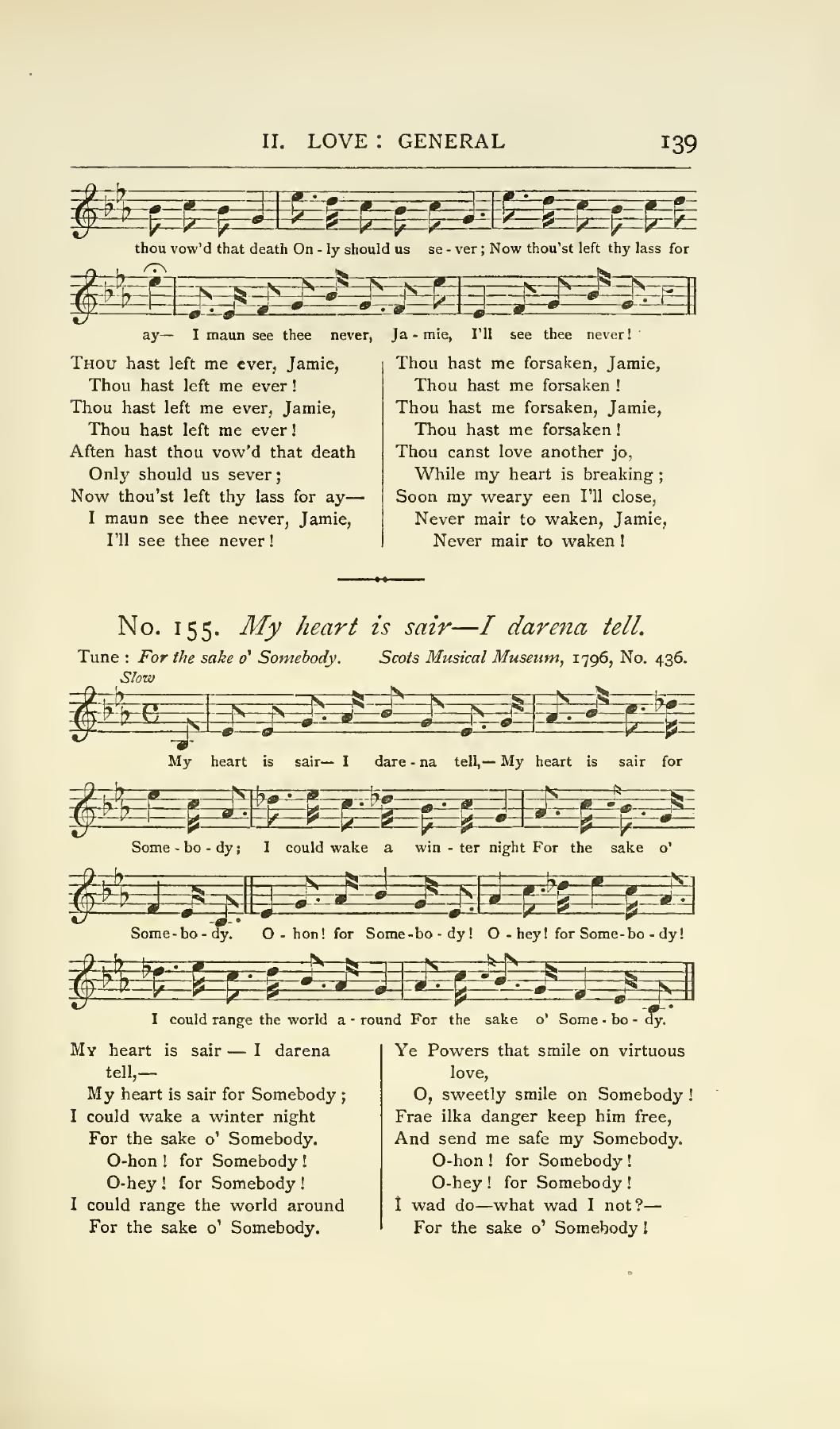
Thou hast left me ever, Jamie
Behind the song
Burns described making this lament beside a bowl of punch. The story he gave the woman singing it is a sober one. Jamie promised that only death could part them. Now he has left and she thinks she will never see him again. [1]
Read the fuller story
Each stanza begins by repeating the same charge four times. The first insists that Jamie has left for ever; the second says he has forsaken her. Between these repeated cries, the speaker explains the injury. His vow has failed, and he can love someone else while her own heart breaks.[1]
The endings draw permanence around the loss. She expects never to see him again, then imagines closing her weary eyes for the last time. The repeated name makes the complaint sound like a direct appeal to the absent man. Cunningham prints “Fee him, father” as the tune and quotes Burns’s playful account of the song’s origin. The lyric concentrates that reported musical occasion into the abandoned speaker’s unwavering sorrow.[1]
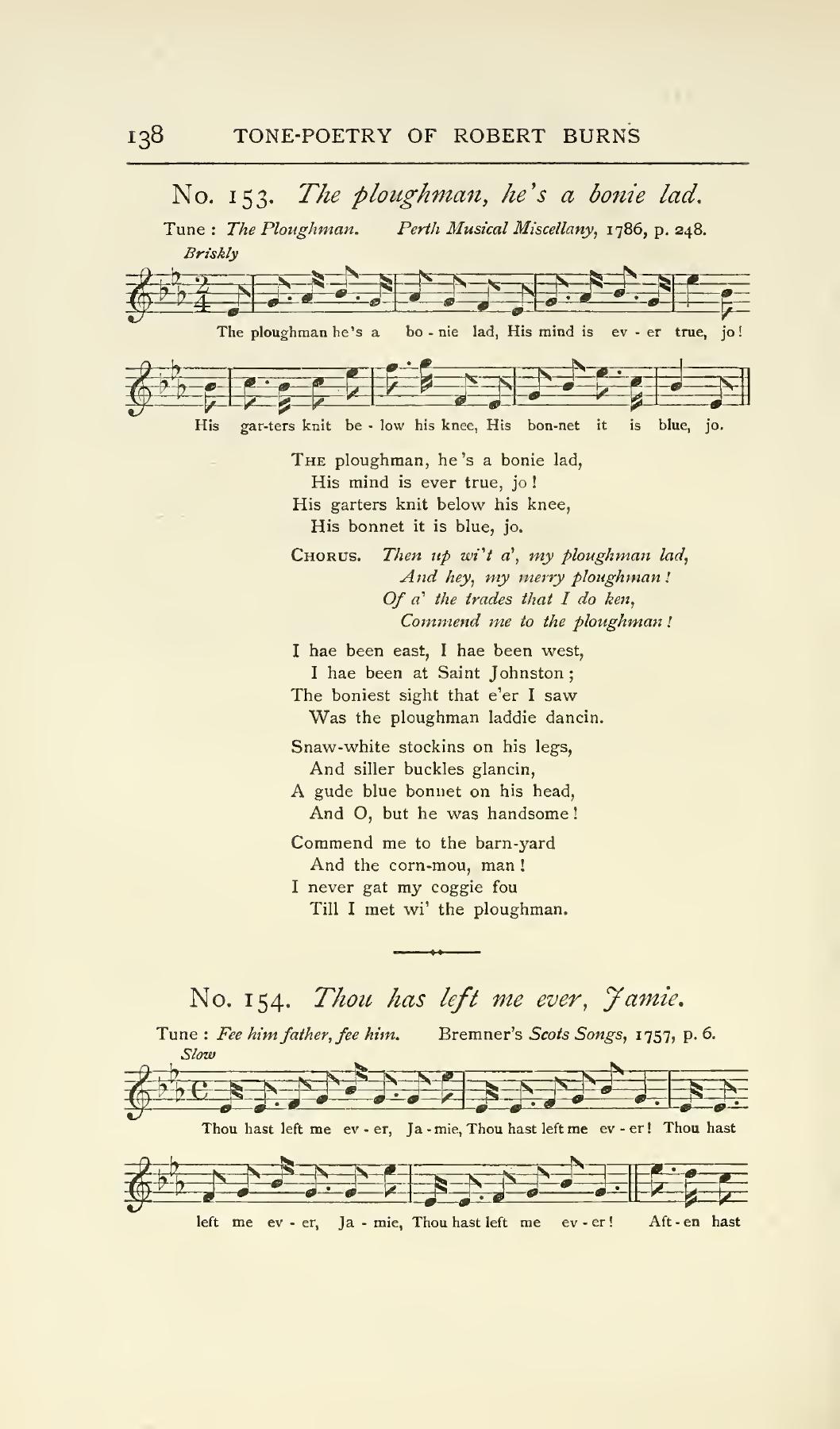 View score Dick’s Songs of Robert Burns (1903)
Lyrics
Choose an edition
Cunningham (1855)
Thou hast left me ever, Jamie!
  Thou hast left me ever;
Thou hast left me ever, Jamie!
  Thou hast left me ever.
Aften hast thou vow’d that death
  Only should us sever;
Now thou’s left thy lass for ay—
  I maun see thee never, Jamie,
    I’ll see thee never!

Thou hast me forsaken, Jamie!
  Thou hast me forsaken;
Thou hast me forsaken, Jamie!
  Thou hast me forsaken.
Thou canst love anither jo,
  While my heart is breaking:
Soon my weary een I’ll close,
  Never mair to waken, Jamie,
    Ne’er mair to waken!
Digital text from Project Gutenberg.
View the source edition · p. 287
About this edition
Cunningham’s preface discusses several poems he left out of the collection.
Dick (1903) · no. 154
The words are on the score page.
View the source edition · no. 154; pp. 138–139
About this edition
The Corrections leaf changes the title to “Thou hast”, rather than “Thou has”. The facsimile preserves the printed page.
Music
View historical scores
Dick’s Songs of Robert Burns (1903)
no. 154; pp. 138–139
View source · Download citation