Why, Why Tell Thy Lover
Behind the song
The lover asks Chloris why she must destroy a happiness that exists in hope and imagination. Repeated questions give these eight lines their pleading movement. Cunningham quotes Burns telling Thomson that the air’s unusual rhythm had defeated his attempt to add another stanza.[1]
Read the fuller story
The first group of lines asks why the lover must be told that the happiness he imagines is impossible. To be undeceived is to have every hope contradicted. The repeated opening word presses the same question from different directions, giving the brief lyric the sound of an appeal that cannot accept its answer.[1]
The second group pictures the imagination asleep in delight, with Chloris filling its dream. Her truth becomes an awakening the lover calls cruel. The song stops on that question, leaving the lost dream as its final image.[1]
The heading names “Caledonian Hunt’s Delight” as the tune. In the letter extract printed by Cunningham, Burns jokes about his toothache before discussing the difficulty of fitting more words to its rhythm. The headnote calls this his last strain for Chloris. The printed text’s two short numbered groups make their repeated questions carry the whole emotional argument.[1]
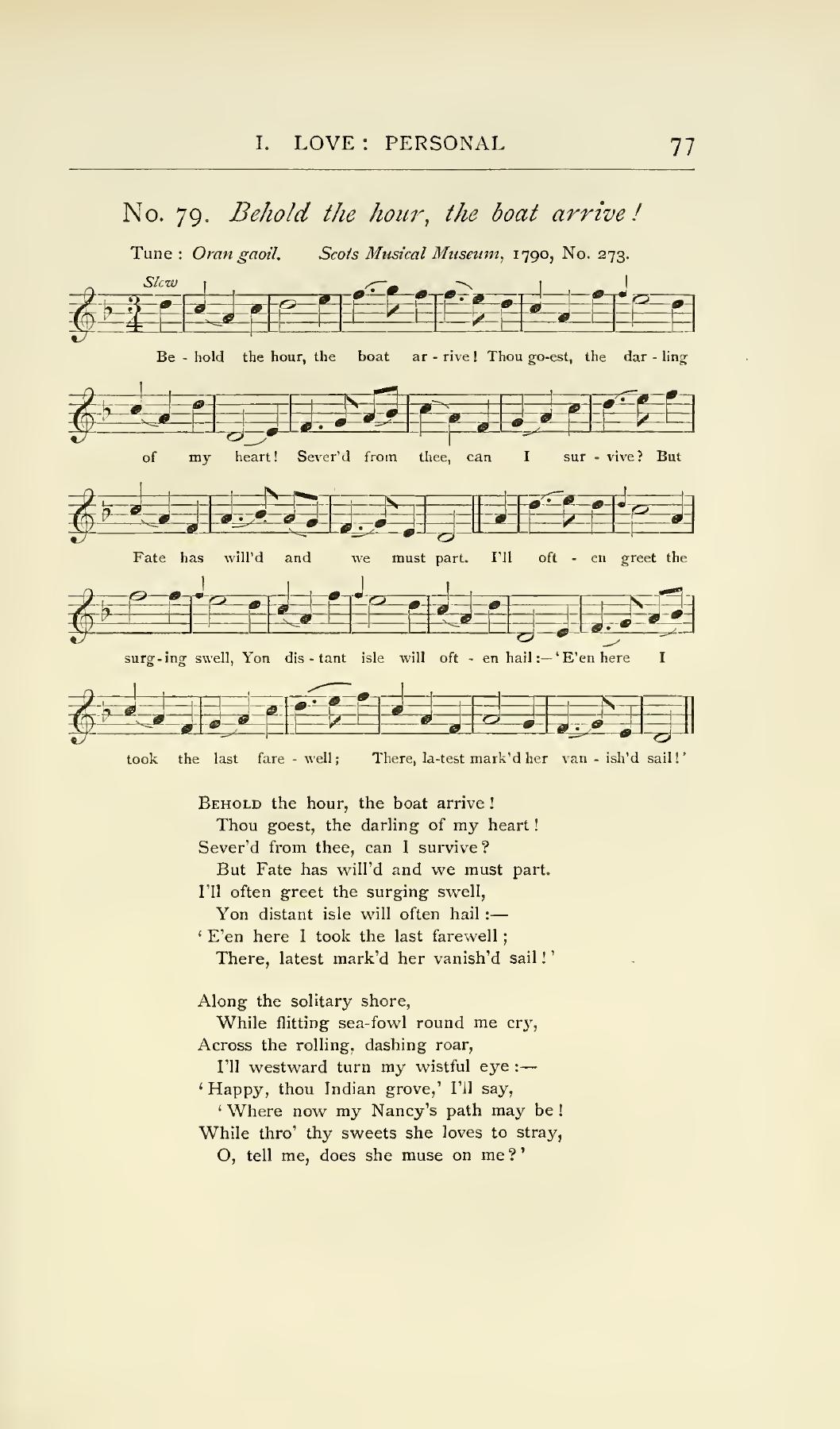 View score Dick’s Songs of Robert Burns (1903)
Lyrics
Choose an edition
Cunningham (1855)
Why, why tell thy lover,
  Bliss he never must enjoy:
Why, why undeceive him,
  And give all his hopes the lie?

O why, while fancy raptured, slumbers,
  Chloris, Chloris all the theme,
Why, why wouldst thou, cruel,
  Wake thy lover from his dream?
Digital text from Project Gutenberg.
View the source edition · p. 308
About this edition
Cunningham’s preface discusses several poems he left out of the collection.
Dick (1903) · no. 79
The words are on the score page.
View the source edition · no. 79; p. 77
Dick (1903) · no. 88
View the source edition · no. 88; p. 83
Music
View historical scores
Dick’s Songs of Robert Burns (1903)
no. 79; p. 77