 Open full image
Rare Print Collection · 1900 · Cornell/IA · Licence · Source
The Morning Chronicle printed the poem now known as Scots Wha Hae in May 1794. James C. Dick records this newspaper appearance in his study of Robert Burns's songs. Its imagined speaker is Robert Bruce, calling his followers to choose freedom and resistance before battle.
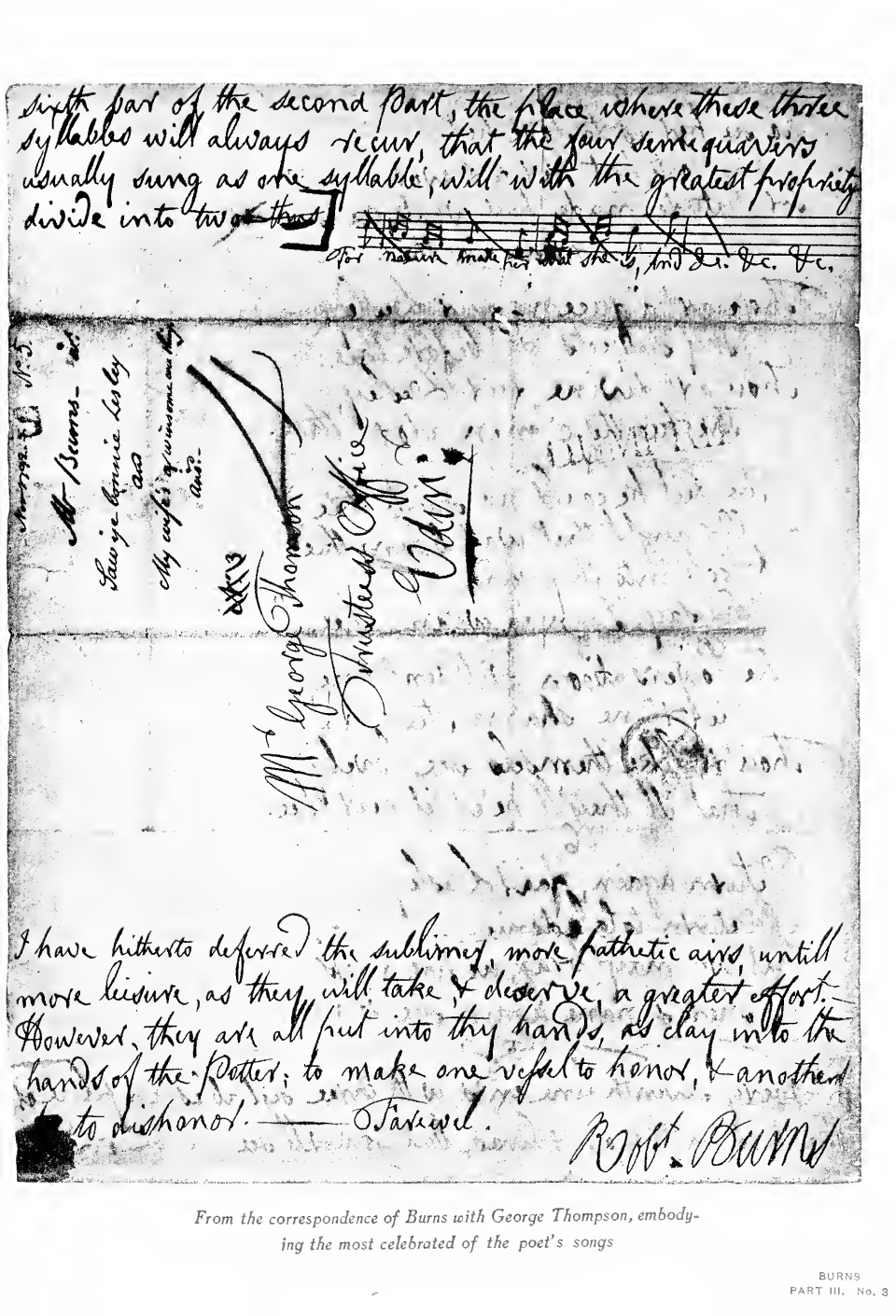
Burns had sent the words to George Thomson in 1793 with the air Hey, tutti, taitie in mind. He associated that tune with Bannockburn through tradition and told Thomson that the older struggle had also stirred thoughts of more recent contests for liberty.
The words were therefore reaching readers while their musical setting was still the subject of discussion. Thomson preferred Lewie Gordon, which required alterations to the short closing lines. Later editions carried different combinations of tune and text. Newspaper readers could read Bruce’s address before singers saw which tune and words Thomson would publish together.
Sources
- The Songs of Robert Burns: now first printed with the melodies for which they were written · Dick1903 note255 pp448–449
- The Complete Works of Robert Burns: poems, songs and correspondence · LetterCCLXXISeptember1793