 Open full image
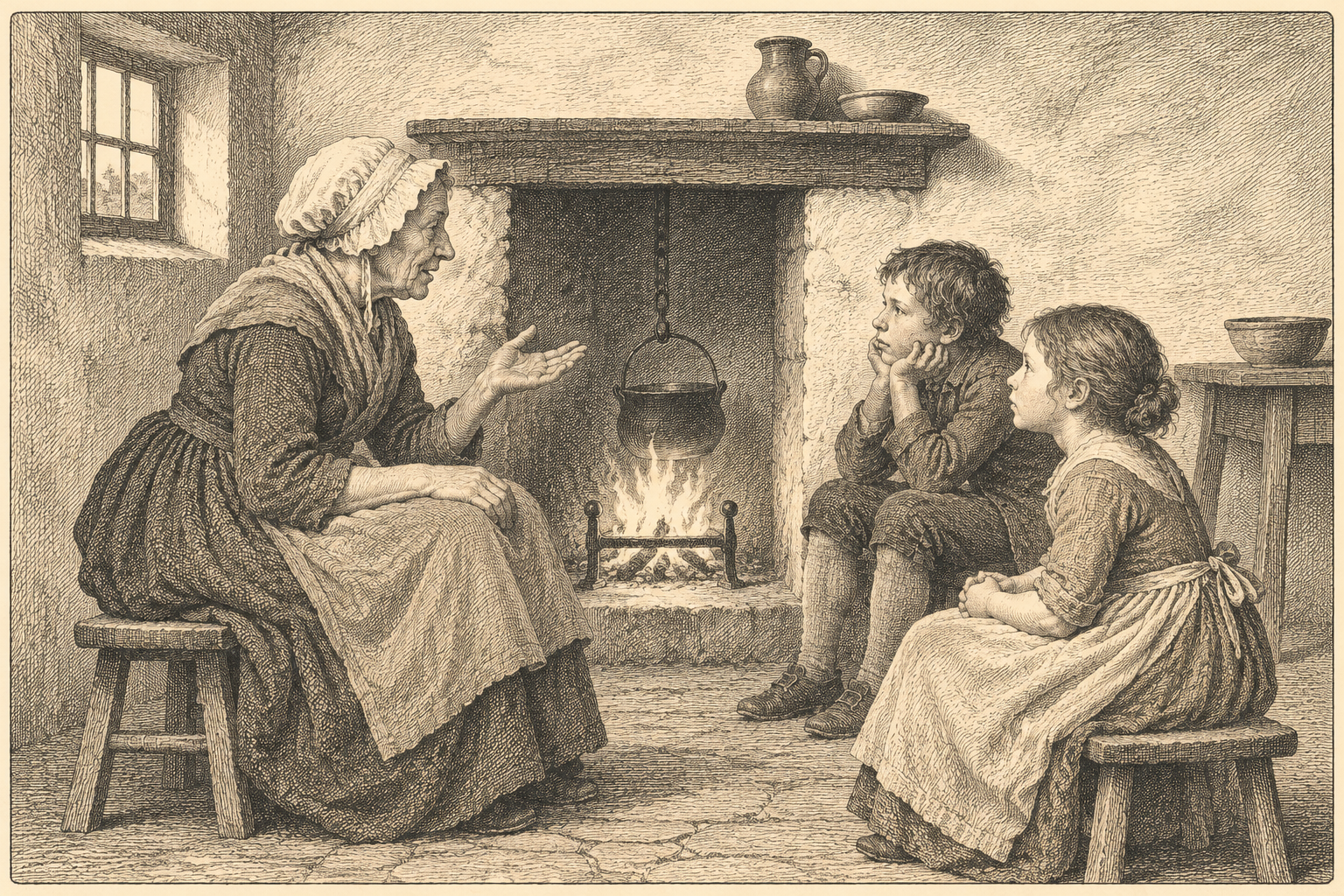
AI-assisted illustration · AIRT
An older woman living with the Burns family supplied Robert with a store of tales and songs about ghosts, witches, fairies and other supernatural beings. He remembered her contribution when he wrote an account of his life to the physician and novelist John Moore on 2 August 1787. Her storytelling, he said, had helped awaken his poetry.
Burns placed that memory alongside his school lessons and early reading. He recalled the pleasure of an Addison hymn and a passage from The Vision of Mirza, both encountered in a school anthology. Spoken stories and printed literature were already giving him different kinds of enjoyment in language.
The woman's tales also left fears that lasted into adulthood. Burns told Moore that he sometimes watched suspicious places closely during night walks, although he regarded himself as sceptical about supernatural matters. He could reason against the fears and still feel their force. When Burns wrote about his early education, he gave the unnamed woman a place alongside his teachers.
Sources
- The Complete Works of Robert Burns: poems, songs and correspondence · Burns to John Moore, 2 August 1787, letter LXXIV, p.352