 Open full image
Jean-Pierre Houël · Paris Musées / Carnavalet · CC0 · Licence · Source
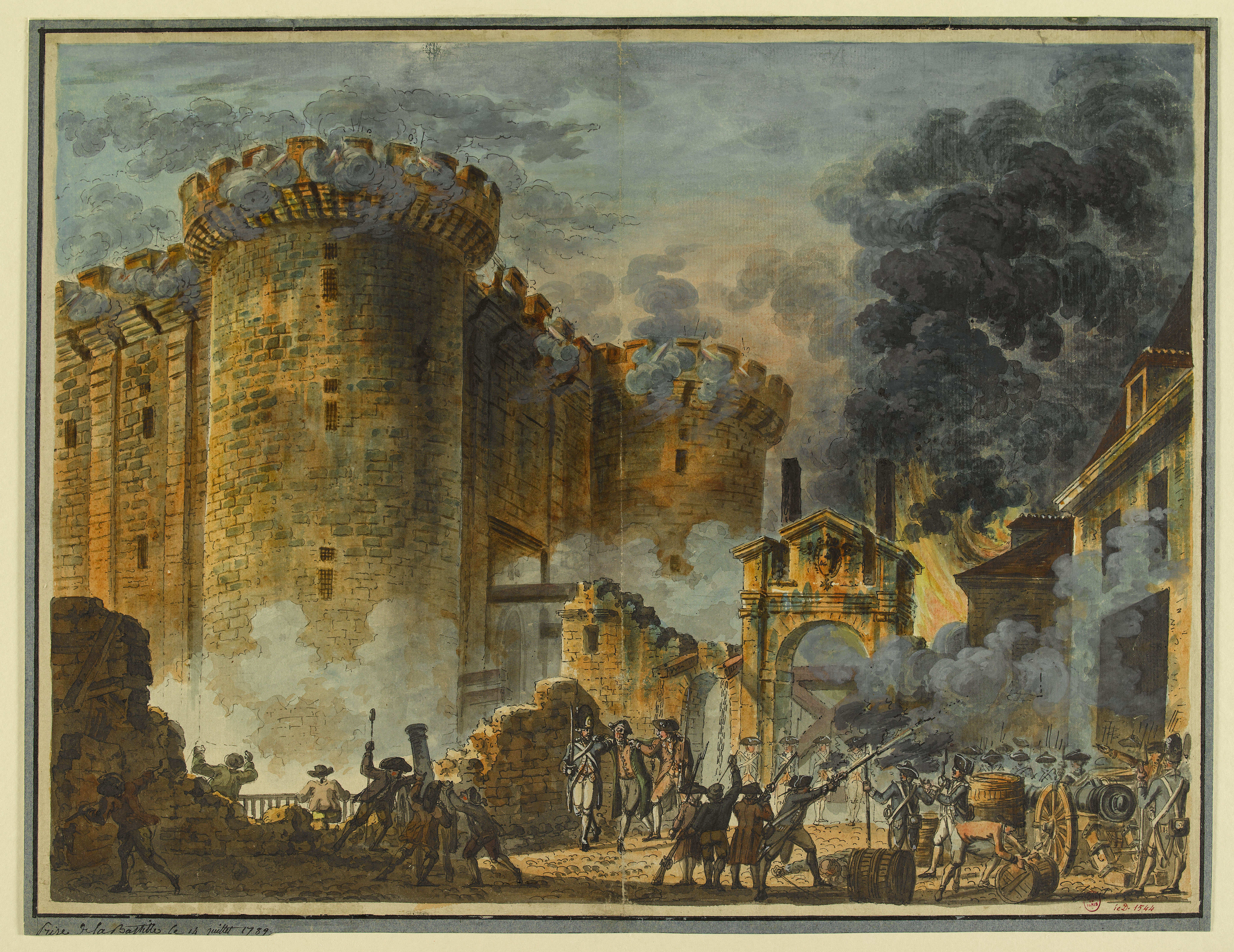
The French Revolution began in 1789, bringing arguments about liberty and political authority into urgent public discussion. On 14 July a crowd took the Bastille fortress and prison in Paris. News reached British readers through newspapers, private letters and official reports, whose accounts differed sharply in their interpretation of what had happened.
The London Gazette described closed shops, interrupted work and armed citizens replacing the established police. A private letter from Paris conveyed the excitement and fear of an eyewitness. The British ambassador's later report challenged exaggerated accounts of deaths and expected the royal family's position to recover.
For Robert Burns, political opinion would become entangled with his employment as an Excise officer, collecting taxes on goods. Writing to Frances Dunlop in early January 1793, he said that his principles had attracted official suspicion and that he intended to be more guarded in public. He also expressed his dread of war. The upheaval in France formed part of the political world in which he worked and wrote.
Sources
- The National Archives, French Revolution education resource · NationalArchives lessonpack backgroundp5; GazetteZJ1/85 transcriptp10; Jenkinson15July1789p16; ambassador30Julyp20–22
- The Works of Robert Burns, volume sixth: Prose · ScottDouglasVI1895 pp45–46, Dunlop31December1792–5January1793