Jean Armour and the widow’s copies
In June 1800 a hundred sets of Burns’s works lay at the bottom of a ship’s hold. They were bound for Edinburgh, where Alexander Cunningham was to sell them for Jean Armour and her children. Then Cunningham wrote to James Currie. The Edinburgh booksellers had already taken orders from his buyers. Both consignments were aboard the same ship. Currie decided to leave Jean’s parcel where it was.[1]
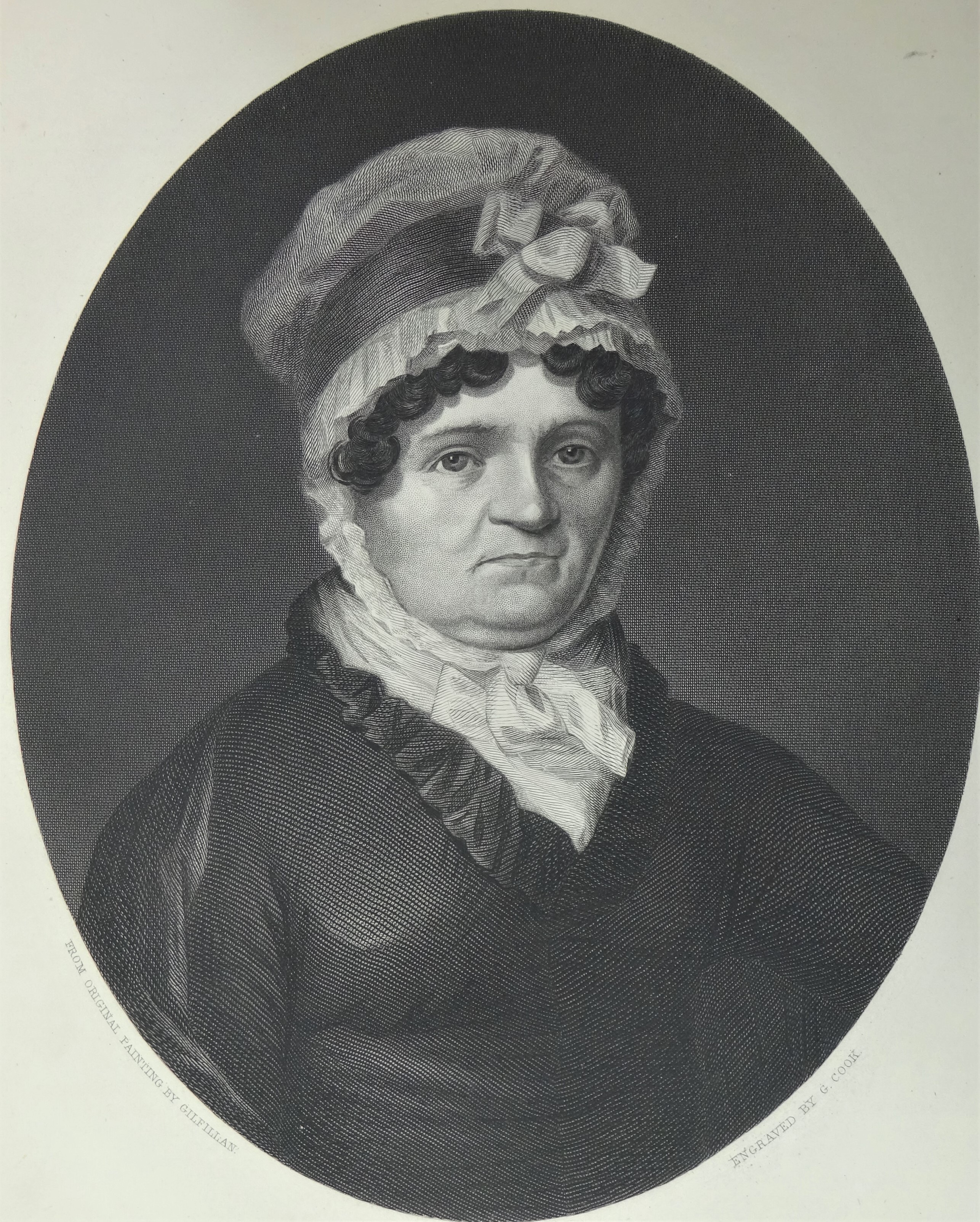
Four of Jean’s sons were alive when the books appeared. Friends had collected money for the family after Robert died in 1796. In June 1798 Currie wrote that the family was already receiving regular interest for its upkeep. The books offered Jean and the boys a further source of income.[2][3]
Five hundred sets to sell
The family’s trustees had agreed terms with the London booksellers Cadell and Davies. In return for the publishing rights, the trustees were to receive £250 and 500 sets of the four volumes to sell on the family’s behalf. Cadell and Davies paid for paper and printing. The family’s only charge for receiving the books was carriage. A second edition would bring a further £200 and a third another £150. Beside the £200 the publishers wrote “in Cash or Books”.[4]
At the subscription price of thirty-one shillings and sixpence, the 500 sets could bring in £787 10s if every buyer paid in full. Currie allotted a hundred sets each to Dumfries, Glasgow and Edinburgh, fifty to Ayr and the remaining 150 to Liverpool and elsewhere. With the Edinburgh parcel out of reach, he asked Cadell and Davies to supply a hundred London subscribers instead. They could keep one shilling and sixpence on each sale and pass thirty shillings to the family. The booksellers still hoped Cunningham could sell the Edinburgh sets himself, so the family would get the full price.[1][5]
One buyer had already paid. Dr Valpy of Reading gave Currie the money for two sets. Currie asked the publishers to send them to the office of the Star evening paper, addressed to Valpy, and count them towards the family’s London allotment. By Currie’s reckoning, that left ninety-eight.[1]
What reached the family?
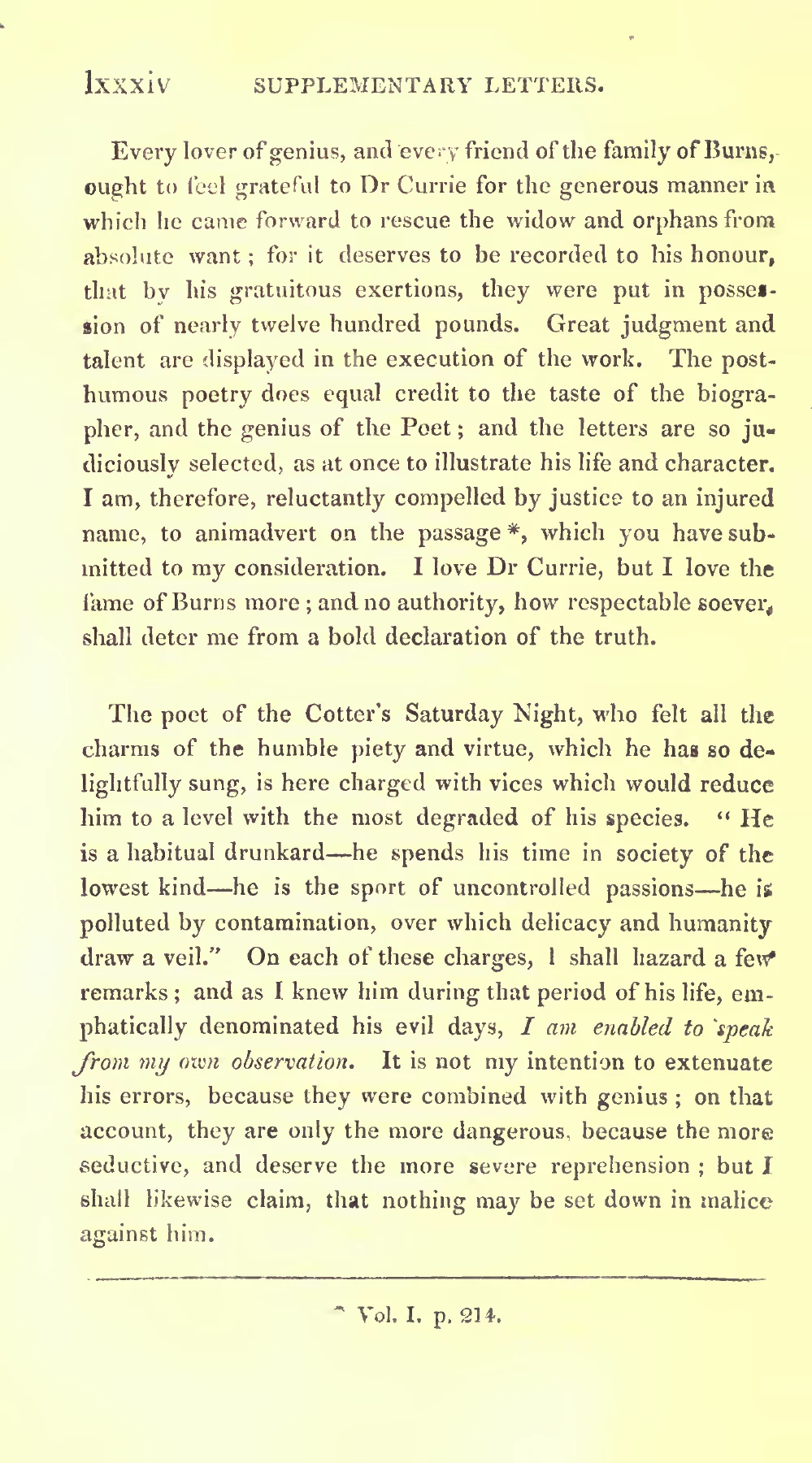
James Gray, a schoolmaster who knew Burns in Dumfries, put the family’s proceeds at nearly £1,200. He was writing to Alexander Peterkin in 1814, fourteen years after the books appeared. The later Dictionary of National Biography gave £1,400. Both figures are estimates for the family as a whole. The trustees’ terms and Currie’s letters let us follow individual sales, but they give no final sum paid to Jean or divided among the boys.[6][7]
One sum Jean acknowledged herself was £20. On 26 December 1801 she wrote to the committee of the Literary Fund, which had awarded her the money. The committee had also granted the family £25 in 1796. Both payments came from the charity.[8]
In 1804 Maria Riddell asked Jean what had become of the children. Jean was still in the same house. Robert had spent two winters at Glasgow College and one in Edinburgh. James Glencairn was at the Bluecoat School in London. Mr Shaw had found Francis Wallace a cadetship in the East Indies, but the boy had died the year before. William Nicol was still at school in Dumfries, the only one of the boys then living at home.[3]
References
- James Currie to Cadell and Davies, 12 June 1800, the distribution of the widow’s copies and Dr Valpy’s payment. University of Glasgow, The Letters of James Currie.
- James Currie to Cadell and Davies, 1 June 1798, support for Mrs Burns and her children.
- Jean Burns to Maria Riddell, Dumfries, 1804. Read Jean’s letter in P. Hately Waddell’s edition, Life and Works of Robert Burns, vol. II, pp. 219–220.
- William Thomson to James Currie, 27 August 1798, enclosing the Dumfries trustees’ minutes. Cadell and Davies to Currie, 19 September 1798, with the publishers’ tally.
- Cadell and Davies to James Currie, 14 June 1800, collecting payment from subscribers in Edinburgh and London.
- James Gray to Alexander Peterkin, Edinburgh, 28 September 1814, supplementary letter II, pp. lxxxiii–lxxxv, in The Life and Works of Robert Burns (Edinburgh, 1815), vol. I.
- Leslie Stephen, “Burns, Robert”, account of the family after Burns’s death, Dictionary of National Biography, vol. VII (1886).
- British Library, Literary Fund case file for Jean Burns, Loan 96 RLF 1/46, especially Jean to the committee, 26 December 1801. The calendar of the correspondence, file 46, items 3–5, identifies the acknowledgements.
Read Jean’s letter about the boys
How Gilbert Burns, John Syme and James Currie put the edition together