The reader who became a friend
Frances Dunlop asked Robert Burns for six copies of his poems. On 15 November 1786 he replied from Mossgiel that he could find only five. He thanked her for her praise, told her that he expected to go to Edinburgh to arrange another edition, and promised to call on his return. A reader’s order had opened a conversation.[1]
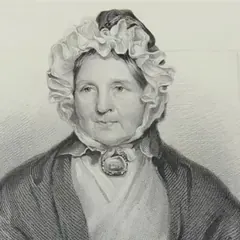
The poem that drew her to him was The Cotter’s Saturday Night. Gilbert Burns later recalled that a friend had placed the Kilmarnock volume on her table during a period of illness and low spirits. She opened it at the poem and read with pleasure and surprise. In Gilbert’s account, she then sent a messenger to Mossgiel asking for copies and inviting the author to Dunlop House.[2]
Burns’s reply quickly moved beyond the business of books. Dunlop had praised his celebration of William Wallace, whom Burns addressed as her ancestor. He told her about the books he had loved as a boy and a Sunday walk to Leglen Wood, where he imagined Wallace finding shelter. Her letter had prompted him to share a memory of his own beginnings as a reader and aspiring poet.[1]
Praise with expectations
By the end of December, Dunlop was helping his work travel. She had sent a copy to Dr John Moore in London, whose literary judgement and friendship she valued. In her letter of 30 December she explained that she hoped an introduction would bring Burns useful support. She was also collecting requests for the new edition and intended to send the names and quantities to his Edinburgh bookseller, William Creech.[3]
Her admiration came with close attention to the writing. In the same letter she objected to the word “unhappy” applied to Wallace. She anticipated Burns’s defence: he might mean unsuccessful. She believed that patriotic virtue brought its own happiness and wanted poetry to encourage people towards it.[3]
Burns answered on 15 January 1787. Her criticism had made him question his judgement and consult literary acquaintances in Edinburgh. They had approved the word, and he defended it.[4]
The dangers of being admired
Dunlop also worried about the reception he was enjoying in Edinburgh. She feared that praise would inflate his vanity and that the rural poet she admired might be lost amid it. Burns answered with a description of his own uneasiness. He believed his abilities deserved attention, but felt exposed before readers whose education and social advantages exceeded his. Public enthusiasm, he feared, could retreat as quickly as it had risen.[3][4]
He told her that her interest in his reputation mattered deeply to him, whether or not she could help the subscription. Within weeks of that first order, they were discussing literary judgement, ambition and the strains of becoming known. Dunlop had become someone to whom he could explain how fame felt from inside it.[4]
Her own copy of the Kilmarnock edition survives at the Rosenbach in Philadelphia. Bound into it are thirty-three pages of transcripts in her handwriting, dated 1787–90: seventeen further poems and two letters. As Burns continued to write, she continued to copy and keep his work, building a personal collection from that first encounter with his poetry.[5]
References
[1] Robert Burns to Frances Dunlop, 15 November 1786, in William Wallace, ed., Robert Burns and Mrs. Dunlop (1898), volume I, pp. 2–3. Wallace prints the closing paragraph and exact date omitted from Currie’s earlier version. Read the scanned volume ↗ ↗.
[2] Gilbert Burns’s recollection, printed in James Currie, The Works of Robert Burns (1800), volume I, pp. 133–134, footnote. Read the scanned volume ↗ ↗.
[3] Frances Dunlop to Robert Burns, 30 December 1786, in Wallace, Robert Burns and Mrs. Dunlop, volume I, pp. 4–7. Read the scanned volume ↗ ↗.
[4] Robert Burns to Frances Dunlop, 15 January 1787, in Currie, Works, volume II, no. XV, pp. 48–51. Read the scanned volume ↗ ↗.
[5] The Rosenbach Museum & Library, Guide to the Robert Burns Holdings, updated 15 July 2024, p. 26, shelfmark EL2 .B967 786: Dunlop’s copy of the Kilmarnock edition and its manuscript additions. Read the collection guide ↗ ↗.