Ellisland: a farm, a family and a living
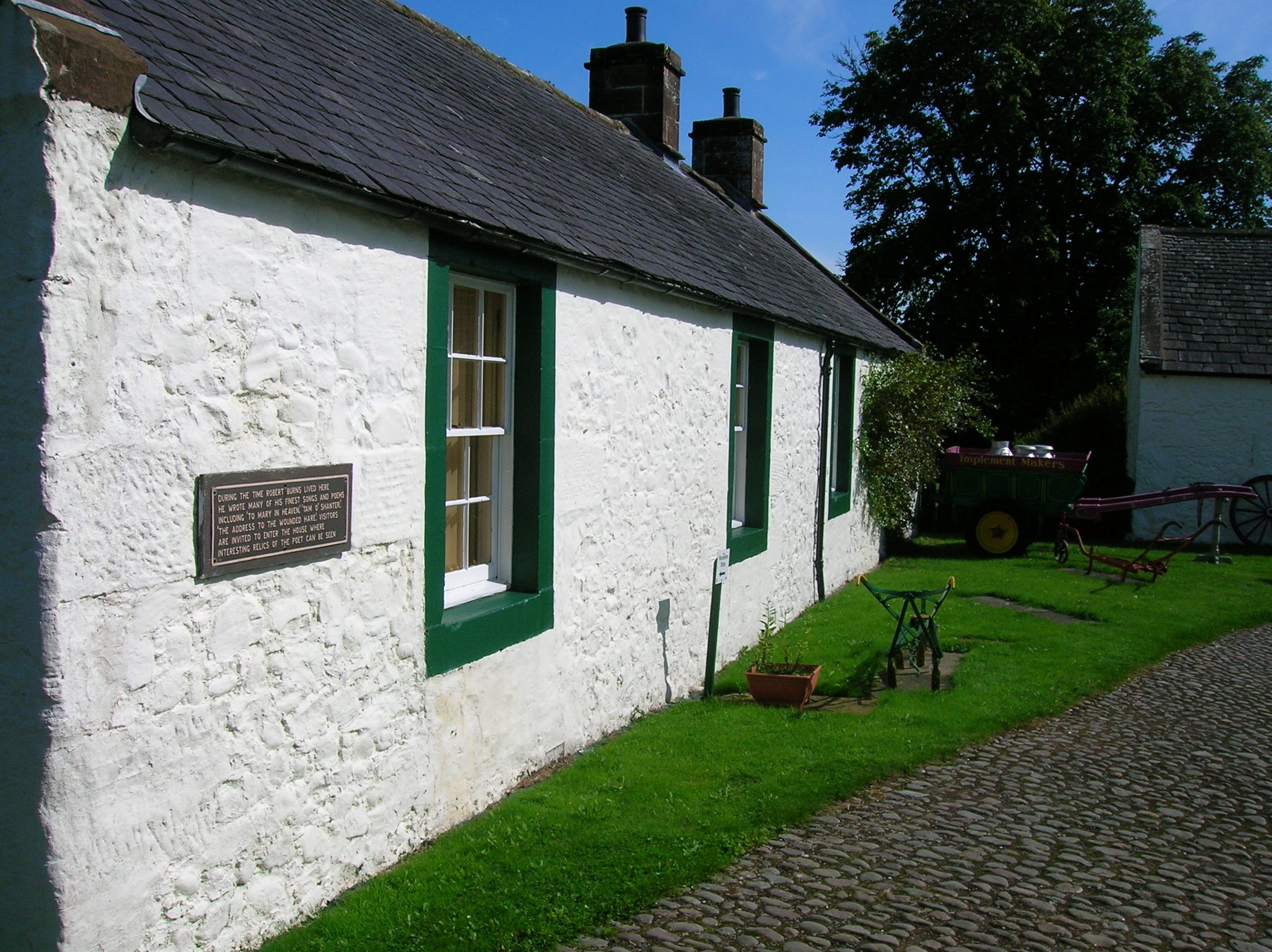
In 1788 Robert Burns took a farm beside the River Nith, north of Dumfries. Ellisland would give him land to work and a home for his family. Within three years he would leave it and settle in the town, earning his living as an excise officer. During those years he built a house, worked the farm and travelled a tax district of ten parishes. He also continued to write poems and send songs to his correspondents.[1][2]
Taking on Ellisland
The success of Burns’s poetry had brought money into his hands. In February 1789 he told his cousin James Burness that the profits from his book had allowed him to begin his new life decently. Farming offered a way to put that money to work. Ellisland belonged to Patrick Miller of Dalswinton, who became his landlord.[1][3]
Burns inspected the farm before committing himself. On 3 March 1788 he wrote to Miller after visiting with John Tennant, whose judgement he trusted. His preference was for a farming life, but the letter dealt closely with the condition of the land and the cost of starting. He described exhausted ground, fields already under crops, and a shortage of pasture for the animals he would need. Four horses would be required to bring in lime and building materials. Cows would need grazing too.[4]
He proposed paying for the summer’s grass and accommodation, beginning the lease at Martinmas in November, and keeping the rent at £50 a year for the first three years. A lower initial rent would leave him more money for improvements while he established the business. Miller subsequently provided £300 towards a farmhouse and enclosing the fields.[4][1]
There was another possible livelihood. Burns was already pursuing entry to the excise service while considering Ellisland. On the same March day he told William Cruikshank that he had two plans before him and was weighing their advantages. By February 1789 he had completed his instruction and held an excise commission. He explained to his cousin that Robert Graham of Fintry, one of the commissioners, had helped him obtain it. The commission gave him a route into employment if the farm disappointed him; a paid posting was still to come.[5][3]
Building a household
Burns’s first weeks at Ellisland were unsettled. In a letter to his friend Frances Dunlop on 13 June 1788, he described his second day on the farm, living alone in an old smoky room. Jean Armour was still in Ayrshire. He wrote of the unfamiliar cares surrounding him and of the people he missed.[6]
He and Jean were establishing a married household as well as a business. In the same letter he praised her ability to learn and carry out household work. During his absence she was learning dairy and other rural work from his mother and sisters. Dairy produce formed part of the farm economy, giving her preparation an immediate practical purpose. Burns placed the concerns of his wife and family first, with poetry close behind.[6]
The new farmhouse stood beside the Nith. By June 1789 Burns could describe his life there in a letter to Mr M’Auley: holding the plough, watching his corn and attending to the dairy, then walking beside the river and composing. He also described family worship, with Jean joining in the singing.[7]
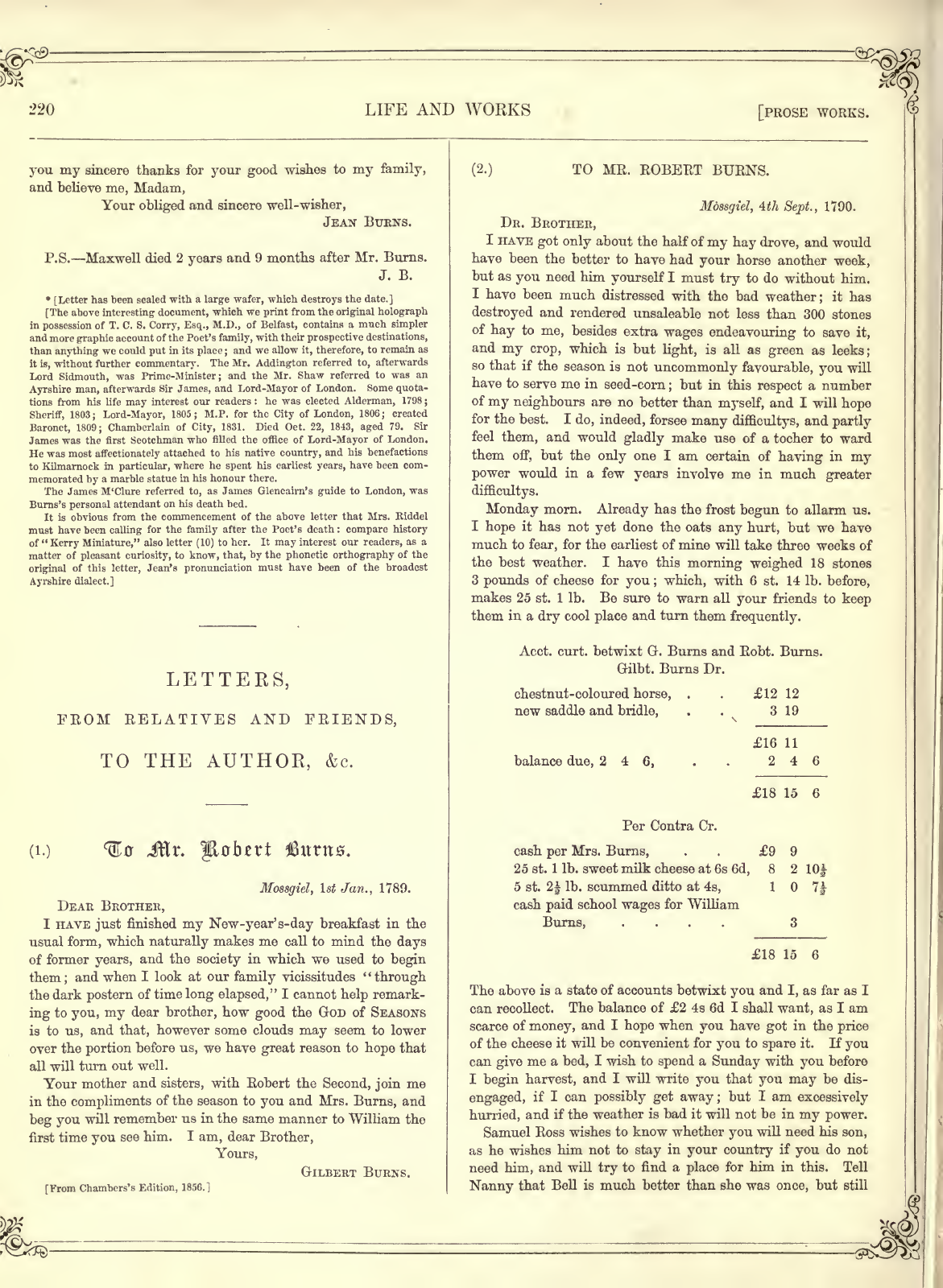
His family responsibilities extended beyond the couple and their children. His cousin Fanny had come into his household after her father’s death in January 1789. Burns told James Burness that he intended to keep her with the family until she was old enough to enter service. Other young relatives also looked to him for help as they began working lives of their own.[3]
What an exciseman did
Burns began excise duties in 1789. Excise was a system of taxes on goods, including beer, wine and spirits. Officers visited businesses within their districts, measured quantities of goods and checked compliance with the revenue laws. The work brought Burns into contact with publicans and producers, as well as people selling goods outside the rules.[8][9]
The familiar nickname “gauger” came from this measuring work. A gauging rod associated with Burns survives in the Dumfries museum collection. Its scales were used to calculate the quantity of beer and wine in barrels. Measurement helped turn the contents of a vessel into an amount on which tax could be charged.[8]
The job also involved enforcement and paperwork. On 12 January 1791 Burns signed a receipt for £2 10s paid by George Gracie of Carronbridge. It recorded a fine imposed by the county justices the previous September.[9]
For Burns, a salary offered a firmer basis for supporting a family. On 1 November 1789 he told his friend Robert Ainslie that he had been appointed directly to an excise division containing his house and farm. He knew the low standing of the occupation would trouble some of his acquaintances. He answered that objection through his responsibilities as a husband and father. The post brought £50 a year, together with provision for widows and orphans.[10]
Three days later he explained the bargain to his old friend Richard Brown. The additional income was £50, against extra annual expenses he estimated at £10 or £12. The district, however, covered ten parishes. Riding over that area and carrying out its business left him scarcely a spare moment. Even a journey to meet Brown in Ayrshire required leave from the Board of Excise in Edinburgh.[2]
Two kinds of work
The appointment allowed Burns to keep his farm while earning a salary, but it placed another set of duties alongside the crops, livestock and building work. His December 1789 letter to Provost Maxwell of Lochmaben gives the pressure a memorable form: he was trying to make one guinea do the work of three. Farming, building and marketing all came into his complaint.[11]
By 11 January 1790 his mood about Ellisland had darkened sharply. Writing to his brother Gilbert, he called the farm “a ruinous affair” and wanted to be clear of it. The confidence with which he had described his bargain the previous February had given way to a determination to get out.[12]
Farming continued through that frustration. In August 1791 the Earl of Buchan invited him to a ceremony honouring the poet James Thomson. Burns wanted to go, but explained that an absence of a week or two in the middle of harvest was difficult to risk. The farm still imposed its own calendar, even when the invitation came from a literary patron.[13]
His writing continued too. In December 1788 he had sent Frances Dunlop verses of “Auld Lang Syne”, speaking warmly of old Scottish songs. Early in 1791 he was corresponding about Tam o’ Shanter. A. F. Tytler’s praise delighted him; Tytler’s criticisms also prompted a decision to remove a passage about a lawyer and a priest. Burns was thinking about the poem’s ending and considering further stories while managing his other work.[14][15]
That exchange came during another interruption. His horse had fallen with him and broken his right arm. In his reply to Tytler he explained that writing was still difficult.[15]
Leaving the farm
In 1791 Burns gave up Ellisland, sold his farming stock at auction and moved with his family to Dumfries. The rented land and its livestock ceased to be his means of earning a living. Excise employment became the main occupation around which the household was organised.[1]
The service had already begun moving him from the large rural riding district towards duties on foot in Dumfries. Town work brought a different pattern of inspections. Burns continued dealing with traders and the enforcement of revenue law; in February 1792 he also took part in the Solway smuggling-vessel seizure described in Burns, the smugglers and the cannon.[9]
The surviving farmhouse at Ellisland is now a museum. Its rooms and farm setting give a place to the work Burns described in his letters: the effort of establishing a household, the corn and dairy, and the writing fitted among them. In Dumfries, the excise salary supported the family while his work on Scottish songs continued.[1]
References
[1] Dumfries and Galloway Council, Postcard of Ellisland, The Homestead of Robert Burns ↗, Future Museum, object BCBN046n; farm history.
[2] Robert Burns, letter to Captain Richard Brown, 4 November 1789 ↗, National Trust for Scotland, NTS/02/25/BRN/01/35.
[3] Burns, letter to James Burness, 9 February 1789 ↗, in Allan Cunningham, The Complete Works of Robert Burns (1855), letter CL, pp. 399–400.
[4] Burns, letter to Patrick Miller, 3 March 1788 ↗, National Trust for Scotland, NTS/02/25/BRN/01/25.
[5] Burns, letter to William Cruikshank, 3 March 1788 ↗, Cunningham (1855), letter CIV, pp. 372–373.
[6] Burns, letter to Frances Dunlop, 13 June 1788 ↗, Cunningham (1855), letter CXXII, pp. 380–381.
[7] Burns, letter to Mr M’Auley, 4 June 1789 ↗, Cunningham (1855), letter CLXIV, pp. 406–407.
[8] Dumfries and Galloway Council, Measuring or gauging rod which belonged to Robert Burns ↗, Future Museum, DUMFM:1969.29.
[9] Burns, receipt for an excise fine, 12 January 1791 ↗, National Trust for Scotland, NTS/02/25/BRN/02/26; receipt transcription and collection description. For the Solway episode, see the linked story and its references.
[10] Burns, letter to Robert Ainslie, 1 November 1789 ↗, National Trust for Scotland, NTS/02/25/BRN/01/30.
[11] Burns, letter to Provost Maxwell, 20 December 1789 ↗, Cunningham (1855), letter CLXXIX, pp. 415–416.
[12] Burns, letter to Gilbert Burns, 11 January 1790 ↗, Cunningham (1855), letter CLXXXII, pp. 417–418.
[13] Burns, letter to the Earl of Buchan, 29 August 1791 ↗, Cunningham (1855), letter CCXIX, pp. 437–438.
[14] Burns, letter to Frances Dunlop, 17 December 1788 ↗, Cunningham (1855), letter CXLII, pp. 394–395.
[15] Burns, letter to A. F. Tytler, February 1791 ↗, Cunningham (1855), letter CCVI, p. 431.