The books that sent Burns to Leglen Wood
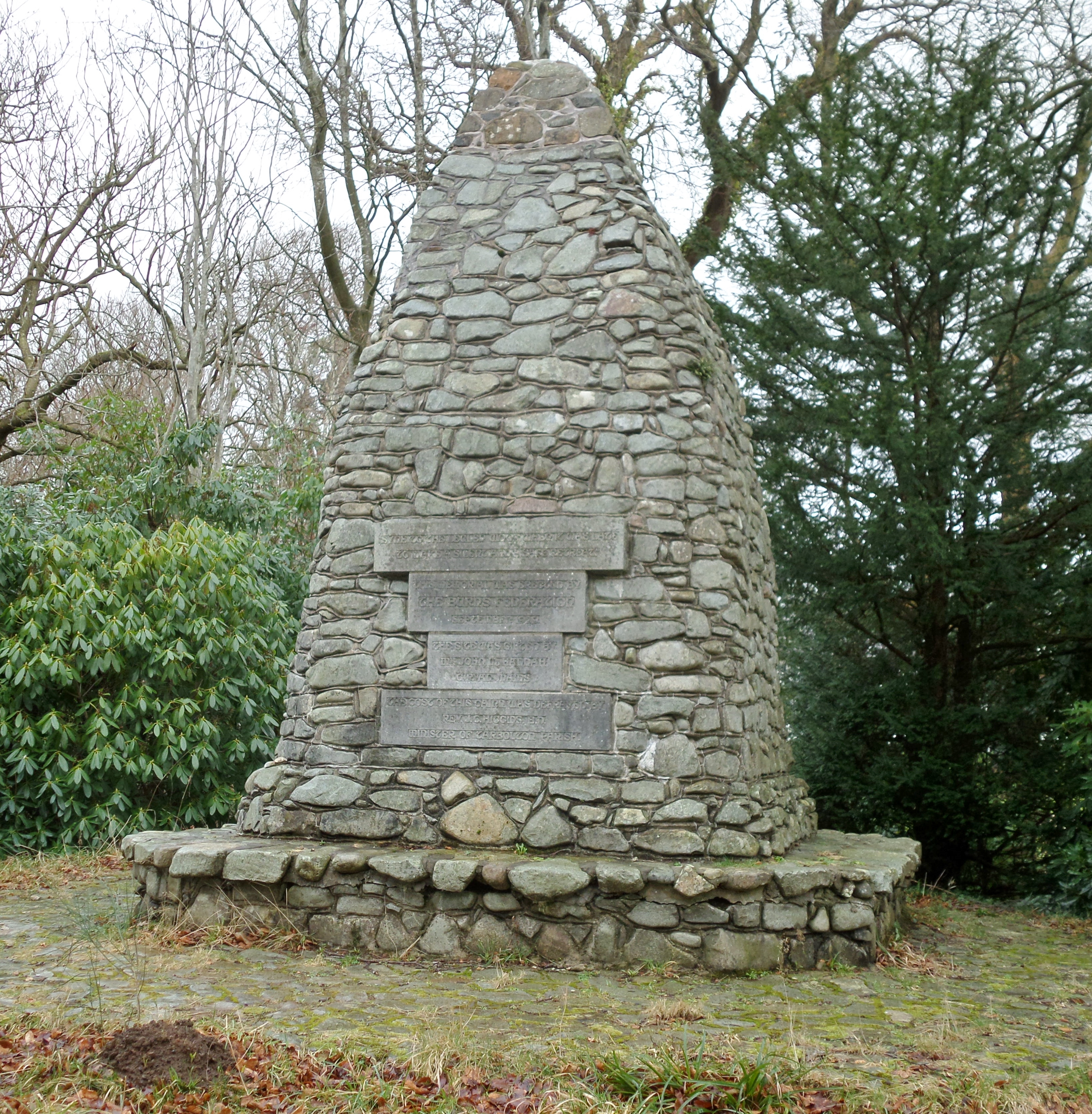
On a fine summer Sunday in his boyhood, Robert Burns walked about six miles to Leglen Wood. He had been reading about William Wallace and wanted to explore a place named in the story. Years later, writing to Frances Dunlop on 15 November 1786, he remembered searching its hollows for places where he imagined Wallace might have sheltered. Sunday was the only day of the week he could spare.[1]
Books borrowed from neighbours
Burns remembered the lives of Hannibal and Wallace as his first great pleasures in private reading. In his autobiographical letter to John Moore, he described the different effects they had on him. Hannibal made him follow the recruiting drum and bagpipe, wishing he were tall enough to become a soldier. Wallace stirred a passionate attachment to Scotland which, he wrote, would last as long as he lived.[2]
His brother Gilbert supplied the practical details of how those books reached him. John Murdoch, their teacher, lent Robert a Life of Hannibal. Apart from schoolbooks, Gilbert remembered it as the first book Robert read and almost the only one available to him during his schooling. The Wallace book came some years later, borrowed from the blacksmith who shod the family’s horses.[2]
Gilbert recalled his eagerness to read the few books that came his way; Robert remembered finding solitary hours after the day’s work to dwell on the fortunes of his heroes. He could still recall weeping over their stories when he wrote to Dunlop.[1][2]
School reading had its own pleasures. Burns told Moore that he remembered Addison’s The Vision of Mirza and a hymn from one of his schoolbooks, Mason’s English Collection. A passage in the hymn about a broken wave had stayed with him for the sound of its words.[2]
A place from the page
Two lines in the Wallace story caught his attention. He quoted them to Dunlop:
Syne to the Leglen wood when it was late
To make a silent and a safe retreat.
Syne means “then”. The lines gave him a named place to seek out. William Wallace, the later editor of Burns’s correspondence with Dunlop, located the wood beside the River Ayr near Auchencruive and placed the boy’s departure at Mount Oliphant. Burns himself remembered a summer Sunday and the distance he walked; he gave no year for the visit.[1]
He described his enthusiasm as a pilgrim’s devotion. Once there, he explored the places where he could imagine his hero finding refuge. The wood allowed him to give a physical setting to the story he had been reading. He also remembered a literary ambition taking shape. Already trying his hand at rhyme, he wished he could make a song worthy of Wallace.[1]
In his harvest story, he described another route into composition: making words to fit a tune sung by a girl working beside him. Books and living singers both offered him reasons to try writing.[1][2]
Remembering the boy as a published poet
Burns told the Leglen story while thanking Dunlop for ordering copies of his poems. Her praise of his writing about Wallace touched a feeling he traced back to childhood. He addressed Wallace as her illustrious ancestor, then explained how deeply the books had affected him.[1]
The letter ends with the business of authorship. Burns could supply only five copies and was considering a journey to Edinburgh to print another edition. The boy who had gone looking for a place in a book was now sending out a book of his own. His friendship with Dunlop began with those poems and this account of the reading that had helped form him.[1]
References
[1] Robert Burns to Frances Dunlop, Mossgiel, 15 November 1786, in William Wallace, ed., Robert Burns and Mrs. Dunlop, vol. I (New York: Dodd, Mead, 1898), pp. 2–3; editor’s geographical note, p. 4. The visit is Burns’s boyhood recollection. Read the scanned volume ↗.
[2] Robert Burns’s autobiographical letter to John Moore, 2 August 1787, and Gilbert Burns’s account to Mrs Dunlop, in James Currie, ed., The Works of Robert Burns; with an Account of His Life, vol. I (Liverpool: J. M’Creery, 1800), pp. 38–39, 41–42 and 60–61. Read the scanned volume ↗.